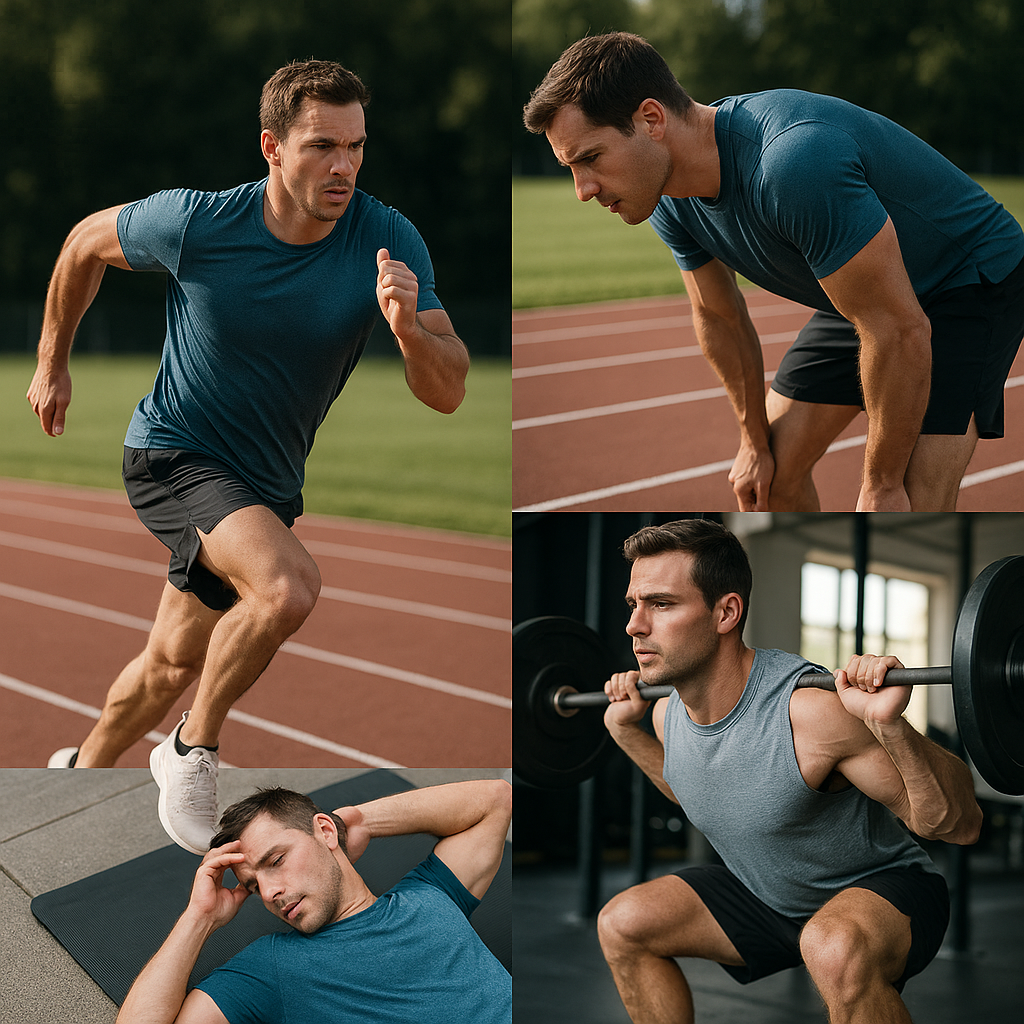
Your living room already has everything a great workout space needs: a floor, a few square metres of room, and a daily routine you can actually stick to. A home workout program turns that familiar space into a personal fitness hub—no commute, no waiting for machines, and no “I’ll start next week” because the gym felt like a project. You can train before work, squeeze in a session between meetings, or move your body while dinner is in the oven.
Home training also isn’t a pandemic leftover. It has become the practical choice for people who want flexibility, privacy, and a plan that fits real life. The key difference between random workouts and real progress is structure. When you know what to do today, what to repeat next week, and how to scale it, consistency gets easier—and results follow.
Why most home workouts stall (and how a program fixes it)
Many people quit home training for the same reasons: “I don’t have equipment,” “I don’t have space,” or “I just can’t stay motivated.” The truth is that most of those problems are planning problems.
A well-built home workout program removes friction by giving you:
- Clear sessions with a start and finish, so you’re not improvising.
- Progression (more reps, slower tempo, harder variations) so you keep improving without buying a home gym.
- Flexible options for busy days, including shorter workouts that still “count.”
More than fitness: strength, posture, and everyday comfort
The best reason to train at home isn’t just aesthetics—it’s how you feel in your body. A smart program builds strength in the muscles that support daily life: glutes, core, upper back, and legs. That can translate into better posture, steadier energy, and fewer “stiff neck after the laptop” moments.
This is where an ergonomic lens makes a real difference. If you sit a lot, your workouts should not only challenge you—they should also help you move with better alignment. Ergonomic aids, such as posture-supporting apparel and targeted supports, can be used as a comfort tool during certain movements and as a reminder of good positioning after training. They are not a shortcut, but they can help you stay mindful, reduce unnecessary strain, and train in a way that supports long-term joint and back health.

Women's Posture Shirt™ - Black
The Posture Shirt™ stimulates muscles for improved posture and pain relief. Suitable for work, exercise, and daily use.
What to expect next
In the next sections, we’ll break down what a complete home workout program looks like, how to choose the right format (app, video, or written plan), and how to combine strength, mobility, and recovery—so your living room setup becomes a sustainable routine, not a temporary phase.
What a home workout program actually is
A home workout program is more than a list of exercises. It’s a structured plan that tells you what to do, when to do it, and how to progress—so you’re not relying on motivation or random inspiration. A comprehensive program usually includes:
- Planned sessions (for example 3–4 workouts per week) with a clear focus for each day.
- Progression rules so the training keeps working as your body adapts (more reps, harder variations, slower tempo, longer range of motion, shorter rest).
- Built-in flexibility for busy weeks, travel days, or low-energy days—without losing momentum.
- Recovery and mobility so you can train consistently without feeling beat up.
When people say home workouts “don’t work,” it’s often because they’re doing workouts, not following a program. The difference is the plan.
Choosing the right format: app, video, or written plan
Most home workout programs come in three formats. The best choice depends on your personality, your schedule, and how much guidance you want in the moment.
- Apps are great if you want reminders, tracking, and short sessions you can start quickly. The downside is that some app workouts can feel generic, and progression isn’t always tailored to your movement quality or posture.
- Follow-along videos make it easy to stay engaged and keep your pace. They’re especially helpful for learning exercise form. The trade-off is that it can be harder to adjust intensity (you may need to pause, swap movements, or repeat a week).
- Written plans are flexible and easy to repeat, which is ideal for measurable progress. They do require a bit more self-direction, especially for timing rest and choosing modifications.
Many people do best with a hybrid approach: a written plan for structure, plus short videos for technique and confidence.
Key components of an effective home workout program
The most effective programs balance three things: strength, mobility, and consistency. That balance is what supports results you can feel in daily life—like easier stairs, better posture at your desk, and fewer stiff shoulders.
Exercise variety that supports real-life movement
A well-rounded home workout program should include:
- Lower-body strength (squats, lunges, hip hinges) to build glutes and legs that support your back and hips.
- Upper-body pushing and pulling (push-ups, rows, presses) to balance the shoulders and build a stronger upper back.
- Core stability (dead bugs, planks, carries) to resist unwanted movement and protect the spine.
- Mobility and flexibility (thoracic rotation, hip flexor stretches, ankle mobility) to keep joints moving well.
Variety doesn’t mean chaos. It means covering the basics consistently, with small changes that keep the program progressing.
Progression and frequency that match your level
Progressive overload is what turns effort into results. At home, you can progress without heavy weights by using simple methods:
- Add reps (for example, 8 to 10 to 12).
- Add sets (2 sets to 3 sets).
- Slow the tempo (3 seconds down, 1 second up).
- Increase range of motion (deeper squat to a safe depth, elevated feet for push-ups).
- Reduce rest slightly while keeping good form.
As a general guide, beginners often do well with 2–3 sessions per week, while more experienced trainees can handle 3–5 sessions per week depending on intensity and recovery. The goal is to finish sessions feeling challenged, not wrecked.
No equipment? still effective
You don’t need a full home gym to build strength. Bodyweight training works because you can scale difficulty through leverage, tempo, and volume. If you want simple upgrades using what you already have, try:
- A backpack loaded with books for squats, lunges, and hip hinges.
- A towel for isometric rows or hamstring sliders on smooth floors.
- A sturdy chair or sofa edge for step-ups, incline push-ups, and triceps dips (only if shoulders tolerate it).
These tools aren’t mandatory, but they can add variety and progression without taking up space.
How ergonomic aids fit into your training
Ergonomic aids can support a home workout program by helping you stay aware of alignment and reducing unnecessary strain—especially if you spend long hours sitting. Used correctly, they’re not a replacement for strength and mobility; they’re a supportive layer.
- During workouts, posture-supporting apparel or targeted supports can act as a gentle reminder to avoid collapsing through the upper back or flaring the ribs during movements like push-ups, rows, and overhead work.
- After workouts, they can help you maintain a more neutral position while you cool down, walk, or return to desk work—when posture often slips back into old habits.
- On non-training days, ergonomic support can pair well with short mobility breaks to reduce stiffness in the neck, shoulders, and lower back.
The best approach is to use ergonomic aids as feedback: if a movement feels better with support, treat that as a signal to refine technique, adjust range of motion, or strengthen the muscles that hold you in good alignment.

Men's Posture Shirt™ - Black
Improves posture, stimulates muscles, and can relieve pain. For work, exercise, and everyday use.
Home workout trends worth using (and which to ignore)
Home fitness has evolved quickly, and some trends are genuinely useful. One of the most practical is micro-workouts: short sessions (often 10–15 minutes) that make consistency easier on busy days. These can be strength “finishers,” mobility blocks, or posture-focused movement breaks between meetings.
Another trend is hybrid coaching, where you follow a structured plan but use digital guidance (videos, form demos, check-ins) to stay on track. This is especially helpful for learning technique and staying accountable without committing to a gym schedule.
Finally, there’s a growing focus on longevity and mobility—training to feel good and move well for years, not just weeks. That aligns perfectly with a program that prioritises posture, joint-friendly progressions, and recovery.
Designing a home workout space that makes consistency easier
You do not need a dedicated gym room to follow a home workout program—you need a setup that reduces friction. Start by choosing a “default spot” in your living room where you can fully extend your arms and lie down comfortably. If space is tight, move a coffee table to the side and keep your essentials in a small basket or drawer so setup takes less than a minute.
- Protect the floor: A mat or folded blanket makes kneeling, planks, and mobility work more comfortable.
- Keep simple tools visible: A resistance band, a small towel, and a backpack are enough for most progressions.
- Use cues that support posture: A mirror, a phone camera, or a wall reference can help you notice rib flare, rounded shoulders, or a collapsed lower back.
- Make it engaging: A playlist, a timer, or a virtual class can keep pace high and reduce decision fatigue.
If you use ergonomic aids such as posture-supporting apparel or targeted supports, store them with your workout items. That makes them part of the routine rather than an afterthought—especially helpful on days when you feel stiff from sitting.
A sample 4-week home workout program (no gym required)
This plan uses three full-body sessions per week (for example Monday, Wednesday, Friday). Each workout takes about 25–35 minutes including warm-up and cool-down. Aim for controlled reps and stop 1–2 reps before form breaks.
Warm-up (5 minutes before every session)
- Cat-cow: 6–8 reps
- Hip hinge drill (hands on hips): 8 reps
- Shoulder circles + thoracic rotations: 6 reps each side
- Bodyweight squat to comfortable depth: 8 reps
Weeks 1–2: Build the base
Workout A (rest 60–90 seconds between sets)
- Squat to chair (beginner) or bodyweight squat: 3 sets x 8–12 reps
- Incline push-up (hands on sofa) or push-up: 3 x 6–10
- Backpack hip hinge (Romanian deadlift pattern): 3 x 10–12
- Dead bug: 3 x 6–10 per side
Workout B
- Reverse lunge (hold chair for balance if needed): 3 x 8–10 per side
- Towel row (isometric pull against a sturdy towel) or band row: 3 x 20–30 seconds
- Glute bridge: 3 x 10–15
- Side plank (knees down for beginner): 3 x 20–40 seconds per side
Alternate A and B across the week (Week 1: A/B/A, Week 2: B/A/B).
Weeks 3–4: Progress with small upgrades
Keep the same structure, but choose one progression per exercise:
- Add reps until you reach the top of the range, then add a small load (heavier backpack) or a harder variation.
- Slow the lowering phase to 3 seconds on squats, lunges, and push-ups.
- Add a set to one or two key movements (for example squats and rows) if recovery is good.
Advanced option: Add a 6–10 minute finisher once per week (e.g., 30 seconds brisk step-ups + 30 seconds rest x 6–10 rounds) while keeping technique crisp.
Recovery and habit building that supports posture
Progress comes from training and recovering. Plan at least one full rest day between strength sessions, and use 5–10 minutes on off-days for mobility that counters sitting: hip flexor stretching, gentle thoracic rotation, and chest opening. If you work at a desk, small ergonomic adjustments (screen height, chair support, feet grounded) can reduce the “undoing” effect between workouts.
To stay consistent, make the program easy to repeat: schedule sessions like appointments, track only a few basics (reps, sets, variation), and keep a “minimum session” for busy days (for example one round of each exercise). A home workout program works best when it is realistic enough to follow even when motivation is low.
Frequently Asked Questions
What if I don’t have any equipment?
You can build an effective home workout program with bodyweight alone by progressing reps, sets, tempo, and leverage (for example incline push-ups to floor push-ups). Household items can also help: a backpack adds load, a towel can be used for isometric pulling, and a sturdy chair can support step-ups or incline movements.
How can I stay motivated to work out at home?
Reduce decision-making and make progress visible. Choose specific training days, use a simple checklist, and track one or two performance markers (like push-up reps or lunge reps). Many people also stay more consistent with accountability—sharing the plan with a friend, joining a virtual class, or repeating the same weekly schedule for four weeks before changing anything.
Can home workouts really build muscle and improve fitness?
Yes—muscle and fitness improve when training creates enough challenge and you progress over time. Bodyweight training can be scaled through range of motion, slower tempo, added volume, and added load (like a backpack). Consistency matters more than complexity, especially in the first 4–8 weeks.
How do ergonomic aids fit into a workout program?
Ergonomic aids can act as feedback for alignment and comfort. During certain movements, posture-supporting apparel or targeted supports may help you stay aware of rib position, shoulder alignment, and spinal neutrality. After training, they can support a more neutral posture when you return to desk work, where fatigue often leads to slouching.
What should I do if I experience pain during workouts?
Stop the movement and adjust first: reduce range of motion, slow down, lower the load, or switch to a more joint-friendly variation. If pain persists, is sharp, or changes your movement, consult a qualified healthcare professional. Ergonomic aids may improve comfort, but ongoing pain should be assessed rather than pushed through.
Källor
- Daily Burn. (n.d.). "The 30-Day Home Workout Plan for Total Beginners."
- Fitness Free. (n.d.). "9 Træningsprogram Hjemme på 30 Minutter."
- UNM Health Sciences. (2020). "Home Workout Guide."
- Fitness Shoppen. (n.d.). "Guide: Hjemmetræningsprogram – 6 Øvelser Du Kan Lave Med og Uden Udstyr."
- Healthline. (n.d.). "Workout Routine for Men."
- MyProtein. (n.d.). "Hjemmetræning for Begyndere: Øvelser med & Uden Udstyr."
- DAREBEE. (n.d.). "Fitness Programs and Workouts."
- YouTube. (n.d.). "Home Workout Video."
- Nourish Move Love. (n.d.). "Workout Calendars."
- PureGym. (n.d.). "Full Body 10 Minutters Træningsprogrammer Uden Udstyr."
- Google Play. (n.d.). "Home Workout - No Equipment App."
- YouTube. (n.d.). "Home Workout Video 2."
- NHS. (n.d.). "Home Workout Videos."
- Matas. (n.d.). "Træningsprogram."
- We Train at Home. (n.d.). "Hjemmetræning."