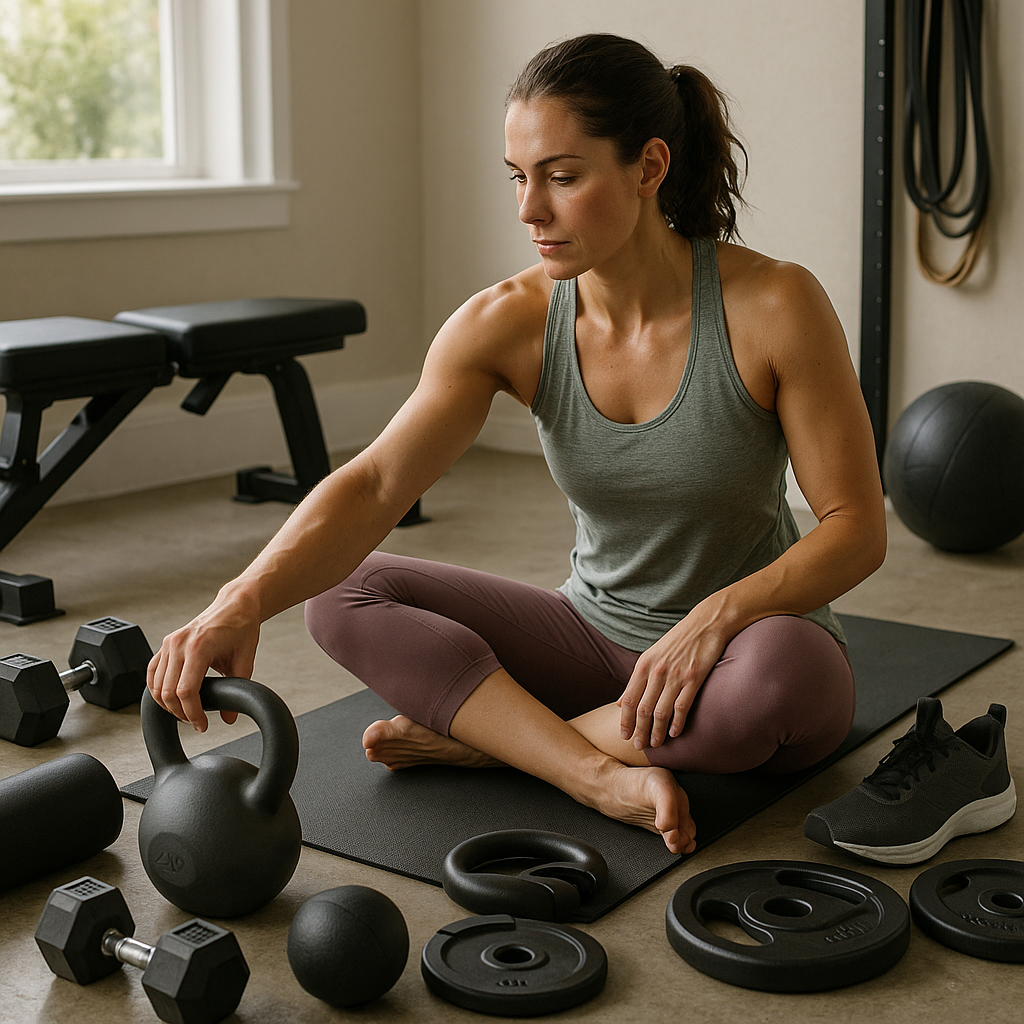
Between meetings, commutes, family logistics and a body that’s already tired from sitting still, it’s easy to feel like a strength goal requires more time than you actually have. That’s exactly why a time-saving strength training program works so well: it focuses on the smallest amount of training that still creates real progress. You don’t need to live in the gym to get stronger—you need a plan that respects your calendar and prioritises what matters.
The key idea is the minimal effective dose. In practice, that means fewer exercises, fewer “junk” sets, and more intention in each working set. Instead of chasing variety, you repeat the movements that give the biggest return, track them, and make small improvements over time. For busy professionals, this approach is often the difference between starting (and sticking with) training versus constantly “getting back on track.”
Why time-efficient strength training works
Strength is largely a skill: your nervous system learns to recruit muscle better, and your body adapts when the stimulus is consistent. A well-structured strength training program uses that to your advantage by keeping sessions short, repeatable and focused on progressive overload—adding a little weight, a rep, or better control week to week. The goal isn’t to do everything; it’s to do the right things often enough to move the needle.
Time efficiency also reduces friction. When a workout fits into 30–45 minutes, it’s easier to train before work, during lunch, or right after you shut the laptop. Consistency becomes realistic, and consistency is what drives results.
The science concepts that simplify your training
You’ll often see two tools in modern, evidence-informed programming: RPE and AMRAP. They sound technical, but they’re simply ways to match the workout to how you feel on the day—without guessing.
RPE (rate of perceived exertion) is a scale that describes how hard a set feels. An RPE 8 means you could have done about two more reps with good form; an RPE 9 means maybe one more. This helps you train hard enough to improve, while avoiding the all-or-nothing mindset that can lead to missed sessions or nagging aches.
AMRAP (as many reps as possible) is a set where you do as many quality reps as you can at a given weight, stopping when form slows or breaks down. Used sparingly, it’s an efficient way to measure progress and create a strong training stimulus in limited time.
Next, we’ll turn these ideas into a simple structure you can actually follow—built around high-value movements and templates that keep your training effective, even on your busiest weeks.
How to design a time-saving strength training program
The fastest way to build a strength training program you can stick to is to organise it around a few high-return movement patterns. Instead of chasing dozens of exercises, aim to cover the basics each week:
- Squat/leg press pattern (knee-dominant lower body)
- Hinge pattern (hip-dominant lower body)
- Upper-body push (horizontal or vertical)
- Upper-body pull (row or pull-up variation)
- Optional trunk work (anti-extension, anti-rotation, carries)
This structure is “bang for buck” because compound lifts train multiple muscle groups at once and let you progress with small, measurable changes. A squat variation trains quads, glutes and trunk; a row trains lats, upper back and biceps; a deadlift variation trains posterior chain and grip. When time is limited, that efficiency matters more than variety.
Choose exercises that match your equipment and body
Barbells are great, but they’re not mandatory. The best exercise is the one you can repeat with good technique and minimal joint irritation. If you train at home or prefer simpler setups, you can still build an effective strength training program using:
- Goblet squat or leg press instead of back squat
- Romanian deadlift or hip hinge with dumbbells instead of heavy conventional deadlifts
- Dumbbell bench press or push-ups instead of barbell bench
- Chest-supported row or lat pulldown instead of bent-over row
As a rule, pick variations that feel stable and allow a full range of motion you can control. Stability reduces wasted energy and makes it easier to train hard without turning every set into a technique battle.
Simple templates you can run on busy weeks
If you don’t want to build a plan from scratch, templates are the shortcut. Two time-efficient approaches work especially well because they reduce decision fatigue and keep the “hard work” very targeted.
Singles-only template (for strength focus)
This style is built around a heavy but controlled top single, followed by a few crisp singles at a slightly lighter load. It’s efficient because you get high-quality practice with heavy weights without doing long, fatiguing sets.
- Work up to 1 single at RPE 9–9.5 in the main lift (strong effort, but not a form breakdown)
- Then do 3–6 singles at roughly 90% of that top single
- Add 1–2 quick accessories if time allows (6–12 reps)
This template fits well when you have 30 minutes and want the session to feel “done” without piling on volume.
Amrap + hypertrophy template (for strength and muscle in less time)
This approach uses one hard AMRAP set to drive progress, then adds a small amount of higher-rep work to support muscle growth and joint resilience. It’s simple: one performance set, then targeted volume.
- Main lift AMRAP at a moderate-heavy load, stopping around RPE 8.5–9.5 (hard, but still clean reps)
- Then 2–4 accessory sets in the 6–15 rep range, taken close to failure with good form
Because the AMRAP gives you a clear benchmark, you can see progress even when your schedule is inconsistent.
Evidence-based ways to save time without losing results
Research on time-efficient strength training consistently points to the same priorities: use bilateral, multi-joint movements, train through a controlled full range of motion, and do enough weekly sets to create a stimulus. A practical target for many people is at least 4 hard sets per muscle group per week in the 6–15 rep range. If you’re new to lifting or returning after a break, even one set per exercise performed 2–3 times per week can still move you forward.
When you need to compress sessions further, these methods help:
- Supersets: pair a push with a pull (e.g., bench press + row) to cut rest time while keeping performance high.
- Rest-pause: do a hard set, rest 15–30 seconds, then add a few more reps. Useful for accessories when time is tight.
- Drop sets: reduce the weight immediately after a set and continue with controlled reps. Best for machine or dumbbell accessories, not heavy barbell lifts.
Keep the “advanced” techniques mostly for accessories. For your main compound lifts, time efficiency should come from smart exercise selection and tight session structure, not from turning heavy sets into cardio.
How to individualise your program with quick strength checks
A good strength training program is repeatable, but it shouldn’t ignore your personal weak links. One simple way to individualise is to compare your push and pull work, and your squat and hinge work, over a few weeks. If pressing strength climbs while rows and pull-ups stall, your shoulders may feel better long-term if you add pulling volume. If your hinge progress outpaces your squat pattern, you may benefit from more quad-focused work or technique practice.
Also consider limitations that affect exercise choice: if mobility or technique is the bottleneck, choose a variation that lets you train hard safely (for example, a goblet squat to reinforce depth and torso control). The goal is not to force a “perfect” lift; it’s to pick the most effective version you can do consistently, week after week.
Make your strength training program easier with ergonomics
A time-saving strength training program works best when your body feels ready to train. For many busy professionals, the biggest obstacle is not motivation—it is accumulated stiffness from long hours at a desk. Ergonomics helps by reducing unnecessary strain during the day, so your training sessions start from a better baseline.
Start with the basics in your home or office setup:
- Screen height: keep the top of the monitor around eye level to reduce forward head posture.
- Chair and desk height: aim for feet flat on the floor and elbows supported around 90 degrees.
- Keyboard and mouse placement: keep them close so shoulders do not creep upward.
- Micro-breaks: 30–60 seconds of standing, shoulder rolls, or a short walk every hour can improve how your hips and upper back feel before training.
Ergonomic aids and posture wear can also support your training by encouraging better alignment awareness. The goal is not to “lock” you into a rigid position, but to give you feedback so you can keep ribs stacked over pelvis, avoid excessive rounding, and distribute load more evenly. That can be especially helpful on days when you feel fatigued or tight and your technique tends to drift.

Women's Posture Shirt™ - Black
Patented shirt activates muscles and improves posture. For work, exercise, and pain relief.

Men's Posture Shirt™ - Black
Patented shirt that activates muscles and relieves pain. CE-registered and FDA-approved.
A simple 3-day strength training program for busy professionals
The structure below keeps sessions focused and repeatable. Each day includes one main lower-body movement, one main upper-body movement, and a small amount of targeted work for balance and resilience. Plan for 30–45 minutes per session.
How to run it: do 2–4 working sets per main lift. Keep most sets around RPE 7–9 (challenging but controlled). Rest 1–3 minutes depending on the lift and your available time. If you are rushed, superset a push with a pull or pair accessories together.
| Day | Main lifts | Accessory focus |
|---|---|---|
| Day 1 | Squat variation (back squat, goblet squat, or leg press) Bench press variation (barbell or dumbbell) |
Row variation (chest-supported row or cable row) 2–3 sets of 8–12 Optional: calf raises or hamstring curl 1–2 sets of 10–15 |
| Day 2 | Deadlift variation (Romanian deadlift, trap bar, or conventional) Pull-ups or lat pulldown |
Core: plank, dead bug, or Pallof press 2–3 sets Optional: split squat 1–2 sets of 8–12 per side |
| Day 3 | Overhead press variation (standing or seated) Lunge variation (walking lunge, reverse lunge, or step-up) |
Mobility finisher: 5–8 minutes (hips, ankles, thoracic rotation) Optional: face pulls or rear delt raises 2 sets of 12–15 |
Progression that stays simple: when you hit the top of your rep range at a given RPE, add a small amount of weight next time. If sleep is poor or your joints feel irritated, keep the weight the same and aim for cleaner reps at a slightly lower RPE. This is how a strength training program stays consistent through real-life stress.
Frequently Asked Questions
What is RPE and how do I use it?
RPE (rate of perceived exertion) is a way to rate how hard a set feels based on how many good reps you had left. As a practical guide: RPE 7 means about 3 reps in reserve, RPE 8 means about 2, and RPE 9 means about 1. Use it to choose a weight that matches your capacity that day. If a set that is usually RPE 8 feels like RPE 9, reduce the load slightly and keep technique crisp.
Can I still build strength with just a few sessions a week?
Yes. A well-designed strength training program can produce results with 2–3 sessions per week, especially when you prioritise multi-joint lifts and keep sets challenging. If you are newer to training or returning after time off, even low weekly volume can improve strength and muscle when effort and consistency are in place.
How do I adjust my program if I experience joint pain?
First, reduce the aggravating factor: lower the load, shorten the range of motion temporarily, or switch to a more joint-friendly variation (for example, a goblet squat instead of a low-bar back squat, or a neutral-grip dumbbell press instead of a barbell bench). Keep the movement pattern, but choose the version you can repeat without sharp pain. Ergonomic aids and posture wear may help you maintain better alignment and reduce compensations, but persistent or worsening pain should be assessed by a qualified healthcare professional.
What are the benefits of using posture wear during workouts?
Posture wear can provide gentle feedback that helps you notice when your shoulders round, your ribs flare, or your trunk loses position under load. For busy professionals who spend hours sitting, that extra awareness can make it easier to keep technique consistent, reduce unnecessary strain, and get more from each session in a time-saving strength training program.
Källor
- Healthline. ”Benefits of Strength Training.”
- Exercise Coach. ”The 6 Essential Elements of an Effective Strength Training Program with Matt Brzycki.”
- Harvard Health. ”Guide to Starting a Strength Training Program.”
- Mayo Clinic. ”Strength Training: Get Stronger, Leaner, Healthier.”
- Westside Barbell. ”The Westside Barbell Template for Athletic Development.”
- The Barbell Physio. ”Analyzing Strength Ratios for Improved Training.”
- Gold's Gym. ”2026 Workout Plan.”
- Legion Athletics. ”Strength Training Plan.”
- Cleveland Clinic. ”Strength Training.”
- Nourish Move Love. ”Progressive Overload Workout Plan.”
- NCBI. ”An Overview of Strength Training.”
- Barbell Logic. ”Novice Linear Progression Explained.”
- The Perfect Workout. ”One-Set Strength Training.”
- Stronger by Science. ”Complete Strength Training Guide.”
- Peloton. ”Benefits of Strength Training.”