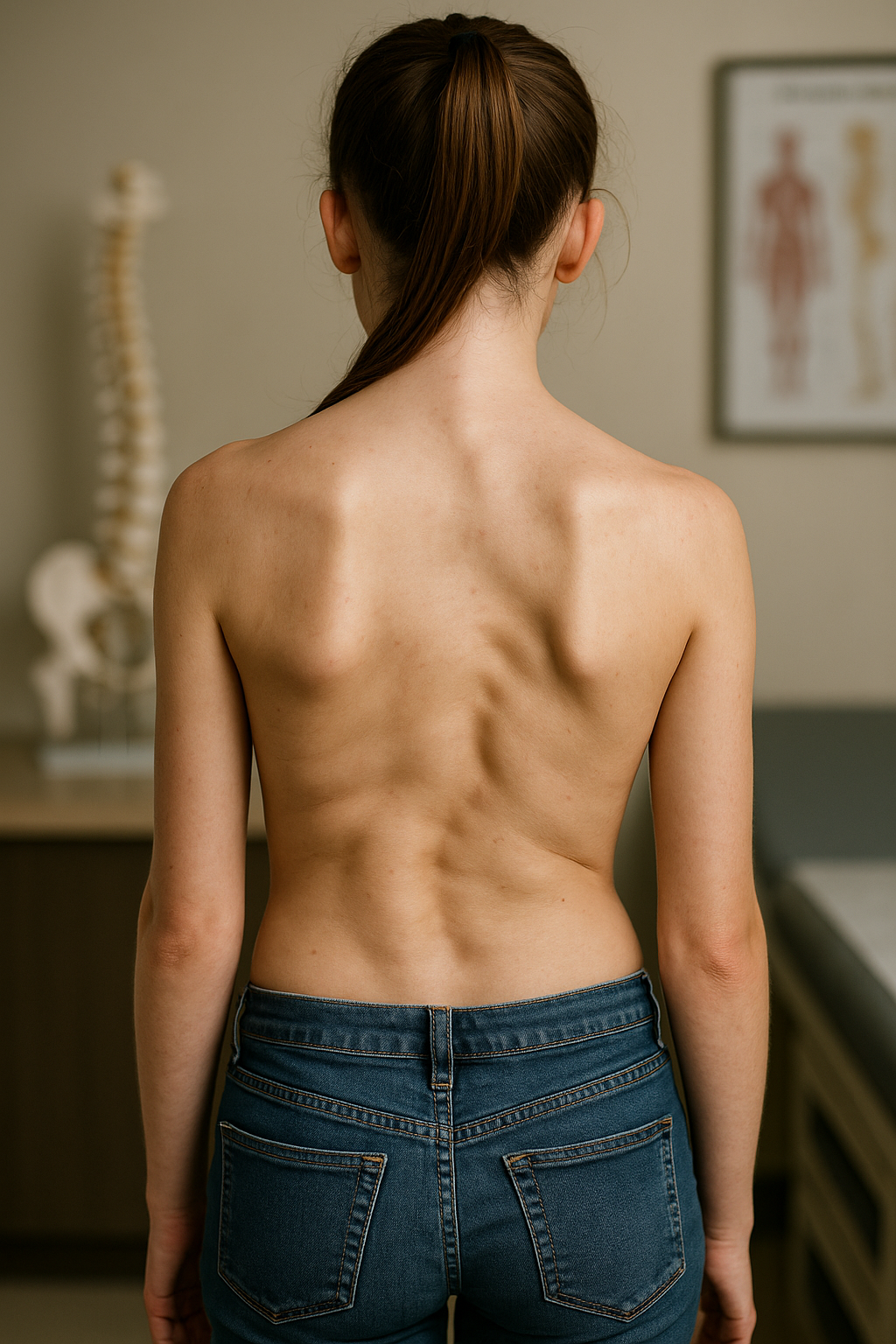
Most of us blame a long day at the desk, heavy bags, or “just bad posture” when the body feels uneven. But sometimes posture changes can be a clue to something else. Scoliosis is a condition where the spine curves sideways, often forming a gentle C- or S-shape rather than running straight down the back. It’s commonly identified during the growth spurt years in children and teens, but adults can have scoliosis too—either from a curve that started earlier in life or from age-related changes in the spine.
What makes scoliosis tricky is that it can be quiet. Mild curves often cause few, if any, noticeable symptoms—especially in children. That’s why awareness matters. Spotting early scoliosis symptoms can help you get the right assessment sooner, monitor changes over time, and reduce the risk of the curve progressing unnoticed.
Why scoliosis can be easy to miss
Scoliosis doesn’t always announce itself with sharp pain or obvious disability. In many cases, the first signs are subtle and visual: small shifts in symmetry that are easy to explain away. A shoulder that sits a little higher, a waistband that never looks level, or a shirt that twists slightly on the body can all be dismissed as “normal.” Because these changes can develop gradually, they may be hard to notice without intentionally checking.
In adults, scoliosis symptoms are more likely to include discomfort—often described as backache, stiffness, or fatigue that builds after prolonged sitting or standing. Still, pain alone isn’t a reliable indicator of scoliosis, and having scoliosis doesn’t automatically mean you’ll hurt. The key is to look at the whole picture: how your body lines up, how you move, and whether you’re noticing new imbalances over time.
Is your posture telling you something?
Take a moment to think about your everyday posture and how your clothes fit. Do straps slide off the same shoulder repeatedly? Do you feel like you’re always shifting your weight to one side when you stand? When you look in the mirror, does your waist look more indented on one side than the other?
These questions aren’t meant to diagnose anything at home—but they can help you tune into patterns you might otherwise ignore. In the next section, we’ll walk through the most common visible scoliosis symptoms to watch for, including what to look for in the shoulders, hips, and rib area, and when it may be worth getting a professional check-up.
Visible scoliosis symptoms you can spot in the mirror
Because mild scoliosis can be painless—especially in children and teens—the most reliable early clues are often visual. These changes usually show up as small differences in symmetry from left to right. A helpful way to check is to stand naturally in front of a mirror (or have someone take a photo from behind) and look for patterns that persist over time rather than one-off “bad posture” moments.
Uneven shoulders and hips
One of the most common scoliosis symptoms is unevenness across the shoulders, hips, or waist. You might notice that one shoulder sits higher, one hip looks more prominent, or the waistline appears more indented on one side. Some people also see that their torso seems to shift slightly to the left or right instead of stacking evenly over the pelvis.
Everyday clues can show up in how clothing fits: straps that consistently slip off one shoulder, waistbands that look slanted, or tops that twist so the side seam doesn’t hang straight. These signs don’t confirm scoliosis on their own, but they can be a reason to pay closer attention—particularly if the differences are new or becoming more noticeable.
A prominent shoulder blade or rib hump
Another classic sign is a shoulder blade that sticks out more on one side, or a rib area that looks more raised on one side of the back. This can be subtle when standing upright and more obvious when bending forward.
A commonly used screening method is the Adam’s forward bend test. With feet together and knees straight, the person bends forward at the waist with arms hanging down. If one side of the ribcage or lower back rises higher than the other, it may suggest a spinal rotation that can occur with scoliosis. This test is not a diagnosis, but it’s one reason schools, parents, and clinicians use forward-bending checks to decide whether a more thorough evaluation is needed.
Head not centered over the pelvis
Scoliosis can also affect overall alignment, making the head and upper body look slightly off-center over the pelvis. Some people appear to lean to one side, even when they feel like they’re standing straight. You may also notice that one arm hangs closer to the body than the other, or that the space between the arm and waist differs from side to side.
These alignment changes can influence balance and how weight is distributed through the feet and hips. Over time, that uneven loading may contribute to muscle tightness on one side and fatigue on the other—especially during long periods of standing or walking.
Pain and fatigue: when scoliosis feels like more than posture
Not everyone with scoliosis has pain, and many children with scoliosis have no discomfort at all. However, back pain and fatigue are more commonly reported in adults, and they can also occur with larger curves or curves that are progressing.
Backache, stiffness, and “tired back” after daily activities
When scoliosis symptoms include pain, it’s often described as a dull ache, tightness, or stiffness—frequently in the lower back, but it can also be felt in the mid-back or around the shoulder blade area depending on where the curve is. A common pattern is discomfort that builds gradually, worsening after prolonged sitting, standing, or repetitive tasks.
This can be related to how the muscles work to keep you upright when the spine and ribcage aren’t evenly aligned. One side may be doing more stabilizing work, while the other side may feel tight or compressed. For some people, simple ergonomic changes—like improving desk setup, using supportive seating, or adding posture-friendly support during long sitting periods—can reduce strain and help the back feel less fatigued through the day.

Women's Posture Shirt™ - Black
Improves your posture, relieves pain, and supports muscle activity throughout the day.
More severe symptoms to take seriously
Severe scoliosis is less common, but it’s important to recognize symptoms that may signal a bigger issue. Larger curves can reduce spinal mobility and, in rare cases, affect breathing by limiting how freely the ribcage can expand. Some people may also notice significant muscle weakness, reduced range of motion, or difficulty staying active without discomfort.
If you notice rapidly changing posture, worsening pain, breathing difficulty, or any symptoms like numbness, weakness, or changes in bowel or bladder control, it’s important to seek medical assessment promptly. These signs aren’t typical of mild scoliosis, but they are important to evaluate.
Why scoliosis symptoms should not be ignored
Even when scoliosis symptoms seem mild, it is worth taking them seriously. A small curve can remain stable for years, but in some people it can progress—meaning the curve increases over time and the visible asymmetry becomes more pronounced. Progression matters because larger curves can place more uneven stress on joints, muscles, and spinal structures, which may increase the likelihood of discomfort, stiffness, and reduced tolerance for daily activities.
In more advanced cases, the shape of the ribcage and spine can affect how the body functions. Severe curves may limit chest expansion and contribute to breathing difficulty, and significant deformity can also affect balance and movement efficiency. These outcomes are not typical of mild scoliosis, but they are part of why monitoring and professional assessment are recommended when changes are noticeable or worsening.
A practical takeaway is to focus on trends rather than one-time observations. If you notice that your posture is becoming more uneven, your clothes are fitting differently, or fatigue is increasing despite normal routines, those patterns can be a reason to seek an evaluation.
Scoliosis symptoms across age groups
Scoliosis can look and feel different depending on age, growth, and the underlying cause of the curve. Understanding these differences can help you interpret what you are seeing and decide when to act.
Children and adolescents
In children and teens, scoliosis symptoms are often primarily visual. Many young people have no pain at all, which is why curves are frequently found during routine checks, school screenings, or when a parent notices asymmetry. The biggest risk period for progression is during growth spurts, when the spine can change quickly. That is why early detection and follow-up matter: monitoring helps determine whether a curve is stable or increasing and whether interventions such as bracing may be considered.
If you are checking a child at home, look for consistent signs such as uneven shoulders, a tilted waistline, or a rib hump during a forward bend. If anything looks clearly asymmetrical or seems to be changing over time, a clinician can perform a more accurate assessment.
Adults
Adults may have scoliosis that began earlier in life or scoliosis that develops later due to degenerative changes in the spine. Compared with adolescents, adults are more likely to describe symptoms such as backache, stiffness, muscle tightness, or a “tired back” after sitting, standing, or walking for long periods. Some people also notice that they lean to one side more than they used to, or that their posture feels harder to maintain as the day goes on.
Management often focuses on function and comfort. Many people benefit from a combination of targeted exercise, physical therapy, and practical ergonomic changes. For example, improving workstation setup, using supportive seating, and adding posture support during long periods of sitting can help reduce strain and make daily activities feel more manageable. These strategies do not “straighten” the spine, but they may help address the muscle fatigue and postural stress that can accompany scoliosis symptoms.

Men's Posture Shirt™ - Black
Targets muscle activity, eases back pain and tension, and helps maintain a straight posture all day.
When to get checked
If you suspect scoliosis, a professional assessment is the safest next step. Seek evaluation if you notice increasing asymmetry, a new rib hump, worsening or persistent back pain, or changes in how you walk or balance. It is also important to seek prompt care if symptoms include numbness, weakness, or changes in bowel or bladder control, as these are not typical of mild scoliosis and should be assessed without delay.
Frequently Asked Questions
What are the early signs of scoliosis?
Early scoliosis symptoms are often visual, especially in children and teens. Common signs include uneven shoulders or hips, a waistline that looks more indented on one side, clothing that hangs unevenly, a shoulder blade that protrudes more on one side, or a rib hump that becomes more noticeable when bending forward.
How is scoliosis diagnosed?
Diagnosis typically starts with a clinical exam that looks at posture, symmetry, and spinal movement. A forward-bending assessment may be used to check for rib or lower-back prominence. If scoliosis is suspected, imaging such as an X-ray is commonly used to confirm the curve and measure its size, which helps guide monitoring and treatment decisions.
Can scoliosis cause back pain?
Yes, scoliosis can be associated with back pain, but the relationship is not the same for everyone. Many children with scoliosis have no pain. Adults are more likely to experience discomfort, stiffness, or fatigue, often related to uneven loading and muscle overwork. Pain can also come from other causes, so an assessment is important rather than assuming scoliosis is the only explanation.
What should I do if I suspect scoliosis?
Start by booking an evaluation with a healthcare professional who can assess posture and spine alignment. If scoliosis is confirmed, follow the recommended plan for monitoring or treatment. It can also help to track changes over time with occasional photos (taken in the same position and lighting) and to note patterns such as increasing unevenness or activity-related fatigue.
Are there non-surgical ways to manage scoliosis symptoms?
Non-surgical management may include observation and regular follow-ups, physical therapy, and exercise programs aimed at strength, mobility, and postural control. For day-to-day comfort, ergonomic adjustments—such as optimizing desk height, using supportive seating, and adding posture support during prolonged sitting—may help reduce muscle strain and fatigue associated with scoliosis symptoms.
Källor
- Northwestern Medicine. "Adult Scoliosis Symptoms."
- Weill Cornell Medicine. "Scoliosis Symptoms, Types, and Treatments."
- Yale Medicine. "Scoliosis."
- Penn Medicine. "Scoliosis."
- Cleveland Clinic. "Scoliosis."
- University of Utah Health. "Scoliosis."
- Rush University Medical Center. "What is Scoliosis? Understanding Your Condition."
- Mayo Clinic. "Scoliosis: Symptoms and Causes."