A herniated disc can be surprisingly easy to miss at first. Many people expect a dramatic “back went out” moment, but the earliest changes are often quieter: a nagging ache that won’t settle, a strange tingling that comes and goes, or a weakness you notice only when climbing stairs or reaching overhead. Because disc changes become more common with age and everyday wear, it’s also possible to have a herniation without obvious pain—until a nerve gets irritated and the symptoms suddenly make sense.
Understanding herniated disc symptoms matters because early awareness helps you respond sooner, adjust daily habits, and know when it’s time to get medical advice. It can also prevent unnecessary worry: not every back or neck twinge is serious, but certain patterns are worth paying attention to.
What a herniated disc is (and why symptoms can feel “random”)
Your spine is made of vertebrae with discs in between—think of discs as tough, flexible cushions. When a disc’s outer layer weakens or tears, the inner material can bulge or leak outward. If that bulge presses on a nearby nerve, symptoms often show up away from the spine itself. That’s why a problem in the lower back can be felt down the leg, and a problem in the neck can be felt in the arm or hand.
The exact symptoms depend on where the herniation occurs and which nerve is affected. In general, the most common signals fall into a few buckets:
- Pain that may be sharp/burning or dull/throbbing, sometimes worse at night or when lying down
- Radiating pain (pain that travels along a nerve pathway)
- Numbness or tingling in an arm, hand, leg, or foot
- Muscle weakness, reduced grip strength, or a feeling that a limb “won’t cooperate”
Where herniated discs happen: neck, mid-back, or lower back
Herniations can occur in the cervical spine (neck), thoracic spine (mid-back), or lumbar spine (lower back). Lumbar issues are the most common and often involve sciatica-like pain down the buttock and leg. Cervical herniations tend to affect the shoulder, arm, and hand. Thoracic herniations are rarer, but can cause mid-back discomfort that wraps around the ribs.
In the next section, we’ll break down herniated disc symptoms by spinal region, including common triggers (like coughing, sneezing, or certain neck movements) and the red flags that should be treated as urgent.
Lumbar herniated disc symptoms (lower back)
A herniated disc in the lumbar spine is the most common type, largely because the lower back carries a lot of load and is heavily involved in bending, lifting, and prolonged sitting. Symptoms often show up as a mix of lower-back discomfort and nerve-related sensations in the leg or foot.
The classic sign is sciatica: pain that starts in the lower back or buttock and travels down the back or side of the thigh, sometimes reaching the calf, ankle, or foot. The pain is often described as sharp, burning, or electric, and it may come in waves.
- Back pain that may worsen after sitting, bending, or lifting
- Leg or foot numbness/tingling, sometimes in a specific area (for example, the outer foot or toes)
- Weakness in the leg (trouble lifting the foot, climbing stairs, or pushing off when walking)
- Reduced reflexes in the knee or ankle, which a clinician may test during an exam
- Difficulty walking or a sense that the leg “gives way”
Many people notice that symptoms flare with pressure changes or certain positions. Common aggravating factors include coughing, sneezing, straining, prolonged sitting, standing for long periods, or movements like bending forward and twisting. If you find yourself constantly shifting positions to “find relief,” that pattern can be a clue that a nerve is being irritated.

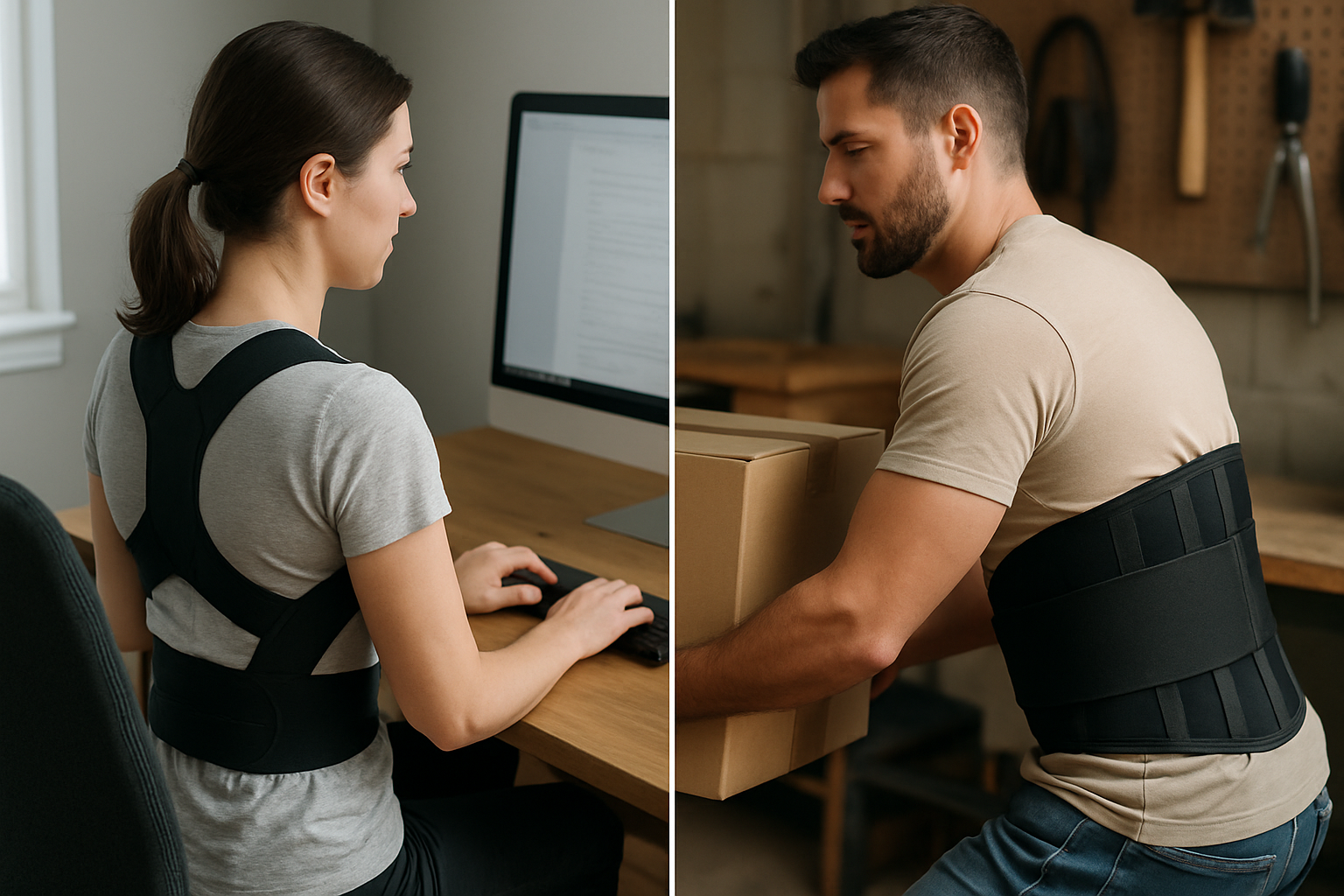
Lumbar support belt
Stabilizes and relieves lower back pain, ideal for sciatica or herniated discs.
Red flags: Seek urgent medical attention if you notice new bowel or bladder changes (difficulty starting urination, loss of control), numbness in the groin/saddle area, or rapidly worsening weakness. These can be signs of cauda equina syndrome, which is rare but requires immediate care.
Cervical herniated disc symptoms (neck)
When a disc herniates in the cervical spine, symptoms can feel like a neck problem, a shoulder problem, or even a hand problem—because irritated nerves can refer pain and altered sensation down the arm.
- Neck pain that may spread into the shoulder blade area
- Radiating arm pain that travels toward the forearm, wrist, or fingers
- Numbness or tingling in the arm or hand (often affecting specific fingers)
- Weakness in the shoulder, arm, or hand (reduced grip strength, dropping objects)
- Clumsiness with fine motor tasks like buttoning a shirt or typing
Symptoms are often aggravated by neck extension (looking up), rotation (turning to one side), or sustained postures like craning the head forward toward a screen. Some people also notice that pain or tingling increases when they hold a phone between the ear and shoulder or sleep with the neck in an awkward position.

Women's Posture Shirt™ - Black
Activates muscles and can relieve tension/pain in neck, shoulders, and back.
Red flags: If you develop balance problems, unexplained falls, or leg weakness along with neck and arm symptoms, seek prompt medical evaluation. These can suggest the spinal cord is being compressed rather than just a nerve root.
Thoracic herniated disc symptoms (mid-back)
Thoracic herniations are less common, but they can be more confusing because mid-back discomfort is often blamed on posture, muscle strain, or rib irritation. When nerves in this region are affected, symptoms may wrap around the torso.
- Mid-back pain that can feel deep, aching, or sharp
- Pain that wraps around the ribs or chest in a band-like pattern
- Altered sensation (numbness/tingling) around the trunk
- Leg symptoms such as heaviness, numbness, weakness, or gait changes (rarer, but more concerning)
The thoracic spinal canal is relatively narrow, so significant compression can cause more noticeable neurological changes. Symptoms may worsen with movements that load the spine, prolonged sitting, or activities that increase pressure through the trunk.
Red flags: New bowel or bladder dysfunction, progressive leg weakness, or difficulty walking should be treated as urgent, as these can indicate spinal cord compression.
How symptoms are evaluated (and why imaging matters)
Because herniated disc symptoms can mimic other conditions, a clinician typically combines your history with a physical exam that checks strength, sensation, and reflexes. If symptoms are persistent, severe, or include red flags, imaging may be recommended. An MRI is commonly used because it shows discs and nerves clearly.
It’s also worth knowing that many disc bulges or herniations show up on scans without causing symptoms. That’s why the most helpful diagnosis matches what you feel with what’s seen on imaging. In many cases, care starts conservatively—then escalates if pain, weakness, or function doesn’t improve.
Prevention tips for herniated disc symptoms
Not every herniation can be prevented, but many herniated disc symptoms are influenced by daily loading patterns—how you sit, lift, and recover between bouts of activity. The goal is not “perfect posture” all day. It is to reduce repeated strain, vary positions, and build tolerance in the muscles that support the spine.
If you spend long hours at a desk, small changes can meaningfully reduce irritation that contributes to neck, mid-back, and lower-back flare-ups. These strategies are also useful if you have had symptoms before and want to reduce recurrences.
Ergonomic habits that reduce disc strain
- Keep your spine supported, not slumped: Use gentle lumbar support so the lower back is not rounded for hours. A small cushion or built-in chair support can help maintain a neutral curve.
- Set your chair height for stable hips and feet: Aim for feet flat on the floor and knees roughly level with hips. If your feet dangle, use a footrest to reduce strain through the pelvis and low back.
- Bring the screen to you: Place the top of the monitor around eye level and keep it at a comfortable distance. This reduces forward head posture that can aggravate cervical herniated disc symptoms.
- Use arm support to unload the neck and shoulders: Armrests (or a desk setup that supports forearms) can reduce tension that often accompanies neck and arm symptoms.
- Take movement breaks before pain forces you to: Stand, walk, or gently extend the spine for 30–60 seconds every 30–45 minutes. Frequent micro-breaks are often more effective than one long break.
- Lift with a plan: Keep loads close to your body, avoid twisting while lifting, and pivot with your feet. If you must lift from the floor, hinge at the hips and brace through the trunk rather than rounding the back.
- Sleep positions matter: If symptoms worsen at night, try side-sleeping with a pillow between the knees or back-sleeping with a pillow under the knees to reduce lumbar stress. For neck symptoms, use a pillow height that keeps the neck neutral rather than tilted.
These changes are not a substitute for medical care when red flags are present. However, they can reduce the day-to-day triggers—prolonged sitting, awkward neck angles, and repeated bending—that commonly aggravate nerve irritation.
Quick reference: herniated disc symptoms by region
| Region | Common symptoms | Often aggravated by | Red flags (seek urgent care) |
|---|---|---|---|
| Lumbar (lower back) | Sciatica; back pain; leg/foot tingling or numbness; weakness; reduced reflexes; difficulty walking | Sitting/standing too long; bending/twisting; coughing/sneezing/straining | New bowel/bladder changes; saddle-area numbness; rapidly worsening weakness (possible cauda equina syndrome) |
| Cervical (neck) | Neck/shoulder pain radiating to arm/hand; tingling; weakness; clumsiness with fine motor tasks | Looking up; turning the head; sustained forward-head posture | Balance problems; falls; leg weakness (possible spinal cord compression) |
| Thoracic (mid-back) | Mid-back pain; band-like pain around ribs/chest; altered sensation around trunk; rare leg symptoms | Loading the spine; prolonged sitting; pressure through the trunk | Bowel/bladder dysfunction; progressive leg weakness; difficulty walking (possible spinal cord compression) |
Frequently Asked Questions
What are the first signs of a herniated disc?
Early herniated disc symptoms are often subtle and intermittent. Common first signs include a localized ache in the neck or lower back, tingling that comes and goes in an arm/hand or leg/foot, or a “different” feeling of weakness during everyday tasks (climbing stairs, gripping, lifting the foot). Symptoms may be mild until a position or activity increases nerve irritation, making the pattern easier to recognize.
Can a herniated disc heal on its own?
Many people improve over time with conservative care. Symptoms can settle as inflammation reduces and the body adapts, especially when combined with activity modification and guided exercise. Physical therapy is often used to restore movement, improve strength, and reduce mechanical triggers. However, persistent or worsening weakness, severe pain, or red flags should be evaluated promptly.
When should I see a doctor for a herniated disc?
Seek urgent medical attention if you have bowel or bladder changes, numbness in the groin/saddle area, rapidly worsening weakness, significant balance problems, or difficulty walking. For non-urgent cases, it is reasonable to seek medical advice if pain is severe, symptoms persist beyond a short period, numbness/tingling is spreading, or weakness affects daily function.
How is a herniated disc diagnosed?
Diagnosis typically starts with a medical history and physical exam, including checks of strength, sensation, and reflexes. Clinicians may use specific movement tests to see whether symptoms reproduce along a nerve pathway. If symptoms are persistent, severe, or concerning, imaging may be recommended. MRI is commonly used because it shows discs and nerve structures clearly.
What treatments are available for herniated discs?
Treatment usually begins conservatively, such as activity modification, targeted exercise or physical therapy, and pain-relief strategies recommended by a clinician. Ergonomic changes can help reduce repeated triggers, particularly for desk work. If symptoms do not improve, or if there is significant or progressive neurological deficit, additional options may include injections or surgery, depending on the severity and clinical findings.
Källor
- NewYork-Presbyterian. "Herniated Disc Symptoms."
- Advocate Health. "Herniated Disc."
- Cleveland Clinic. "Herniated Disk."
- ACES Premier Orthopaedics. "Understanding Herniated Discs: Symptoms, Diagnosis, and Treatment Options."
- University of Maryland Medical Center. "Herniated Thoracic Disc."
- Mayo Clinic. "Herniated Disk: Diagnosis & Treatment."
- Mayo Clinic. "Herniated Disk: Symptoms & Causes."
- NewYork-Presbyterian. "Herniated Disc Treatment."
- Penn Medicine. "Herniated Disc Disorders."
- American Association of Neurological Surgeons. "Herniated Disc."
- National Center for Biotechnology Information. "Herniated Disc."
- Hospital for Special Surgery. "Herniated Disc."
- Virginia Mason Franciscan Health. "Herniated Disc."