If you’ve ever caught yourself “shrinking” over a laptop, craning toward a screen, or standing in photos with rounded shoulders, you’re not alone. Kyphosis is a common spinal curvature pattern that can quietly shape the way you sit, move, breathe, and feel throughout the day. While severe cases require medical assessment, many people are dealing with milder, posture-related changes that build over time—especially in a world of desk work, commuting, and scrolling.
The good news: addressing posture early can make a meaningful difference. Small daily choices—how your chair supports you, where your screen sits, how often you change position—can reduce strain and help you reclaim a more upright, comfortable alignment.

Men's Posture Shirt™ - Black
Patented shirt activates muscles and supports posture to relieve tension and pain.
What kyphosis is (and what it isn’t)
Kyphosis describes an excessive forward rounding of the upper back (the thoracic spine). A gentle curve in this area is normal and helps the spine absorb load. The term typically applies when the curve becomes more pronounced—often described clinically as greater than about 50 degrees—creating a visible “hunched” posture in some people.
It’s also easy to mix up spinal conditions. Kyphosis is primarily a forward curve seen from the side. Scoliosis, by contrast, involves a sideways curve when viewed from the front or back. Both can affect posture, but they’re different patterns with different management approaches.
How common is it, and what does it feel like?
Kyphosis can affect people of all ages. In teens, it may show up as slouching habits that become a default posture. In adults, long hours seated and poorly set up workstations can reinforce the same rounded position. In older adults, age-related changes such as osteoporosis or arthritis can contribute to more rigid curvature.
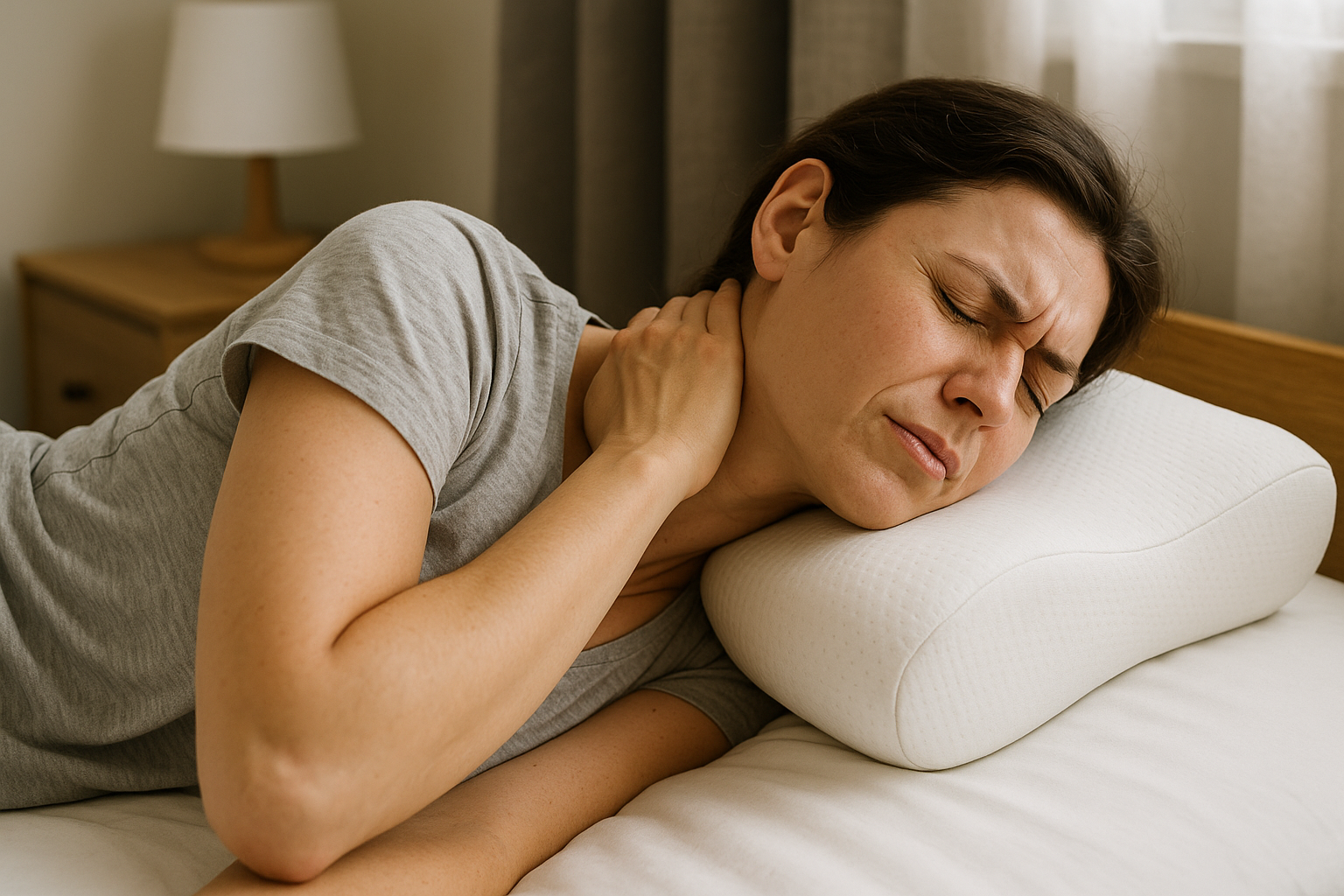
Symptoms vary widely. Some people notice rounded shoulders or a visible upper-back “hump.” Others feel it as stiffness between the shoulder blades, neck tension, fatigue after sitting, or aching in the upper back. In more severe cases, the curve can affect comfort during activity and, rarely, contribute to breathing difficulties.
Why ergonomics belongs in the conversation
Many top resources focus on diagnosis and medical treatment—and that’s important. But for posture-related kyphosis, ergonomics offers a practical, non-invasive way to influence the inputs that shape your posture every day. In the next sections, we’ll break down common types and causes, then map out ergonomic adjustments and habits that can help you sit and stand with less strain and more support.
Understanding different types of kyphosis
Not all kyphosis is the same, and that matters because the “right” strategy depends on whether the curve is mainly posture-related or driven by structural changes in the spine. A useful starting point is whether the curve is flexible (it improves when you stand tall or lie down) or more rigid (it stays rounded regardless of position).
Postural kyphosis
Postural kyphosis is the most common type and is often linked to habitual slouching—think shoulders drifting forward, chest collapsing, and the head creeping toward the screen. It’s frequently seen in teenagers and desk-based adults, and it tends to be flexible, meaning the spine can usually move into a more upright position when you consciously correct your posture. Because the bones aren’t typically deformed, this type often responds well to ergonomic changes, strengthening, and mobility work.
Scheuermann’s kyphosis
Scheuermann’s kyphosis is a structural condition, usually developing during adolescence, where several vertebrae become wedge-shaped. This makes the curve more rigid and harder to “sit up straight” out of. People may notice a more pronounced upper-back rounding, tightness (often including hamstrings), and discomfort with prolonged sitting or activity. Management can include targeted exercise and, in some cases, bracing or specialist care depending on severity and symptoms.
Degenerative kyphosis
Degenerative kyphosis is more common in older adults and can be influenced by age-related changes such as arthritis and osteoporosis. When vertebrae weaken, small compression fractures can contribute to a forward curve that may be less flexible. This type deserves particular attention because it can affect balance, confidence with movement, and overall function—especially if pain or reduced mobility leads to even more time spent sitting.
Symptoms and potential complications to take seriously
Mild kyphosis may show up mostly as posture changes: rounded shoulders, a subtle hump at the upper back, or a head-forward position that makes photos look “slouched.” Discomfort can be minimal at first, but common day-to-day complaints include upper-back aching, stiffness between the shoulder blades, neck tension, and fatigue after sitting.
More pronounced curves can bring more disruptive symptoms, such as persistent back pain, reduced spinal mobility, and in some cases breathlessness during activity. Severe hyperkyphosis can reduce chest expansion, which may contribute to respiratory strain. Rarely, if the curvature is associated with spinal degeneration or other structural issues, there can be neurological symptoms such as tingling, weakness, or changes in coordination—signals that warrant prompt medical assessment.
What causes kyphosis?
Kyphosis usually develops through a combination of mechanical habits and underlying tissue changes. Understanding the most common drivers helps you choose the most effective next step.
- Postural factors: Prolonged sitting, poorly positioned screens, unsupported lower back, and frequent phone use can encourage a rounded thoracic spine and forward head posture. Over time, the body adapts to what it does most.
- Structural causes: Conditions like Scheuermann’s kyphosis, congenital spinal differences, or trauma can change vertebral shape or alignment, making the curve more rigid.
- Degenerative conditions: Osteoporosis can weaken vertebrae, increasing the risk of compression fractures that contribute to a more fixed curve. Arthritis and disc degeneration can also alter spinal mechanics and posture.
Ergonomic solutions that support a more upright posture
Ergonomics won’t “force” your spine into a new shape overnight, but it can reduce the constant inputs that reinforce rounding—making it easier to sit tall, move more often, and strengthen the muscles that support better alignment.
Set up your chair and desk to reduce rounding
- Use an adjustable chair: Aim for feet flat on the floor, knees roughly level with hips, and a backrest that supports the natural curve of your lower back. When the lumbar area is supported, the upper back often rounds less to compensate.
- Bring the work to you: If your desk is too high or too low, you’ll hunch your shoulders or collapse your chest. Adjust height so elbows rest comfortably near your sides.
- Support your arms: Armrests (or the desk surface) should reduce shoulder “hiking,” which can feed neck and upper-back tension.
Position your screen to protect your neck and upper back
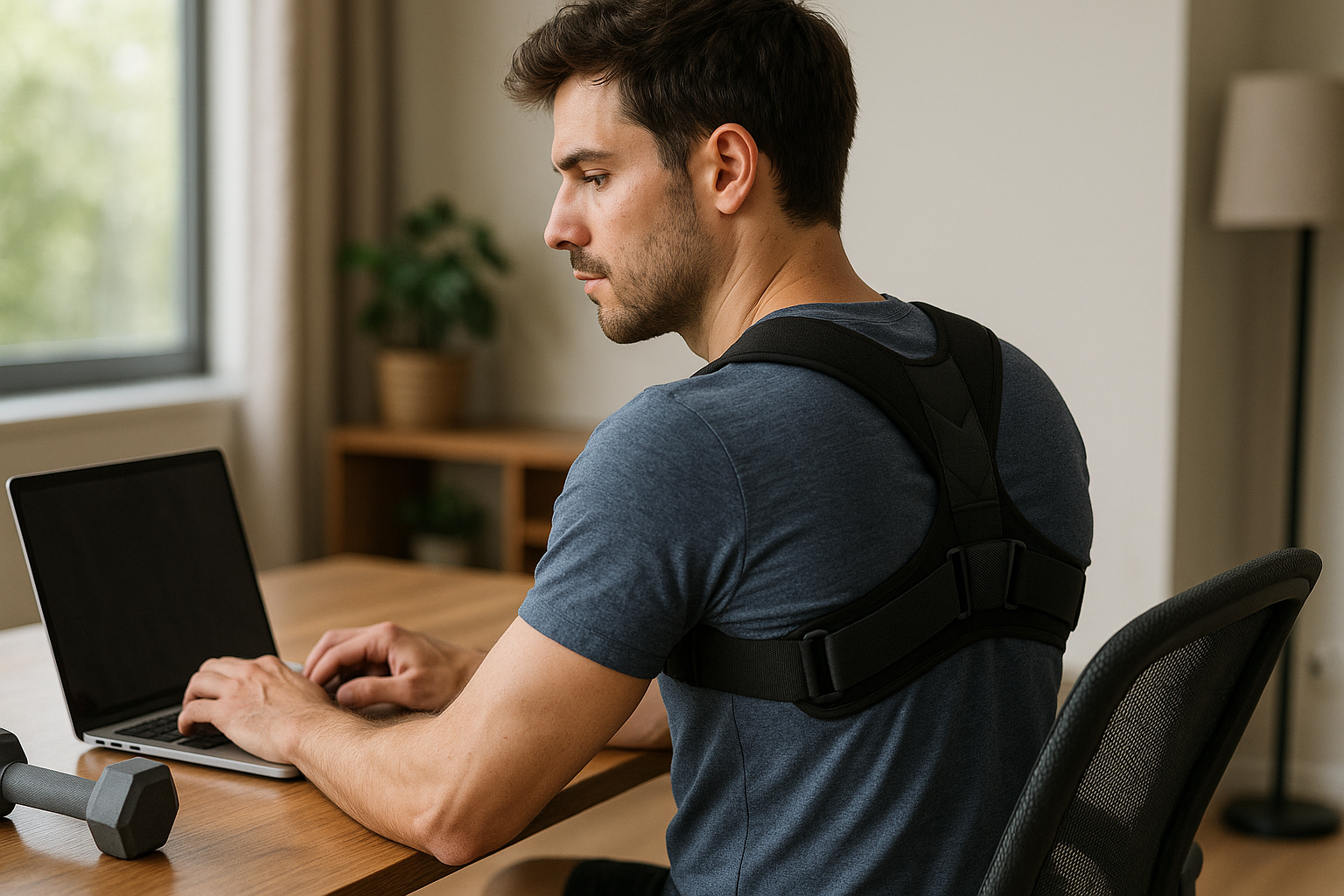
A low or distant screen encourages the classic head-forward posture that often accompanies kyphosis. Place the monitor so the top third of the screen is near eye level and keep it at a comfortable distance (roughly an arm’s length). If you use a laptop, consider elevating it and using an external keyboard and mouse so you’re not forced into a rounded, downward gaze for hours.
Build movement into the day
Even a perfect setup can’t replace movement. Break up long sitting periods with brief posture resets: stand, reach overhead, open the chest, and gently extend the upper back. Pair that with regular strength work for the upper back and core, and you create the conditions where improved posture becomes easier to maintain—not just something you “try” to hold.
Non-invasive ways to manage kyphosis
For many people, kyphosis is closely tied to daily posture and can improve with consistent, non-invasive steps. The goal is not to “force” the upper back straight, but to create better support, restore mobility where you’re stiff, and build strength where you’re underactive. If your curve is flexible and you can stand taller when you focus, you’re often a good candidate for conservative strategies such as exercise, physical therapy, and ergonomic changes.
If you have persistent pain, a rapidly worsening curve, breathlessness, numbness, weakness, or balance changes, it’s important to seek medical assessment. These symptoms can indicate a more complex cause that needs targeted care.
Physical therapy and exercises that support a more upright posture
Physical therapy can be especially helpful for postural kyphosis because it combines assessment with a plan you can actually follow. A clinician may look at thoracic mobility, shoulder positioning, neck posture, breathing mechanics, and core control, then tailor exercises to your needs. Over time, this can reduce discomfort and make “good posture” feel more natural rather than forced.
Exercises commonly used to address posture-related kyphosis tend to focus on three areas:
- Thoracic extension mobility: Gentle upper-back extension drills can counter the tendency to stay flexed over screens. Think controlled movements that open the chest and encourage the ribcage to stack over the pelvis.
- Upper-back and shoulder-blade strength: Strengthening the muscles that retract and stabilise the shoulder blades can reduce rounded shoulders and improve endurance for upright sitting.
- Core and hip support: When the pelvis collapses into a slumped position, the upper back often follows. Improving trunk control and hip strength can make it easier to maintain alignment throughout the spine.
Consistency matters more than intensity. A short routine performed most days usually beats an occasional long workout, especially if your main trigger is prolonged sitting.

Women's Posture Shirt™ - Black
Patented shirt helps improve posture, relieve tension, and increase postural awareness.
Daily habits that make ergonomic changes stick
Ergonomics works best when it’s paired with habits that reduce time spent in one posture. Even with an ideal chair and screen height, the body adapts to stillness. These practical habits can help you get more out of your setup and reduce the strain patterns that contribute to kyphosis:
- Use a simple posture reset: Every 30–60 minutes, stand up, relax the shoulders, gently lift the breastbone, and take a few slow breaths that expand the ribcage.
- Make “neutral” your default: Sit back so your backrest supports you, keep your elbows close to your sides, and avoid reaching forward to the keyboard or mouse.
- Change positions on purpose: Alternate between sitting and standing if possible, or shift tasks (calls, reading, typing) so you’re not locked into one posture for hours.
- Check your screen distance: If you lean forward to read, increase font size, bring the monitor closer, or adjust lighting to reduce the urge to crane the neck.
- Support recovery outside the desk: Regular walking, strength training, and mobility work help counteract the cumulative effect of sitting and can improve confidence in upright movement.
Consider a quick ergonomic evaluation of your home office or workplace. Small adjustments—monitor height, chair support, and where your hands rest—often remove the “need” to round forward, which can be a turning point for managing kyphosis day to day.
Frequently Asked Questions
What is the difference between kyphosis and scoliosis?
Kyphosis is an excessive forward rounding of the upper back (a curve seen from the side). Scoliosis is a sideways curvature of the spine (seen from the front or back). They are different patterns and may require different management approaches.
Can kyphosis be corrected without surgery?
Mild, postural kyphosis can often improve with non-invasive strategies such as exercise, physical therapy, and ergonomic adjustments. More rigid or severe cases may need medical evaluation to determine whether bracing, other interventions, or specialist care is appropriate.
What role does osteoporosis play in kyphosis?
Osteoporosis can weaken the vertebrae, increasing the risk of compression fractures. These fractures can contribute to or worsen a forward spinal curve, particularly in older adults. Addressing bone health and seeking clinical guidance is important when osteoporosis is a factor.
How can ergonomic furniture help with kyphosis?
Ergonomic furniture helps by supporting more neutral posture and reducing the tendency to collapse forward. Adjustable chairs, desks, and properly positioned screens can reduce strain on the neck and upper back and make it easier to maintain a more upright alignment during daily tasks.
Are there specific exercises to prevent kyphosis?
Yes. Exercises that strengthen the upper back, improve shoulder-blade control, support the core, and restore thoracic mobility can help prevent or manage posture-related kyphosis. A personalised plan from a physical therapist can be especially effective if pain, stiffness, or persistent rounding is present.
Kilder
- Cleveland Clinic. (n.d.). "Kyphosis." Cleveland Clinic.
- Hoag. (n.d.). "Kyphosis." Hoag Health Network.
- NewYork-Presbyterian. (n.d.). "Kyphosis." Och Spine.
- Lowenstein, J. (n.d.). "Degenerative Kyphosis." Jason Lowenstein MD.
- NHS. (n.d.). "Kyphosis." National Health Service.
- YouTube. (n.d.). "Understanding Kyphosis."
- University of Maryland Medical Center. (n.d.). "Adult Kyphosis." UMMC.
- Mayo Clinic. (n.d.). "Kyphosis: Symptoms and Causes." Mayo Clinic.
- Penn Medicine. (n.d.). "Kyphosis." Penn Medicine.
- Scoliosis Research Society. (n.d.). "Kyphosis." SRS.
- NCBI. (n.d.). "Kyphosis." NCBI Bookshelf.
- Aurora Health Care. (n.d.). "Kyphosis." Aurora Spine Services.
- Weill Cornell Medicine. (n.d.). "Kyphosis." Weill Cornell Neurosurgery.