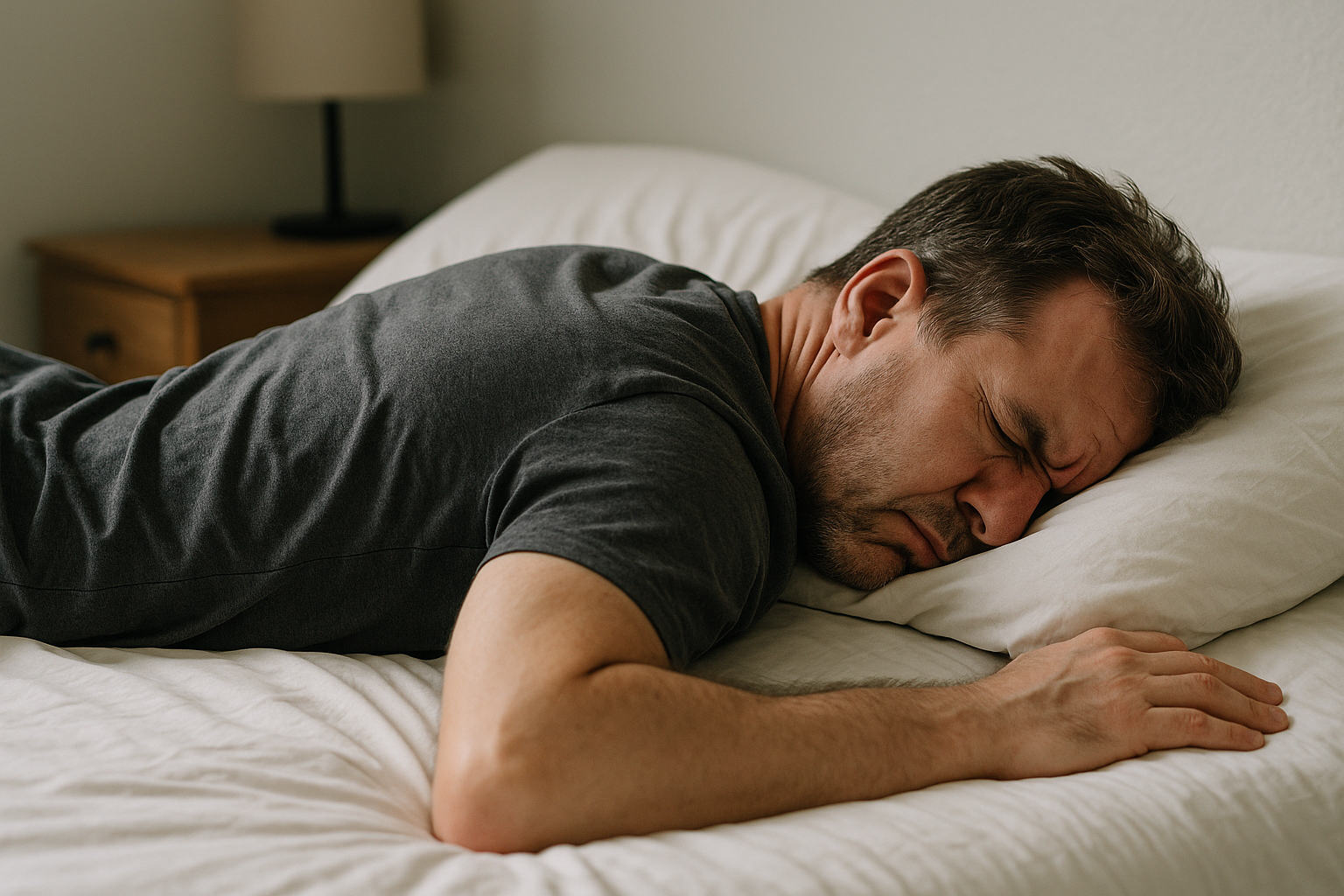
Sleeping on your stomach can feel like the fastest route to comfort: you settle in, your body relaxes, and suddenly it’s morning. But the same position that helps some people drift off can also be the reason they wake up with a stiff neck, a sore lower back, or that nagging shoulder tension that follows them into the day. So is sleeping on your stomach actually bad for you, or is it just misunderstood?
The honest answer is: it depends on your body, your mattress, and how you set yourself up. Compared with side or back sleeping, stomach sleeping is less common, yet still a real preference for many adults. And because sleep posture influences how your spine and joints recover overnight, it’s worth understanding what’s happening beneath the surface when you sleep face-down.
Why sleeping position matters for everyday health
Sleep isn’t only about duration; it’s also about how well your body can fully relax. Your sleeping position affects spinal alignment, breathing mechanics, and where pressure builds up in the shoulders, hips, and ribs. When alignment is off for hours at a time, your muscles may stay “on” instead of switching into recovery mode. That can show up as morning stiffness, headaches, or pain that feels unrelated to sleep until you connect the dots.
With sleeping on your stomach, the biggest challenge is simple: to breathe, you typically turn your head to one side. That rotation can place extra demand on the neck and upper back, while the pelvis and mid-back may sink in ways that encourage an uncomfortable curve in the spine. For some people, it’s a recipe for recurring discomfort; for others, it’s manageable with the right adjustments.
Risks, benefits, and the questions we’ll answer
In this guide, we’ll break down what stomach sleeping can mean for your neck, back, and shoulders, including why it’s often linked to aches and reduced sleep quality. We’ll also cover the main upside that keeps many stomach sleepers loyal: it can reduce snoring and may help some people who struggle with nighttime breathing.
Most importantly, we’ll get practical. If you’re not ready (or able) to change positions, you’ll learn how to make stomach sleeping safer using simple tweaks like pillow height, pelvic support, and better body positioning. And if you are ready to transition, we’ll outline realistic ways to move toward side or back sleeping without feeling like you’re fighting your body all night.
Health implications of sleeping on your stomach
Sleeping on your stomach is often called the prone position, and it comes with a very specific biomechanical challenge: your body wants to stay facing down, but your airway needs space. For most people, that means turning the head to one side for hours. Over time, this can load the neck unevenly and make it harder for the upper spine to stay in a neutral position.
Neck strain and spinal misalignment
When your head is rotated to breathe, the cervical spine is held at end-range rotation for a prolonged period. Even if you don’t feel pain during the night, the tissues around the neck (muscles, joints, and connective structures) can become irritated, which may show up as morning stiffness, reduced range of motion, or a dull ache that builds during the day. If your pillow is thick, the neck may also be forced into extension and side-bending, increasing the strain further.
Lower down, stomach sleeping can encourage the pelvis to sink into the mattress. If the midsection drops more than the ribcage, the lower back may arch more than usual, which can contribute to lumbar discomfort. This is one reason sleeping on your stomach is frequently linked with lower back pain and a feeling of tightness across the front of the hips.
Back, shoulder, and arm discomfort
Another common issue is how the shoulders and arms are positioned. Many stomach sleepers place one arm up near the pillow or tuck an arm underneath it. That can narrow space around the shoulder joint and increase pressure through the front of the shoulder, sometimes leading to soreness, tingling, or numbness in the arm or hand. If you regularly wake up with a “dead arm,” your sleeping posture may be compressing nerves or restricting circulation.
Pain and micro-awakenings also affect sleep quality. Even small discomforts can cause you to shift positions repeatedly, reducing time spent in deeper, more restorative sleep stages. For some people, this becomes a cycle: poor sleep increases sensitivity to pain, and pain makes sleep lighter and more fragmented.
Headaches and reduced sleep quality
Headaches can be another downstream effect. A neck held in rotation and extension can irritate sensitive structures in the upper neck, which may contribute to tension-type headaches in the morning. If you notice headaches that improve as the day goes on, it’s worth considering whether sleeping on your stomach is part of the pattern.
Potential benefits of stomach sleeping
Despite the drawbacks, stomach sleeping isn’t “all bad,” and there’s a reason some people swear they breathe better this way.
It may reduce snoring for some people
One of the most consistent upsides is snoring reduction. When you sleep face-down, gravity can change how the tongue and soft tissues sit in the throat, which may help keep the airway more open compared with back sleeping. Some people also find that stomach sleeping reduces the sensation of airway collapse and leads to fewer wake-ups from noisy breathing.
That said, if you suspect sleep apnea (for example, loud snoring with choking/gasping, or significant daytime sleepiness), position changes alone may not be enough. It’s important to treat breathing concerns seriously, because untreated sleep apnea can affect cardiovascular health, mood, and energy levels.
Acid reflux and digestion claims are less consistent
You may also hear that sleeping on your stomach helps digestion or reduces acid reflux. These claims are less consistent and often depend on individual anatomy and habits (meal timing, alcohol intake, and overall sleep position changes during the night). In general, many people with reflux do better on their left side rather than on the stomach, but your personal response matters.
Special considerations before you commit to stomach sleeping
Pregnancy
Stomach sleeping is generally not recommended during pregnancy, particularly as the abdomen grows. Comfort becomes a limiting factor, but there are also safety considerations related to pressure and circulation. If you’re pregnant and struggling to find a comfortable position, side sleeping with supportive pillows is typically the go-to approach, and it’s wise to follow guidance from your midwife or doctor.
When pain is already part of your day
If you have ongoing neck pain, lower back pain, or shoulder issues, sleeping on your stomach can easily aggravate symptoms because it reinforces the very positions that tend to irritate those areas: neck rotation, lumbar extension, and shoulder compression. A useful rule of thumb is to pay attention to patterns. If you consistently feel worse in the morning and gradually loosen up as the day goes on, your sleep posture may be contributing.
What your sleep position might say about you
Some lifestyle sources suggest stomach sleepers may share certain personality traits, such as being more private, determined, or comfort-seeking. While these interpretations can be fun to read, they’re not a reliable way to make health decisions. What matters more is how your body responds: your pain levels, your breathing, and how rested you feel.
Next, we’ll get practical: how to sleep on your stomach with less strain, what pillow and mattress setup tends to work best, and how to transition to side or back sleeping if you’re ready for a change.
How to make sleeping on your stomach safer
If you prefer sleeping on your stomach, the goal is to reduce the two biggest stressors: excessive neck rotation and an exaggerated arch in the lower back. Small changes to your setup can make a noticeable difference in how you feel in the morning.
Use a thin pillow, or consider no pillow
A thick pillow can push the head and neck into extension and side-bending, which increases strain when your head is already rotated to breathe. Many stomach sleepers do better with a very thin pillow or no pillow under the head. If you need something for comfort, choose a low-profile option that keeps the neck as close to neutral as possible.
Another option is to place the pillow so your forehead rests on it while your nose and mouth still have space to breathe. This can reduce how far you need to turn your head, although it will not eliminate rotation entirely.
Add support under the pelvis to protect the lower back
When the pelvis sinks into the mattress, the lower back often arches more than it should. Placing a small pillow (or a folded towel) under the pelvis/lower abdomen can help level the hips and reduce lumbar extension. For many people, this is the simplest way to make sleeping on your stomach feel less “compressed” through the lower back.
Keep the body long and avoid aggressive arm positions
Try to keep the hips and legs relatively straight rather than hiking one knee up high, which can twist the pelvis and add rotational stress to the lower back. If you tend to sleep with one arm overhead or tucked under the pillow, experiment with bringing both arms down by your sides or placing one arm gently bent at a lower angle. The aim is to reduce shoulder compression and avoid waking with numbness or tingling.
Choose a mattress that supports, not swallows
A mattress that is too soft can allow the midsection to sink, increasing spinal misalignment. A more supportive (often medium-firm to firm) surface tends to keep the torso more level during sleeping on your stomach. Comfort still matters, but look for even support through the hips and ribcage so the spine is not forced into an exaggerated curve.
Transitioning away from stomach sleeping (without fighting it all night)
If you wake up with recurring neck or back discomfort, switching positions is often the most effective long-term fix. The challenge is that position changes can feel unnatural at first, especially if stomach sleeping is your default.
A practical approach is to “block” the full roll onto the stomach rather than trying to control sleep consciously. A body pillow or a firm pillow placed along the front of your torso can encourage a side-lying posture and make it harder to rotate fully face-down. Some people also find it helpful to start the night on their side with a pillow between the knees and a supportive pillow that keeps the head level with the spine.
If back sleeping is comfortable for you, try placing a pillow under the knees to reduce tension in the lower back. This can make the position feel more stable and reduce the urge to roll forward.
Alternatives that often work better for comfort and alignment
Side sleeping
Side sleeping is the most common position for adults and is often easier on the spine than sleeping on your stomach. With the right pillow height (so the neck stays level) and support between the knees, side sleeping can reduce twisting through the back and may also help with snoring for some people.
Back sleeping
Back sleeping can be a good option if you want a more neutral spine position, especially when paired with appropriate pillow support. A pillow that supports the natural curve of the neck (without pushing the head forward) and a pillow under the knees can improve comfort and reduce morning stiffness.
Frequently Asked Questions
Is sleeping on your stomach bad for your back?
Sleeping on your stomach can be hard on the lower back because the pelvis may sink into the mattress, increasing the arch in the lumbar spine. This can contribute to morning tightness or pain. If you choose to keep sleeping on your stomach, using a thin pillow under the head and placing a small pillow under the pelvis can help reduce strain and improve alignment.
Can sleeping on your stomach help with snoring?
Yes, sleeping on your stomach may reduce snoring for some people because it can change how the tongue and soft tissues sit in the airway compared with back sleeping. However, side sleeping can also reduce snoring for many people and typically carries fewer alignment-related downsides. If snoring is loud, frequent, or paired with choking/gasping or daytime sleepiness, it is worth discussing possible sleep apnea with a healthcare professional.
What should I do if I have neck pain from sleeping on your stomach?
Start by reducing neck rotation and pillow height. Use a very thin pillow (or none) and consider positioning the pillow so your forehead is supported while your airway remains clear. If pain persists, try transitioning to side or back sleeping using a body pillow for support. Ongoing or worsening neck pain, numbness, or headaches should be assessed by a qualified healthcare professional.
How common is sleeping on your stomach compared to other positions?
Stomach sleeping is less common than side sleeping. Many sources report that only around 16% of adults prefer sleeping on their stomach, while side sleeping is the most popular position overall.
Are there specific products that can help stomach sleepers?
Products that reduce strain tend to be the most helpful: a low-profile pillow to limit neck extension, a small support pillow under the pelvis to reduce lower-back arching, and a supportive mattress that keeps the hips from sinking too deeply. If you are trying to stop sleeping on your stomach, a body pillow can help you stay on your side by making the position feel more stable.

ActivePosture® Shirt for men
Improves posture and provides all-day comfort thanks to tension zones in the shirt.
Källor
- Healthline. "Is It Bad to Sleep on Your Stomach?"
- Sleep Foundation. "Sleeping on Your Stomach."
- Cleveland Clinic. "Sleeping on Your Stomach."
- The Sleep Chapter. "Sleeping on Stomach: Is It Bad for You? Explained."
- Nap Lab. "Why Sleeping on Your Stomach is Bad."
- Nectar Sleep. "Stomach Sleeper: Good or Bad?"
- HCA Healthcare. "How a Good Night's Sleep Benefits Your Digestion."