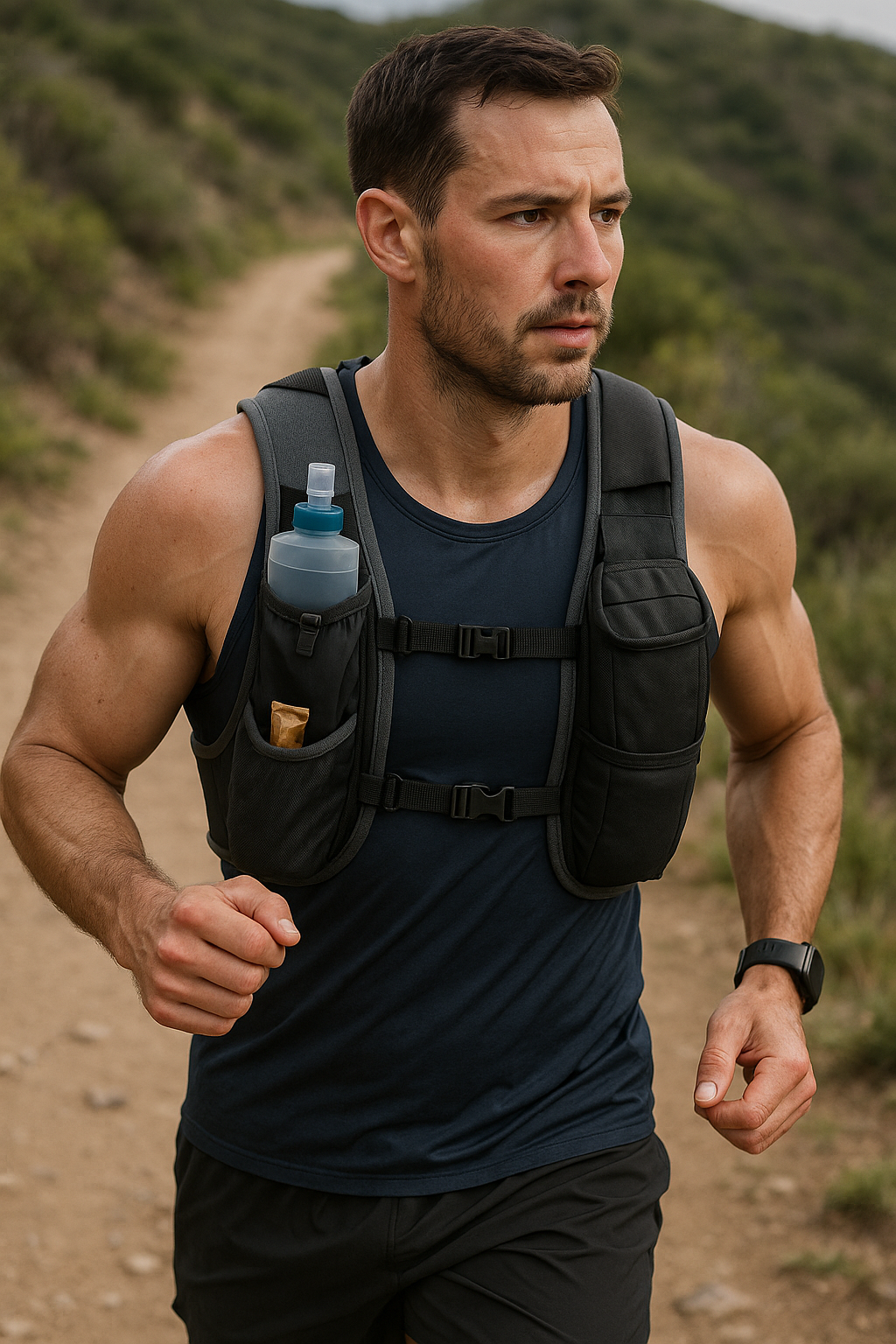
A great run can turn miserable fast when the weather shifts. A sudden headwind can chill your core, drizzle can soak your layers, and the wrong outer shell can trap sweat until you feel clammy and heavy. That’s why choosing the right running jacket isn’t just about staying dry—it’s about keeping your body at a steady, workable temperature so your stride stays relaxed and efficient from warm-up to cooldown.
When you’re cold, you tend to tense your shoulders, shorten your arm swing, and brace your torso against the wind. Over time, that “hunched” running posture can make the whole session feel harder than it needs to. A well-chosen running jacket helps you stay comfortable without overheating, so you can focus on rhythm, breathing, and good mechanics instead of fighting the elements.

Men's Posture Shirt™ - Black
Posture-correcting shirt with patented technology for pain relief and better everyday support.
Why a running jacket matters in changing weather
Unlike a casual raincoat, a running jacket is built for movement and high effort. It should block enough wind and moisture to prevent rapid cooling, while still letting heat escape as your intensity rises. The goal is balance: protection on the outside, breathability on the inside, and a fit that doesn’t flap, chafe, or restrict your range of motion.
For many runners, the sweet spot is a lightweight shell you can wear across seasons—easy to layer over a tee in spring, or over a midlayer when temperatures drop. That versatility is also what makes modern designs so popular: less bulky insulation, more smart fabric and ventilation.
Key features to look for before you buy
Start with breathability. If a jacket can’t release moisture, sweat builds up quickly and you end up wet from the inside. Many brands describe breathability with technical metrics, but the practical takeaway is simple: the more breathable the fabric and the better the ventilation, the more comfortable you’ll feel during steady runs and intervals.
Next is weather resistance. Most runners don’t need a heavy, fully waterproof shell every day—but you do want wind protection and a surface that can handle light rain without soaking through immediately. Finally, consider portability: a packable running jacket that stuffs into its own pocket or a small waist pack is easier to bring along “just in case.”
In the next sections, we’ll break down these features in more detail, including what to know about breathability ratings, smart design details, and how to choose a jacket that works for your routes and your climate.
Breathability and weather resistance: the balance that keeps you comfortable
The biggest mistake runners make when choosing a running jacket is focusing only on “keeping water out.” For running, comfort is usually determined by how well the jacket manages moisture from the inside. When sweat can’t escape, it condenses on the inner surface, leaving you damp even if the outer fabric is doing its job. That dampness can cool you quickly once you slow down, especially in wind.
Two common ways brands and reviewers describe breathability are RET (resistance to evaporative heat transfer) and MVTR (moisture vapor transmission rate). In simple terms, RET tells you how hard it is for sweat vapor to pass through the fabric—so lower is better. For runners, a RET value under 13 is often considered a strong target because it indicates the fabric can release heat and moisture efficiently during sustained effort. MVTR is usually shown as a “grams per square meter per 24 hours” figure; higher numbers generally suggest more moisture can escape, but it’s not always a perfect predictor of how a jacket feels on your specific runs.
Weather resistance matters too, but it helps to think in layers of protection. Many running jacket designs rely on a DWR finish (durable water repellent) that makes light rain bead and roll off rather than soaking in immediately. This is ideal for drizzle, mist, and short showers. For heavier rain, you may want taped seams and a more protective membrane, but keep in mind that maximum waterproofing can reduce breathability. For many runners, the best “everyday” option is a jacket that is wind-resistant and water-repellent, paired with smart ventilation so you can regulate temperature as your pace changes.
Lightweight and packable running jacket designs for changing conditions
Weather rarely stays consistent for the full length of a run. A calm start can turn windy on exposed paths, and a cool morning can warm up quickly once the sun rises. That’s where a lightweight, packable running jacket becomes a practical tool rather than an extra burden.
Packability depends on both fabric and construction. Thin, technical shells can often be folded into an internal pocket or rolled into a compact bundle that fits in a vest, belt, or handheld. This matters on long runs and race days, where carrying bulky gear can alter your arm swing and posture over time. A jacket that stows easily is more likely to come with you, which means you’re more likely to have protection when you actually need it.
Materials designed for performance shells—such as Pertex Shield in some models—are popular because they aim to combine low weight with a useful level of breathability and weather protection. The most runner-friendly versions also include small but meaningful details: a zipper that’s easy to operate with cold fingers, a collar that seals out wind without rubbing your neck, and fabric that doesn’t feel stiff or noisy as you move.
One more consideration: lightweight doesn’t have to mean fragile. Look for reinforcement in high-wear areas (like shoulders if you run with a hydration pack) and check that the jacket doesn’t cling when damp. A shell that stays comfortable against your base layer helps reduce the “sticky” feeling that can lead to fidgeting and poor form.
Visibility and safety features that matter on real runs
A running jacket often becomes your most visible piece of gear, especially in autumn and winter when daylight is limited. Visibility isn’t only about being seen at night—it’s also about standing out in rain, fog, and busy urban environments where drivers have less time to react.
Prioritise reflective details that are placed where they move (such as arms and shoulders) and where they can be seen from multiple angles. Reflective logos help, but broader reflective strips or 360-degree elements tend to be more noticeable as you run. Bright, high-contrast colours can also improve daytime visibility in grey weather, and they’re often more effective than dark tones when the background is wet roads and low clouds.
Safety features can overlap with comfort features, too. A well-designed hood that stays put in wind can help you keep your gaze forward instead of constantly adjusting your gear. Similarly, cuffs that seal without squeezing and hems that don’t ride up reduce distractions—small details that make it easier to maintain relaxed shoulders and an efficient stride when conditions are challenging.
Fit and mobility: how a running jacket should move with you
Even the most breathable, weather-resistant running jacket can feel “wrong” if the fit fights your stride. Running is repetitive, and small annoyances—fabric flapping in the wind, a collar rubbing your neck, sleeves creeping up—add up over time. A good fit supports relaxed shoulders, free arm swing, and easy breathing, especially when conditions are cold enough to make you tense.

Women's Posture Shirt™ - White
Patented shirt for posture, relief and pain reduction—ideal for activity and everyday use.
Look for an athletic cut that follows your body without feeling restrictive. You should be able to reach forward, rotate your torso, and lift your arms overhead without the hem riding up. Many runners also benefit from a slightly longer back panel for coverage when leaning forward, and a design that stays close to the body to reduce wind drag and noise.
Comfort details matter more than they seem. Flatlock seams and smooth seam placement help reduce chafing, particularly under a hydration vest or around the underarm area. Adjustable cuffs can seal out wind without squeezing, while a drawcord hem helps prevent cold air from pumping in as you run. If you choose a hooded running jacket, prioritise a hood that can be adjusted to stay put in wind and doesn’t block peripheral vision. For many runners, a low-profile hood that fits over a cap is the most practical option.
Technical innovations and trends in the modern running jacket
The biggest shift in recent years is away from heavy, insulated outerwear and toward ultra-light shells that work across seasons. Instead of relying on thick insulation, runners increasingly build warmth with layering and use the jacket as a breathable barrier against wind and light rain. This approach makes it easier to regulate temperature: unzip on climbs or intervals, zip up for descents and exposed sections.
Material innovation is also moving in a more sustainable direction. More brands now offer shells made with PFC-free water-repellent treatments or updated membrane technologies designed to reduce environmental impact while still providing useful weather protection. At the same time, many jackets are becoming more runner-specific in their patterning, including women-specific designs that account for different proportions in the shoulders, chest, and waist to reduce bunching and improve comfort on longer runs.
Another trend is smarter ventilation rather than simply “more waterproofing.” Because running generates a lot of heat, many jackets now focus on airflow through features like vented back panels, breathable fabric zones, or two-way zippers that let you dump heat without fully exposing your core. The result is a running jacket that feels less like a raincoat and more like a performance layer you can keep on for most of the session.
Frequently Asked Questions
What is the best material for a running jacket?
The best material depends on your typical conditions and how hard you run. Membrane-based fabrics such as GORE-TEX-style shells can offer higher weather protection, especially in prolonged rain, but they may feel warmer and less breathable at higher intensities. Lightweight shell fabrics such as Pertex Shield are popular for running because they balance low weight, packability, and practical breathability for changeable conditions. If most of your runs are in drizzle, wind, or intermittent showers, a light, breathable shell is often the most comfortable choice.
How do I choose the right size for my running jacket?
A running jacket should allow full arm swing and easy breathing without excess fabric flapping. Try it on over the layers you actually run in (for example, a base layer plus a thin midlayer in winter). Check mobility by lifting your arms, mimicking a running motion, and zipping fully to ensure the collar doesn’t rub. If you often carry a hydration vest, confirm the jacket does not feel tight across the chest or shoulders when worn underneath.
Are running jackets necessary for all types of weather?
No, but they are useful in more situations than many runners expect. In cold wind, a running jacket can prevent rapid cooling and help you stay relaxed. In light rain, a water-repellent shell can keep you comfortable without overheating. In mild but breezy conditions, a very light wind shell can be enough. In warm weather, many runners skip a jacket entirely or choose an ultra-light option they can pack away if the forecast changes.
Can I use a regular raincoat for running?
You can, but it is rarely ideal. Regular raincoats are typically designed for walking and lower-intensity movement, so they often trap heat and sweat during a run. A running jacket is built to manage moisture, reduce chafing, and move with your stride, with features like better ventilation, lighter materials, and a more athletic cut.
How do I care for my running jacket to maintain its performance?
Wash your running jacket occasionally to remove sweat, oils, and dirt that can reduce breathability and water repellency. Follow the care label, use a gentle detergent, and avoid fabric softener. If the outer fabric stops beading water, reapply a DWR treatment designed for technical outerwear. Proper care helps the jacket breathe better and keeps weather resistance working as intended.
Källor
- Dahlie. (n.d.). "Running Jackets Guide." Dahlie.
- Titika Active. (n.d.). "The Ultimate Guide to Performance Jackets: Materials, Functions, and Tips for Choosing the Best One." Titika Active.
- Adidas. (n.d.). "Winter Running Jackets: A Comprehensive Guide." Adidas.
- Public Lands. (n.d.). "How to Choose a Running Jacket." Public Lands.
- Runner's World. (n.d.). "Best Running Rain Jackets." Runner's World.
- Valley and Peak. (n.d.). "The Science of Staying Dry: A Deep Dive into Waterproof Jacket Materials." Valley and Peak.
- Dare2b. (n.d.). "How to Choose the Best Running Jacket." Dare2b.
- Outdoor Gear Lab. (n.d.). "Best Running Jacket." Outdoor Gear Lab.
- Inov-8. (n.d.). "How to Choose the Right Running Jacket." Inov-8.
- Runners Need. (n.d.). "Running Jacket Buying Guide." Runners Need.
- Salomon Sports. (n.d.). "How to Choose a Running Jacket." Salomon Sports.
- Olaben. (n.d.). "How to Choose a Running Jacket." Olaben.
- TLD Apparel. (n.d.). "Selecting the Optimal Running Jacket." TLD Apparel.
- Run Forest. (n.d.). "The Ultimate Guide to Running Jackets." Run Forest.
- On. (n.d.). "Ultra Jacket M." On.