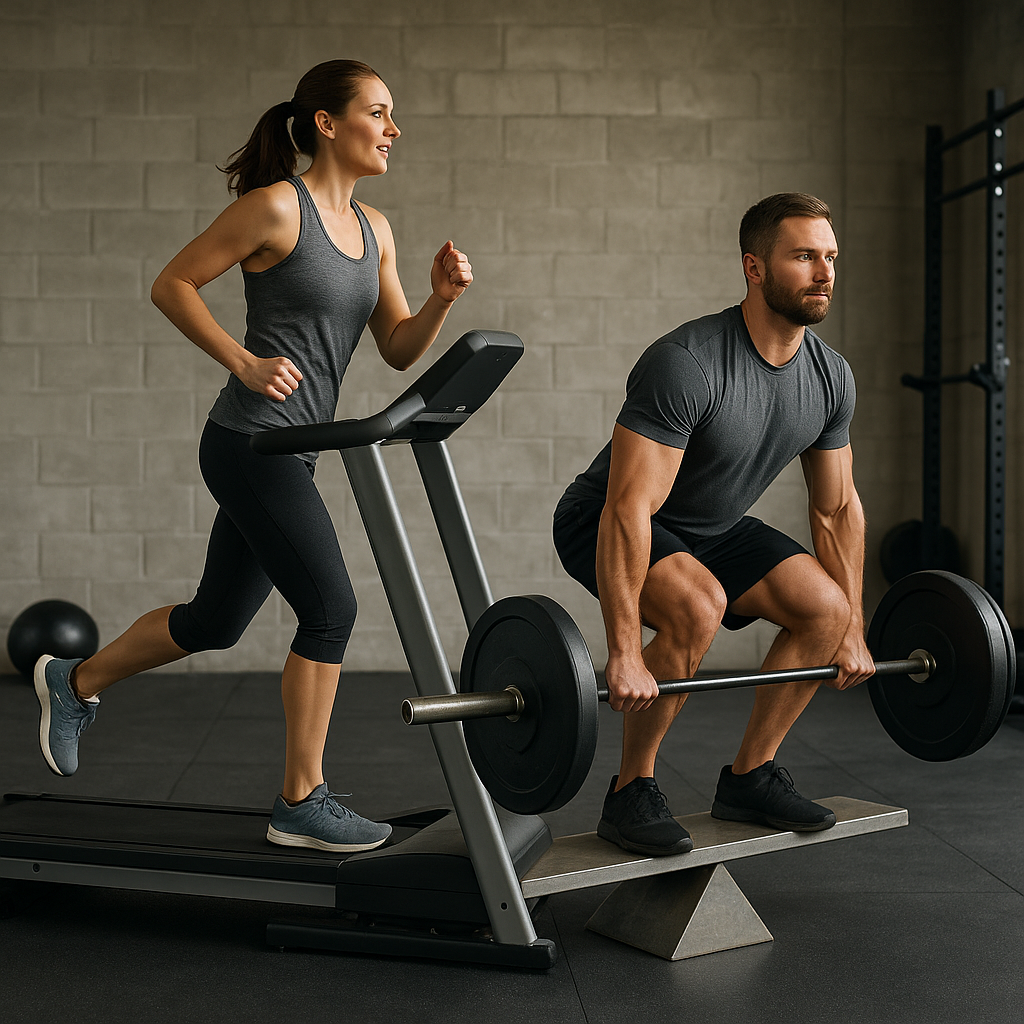
A weight loss training program is more than a random mix of workouts you squeeze in when motivation strikes. It’s a structured plan designed to help you create a sustainable calorie deficit over time—by increasing how much you move, improving your fitness, and building muscle that makes your body more efficient at using energy. The best programs don’t rely on extremes. They combine strength training, cardio, and realistic lifestyle habits so you can keep going long after the first “fresh start” week.
That structure matters because weight loss is rarely a knowledge problem. Most people already know they should “move more.” What they’re looking for is a clear schedule, a simple way to progress, and a plan that fits real life—workdays, family time, and the occasional low-energy day. A well-designed program can change more than the number on the scale: it can improve conditioning, strength, mood, and everyday confidence in your body.
Why a structured plan beats guesswork
When training is planned, you remove daily decision fatigue. You know which days are for lifting, which are for cardio, and which are for recovery. That consistency is what drives results. A smart weight loss training program typically includes:
- Strength training to preserve (and build) muscle while you lose weight
- Cardio to boost calorie burn and improve heart and lung fitness
- Daily movement to raise your baseline activity outside the gym
- Recovery so you can train again without feeling broken
In other words: you’re not just “working out,” you’re building a repeatable system.
The missing piece: ergonomics and injury risk
Here’s the part many plans ignore: if you sit a lot, your setup and posture can quietly sabotage your training. Tight hips, a stiff upper back, and a cranky neck or lower back can make common exercises feel harder than they should—and discomfort is one of the fastest routes to inconsistency.

Men's Posture Shirt™ - Black
Improves posture, relieves pain and tensions; patented NeuroBand™ technology for work, exercise, or daily life.
Ergonomics isn’t only about office comfort; it’s about keeping your body in a position where movement stays available. When your daily environment supports better alignment, your workouts tend to feel smoother, your technique improves, and you’re less likely to “take a week off” that turns into a month. In the next section, we’ll break down what actually drives fat loss and how to build a weekly program that balances strength, cardio, and posture-friendly progress.
The science behind weight loss
Every effective weight loss training program is built on one principle: energy balance. Your body uses energy (calories) to keep you alive, to move, and to recover from training. When you consistently use more energy than you consume, your body has to make up the difference—often by tapping into stored energy, including body fat. That’s the practical takeaway from basic physics: energy doesn’t appear from nowhere, and fat loss doesn’t happen without a deficit.
Diet plays a major role in how easy it is to maintain that deficit, but training is what makes the process more sustainable for many people. A smart plan helps you burn more calories, preserve muscle, improve fitness, and build routines that keep you active even on “busy” weeks. The goal isn’t to annihilate yourself with workouts; it’s to create a repeatable weekly structure that steadily nudges your average energy expenditure upward.
Core components of an effective weight loss training program
Strength training: protect muscle while you lose fat
Strength training is the anchor because it helps you maintain (or build) muscle while you’re in a calorie deficit. That matters for both performance and appearance, but also for long-term weight management: more muscle generally supports a higher resting energy expenditure and makes your body better at handling higher training volumes.
Prioritise compound movements that train multiple muscle groups at once—think squat patterns, hinges, presses, and rows. These exercises create high “metabolic demand” because they involve more total muscle mass. To keep progress coming, use progressive overload: gradually increase weight, reps, sets, or improve technique and range of motion over time. Small weekly improvements beat occasional heroic sessions.
Cardio training: combine steady-state and intervals
Cardio supports weight loss by increasing calorie burn and improving heart and lung capacity, which can make your strength sessions feel easier too. The most sustainable approach for many people is a mix of:
- Steady-state cardio (moderate intensity for longer): builds an aerobic base and is easier to recover from.
- Interval training (shorter bursts of higher effort): boosts conditioning and can deliver a lot of work in less time.
You don’t need to do extreme HIIT every week to see results. One interval day is plenty for most beginners and intermediates—especially if you also lift.
Daily activity: NEAT is the hidden multiplier
NEAT (non-exercise activity thermogenesis) is the energy you burn outside formal workouts: walking, taking stairs, standing, doing chores, even fidgeting. For people with sedentary jobs, NEAT can be the difference between “I train hard but nothing changes” and steady progress. A simple target like 7,000–10,000 steps per day (adjusted to your current level) often improves results without adding more gym time.
Sample 4-week ergonomic weight loss training plan
This template uses 3 strength days, 2 cardio days, and 2 recovery days. Choose loads that leave you with about 1–3 reps in reserve on most sets, and prioritise clean technique over heavier weight.
Weekly schedule (repeat for 4 weeks)
- Monday – strength (full body a): squat pattern, horizontal press, row, core carry
- Tuesday – cardio (steady-state): 30–45 minutes brisk walk, cycling, rowing, or incline treadmill
- Wednesday – strength (full body b): hinge pattern, vertical press, pulldown/assisted pull-up, split squat
- Thursday – active recovery: 20–30 minutes easy walk + mobility (hips, upper back, ankles)
- Friday – cardio (intervals): 5–8 rounds of 1 minute hard / 2–3 minutes easy (bike or rower is joint-friendly)
- Saturday – strength (full body c): front-loaded squat or leg press, incline press or push-up, single-arm row, glute bridge/hip thrust
- Sunday – rest: light movement only (optional gentle yoga or a relaxed walk)
Progression guidelines (week by week)
- Week 1: learn the movements, keep volume moderate (2–3 sets per exercise, 8–12 reps).
- Week 2: add 1 set to one or two key lifts, or add 1–2 reps per set.
- Week 3: increase load slightly (often 2.5–5%) while keeping form strict.
- Week 4: keep weights similar but reduce rest times slightly, or add 5–10 minutes to steady-state cardio.
If recovery feels rough, progress more slowly. Consistency is the real “secret,” and a plan you can repeat beats a plan that burns you out.
Integrating ergonomics and posture for better training consistency
Poor posture and long hours of sitting can show up in training as limited hip mobility, stiff upper back, and neck or lower-back irritation. That doesn’t mean you can’t follow a weight loss training program—it means you should make posture-friendly choices so you can train week after week.
- If squats aggravate your back: try goblet squats, a box squat, or a leg press while you build control and mobility.
- If overhead pressing irritates your neck/shoulders: use a landmine press, incline dumbbell press, or keep the range pain-free.
- If hinging feels risky: start with Romanian deadlifts using light dumbbells, hip hinges with a dowel, or cable pull-throughs.
Add a short daily “desk reset” to support alignment: chin tucks, thoracic extensions over a foam roller, hip flexor stretches, and glute activation (like bridges). These take 5–8 minutes, but they can reduce nagging discomfort that often derails training. The more your everyday setup supports better posture, the easier it becomes to show up and execute the plan.
Nutrition and habits that make a weight loss training program easier to follow

Women's Posture Shirt™ - Black
Improves posture, relieves pain/tension; patented NeuroBand™ tech for work, exercise, or daily life.
Quick nutrition guidelines (keep it simple)
- Aim for a moderate calorie deficit: aggressive cuts often backfire by increasing fatigue and cravings. A steady, sustainable deficit is easier to maintain alongside training.
- Prioritise protein at most meals: adequate protein supports muscle retention while you lose weight and helps with fullness. A practical approach is including a protein source at breakfast, lunch, and dinner.
- Build meals around minimally processed foods: vegetables, fruit, lean proteins, legumes, whole grains, and healthy fats tend to make portion control easier without meticulous tracking.
- Plan one “default” option: having a repeatable breakfast or lunch reduces decision fatigue and helps you stay consistent on busy days.
Behaviour strategies that improve consistency
Most people don’t fail because the plan is “wrong.” They stop because the plan is hard to repeat. Two strategies are especially effective:
- Habit stacking: attach a new action to something you already do. Example: after you brew coffee, do 8 minutes of mobility; after lunch, take a 10-minute walk.
- Environment design: make the right choice the easy choice. Keep walking shoes by the door, pack gym clothes the night before, and set a calendar reminder for training sessions like you would for a meeting.
Ergonomics fits here too. If your workstation supports better posture, you typically feel less stiff and more willing to train after work. Small changes—like adjusting screen height, using supportive seating, or adding a footrest—can reduce the “I’m too sore to move” barrier that derails many programs.
Safety, recovery, and realistic expectations
Progress comes from training stress plus recovery. If recovery is neglected, soreness and nagging pain can accumulate and reduce adherence. Treat recovery as part of the program, not an optional extra.
Recovery basics that protect your progress
- Sleep 7–9 hours when possible: sleep supports appetite regulation, training performance, and tissue recovery.
- Use active recovery: easy walking, gentle cycling, or mobility work improves circulation without adding heavy fatigue.
- Progress gradually: add a little weight, a few reps, or a small amount of cardio time each week. If you increase everything at once, your joints and connective tissue often complain first.
What results should you expect?
A realistic rate for many people is about 0.5–1 kg per week, but the scale will not move in a straight line. Water retention, stress, sleep, and training soreness can temporarily mask fat loss. Track progress using more than one metric:
- Strength and performance (more reps, better technique, improved cardio pace)
- Waist/hip measurements (weekly or biweekly)
- How clothes fit and how you feel during daily movement
When to seek professional help
Consider professional guidance if you have persistent pain, a medical condition, or you’re unsure how to train safely. A physiotherapist or qualified trainer can help you choose joint-friendly variations, refine technique, and adjust training volume. If your BMI is high or you have risk factors such as high blood pressure or diabetes, it’s also wise to check in with a healthcare professional before increasing intensity.
If discomfort is linked to long hours of sitting, ergonomic support can be a practical addition. The goal is not to “fix posture” overnight, but to reduce daily strain so you can execute your weight loss training program with better movement quality and fewer interruptions.
Frequently Asked Questions
What is the best type of exercise for weight loss?
The best approach is usually a combination of strength training and cardio. Strength training helps preserve muscle while you lose weight, and cardio increases calorie expenditure and improves cardiovascular fitness. Together, they support better long-term results than relying on only one method.
How can I maintain consistency in my weight loss training program?
Make the plan easy to repeat. Schedule workouts on the same days each week, keep sessions to a realistic length, and use habit stacking (for example, walking after lunch). Prepare your environment in advance—gym clothes ready, a clear training space at home, and reminders in your calendar—so training requires less willpower.
Are there specific exercises that can help with posture while losing weight?
Yes. Many posture-supporting exercises also improve lifting technique and reduce discomfort. Useful options include rows, face pulls, dead bugs, glute bridges, and split squats. Pair them with short daily mobility work such as thoracic extensions, hip flexor stretches, and chin tucks to counter long sitting periods.
How can ergonomic aids support my weight loss training program?
Ergonomic aids can reduce strain from prolonged sitting and improve comfort during the day, which often makes it easier to train consistently. Better support and alignment may also help you maintain cleaner technique in strength training by reducing stiffness in common problem areas like hips, upper back, and neck.
What should I do if I experience pain during my workouts?
Stop the movement that triggers sharp or worsening pain and switch to a pain-free variation (for example, a goblet squat instead of a back squat). Reduce load or range of motion, and prioritise controlled technique. If pain persists, returns repeatedly, or affects daily life, consult a qualified professional to identify the cause and adjust your program safely.
Kilder
- NASM. (n.d.). "Program Design for Weight Loss." National Academy of Sports Medicine.
- Anytime Fitness. (n.d.). "Best Workout Schedule for Weight Loss: Example Routines." Anytime Fitness Blog.
- Anytime Fitness. (n.d.). "Weight Loss Plan for Beginners." Anytime Fitness Blog.
- Smith, J., & Doe, R. (2021). "The Impact of Physical Activity on Weight Loss." Journal of Health and Fitness.
- Gold's Gym. (n.d.). "Weight Loss Workout Schedule." Gold's Gym Blog.
- Healthline. (n.d.). "4-Week Workout Plan for Weight Loss." Healthline.
- Hims. (n.d.). "Weight Loss Workout Plan for Men." Hims Blog.
- Berry Street. (n.d.). "The Ultimate Weight Loss Workout Plan: How to Train, Eat and Stay Consistent for Real Results." Berry Street Blog.
- For Hers. (n.d.). "Weight Loss Workout Plan for Women." For Hers Guides.