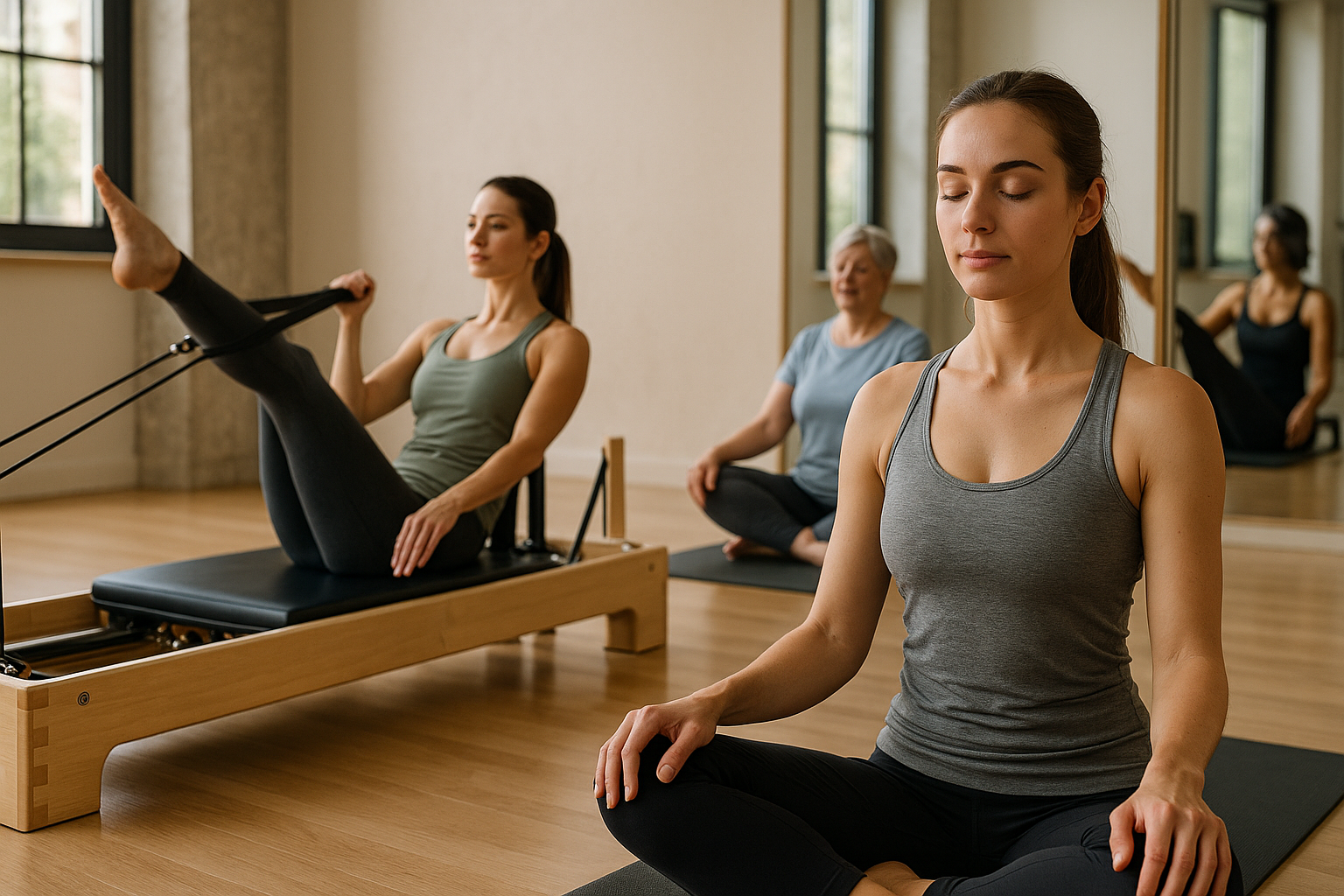
Yoga has a way of meeting you where you are: stiff after a long day at a desk, restless in your head, or simply curious about why so many people swear by a practice that can look both calm and surprisingly challenging. For some, it starts as a stretch routine. For others, it becomes a steady anchor—something that changes how they breathe, focus, and move through everyday life. That range is exactly the point: yoga isn’t limited to what happens on a mat.
What is yoga?
At its core, what is yoga can be answered in one word: union. The term comes from the Sanskrit root yuj, often translated as to yoke, unite, or join. Traditionally, yoga developed in India as a discipline aimed at connecting the body, mind, and spirit—sometimes described as a path toward deeper self-knowledge and inner freedom. In modern contexts, yoga is also widely practiced as a wellness method that supports strength, mobility, and stress management. These two perspectives aren’t opposites; they’re different entry points into the same practice.
In other words, yoga can be spiritual, practical, or both. You might come for the physical benefits—more flexible hips, a stronger back, better balance—and stay because you notice you react differently to stress, sleep more soundly, or feel more present in your body.
Why yoga matters today
Interest in yoga has grown globally because it fits a very modern problem: many of us live in fast minds and sedentary bodies. Yoga offers a structured way to reverse that pattern by combining movement with breath and attention. Instead of pushing harder, the practice often asks you to notice more—how you stand, how you breathe, where you hold tension, and what happens when you slow down.
That’s also why yoga is frequently recommended as a complement to other forms of training. It can help support posture, joint range of motion, and body awareness—useful whether you lift weights, run, or spend hours working at a computer. And because yoga can be adapted, it’s not reserved for the naturally flexible; it’s built for real bodies with real constraints.

Women's Posture Shirt™ - Black
Støtter bedre holdning og kan afhjælpe smerter – ideel til arbejde, træning og hverdag.
Beyond exercise, a holistic practice
Even in a simple beginner session, yoga tends to include more than “just stretching.” The breathing, the pauses, and the emphasis on mindful alignment point to a bigger idea: well-being isn’t only physical. As you continue, you may find yoga influencing how you recover, how you concentrate, and how you relate to discomfort—on and off the mat.
Yoga’s roots: history and philosophy
To really understand what is yoga, it helps to look beyond the modern studio and back to its origins in India, where yoga developed as a broad set of practices for training the body, breath, senses, and mind. References to yogic ideas appear across major Indian philosophical traditions, and over time yoga became both a practical method (what you do) and a framework for understanding human experience (why you do it).
Two texts are especially influential in how yoga is discussed today. The Bhagavad Gita presents yoga as a disciplined way of living and acting—emphasising devotion, selfless action, and insight as paths toward inner freedom. Later, Patanjali’s Yoga Sutras organised yoga into a clear system and famously described its aim as the stilling of the mind’s movements. In other words, yoga was never only about flexibility; it was about learning to relate differently to thoughts, emotions, and impulses so you can act with more clarity.
Traditionally, the deeper goal of yoga is often described as moksha, or liberation: freedom from habitual patterns that create suffering, and a sense of union between individual awareness and something larger (whether you interpret that spiritually, philosophically, or psychologically). Even if you approach yoga in a secular way, that aim translates well into modern life: less reactivity, more steadiness, and a stronger connection to what matters.
The eight limbs of yoga (and why they matter)
One reason yoga can feel bigger than a workout is that classical yoga includes far more than poses. Patanjali described an eight-part path, often called the eight limbs of yoga. You don’t have to “master” these to benefit from yoga, but knowing them helps explain why the practice can influence your habits off the mat.
- Yamas: ethical guidelines for how you relate to others (for example, non-harming and honesty).
- Niyamas: personal practices that support inner stability (such as self-discipline and self-study).
- Asana: physical postures, originally intended to build steadiness and ease in the body.
- Pranayama: breath regulation, used to influence energy, attention, and the nervous system.
- Pratyahara: turning attention inward by reducing sensory distraction.
- Dharana: concentration—training the mind to stay with one object.
- Dhyana: meditation, where focus becomes more continuous and less effortful.
- Samadhi: deep absorption or integration, often described as a state of unity.
This structure clarifies a common misconception: asana is only one part of yoga. In many modern classes it’s the main focus, but traditionally it functions as preparation—helping you sit, breathe, and pay attention with less discomfort and distraction.
How yoga changed in the West
As yoga spread globally, it adapted to new cultures and needs. In much of the Western world, yoga became closely associated with physical postures, mobility, and stress relief. That shift isn’t necessarily a problem—it’s one reason yoga is accessible to so many people—but it can narrow the definition. When yoga is reduced to “stretching,” people may miss the parts that make it uniquely effective: breath awareness, intentional pacing, and the skill of noticing without immediately reacting.
Modern yoga also includes a wide range of styles, from slow and alignment-focused classes to athletic flows. What they tend to share is the same basic formula: coordinated movement, breath, and attention. That combination is a practical way to train the mind-body connection, which is why many people report feeling calmer and more grounded after a session even when the practice is physically demanding.
Evidence-based benefits for body and mind
Yoga is often recommended because it supports multiple systems at once. Physically, regular practice can improve flexibility, strength, balance, and joint range of motion—especially when poses are approached with good alignment and gradual progression. For people who sit a lot, yoga can be a counterbalance: it strengthens postural muscles, opens commonly tight areas like hips and chest, and builds awareness of how you stand, walk, and breathe throughout the day.

Men's Posture Shirt™ - Black
Styrker holdningen, aktiverer muskler og kan mindske smerter i ryg, nakke og skuldre.
On the mental side, yoga’s emphasis on breath and attention is closely tied to stress regulation. Slower breathing and mindful movement can help shift the body out of a constant “on” state, which may support better sleep and improved emotional resilience over time. Research also suggests yoga can be a helpful complement for managing chronic pain and supporting cardiovascular health markers, particularly when practiced consistently and adapted to the individual.
The key is that yoga is scalable. You can practice gently for recovery and nervous system support, or more dynamically for strength and stamina—without losing the core purpose: building a steadier relationship with your body and your mind.
What is yoga beyond the mat?
If you have ever left a class feeling calmer, more patient, or more “in your body,” you have already experienced how yoga extends beyond physical postures. In practice, what is yoga in daily life often looks like improved awareness: noticing tension before it becomes pain, catching a stressed reaction before it becomes an argument, or choosing rest before burnout forces it.
This is where yoga’s traditional emphasis on attention becomes practical. When you coordinate breath with movement, you train the skill of staying present with sensation. Over time, that same skill can support emotional regulation—pausing, breathing, and responding with more clarity rather than acting on autopilot.
Mindfulness you can use in real situations
You do not need an hour-long session to apply yoga principles. Small moments count because they interrupt habitual patterns. For example, a few slow breaths before a meeting can reduce mental noise and help you speak more deliberately. A brief stretch break can reset posture and reduce the “compressed” feeling that builds up from sitting.
Many people also find that yoga changes how they relate to discomfort. Instead of immediately avoiding challenge or pushing through it, you learn to assess what is happening: Is this intensity safe? Am I holding my breath? Can I soften my jaw, shoulders, or belly? That kind of self-check is useful in exercise, work, and relationships.
A holistic lifestyle, not a perfect one
Yoga is sometimes presented as an all-or-nothing lifestyle. In reality, it is more helpful to think of it as a set of choices that support steadiness. The ethical and personal practices described in classical yoga can translate into modern habits: communicating more honestly, consuming more intentionally, and treating the body with respect rather than constant criticism.
For some, yoga influences food choices—not as strict rules, but as curiosity about what supports energy and clarity. For others, it encourages better sleep routines, less screen time late at night, or more time outdoors. Environmental awareness can also become part of the practice: if yoga is about connection, it makes sense to consider how daily decisions affect the wider world.
Making yoga sustainable with smart structure
The most effective yoga routine is the one you can repeat. Consistency matters more than intensity, especially if your goal is to feel better in your body and mind. A sustainable approach usually includes:
- Simple sequencing: a few foundational postures you can do safely without overthinking.
- Breath-first pacing: moving at a speed where you can breathe steadily through the nose.
- Recovery and rest: balancing stronger sessions with gentler practices and relaxation.
- Support when needed: using props or modifications to reduce strain and build better alignment.
This is especially relevant for people with desk-based routines. Tight hips, rounded shoulders, and a stiff upper back are common patterns. Yoga can help, but only if the practice respects your current range of motion. If a pose causes sharp pain, numbness, or joint pinching, it is a signal to adjust rather than “push through.”
Frequently Asked Questions
What is the difference between traditional and modern yoga?
Traditional yoga is rooted in Indian philosophy and includes ethical guidelines, breath practices, concentration, and meditation alongside physical postures. Modern yoga—especially in Western settings—often emphasises asana (poses) and health benefits such as strength, mobility, and stress reduction. Many people combine both approaches by using physical practice as a gateway to breath awareness and mindfulness.
Can anyone practice yoga, regardless of age or fitness level?
Yes. Yoga can be adapted for beginners, older adults, and people with physical limitations. Modifications, props, and slower pacing can make postures more accessible while still building strength, balance, and body awareness. If you have an injury or medical condition, it is sensible to choose a beginner-friendly class and ask for options that reduce strain.
How often should one practice yoga to see benefits?
Consistency is more important than long sessions. Practising a few times per week can lead to noticeable improvements in flexibility, strength, and stress management. Even shorter sessions—10 to 20 minutes—can be effective when done regularly, especially for posture and mobility.
Do I need special equipment or clothing to start practicing yoga?
No. Comfortable clothing that allows free movement is enough. A yoga mat can improve grip and comfort, but you can also practice on a carpet or with a towel. Props like blocks or a strap can be helpful for alignment and accessibility, but they are optional.
How does yoga differ from other forms of exercise?
Yoga integrates physical training with breath control and attention. While many workouts focus mainly on performance or conditioning, yoga also trains awareness: how you move, how you breathe, and how you respond to challenge. That combination supports holistic well-being by linking strength and mobility with mental steadiness and self-regulation.
Källor
- Wikipedia. (2023). "Yoga."
- Medical News Today. (2023). "Yoga: What You Need to Know."
- The Art of Living. (2023). "Yoga."
- Sri Sri School of Yoga. (2023). "What is Yoga? All Basics You Need to Know as a Beginner."
- MedlinePlus. (2023). "Yoga: A Guide to Practice and Benefits."
- Harvard T.H. Chan School of Public Health. (2023). "Yoga."
- Yoga Alliance. (2023). "What is Yoga?"
- National Center for Complementary and Integrative Health. (2023). "Yoga: In Depth."