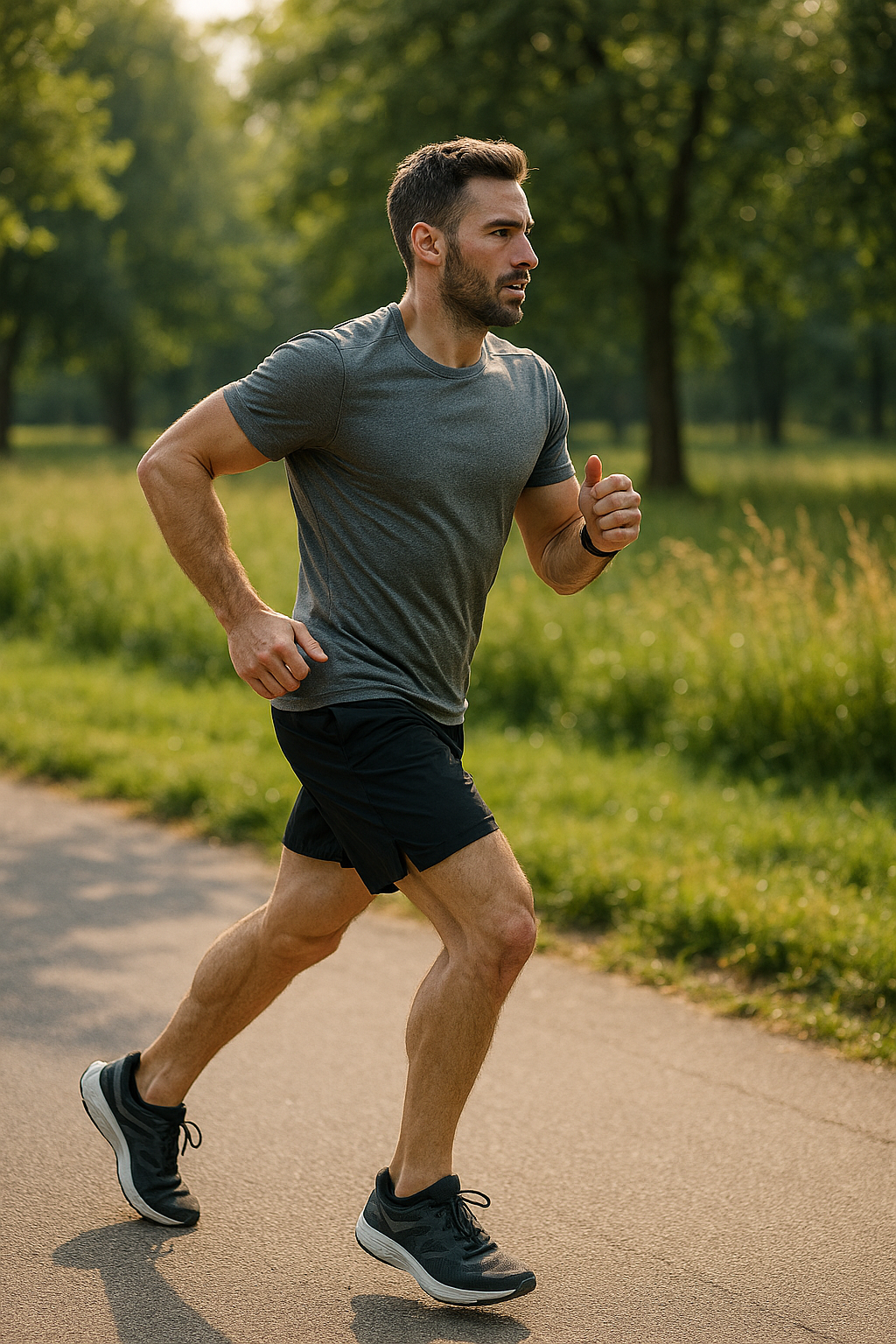
Core training is often marketed as the shortcut to visible abs, but that’s only a small part of the story. At its best, core training is the systematic training of the muscles that stabilize and move the spine, pelvis and trunk. In other words: it’s the work that helps your body stay strong, steady and well-aligned when you sit, stand, walk, lift, reach, rotate or change direction.
Think of your core as a coordinated network rather than a single muscle group. It includes the muscles at the front of your torso, along your back, around your hips and pelvis, and even deeper layers that help create internal support. When these muscles do their job, your spine gets a stable “base” to move from, and your body can transfer force efficiently between upper and lower body. That’s why core training matters whether you’re carrying groceries, training in the gym, or spending long hours at a desk.
What is core training in practice?
In practice, core training is less about doing endless sit-ups and more about building control. A strong core helps you maintain posture without feeling like you’re “holding yourself up” all day. It can also make everyday movements feel smoother because your trunk isn’t collapsing or overcompensating when you bend, twist or lift.
This is also where injury prevention comes in. When the trunk and pelvis are stable, the rest of the body often has an easier time moving with good mechanics. For many people, that can mean less strain in the lower back, hips and shoulders during repetitive tasks, exercise, or long periods of sitting and standing.
Why core strength matters beyond aesthetics
Aesthetic goals are valid, but core training delivers benefits that show up long before any visual changes. Better stability can improve balance and body control. Better alignment can support a more relaxed posture. And better coordination between the muscles around the spine and pelvis can help you move with more confidence—whether you’re sprinting, squatting, or simply getting up from a chair.
In the next sections, we’ll break down which muscles make up the core, what they do, and how to train them in a way that supports real-life movement—not just a mirror check.
Understanding the core: muscles and what they do
If core training is about stabilising and moving the spine, pelvis and trunk, it helps to know which muscles are actually involved. The core isn’t a single “ab muscle” you can isolate; it’s a layered system that creates support from the inside and control on the outside. Some muscles are designed for visible movement (like bending or rotating), while others are built for subtle stability (like keeping the spine steady while your arms and legs move).
Broadly speaking, the core includes the muscles on the front of the torso, along the back, around the sides of the trunk, and the muscles that connect the pelvis and hips. Many people also include the diaphragm and pelvic floor because they contribute to internal pressure and trunk support, especially during lifting and bracing.
Abdominal muscles
The rectus abdominis is the muscle most people associate with “abs.” It helps flex the spine (think a controlled curl-up) and contributes to trunk stiffness when you brace. The obliques (internal and external) help with rotation and side-bending, but they’re also key stabilisers when you resist unwanted twisting. The deepest layer, the transverse abdominis, wraps around the torso like a corset and plays a major role in creating tension and support around the midsection.
Back muscles and deep spinal stabilisers
On the back side, the erector spinae help extend the spine and maintain an upright posture. Deeper muscles such as the multifidi contribute to segment-by-segment stability of the spine. These deep stabilisers are especially relevant for people who sit a lot or experience recurring stiffness, because they help the spine stay controlled during small, repeated movements and long static positions.
Side, hip and pelvic muscles
The quadratus lumborum (often felt as tension in the “side of the lower back”) helps with side-bending and pelvic control. The hip flexors assist in lifting the leg and stabilising the pelvis, while the glutes (especially gluteus medius and maximus) support hip extension, pelvic alignment and overall trunk stability during walking, climbing stairs and lifting. When the hips are weak or poorly coordinated, the lower back often ends up doing more work than it should.
Diaphragm and pelvic floor
The diaphragm and pelvic floor are sometimes called part of the deep core because they help regulate intra-abdominal pressure. This matters in real life: when you exhale, brace and lift something heavy, these structures work together with the abdominal wall and back muscles to create a stable cylinder around the spine.
Functionality over aesthetics: what core training is really building
It’s possible to have visible abs and still lack core function. That’s because core training isn’t just about making muscles bigger; it’s about teaching them to coordinate. A functional core helps you maintain a neutral, supported spine while you move your limbs, change direction, or handle load.
One of the most practical outcomes is posture support. Good posture isn’t about forcing your shoulders back all day; it’s about having enough endurance and control in the trunk and hips to stay aligned without constant effort. Core training can also contribute to spinal support by improving how your body distributes load, which may reduce the tendency to “hang” on passive structures like joints and ligaments during long periods of sitting or standing.
Core function is also closely tied to balance and stability. When the trunk can resist unwanted movement (like excessive twisting or arching), the body can react faster and more efficiently. That’s relevant for athletes, but it’s just as relevant for everyday fall prevention and general body control.
Benefits of core training in daily life and performance
Core training tends to pay off in two main areas: how you feel in everyday life and how well you move when demands increase.
- Improved posture and alignment: Better trunk and hip control can make it easier to sit and stand tall without tension, especially during long workdays.
- Reduced lower-back strain: When the trunk is stable, the lower back often has less need to compensate during lifting, carrying, reaching and repetitive tasks.
- Better balance and stability: A strong, responsive core helps you stay steady when you shift weight, walk on uneven ground, or move quickly.
- More efficient movement: The core helps transfer force between the lower and upper body. That means better mechanics in exercises like squats, presses and running, but also in real-world tasks like carrying bags or lifting boxes.
- Improved form under fatigue: Core endurance helps you maintain technique when you’re tired, which is often when unwanted movement patterns show up.
In the next part, we’ll make this practical by looking at different types of core exercises (stability-focused and movement-focused), how to activate the deep core effectively, and how often to train for steady progress.
Core training exercises: stability and movement
Once you understand that core training is about controlling and supporting the spine, pelvis and trunk, exercise selection becomes clearer. A well-rounded approach usually includes both stability-oriented exercises (where the goal is to resist unwanted movement) and movement-focused exercises (where the trunk actively flexes, extends, rotates or resists rotation under motion). Combining both helps build a core that performs in real life—during lifting, carrying, reaching, walking, and sport.
Stability-oriented core training
Stability work trains your core to hold a strong position while your arms and legs move. This is highly transferable to everyday tasks, because most of the time you want your trunk to stay controlled while the rest of the body does the work.
- Plank and side plank: Build anti-extension and anti-rotation strength. Focus on a long spine and steady breathing rather than maximal time.
- Bird dog: Trains cross-body coordination and spinal control. Move slowly and avoid shifting the hips.
- Dead bug: A controlled way to train bracing while moving the legs and arms. Keep the lower back from arching.
- Glute bridge: Supports hip extension and pelvic control, which often reduces the tendency to overuse the lower back.
Movement-focused core training
Movement-based exercises can be useful when done with control and good alignment. They often build strength and endurance in the muscles that create trunk motion, but they should not come at the cost of spinal positioning.
- Crunch variations: Useful for trunk flexion strength when performed slowly and without pulling the neck.
- Leg raises: Challenge the lower abs and hip flexors; keep the pelvis stable and avoid excessive lower-back arching.
- Russian twists: Train rotation, but should be controlled and pain-free. If the lower back feels strained, reduce range or choose a more stable alternative.
- Mountain climbers: Combine core control with conditioning; keep the trunk steady rather than bouncing through the shoulders and hips.
Deep-core activation: bracing and drawing in
Technique matters in core training because the goal is not only to “feel” the abs, but to create coordinated support around the trunk. Two common cues are bracing and drawing in.
Bracing means creating 360-degree tension around the midsection as if preparing for a gentle impact. You should feel the abdominal wall firm up without holding your breath. This strategy is often helpful for planks, dead bugs, loaded carries, and lifting tasks.
Drawing in is a subtler activation where you gently pull the lower abdomen inward, aiming to engage the deeper abdominal layer. This can be useful when learning control, especially in lower-intensity exercises. In practice, many people benefit from starting with a light draw-in to find control, then progressing toward bracing as exercises become more demanding.
Whichever cue you use, aim for a steady breath. If you cannot breathe normally, the intensity is likely too high or the position needs adjusting.
How often to do core training (and how to progress)
For most people, 2–4 core training sessions per week is a practical target. Sessions can be short—often 10–20 minutes—as long as the work is consistent and well-executed. You can also add a few core exercises at the end of regular workouts.
Progress comes from progressive overload, but that does not have to mean harder exercises immediately. You can progress by:
- Increasing time under tension (for example, longer holds in planks or slower reps in dead bugs)
- Adding sets or reps while keeping form consistent
- Reducing support (for example, moving from a knee side plank to a full side plank)
- Adding load gradually (for example, weighted carries or cable-based anti-rotation work)
Rest matters as well. If your core is constantly sore or your technique breaks down, scale back and prioritise quality. Core training should leave you feeling more stable and capable—not stiff or aggravated.
Frequently Asked Questions
What exactly is core training?
Core training is the systematic training of the muscles that stabilise and move the spine, pelvis and trunk. It focuses on coordination and control across the entire midsection—not only the visible abdominal muscles.
Why is core training important?
Core training supports posture, improves stability and balance, helps transfer force between the upper and lower body, and can reduce the risk of injury by improving how the trunk and pelvis handle load during daily activities and exercise.
Can core training help with back pain?
For many people, improving core strength and endurance can reduce lower-back strain by increasing trunk support and improving movement mechanics. If you have persistent or sharp pain, it is important to get individual guidance from a qualified healthcare professional before progressing your training.
How often should I do core exercises?
Aim for 2–4 sessions per week, typically 10–20 minutes each. A balanced plan includes both stability-oriented exercises (such as planks, bird dog, and dead bug) and movement-focused exercises (such as controlled crunch variations or leg raises), adjusted to your level.
Is core training only for athletes?
No. Core training benefits office workers, older adults, manual workers, and anyone who wants better posture, improved balance, and more efficient movement in everyday life. Athletes may apply it to performance, but the foundation is useful for everyone.
Källor
- Gopher Sport. (n.d.). "What is Core Training?" Gopher Sport Blog.
- Confluent Health. (n.d.). "Benefits of a Strong Core." Confluent Health Resources.
- Hydrow. (n.d.). "The 40 Best Core Workouts: Beginner, Intermediate, and Advanced Exercises to Try." Hydrow Blog.
- Advanced Kinetics. (n.d.). "How Core Strength Benefits Your Physical Health." Advanced Kinetics Blog.
- The Training Room PT. (n.d.). "Core Training vs. Abdominal Training: What’s the Difference?" The Training Room Blog.
- Healthline. (n.d.). "Core Strength: More Important Than Muscular Arms." Healthline.
- Harvard Health Publishing. (n.d.). "Core Conditioning: It's Not Just About Abs." Harvard Health.
- Centers for Advanced Orthopaedics. (2023). "Core Strength: An Important Part of Orthopaedic Health." CFA Ortho News.
- Healthline. (n.d.). "Best Core Exercises." Healthline.
- Mayo Clinic. (n.d.). "Core Exercises: Why You Should Strengthen Your Core Muscles." Mayo Clinic.
- Harvard Health Publishing. (n.d.). "The Real-World Benefits of Strengthening Your Core." Harvard Health.
- Les Mills. (n.d.). "Les Mills Core." Les Mills Workouts.
- Peloton. (n.d.). "Core Strength Benefits." Peloton Blog.