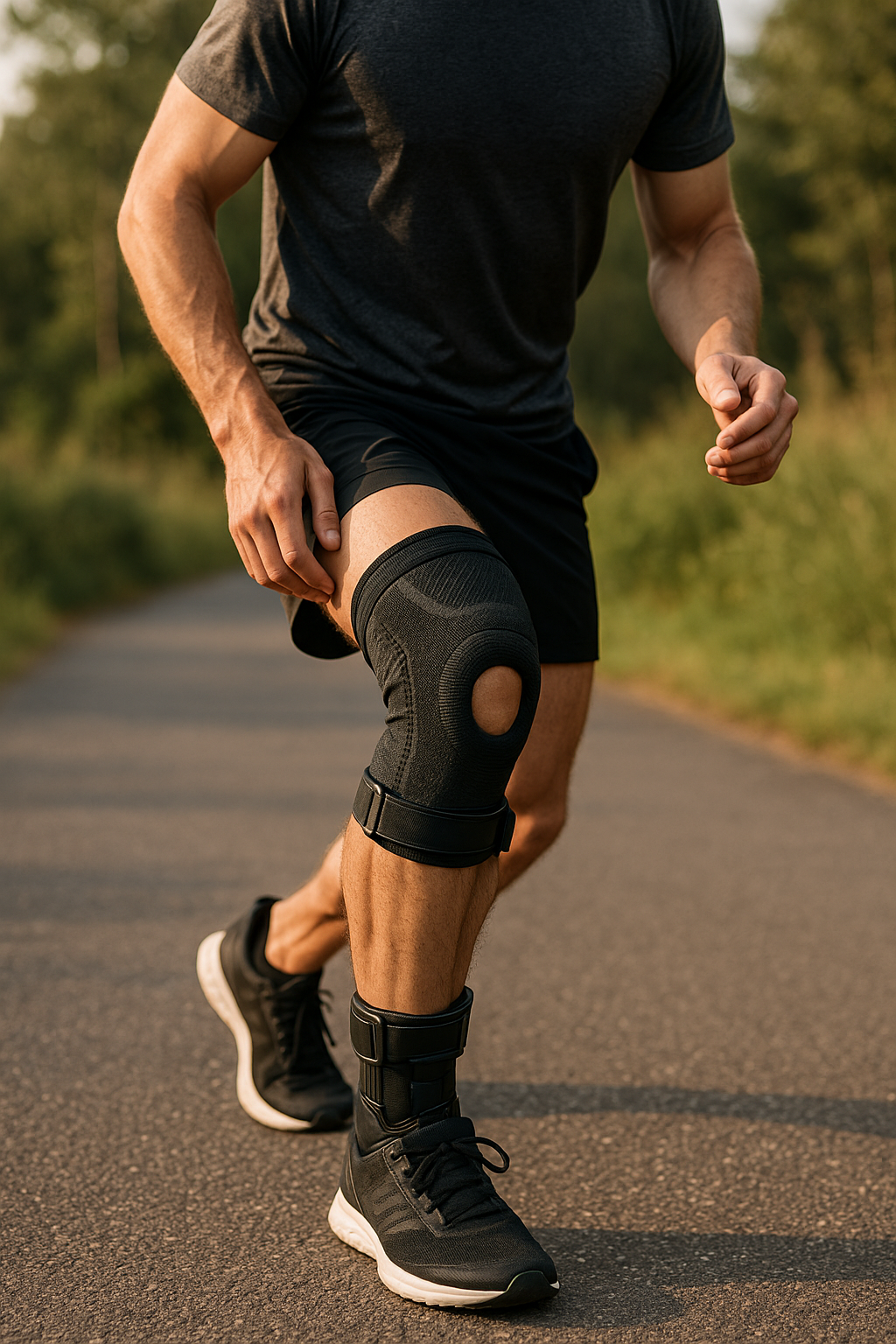
Heart rate zones running is one of the simplest ways to make your training more effective without automatically making it harder. Instead of guessing whether today should be easy, steady, or fast, heart rate zones give you a clear framework for intensity—based on how your body is responding in real time. That matters for performance, but it also matters for durability: when intensity creeps up day after day, the cardiovascular system may cope, while joints, tendons, and lower back quietly accumulate load.
Think of heart rate zones as guardrails. They help you keep easy runs truly easy, so you can build aerobic fitness with less mechanical stress. And they help you place harder sessions where they belong, so you get the training effect you’re after—without turning every run into a grind. This is especially useful when pace is misleading: hills, heat, poor sleep, and accumulated fatigue can all make a “normal” pace cost far more than it should.
Why heart rate zones matter for runners
Most runners improve fastest when training has contrast: plenty of low-intensity work, plus smaller doses of higher-intensity work. Heart rate zones make that contrast visible. If your watch shows you drifting into moderate or hard effort on what was meant to be a recovery day, you can adjust immediately—slow down, shorten the run, or choose flatter terrain. Over time, that kind of control can reduce the risk of overuse issues that often show up when intensity and impact stack up too often.
Two common ways to set heart rate zones
You’ll typically see zones built using one of two models:
- The 5-zone HRmax model, which sets zones as percentages of your maximum heart rate. It’s popular because it’s easy to understand and works well as a starting point.
- Threshold-based zones, which anchor zones to your lactate threshold heart rate (roughly the hardest effort you can sustain for about an hour). This approach is often more individual, especially for experienced runners.
Both methods can work. The key is consistency: pick a model, set realistic zones, and use them to guide decisions on the run. Next, we’ll break down what each zone actually feels like, what it’s best for, and how to calculate your own numbers in a way that fits your current fitness and goals.
What heart rate zones are in running
Heart rate zones are simply intensity bands that reflect how hard your cardiovascular system is working. In running, they’re useful because they respond to the real conditions of the day: hills, headwind, heat, stress, and fatigue can all raise heart rate at the same pace. When you train by zones, you’re choosing an effort level first—and letting pace be the outcome.
The most common approach is the 5-zone HRmax model, where each zone is a percentage of your maximum heart rate (HRmax). While the exact boundaries can vary slightly between watches and coaching systems, the practical purpose stays the same: each zone creates a different training stimulus and a different level of overall body load.
The 5-zone HRmax model explained
Use the descriptions below as both a physiological guide and a reality check. If the number says Zone 2 but you can’t speak in full sentences, treat that as a sign to slow down or reassess your zones.
| Zone | % of HRmax | Perceived effort | Typical session type | Body load |
|---|---|---|---|---|
| Zone 1 | 50–60% | Very easy, relaxed breathing | Warm-up, cool-down, recovery jog | Very low joint stress |
| Zone 2 | 60–70% | Easy, conversational | Easy runs, long runs, base building | Low-to-moderate impact load |
| Zone 3 | 70–80% | Steady, “comfortably hard” | Steady-state runs, moderate progression | Moderate load; form can start to fade |
| Zone 4 | 80–90% | Hard, short phrases only | Tempo runs, threshold intervals | High load; higher fatigue and impact per minute |
| Zone 5 | 90–100% | Very hard to all-out | Short intervals, hill sprints, VO2max work | Very high load; use sparingly and recover well |
A practical takeaway: as you move from Zone 2 into Zones 3–5, the training benefit can increase, but so can fatigue-related changes in technique (overstriding, heavier foot strike, reduced hip stability). That’s one reason many runners do best when most weekly volume stays in Zones 1–2, with smaller, planned doses of higher intensity.

Men's Posture Shirt™ - Black
Posture Shirt™ stimulates muscles, relieves pain, and improves posture for work, training, and leisure.

Women's Posture Shirt™ - Black
Supports posture, relieves pain and tension, and is designed for work, exercise, or rest.
Threshold-based zones vs max heart rate zones
Max-HR-based zones are popular because they’re easy to set up. The downside is that HRmax varies widely between individuals, and age-based estimates can be off by 10–20 beats per minute (or more). If your estimated HRmax is wrong, every zone shifts with it.
Threshold-based zones anchor your training to lactate threshold heart rate (LTHR), which is closely tied to sustainable performance. In simple terms, LTHR is around the highest heart rate you can hold for roughly an hour. Because it’s based on how you perform (not just age), it often produces zones that feel more “true” in day-to-day running.
- Max-HR-based zones tend to suit beginners and runners who want a quick, workable framework—especially if they’re mainly using Zones 1–2 to control easy effort.
- Threshold-based zones tend to suit experienced runners who do structured tempo and interval work and want better precision around the “comfortably hard” and threshold range.
If you’re unsure, start with max-HR zones for simplicity, then upgrade to threshold-based zones once you have a consistent training routine and can complete a controlled field test.
How to calculate heart rate zones for running
Option a: quick start with age-based formulas
If you want a fast estimate of HRmax, two common formulas are:
- HRmax ≈ 220 − age
- HRmax ≈ 208 − (0.7 × age)
Once you have an estimated HRmax, multiply it by each zone percentage. Example: if your HRmax estimate is 190, Zone 2 (60–70%) is about 114–133 bpm. Treat this as a starting point, then fine-tune using the talk test and perceived effort.
Option b: a more accurate 20-minute threshold test
A field test can give you a more individual anchor point. A common protocol is:
- Warm up 10–15 minutes easy, then add 3–4 short pickups (10–20 seconds) with easy jogging between.
- Run 20 minutes at the hardest effort you can sustain evenly (not a sprint start).
- Record your average heart rate for the full 20 minutes.
Many runners then use 95% of that 20-minute average as an estimate of LTHR (because a 20-minute effort is usually slightly higher than true one-hour threshold). From there, you can set threshold-based zones in your watch or training app.
Safety considerations before testing
Maximal or near-maximal tests are demanding. Avoid them if you have known heart or cardiovascular conditions, unexplained chest pain, dizziness, or if you’re returning after a long break and aren’t yet comfortable running continuously. When in doubt, get medical clearance and choose the conservative route: build consistency with Zone 1–2 running first, then test later when your body is ready.
How to apply heart rate zones running in real training
Once your zones are set, the biggest win is using them to make day-to-day decisions. Heart rate zones running works best when you treat zones as targets for the purpose of the session, not as a score to chase. Your goal is to accumulate the right kind of time: lots of low-intensity minutes for aerobic development, and smaller, planned doses of higher intensity for speed and threshold improvements.
Beginners and runners returning from injury
If you are new to running or rebuilding after time off, spend most runs in Zone 1–2 for the first 6–12 weeks. This approach supports gradual adaptation in tendons, bones, and connective tissue while keeping overall fatigue manageable. It also reduces the chance that “easy” runs quietly become moderate efforts, which can happen when motivation is high but durability is still catching up.
- Default session: 20–45 minutes in Zone 2 (with short Zone 1 walk breaks if needed).
- Progression: Increase weekly time before adding intensity.
- Simple check: If you cannot speak in full sentences, you are likely above Zone 2 for your current fitness.
Intermediate runners building performance
For runners with a consistent base, a practical structure is to keep the majority of weekly volume in Zone 2, then add one or two targeted sessions that touch Zone 3–4. Zone 3 can be useful for controlled steady runs, but it is also where many runners accidentally live too often—hard enough to create fatigue, not always hard enough to deliver the specific benefits of true threshold work.
- Example week: 2–4 easy Zone 2 runs, 1 long Zone 2 run, and 1 quality workout (tempo intervals in Zone 4 or controlled progression into Zone 3).
- Signs to reduce load: rising heart rate at the same easy pace, unusually heavy legs, poor sleep, or aches that do not settle after 48 hours.
Older or injury-prone runners
If you are more injury-prone, the safest “default” is still Zone 2, combined with smart variety. Cross-training (cycling, elliptical, brisk incline walking) can deliver aerobic time with less impact, and strength work helps maintain control when fatigue sets in. If you use supportive gear to improve comfort or alignment, treat it as a complement to intensity control—not a reason to push into higher zones more often.
Heart rate zones, posture, and injury prevention
As intensity rises, fatigue can change mechanics: stride often lengthens, ground contact becomes heavier, and hip stability can drop. These shifts are common in Zones 4–5, but they can also appear late in a long run if Zone 2 drifts into Zone 3. Managing effort helps you keep movement more controlled, which matters for joints and soft tissue.
Use this quick body-awareness checklist as you move up in zones:
- Breathing: smooth and nasal/mixed in Zone 2; forced and noisy can signal you are too high for the day.
- Foot strike sound: louder impact often means you are losing control or overstriding.
- Posture: tall torso, slight forward lean from the ankles; avoid collapsing at the waist.
- Cadence cue: if your stride feels “reaching,” shorten it slightly and keep steps quick and light.
Troubleshooting when heart rate and effort do not match
It is normal for heart rate to lag behind effort at the start of a run and to drift upward over time, especially in heat. If your watch shows a higher zone than expected, first consider context: temperature, dehydration, stress, caffeine, poor sleep, hills, or accumulated fatigue can all elevate heart rate.
Practical fixes:
- Slow down early: keep the first 10–15 minutes firmly in Zone 1–2 to prevent early spikes.
- Choose flatter routes: hills can push you into Zone 3–4 even at an “easy” pace.
- Use perceived effort: if the talk test says easy but the number looks high, your zones or sensor may be off.
- Protect your joints: if effort feels hard and form is deteriorating, reduce intensity regardless of the displayed zone.
Frequently Asked Questions
Is training by heart rate better than training by pace?
Neither is universally better. Heart rate is useful for controlling effort when conditions change (heat, hills, fatigue), while pace is useful for race-specific preparation on comparable terrain. Many runners combine both: heart rate to keep easy days easy, and pace (or time) to structure intervals once fitness is stable.
Why do my watch zones differ from online calculators?
Watches often use their own formulas, may update your estimated HRmax automatically, or may base zones on different models (HRmax vs threshold). Online calculators also vary in assumptions. If your zones do not match how running feels, adjust your settings using a tested HRmax or a threshold test, then validate with the talk test.
Can I use heart rate zones on the treadmill or trail?
Yes. In fact, heart rate zones running can be especially helpful there because pace becomes less reliable. On trails and hills, aim to keep the intended zone even if speed drops. On a treadmill, heat and limited airflow can raise heart rate, so use a fan and consider slightly lower speed for the same zone.
What if I have a naturally low or high heart rate?
A naturally low or high heart rate is common and does not automatically indicate a problem. What matters is that your zones are based on your own tested values and match perceived effort. If you consistently find that standard formulas feel wrong, use a threshold-based approach and update your watch zones accordingly.
Källor
- Cleveland Clinic. (n.d.). ”Exercise Heart Rate Zones Explained.” Health Essentials.
- Friel, J. (n.d.). ”Joe Friel’s Quick Guide to Setting Zones.” TrainingPeaks.
- The Running Channel. (n.d.). ”Running Heart Rate Zones.”
- Strava. (n.d.). ”How to Use Heart Rate Zones to Improve Your Running.” Strava Stories.
- Polar. (n.d.). ”Running Heart Rate Zones Basics.” Polar Blog.
- MyProCoach. (n.d.). ”HR Zones Calculator.”
- The Runner Journal. (n.d.). ”Heart Rate Training Zones Explained: The Simple and Actually Useful Way.”
- McMillan Running. (n.d.). ”How to Calculate Heart Rate Zones.”
- Strava. (n.d.). ”Understanding Heart Rate Zones and How They Impact Your Training.” Strava Stories.
- VO2 Master. (n.d.). ”Training Zones.”
- REI. (n.d.). ”How to Train with a Heart Rate Monitor.”
- Training Mit System. (n.d.). ”Training Zones Heartrate.”
- WHOOP. (n.d.). ”4 Essential Runs: Running Heart Rate.”
- McMillan Running. (n.d.). ”Running Heart Rate Zones.”
- RunDNA. (n.d.). ”A Runner’s Guide: Heart Rate Zones for Effective Training.”