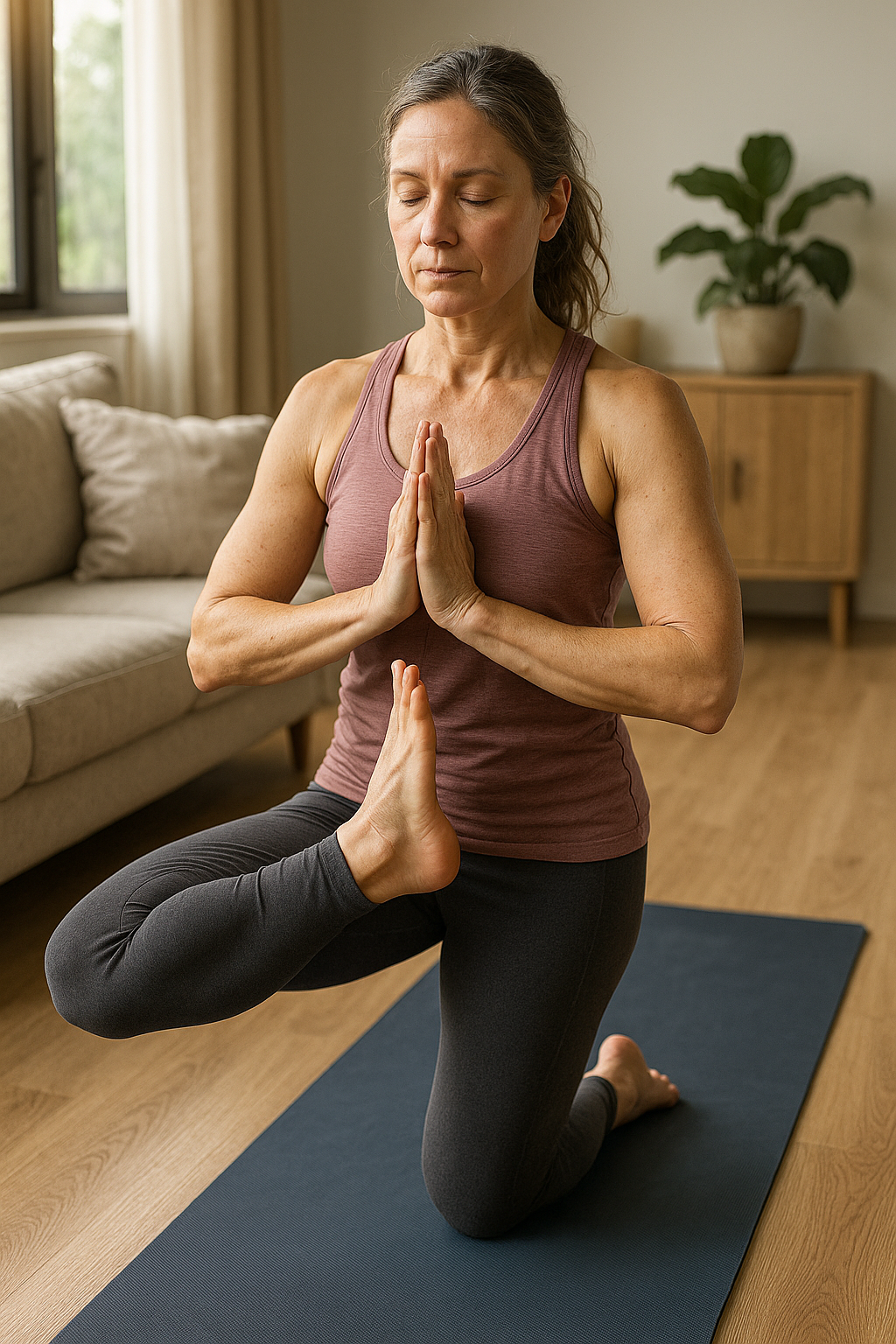
Strength training for beginners isn’t a “gym rat” hobby or a months-long bootcamp you have to survive. It’s a practical skill you can learn—one that pays you back with more strength in everyday life, better posture, and a body that feels more capable. Done consistently, strength training can help build muscle mass, improve bone density, and support long-term health, without requiring complicated equipment or marathon workouts.
The biggest shift for most beginners is realising that modern strength training is less about doing more, and more about doing the right things well. A few foundational movements, performed with control and repeated week after week, can be enough to create noticeable progress. That’s good news if you’re short on time, training at home, or simply want a plan that feels manageable from day one.
What beginners often get wrong about strength training
Many people delay starting because they assume they need a full gym setup, perfect technique, or hours of training to see results. In reality, beginners tend to progress quickly when they focus on the basics: simple exercises, a consistent schedule, and gradual increases over time. You can start with bodyweight, resistance bands, or a pair of dumbbells and still train effectively.
Another common mistake is chasing soreness or exhaustion as proof of a “good workout.” For beginners, the goal is to practice movement patterns safely and build momentum. If you’re dealing with aches, stiffness, or you’re returning after a long break, small ergonomic upgrades—like supportive resistance bands, stable footwear, or a bench/step that helps you control depth—can make training feel more comfortable and repeatable.
The principle that drives results: progressive overload
Progressive overload is the engine behind strength gains. It simply means doing a little more over time—such as adding a small amount of weight, performing an extra rep, or improving your form at the same load. This gradual progression is what turns “I tried working out” into measurable strength improvements.
For strength training for beginners, the smartest approach is to start conservatively and build confidence. Think of your first weeks as laying a foundation: learning key movements (squat, push, pull, core), finding a routine you can stick to, and leaving the gym—or your living room—feeling better than when you started. In the next section, we’ll break down an efficient, science-informed way to train with minimal volume, plus a simple routine template you can follow.

Men's Posture Shirt™ - Black
Improves posture and reduces tension. Patented NeuroBand™ tech for muscle activation.
Science-backed basics: minimal effective volume
If you’re new to lifting, one of the most encouraging findings in modern training research is that you don’t need high volume to get strong. A beginner-friendly approach is to use minimal effective volume: the smallest amount of training that still produces reliable progress. For most people starting out, that looks like 1–3 sets per exercise, performed 2–3 times per week.
Why does this work so well for strength training for beginners? Early progress comes from learning the movements and improving coordination, not just “building bigger muscles.” That means you can get meaningful strength gains with relatively little weekly work—especially if you’re consistent and you train with good form. In practice, many beginners see strong improvements using 6–15 reps per set and stopping each set with a little left in the tank, rather than pushing to all-out failure.
This minimalist structure is also easier to recover from. Less soreness, fewer nagging aches, and a lower risk of overdoing it makes it more likely you’ll keep showing up—and consistency is the real multiplier.
Exercise selection: build your routine around movement patterns
Instead of chasing a long list of exercises, focus on a few compound movement patterns that train multiple muscles at once. These give you the best “return on effort” and carry over to everyday strength:
- Squat pattern (sit down/stand up strength): squats, sit-to-stand, goblet squat
- Hip hinge pattern (lifting from the hips): Romanian deadlift, hip hinge with a dowel, glute bridge
- Push pattern (pressing away): push-ups, dumbbell press, incline push-up
- Pull pattern (pulling toward you): rows with bands/dumbbells, cable rows
- Core/bracing (stability and posture): planks, dead bug, farmer carry
Choose versions that feel stable and controllable. If you’re training at home, resistance bands and a sturdy step/bench can make movements smoother and more joint-friendly. For example, an elevated surface can help you control squat depth, and a supportive band can make rows easier to “feel” in the upper back.
A simple full-body A/B plan (home or gym)
Alternating two full-body sessions keeps things simple while still covering all the essentials. Train on non-consecutive days (for example, Monday/Wednesday/Friday) and rotate A and B.
| Day | Exercise | Sets | Reps | Rest |
|---|---|---|---|---|
| A | Squat variation | 2–3 | 8–12 | 60–90s |
| A | Push-up (incline if needed) | 2–3 | 6–12 | 60–90s |
| B | Row (band, dumbbell, or cable) | 2–3 | 8–12 | 60–90s |
| B | Plank (or dead bug) | 2–3 | 20–40s | 60s |
Optional (if you have time): add a hip hinge movement (2 sets of 8–12) to either day. Keep the total session short and repeatable—most beginners can finish in 30–45 minutes, including a brief warm-up.
Progressive overload: how to know when to add reps or weight
Progressive overload doesn’t have to be complicated. A practical rule is to work in a rep range (like 8–12). When you can complete the top end of the range with solid form while still having 2–3 reps in reserve, increase the challenge next time. That could mean:
- Adding 1–2 reps per set
- Adding a small amount of weight
- Using a harder variation (lower incline push-up, deeper squat, thicker band)
Most beginners notice strength improvements within 4–6 weeks. Visible muscle changes often take longer—commonly 8–12 weeks—but the early wins in confidence, posture, and daily-life strength tend to show up sooner.

Women's Posture Shirt™ - Black
Supports posture and relieves tension. NeuroBand™ tech activates muscles for better alignment.
Recovery and nutrition: the beginner advantage
Training is the stimulus; recovery is where adaptation happens. Aim for at least one rest day between full-body sessions, and prioritise sleep. Nutrition matters too, especially protein, which supports muscle repair and growth. You don’t need perfection—just a consistent baseline of protein-rich meals and enough overall food to support training.
If you’re prone to stiffness or you’re returning after time off, keep your first weeks conservative. Comfortable, stable setups (good footwear, supportive bands, and controlled ranges of motion) help you train consistently with less irritation—exactly what strength training for beginners should feel like.
Effort-based training: Use RPE to train hard without overdoing it
One of the simplest ways to make strength training for beginners safer and more consistent is to train by effort instead of chasing a specific number on the bar. That is where RPE (Rate of Perceived Exertion) comes in. RPE is a 1–10 scale that describes how challenging a set feels, based on how many good reps you could still do with solid form.
- RPE 6: you could do about 4 more reps
- RPE 7: you could do about 3 more reps
- RPE 8: you could do about 2 more reps
- RPE 9: you could do about 1 more rep
- RPE 10: maximal effort (no reps left)
For most beginners, aiming for RPE 6–8 on working sets is a sweet spot: challenging enough to drive progress, but not so hard that technique breaks down or recovery becomes a problem. If your last reps get shaky, your breathing turns into a scramble, or you feel joint discomfort rising, treat that as feedback and stop the set earlier next time.
Make the plan fit your goal (and your life)
Strength training for beginners works best when it is repeatable. The same simple routine can support different goals with small adjustments:
- General strength and health: keep the plan as written, focus on steady progression and good form.
- Fat loss: keep strength training consistent (2–3 sessions/week) and use nutrition to create a modest calorie deficit. Strength work helps maintain muscle while you lose weight.
- Muscle gain (hypertrophy): stay in the 6–15 rep range, keep most sets around RPE 7–9, and consider adding 1–2 extra sets for one or two muscle groups you want to prioritise once you have a solid base.
If you train at home, you can still progress for a long time with bodyweight, resistance bands, and a stable bench/step. Bands make pulling movements easier to set up, and an elevated surface can help you control range of motion on squats and push-ups. If you are managing stiffness, returning from a long break, or simply want more confidence, small ergonomic supports (stable footwear, supportive bands, and controlled depth) can make sessions feel smoother and more joint-friendly.
Simple ways to adapt exercises without losing progress
Beginners often get stuck because they think the “best” version of an exercise is the only version that counts. In reality, the best exercise is the one you can do with control, consistently, and with a clear path to progression. Use these swaps when needed:
- Push-ups: wall → incline (hands on bench) → floor → feet elevated
- Squats: sit-to-stand → box squat → goblet squat → front/back squat
- Rows: band row → one-arm dumbbell row → cable row → barbell row
- Core: dead bug → plank → side plank → loaded carries
Keep the progression rule simple: if you hit the top of your rep range with good form at about RPE 7–8, make the next session slightly harder by adding a rep, slowing the tempo, using a thicker band, or adding a small amount of weight.
Frequently Asked Questions
What is the best way to start strength training for beginners?
Start with a simple full-body routine built around squat, push, pull, and core patterns. Use minimal effective volume (1–3 sets per exercise) and focus on controlled reps, consistent weekly training, and gradual progression.
How often should beginners train for optimal results?
Most beginners do best with 2–3 full-body sessions per week on non-consecutive days. This frequency provides enough practice to improve quickly while still allowing recovery between sessions.
What RPE should I use as a beginner?
Aim for RPE 6–8 on most working sets. This typically means finishing your sets with about 2–4 reps left in reserve, which supports progress while keeping technique and recovery manageable.
How can I track my progress in strength training?
Use a simple workout log (notes app or notebook). Record the exercise, sets, reps, and resistance used (weight, band thickness, or variation). Progress is shown by adding reps, adding load, improving control, or using a harder variation at the same effort.
What should I eat to support strength training for beginners?
Prioritise a balanced diet with enough total calories for your goal and consistent protein intake to support recovery. Build meals around protein-rich foods plus whole grains, fruits, vegetables, and healthy fats to cover energy and micronutrients.
How long will it take to see results from strength training?
Many beginners notice strength improvements within 4–6 weeks. Visible changes in muscle size often take 8–12 weeks, depending on training consistency, nutrition, sleep, and starting point.
Källor
- 10 Fitness. (n.d.). "Strength Training Beginner's Guide."
- Men's Health. (2019). "Beginner's Guide to Weight Training."
- Women's Health. (2020). "What is Strength Training?"
- Maui Powerhouse Gym. (n.d.). "Strength Training 101: A Beginner's Guide to the Weight Room."
- Anytime Fitness. (n.d.). "Beginner Strength Workout: How to Get Started in the Gym."
- Strength Climbing. (n.d.). "The Complete Guide to Arm Lifting & Finger Strength Training."
- Healthdirect. (n.d.). "Strength Training for Beginners."
- YouTube. (n.d.). "Strength Training for Beginners - Video Guide."
- YouTube. (n.d.). "Beginner Strength Training - Full Body Routine."
- Healthline. (n.d.). "Free Weight Exercises."
- Simple Solutions Fitness. (n.d.). "Strength Training for Beginners."