The hours between “closing the laptop” and “turning off the light” can feel like a blur. Your mind is still running through to-dos, while your body is holding onto the day in familiar places: a tight neck from screen time, rounded shoulders from sitting, and a lower back that never quite got a break. Evening yoga is a simple way to change that pattern. It’s not about pushing flexibility or chasing a workout—it’s about downshifting.
In practice, evening yoga is a gentle, calming sequence done later in the day to help your body and nervous system transition from alert to relaxed. Think slower movements, longer holds, and breathing that signals “you’re safe to rest now.” For many people, that shift is exactly what makes it easier to fall asleep—and stay asleep—without feeling like you’re carrying the whole day into bed.
What evening yoga is (and who it helps most)
Evening yoga is typically made up of accessible poses that release tension and encourage stillness. It’s especially helpful if you spend long stretches sitting—at a desk, in a car, or on the sofa—because those positions can shorten the hips, stiffen the upper back, and overload the neck and shoulders. A well-chosen evening yoga routine gently reverses that “folded forward” posture and gives your joints a more comfortable baseline before sleep.
You don’t need to be experienced to benefit. If you can breathe and move slowly, you can do evening yoga. The goal is comfort, not intensity.
Why evening yoga can feel so calming
One reason gentle evening yoga works so well is that it supports your body’s natural relaxation response. Slow breathing and unhurried movement can help reduce stress and quiet mental chatter, which is often the real barrier to rest. Just as importantly, it creates a boundary: a small ritual that tells your brain the workday is over.
If you’re dealing with stiffness or occasional back discomfort, keep the approach “pain-smart”: use support, avoid forcing deep stretches, and prioritise positions that feel steady and easy.
Make it comfortable, not perfect
A great evening yoga session doesn’t require fancy equipment. A blanket, a pillow, or a rolled towel can make a big difference—especially under the knees, behind the lower back, or supporting the hips. The more supported you feel, the easier it is to relax into the poses and let your breathing slow down.

Lumbar support belt
Support and relieve your lower back; adjustable for everyday comfort and posture.
Benefits of evening yoga for sleep, stress and posture
Evening yoga is often described as “relaxing,” but that calm feeling isn’t just in your head. A slower pace and longer holds encourage your nervous system to shift away from the high-alert mode many of us stay in after work. When you pair gentle movement with steady breathing, it becomes easier to release the day’s mental noise and settle into a more restful state.
For sleep, the biggest win is that evening yoga helps you arrive in bed with less physical agitation. Tight hips, a stiff lower back, and a tense upper body can make it hard to find a comfortable position, which keeps you tossing and turning. A short routine that targets common desk-worker areas can reduce that “wired but tired” feeling and make it easier to drift off.
There’s also a clear ergonomics angle: many bodies spend the day in a flexed, forward posture (chin jutting, shoulders rounded, hips bent). Evening yoga gently counters that pattern by opening the front of the body, mobilising the spine, and decompressing areas that tend to feel “stuck” after sitting. Over time, this can support better posture habits because you’re regularly reminding your body what neutral alignment feels like.
How to set up a comfortable evening yoga space
The best evening yoga setup is the one that makes you feel safe, supported, and unhurried. Choose a spot where you can lie down fully and stretch your arms out without bumping into furniture. Keep the room slightly warm if possible; muscles relax more easily when you’re not chilled.
Gather a few simple supports:
- Pillow or folded blanket for under your knees in resting poses (often a game-changer for lower back comfort).
- Rolled towel to support the neck in Savasana or to reduce strain in seated folds.
- Extra blanket to stay warm during longer holds, especially toward the end of practice.
If you like additional structure, ergonomic supports can help you stay aligned without effort. For example, gentle back support or posture-focused wear can provide a subtle reminder to avoid collapsing through the chest and shoulders while you breathe and move slowly. The goal isn’t to “hold yourself” rigidly—it’s to make relaxed alignment feel easier.

Women's Posture Shirt™ - Black
Patented posture shirt supports, activates muscles, and relieves tension and discomfort.
Finally, set the mood: dim lighting, silence or soft background sound, and a clear endpoint (even 10 minutes). A defined container helps your brain stop negotiating and start unwinding.
10-minute evening yoga routine for desk workers
This short sequence is mostly floor-based and designed to release hips, hamstrings, and the lower back after a day of sitting. Move slowly and keep the intensity at about a 5/10. You should feel sensation, not strain.
Child’s pose (1–2 minutes)
Kneel and fold forward, arms extended or by your sides. Place a pillow or folded blanket under your chest or forehead if your neck feels tense. If your hips don’t reach your heels comfortably, tuck a rolled blanket behind your knees or between hips and heels for support.
Cat-cow (1 minute)
Come to hands and knees. Inhale as you gently arch (Cow), exhale as you round (Cat). Keep the movement small and smooth, especially if your lower back is sensitive. Let your breath set the pace.
Seated forward bend (2 minutes)
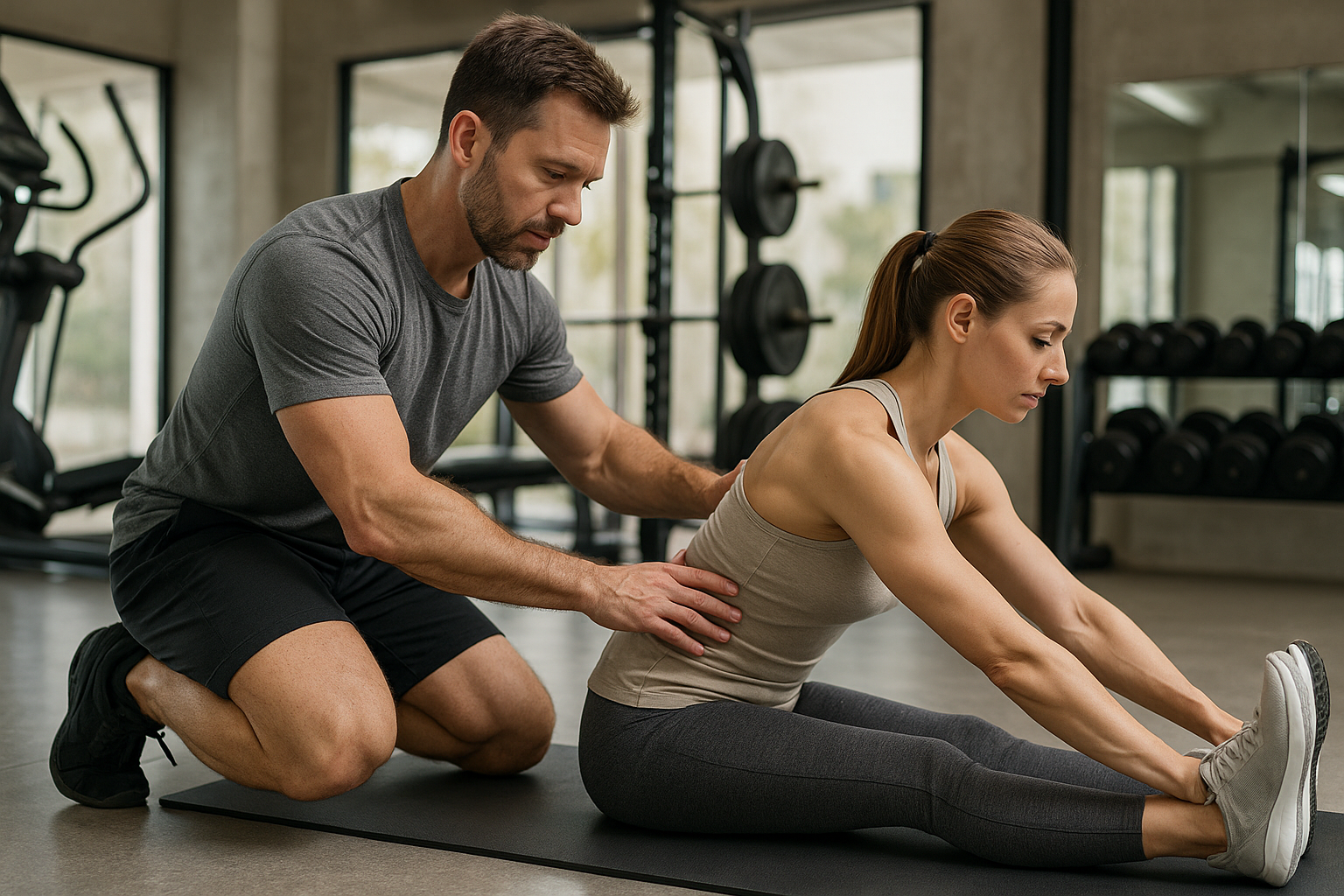
Sit with legs extended or slightly bent. Hinge from the hips and fold only as far as you can keep your spine long. Rest your hands on your shins or a pillow on your thighs. Bending the knees often makes this pose more effective for tight hamstrings and kinder to the back.
Reclined spinal twist (2 minutes each side)
Lie on your back and drop your knees to one side. Place a pillow between your knees or under the top knee so the twist feels supported rather than forced. Keep both shoulders heavy and relaxed.
Savasana (1–2 minutes)
Lie comfortably with a pillow under your knees and a small rolled towel under the neck if needed. Let your jaw soften and lengthen your exhales. If your mind is busy, pick one simple focus: the feeling of your breath moving in and out.
20–25 minute slow flow evening yoga for better sleep and posture
If you want a little more movement before settling down, this slow flow option gently mobilises joints and then transitions into longer, more restorative holds.
- Gentle sun salutations (3–5 minutes): Keep it low intensity. Step back instead of jumping, and skip any plank holds if your wrists or shoulders are tired.
- Standing forward fold (1–2 minutes): Bend your knees generously and let your upper back soften. Rest hands on elbows for a supported feel.
- Pigeon pose (2–3 minutes each side): Support the hip of the bent leg with a pillow or folded blanket so your hips feel level. If pigeon is too intense, do a figure-four stretch on your back instead.
- Legs up the wall (3–5 minutes): Scoot your hips as close to the wall as comfortable and let your legs rest. Place a folded blanket under your hips for gentle support if it feels good.
- Supported Savasana (3–5 minutes): Cover yourself with a blanket and prioritise warmth and stillness. Aim for slow breathing with longer exhales than inhales.
To finish, keep the transition to bed quiet and simple. Avoid immediately returning to bright screens or intense tasks. The calmer you keep the “landing,” the more your evening yoga practice can do its job.
Breathing and mindfulness cues for evening yoga
In evening yoga, the breath is often the fastest way to shift from “doing” to “resting.” A simple approach is to make the exhale slightly longer than the inhale. For example, inhale through the nose for a count of four, then exhale for a count of six. Keep it gentle—there is no need to hold your breath or force a big inhale. Over a few minutes, this rhythm can help your body settle and make the poses feel more restorative.
If counting feels distracting, use a softer cue: breathe in normally, then let the exhale be slow and unhurried, as if you are fogging a mirror (but with lips closed). In supported poses like Legs up the wall or Savasana, place one hand on the belly and one on the chest. Aim to feel the belly rise first, then the chest, and let both soften on the way out.
For mindfulness, keep the prompts practical and calming:
- Let go cue: On each exhale, relax one area that tends to grip (jaw, shoulders, hands, or the space between the eyebrows).
- Body scan cue: Move attention from feet to head, noticing where you feel heavy, warm, or tense—without trying to “fix” anything.
- Gratitude cue: Name one thing your body did for you today (walked, carried, focused, supported you through work), then return to the breath.
If your mind keeps replaying the day, that is normal. The goal is not to empty your thoughts, but to practise returning—again and again—to sensation and breath.
How often to practise evening yoga (and how to make it stick)
Consistency matters more than duration. If you can, aim for evening yoga 3–5 evenings per week. Many people find that a short routine done regularly is more effective for sleep and tension than an occasional long session.
To build the habit, reduce the “setup barrier.” Keep your mat, blanket, and pillow in the same place so you do not have to negotiate with yourself when you are tired. You can also attach evening yoga to an existing routine, such as:
- After you brush your teeth
- Right after you change into comfortable clothes
- Immediately after you plug in your phone for the night
For better sleep support, pair your practice with simple sleep hygiene steps: dim the lights, lower the volume in your environment, and try to step away from intense screen content. Even 10 minutes of calm movement followed by a quiet transition to bed can make your evening feel more intentional.
Optional enhancements for comfort and support
Evening yoga should feel soothing, not like another task to “do correctly.” If you regularly feel strain in the lower back, hips, or neck, add more support rather than pushing deeper. A pillow under the knees in Savasana, a folded blanket under the hips in seated poses, or a rolled towel behind the neck can help your body relax without bracing.
If you are working on posture after long hours sitting, consider using ergonomic aids as a gentle reminder during the day and as added comfort during rest. The best support is the one that helps you feel stable and aligned without tension. You can also create a simple reference for yourself—save this routine as a note on your phone or print a one-page checklist—so your evening yoga practice stays easy to follow when you are winding down.
Frequently Asked Questions
Is evening yoga good before bed?
Yes. Evening yoga is typically gentle and designed to help you transition into rest. Slower movement, longer holds, and calm breathing can reduce physical tension and make it easier to settle in bed.
How late can I do yoga at night?
Most people do best practising 1–2 hours before bedtime, especially if sleep is the goal. If you practise closer to bed, keep it very gentle (restorative poses, supported stretches, and slow breathing) and avoid vigorous flows that raise your heart rate.
What if I have back pain—can I still do evening yoga?
Often, yes, but choose pain-smart options: supported poses, small ranges of motion, and no forced stretching. Use props (pillow under knees, support under hips, pillow between knees in twists) and stop any movement that causes sharp, radiating, or worsening pain. If symptoms are persistent or severe, consult a qualified healthcare professional.
What is the best evening yoga pose for stress relief?
Many people find Legs up the wall and Supported Savasana especially calming because they require minimal effort and encourage slower breathing. The “best” pose is the one that feels safe, supported, and easy to stay in for a few minutes.
Do I need to be flexible to do evening yoga?
No. Evening yoga is about relaxation and comfort, not achieving deep stretches. Bend your knees, use pillows and blankets, and prioritise a steady breath. Flexibility often improves over time, but it is not a requirement to benefit.
Källor
- Equinox. (2022). "Night Yoga." Equinox Articles.
- National Center for Biotechnology Information. "Yoga and Sleep: A Review of the Literature."
- UCLA Health. "New Understanding of the Power of Yoga."
- Sleep Foundation. "Yoga and Sleep."
- Healthline. "Bedtime Yoga: Poses for a Good Night's Sleep."
- West, M. "Yoga for Evenings."
- Van Fossen, A. "30-Minute Evening Yoga Flow: Daily Routine to Relax and Unwind."
- Yoga with Adriene. "Bedtime Yoga Sequence."