Not long ago, choosing an exercise machine was mostly about one question: which movement do you want to repeat—running, cycling, stepping, rowing, or lifting? Today, that decision is changing fast. Smart exercise machines are turning workouts into guided experiences, where the equipment doesn’t just provide resistance or speed, but also helps you understand how you move, how hard you’re working, and what to adjust next time.
This shift is happening for a simple reason: people want training that fits real life. Home workouts have moved from “nice to have” to a practical solution for busy schedules, unpredictable weather, and the desire for privacy. At the same time, expectations have risen. Many of us don’t just want to sweat—we want feedback, progress tracking, and a sense that each session is tailored to our goals, whether that’s improving fitness, building strength, or staying active with less strain on the body.
From basic equipment to smart training
Traditional gym equipment is built to be reliable and repeatable. Smart equipment builds on that foundation by adding sensors, connectivity, and software that can measure what’s happening during your workout. Instead of guessing whether your pace is consistent or your range of motion is improving, you can see it. Instead of relying on memory, you can track sessions over time and spot patterns that affect results—like how workout duration links to calorie burn, or how consistency impacts overall progress.
Even compact, everyday-friendly machines are evolving. A small stepper with a simple display that tracks steps, time, and calories may sound basic, but it reflects a bigger trend: people want quick, measurable movement they can fit into a living room routine and still feel accountable.
What this post will help you understand
In the rest of this article, we’ll look at what’s driving the newest wave of exercise machine innovation—especially AI-driven coaching and data analytics. You’ll learn how modern systems can help with form awareness, performance tracking, and personalised recommendations, and why that matters for both results and comfort. We’ll also explore how these tools can serve different needs, from beginners who want guidance to experienced exercisers who want sharper insights, all while keeping the focus on safe, sustainable movement.
Emerging trends in the modern exercise machine
The biggest change in fitness equipment right now isn’t a new type of movement—it’s the intelligence wrapped around familiar movements. A modern exercise machine is increasingly designed to observe, interpret, and respond to how you train. That means the machine (or the app connected to it) can do more than count minutes. It can identify patterns in your technique, estimate training load, and help you make safer choices when you’re tired, rushing, or returning after a break.
This is where AI and machine learning are moving from “nice add-on” to a core feature. Instead of relying solely on a mirror or a trainer’s eye, smart systems can analyse joint positions and movement timing to flag common issues like incomplete range of motion, uneven tempo, or compensations that may increase strain. The practical benefit is simple: better feedback tends to produce better reps, and better reps tend to produce better results with less wear-and-tear.
AI and machine learning for form correction and performance tracking
AI-driven form analysis is becoming remarkably precise, even on devices people already own. Research into wearable-based resistance training analysis has shown very high recall for recognising specific exercises, alongside tight measurement error for motion tracking. In real terms, that level of accuracy can translate into feedback you can actually trust: whether your arm path is consistent, whether you’re rushing the lowering phase, or whether your range of motion is gradually improving week to week.
Another promising direction is inertial sensor tracking (often called IMUs), which can classify exercises with high accuracy even when the sensor setup is minimal. Studies suggest you don’t necessarily need a full-body sensor suit to get useful insights; a smaller number of sensors can still deliver strong classification performance. This matters for home training because fewer sensors generally means less friction: quicker setup, fewer points of failure, and a better chance you’ll use the system consistently.
For everyday users, the most relevant takeaway is that AI isn’t just about “scoring” your workout. It’s about reducing guesswork. If you’re using a cable station, a resistance machine, or even dumbbells alongside a smart app, AI can help you keep reps consistent, spot technique drift as fatigue sets in, and make training feel more coached—without needing a live session every time.
Home gym innovations: compact machines with built-in accountability
Not every innovation needs to be complex. Some of the most popular home options are compact machines that make movement easier to start and easier to measure. Mini steppers are a good example: they’re small enough to live in a corner, yet they often include a simple digital display that tracks steps, time, and estimated calories. That kind of instant feedback can be surprisingly motivating, especially for people who want a low-barrier way to add daily activity.

Women's Posture Shirt™ - Black
Improves posture, relieves pain and increases muscle activation. Use for work, training or leisure.
Practical design details matter here. A higher weight capacity, stable footing, non-slip pedals, and adjustable components can determine whether a machine feels safe and comfortable or awkward and limiting. Many steppers also allow light upper-body involvement (for example, using resistance bands), which increases versatility without increasing the footprint. For busy schedules, this “small machine, measurable output” approach can be the difference between intending to exercise and actually doing it.
Data-driven fitness insights: turning workouts into useful patterns
Once workouts are tracked consistently, the next leap is using that data to guide decisions. Data science projects analysing gym training datasets have shown how machine learning models can predict outcomes like BMI based on user variables and habits. While no single model can capture the full complexity of health, the direction is clear: when enough training data is collected, it becomes easier to estimate where current habits may lead and what changes are most likely to help.
Even without predictive models, basic correlations can be powerful. One common pattern is the link between workout duration and calorie burn. On its own, that may sound obvious, but the value comes from seeing your personal trend over time. If two 20-minute sessions produce very different outputs, you can investigate why: intensity, rest time, resistance level, or even technique efficiency. This is where a smart exercise machine can support better planning—helping you choose the session style that matches your goal, whether that’s steady movement, strength progression, or a mix of both.
Wearables and real-time feedback: coaching that travels with you
Wearable technology is also reshaping how “smart” a machine needs to be. If your watch and phone can track reps, timing, and movement quality, then the equipment can stay relatively simple while the intelligence lives in software. Lightweight, on-device analysis makes it possible to get real-time cues during a set, and remote monitoring can support people who want structure without constant in-person supervision.
The most useful mindset is to treat smart features as a feedback loop: measure what matters, learn what changes your output, and adjust one variable at a time. Whether you train on a compact stepper, a resistance station, or a cardio machine, the future of fitness looks less like “just do more” and more like “do it better, with clearer signals.”
Ergonomics: the missing link in the smart exercise machine
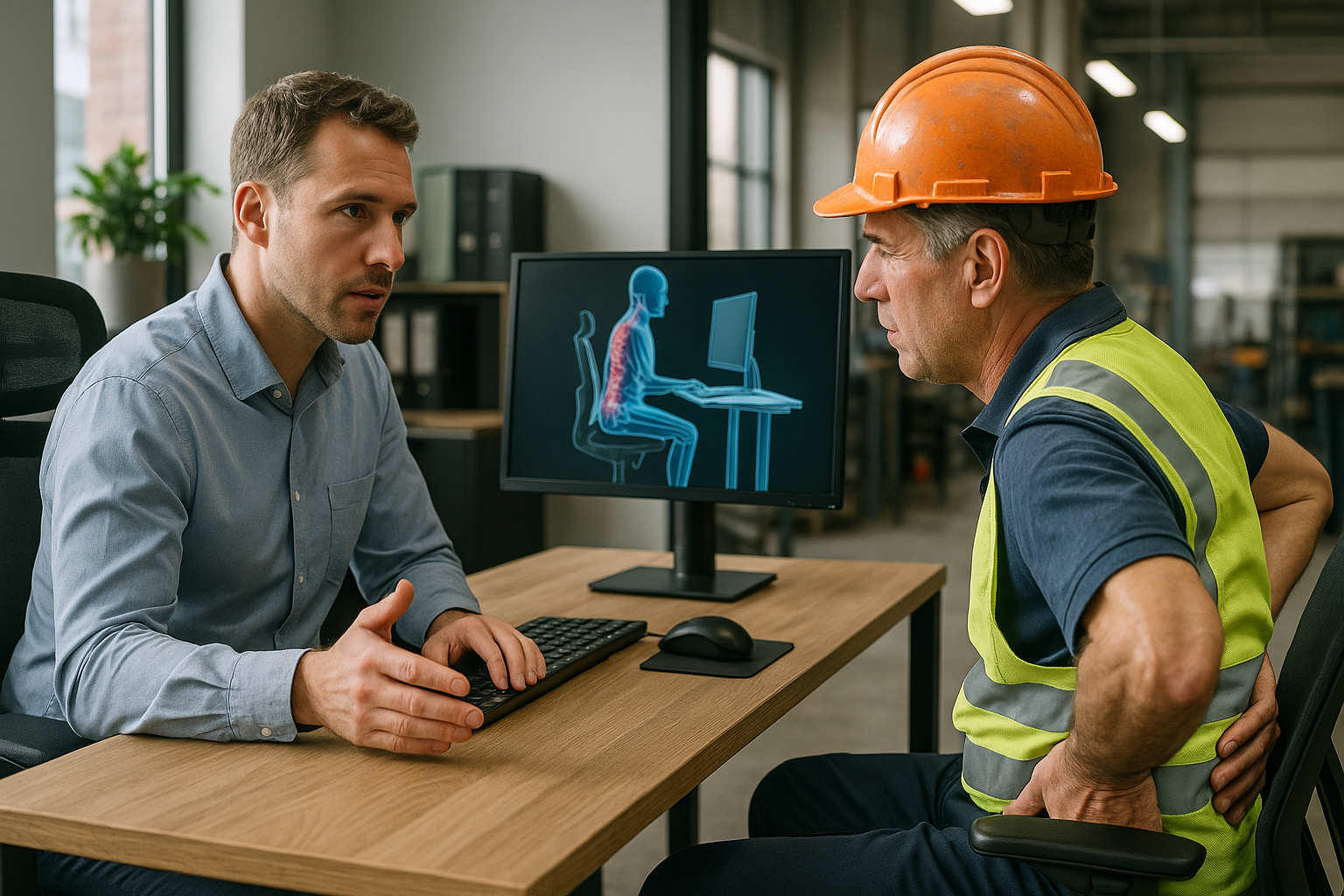
As smart features become more common, the physical design of an exercise machine still determines whether you can train comfortably and consistently. Ergonomics is the bridge between performance and long-term joint health: it influences posture, joint alignment, grip comfort, and how naturally your body fits the movement path.

Men's Posture Shirt™ - Black
Activates muscles and relieves tensions. Designed with patented NeuroBand™ technology for all-day comfort.
In practice, an ergonomic machine helps you stay in a strong position without constantly “fighting” the setup. Seat height, handle placement, pedal spacing, step height, and the smoothness of resistance all affect whether the movement feels stable or strained. This matters for beginners who are still learning technique, but it is just as relevant for experienced users pushing intensity, where small alignment issues can add up over time.
Health-focused design that supports better movement
Smart coaching can tell you what to change, but the machine should make those changes achievable. Good ergonomics reduces the need for compensation patterns such as leaning, shrugging, twisting, or locking joints to complete a rep. When the equipment supports a neutral spine and predictable joint tracking, it becomes easier to repeat quality reps and harder to “cheat” your way through fatigue.
For home fitness, this is especially important because many people train without a coach present. A compact machine can be convenient, but it should still feel stable under load, provide secure contact points, and allow adjustments that match different heights and mobility levels. For example, non-slip pedals and stable footing can reduce the risk of sudden foot shifts during stepping, while adjustable components help users avoid awkward knee or hip angles. The goal is not perfection; it is reducing unnecessary stress so training feels sustainable.
Ergonomics also connects directly to motivation. When an exercise machine feels uncomfortable, users tend to shorten sessions, avoid certain movements, or stop using the equipment altogether. Comfort is not a luxury feature; it is a practical requirement for consistency.
When AI meets ergonomics: smarter feedback, safer habits
AI-driven tracking is moving beyond counting reps and time. As form analysis becomes more accurate, it can support ergonomics by identifying patterns that suggest the setup is wrong for the user. If range of motion is consistently limited, tempo becomes uneven, or the movement drifts to one side, the issue may be technique, fatigue, or machine fit.
Another promising direction is the use of wearable sensors and open-source exercise classifiers to understand movement quality with fewer devices. When systems can recognise exercises and detect deviations reliably, the feedback can shift from generic tips to practical adjustments such as changing seat position, reducing resistance, slowing the lowering phase, or choosing a variation that better matches current mobility.
Over time, this can create a more useful loop: the machine and connected software do not only track what you did, but also help you understand why a session felt easy, difficult, or uncomfortable. That is where smart training becomes genuinely supportive rather than just data-heavy.
Future directions for the exercise machine at home
The next wave of smart equipment is likely to feel less like “a machine with an app” and more like a connected health tool. Integration with wearables can make it easier to combine training data with broader signals such as daily activity, recovery trends, and heart-rate response. For many users, the most valuable outcome will be simpler decision-making: when to push, when to maintain, and when to scale back.
Accessibility will also shape what becomes mainstream. As AI models become more efficient and sensor setups become simpler, smart features can appear in more affordable home equipment. That may include compact machines that already fit small spaces, but gain better guidance through phone-based form analysis and clearer progress tracking.
At the same time, the best results will still come from fundamentals: a well-designed exercise machine, a plan you can repeat, and feedback that helps you improve without adding friction. Smart technology is most useful when it makes training clearer, not more complicated.
Frequently Asked Questions
What are smart exercise machines?
Smart exercise machines are fitness devices that combine traditional mechanics (resistance, speed, or guided movement paths) with technology such as sensors, connectivity, and software. They can track workout metrics and, in some cases, provide feedback on movement quality.
How do AI-driven exercise machines improve workouts?
AI-driven systems can analyse motion patterns to provide real-time cues on form, range of motion, tempo, and consistency. They can also use your training history to support more personalised recommendations, helping reduce guesswork and improve repeatability.
Are smart exercise machines suitable for home use?
Yes. Many smart options are designed for home training, including compact machines that track basic metrics and equipment that relies on phone or wearable apps for guidance. The key is choosing a setup that fits your space, goals, and comfort needs.
What role does ergonomics play in an exercise machine?
Ergonomics affects how well the machine fits your body and supports healthy movement. Good ergonomic design can improve posture, reduce compensation patterns, and lower injury risk by making it easier to maintain stable alignment during training.
What future trends can we expect in smart exercise machines?
Expect tighter integration with wearables and broader health monitoring, more accurate form feedback, and smarter coaching that adapts to performance and recovery. As technology becomes more efficient, these features are also likely to become more affordable and common in home equipment.