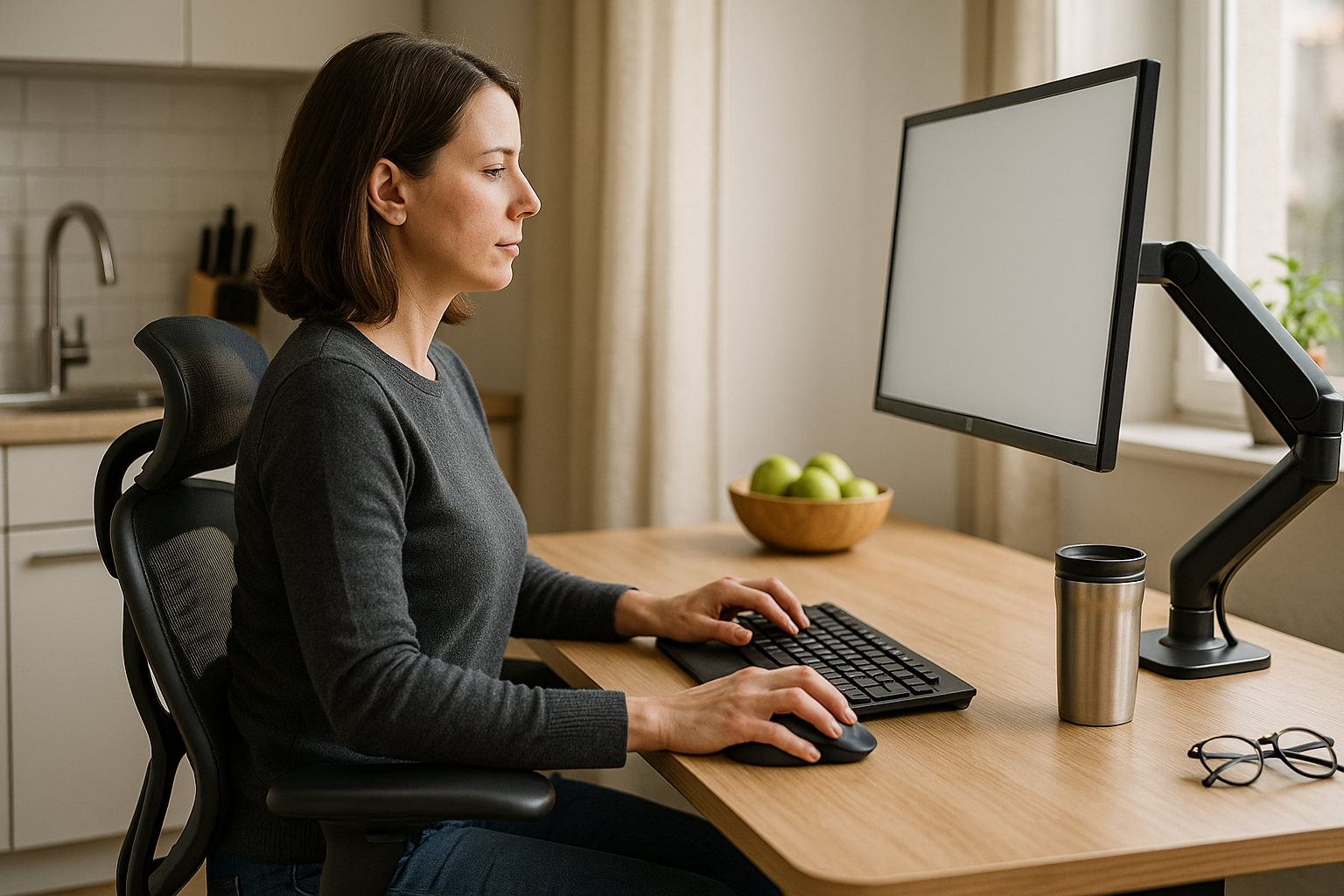
Stability sounds simple until you try to hold onto it in a normal week. One day you feel focused and in control; the next, your calendar shifts, your energy dips, and even small tasks feel like they require constant rebalancing. That’s because stability isn’t one thing. It’s physical (how your body holds itself up), mental (how steady your attention and mood feel), and professional (how consistently you can perform when conditions change).
Have you ever felt like you’re constantly juggling too many things, struggling to find your balance in life? If so, you’re not alone. Many of us chase “more time” or “more motivation,” but what we often need first is a steadier foundation. When your base is stable, you waste less energy compensating—whether that’s correcting your posture at your desk, switching between tasks, or reacting to unexpected changes at work.
What stability really means in daily life
In the body, stability is the quiet work of alignment, support, and control. Think of how much easier it is to concentrate when you’re not perched on the edge of a chair, bracing your shoulders, or shifting every few minutes to get comfortable. In the mind, stability shows up as resilience: the ability to stay calm, make clear decisions, and return to baseline after stress. In your work life, it’s consistency—delivering good output without burning through your attention like it’s a limited battery.
Why stability matters more than you think
Stability is a performance multiplier. When it’s missing, you compensate with effort: more willpower, more caffeine, more late-night catch-up. When it’s present, your day runs with less friction. That’s why the concept is also central in the digital world. In SEO, stability often refers to how much search results fluctuate over time—sometimes called SERP stability or keyword volatility. For marketers, a stable ranking environment is easier to plan around; in a volatile one, yesterday’s wins can disappear overnight.
That overlap is useful: whether you’re managing your body or your website, the goal is the same—reduce unnecessary swings, build predictability, and create conditions where progress sticks.
A new way to think about stability
In the next sections, we’ll connect these worlds: how professionals measure volatility online, and what that teaches us about building steadiness offline—through better routines, smarter workspace choices, and habits that support both posture and peace of mind.
Stability in the digital world: why rankings feel like shifting ground
In SEO, stability is often discussed in terms of how predictable search results are over time. When rankings change a little day to day, planning is straightforward: you can forecast traffic, prioritize content, and measure improvements with confidence. When rankings swing wildly, it becomes harder to tell whether a drop is caused by a competitor, an algorithm update, a technical issue, or simply normal turbulence in the search results.
This is why many marketers track SERP stability and keyword volatility. Volatility describes how much the top results move around for a given query. Some keywords behave like a calm lake; others behave like a storm, especially around major updates, seasonal shifts, or when Google is testing new layouts and SERP features.
How SEOs measure volatility and SERP stability
Most volatility tools boil ranking movement down into a score. While the math varies by platform, the idea is consistent: the more URLs swap positions (and the more dramatic the swaps), the higher the volatility. Some approaches also look at statistical relationships between different keyword sets to understand whether changes are local to a niche or part of a broader shift. In large-scale analyses of SERP snapshots, researchers often use correlation statistics to see whether certain keyword types move together, which can hint at system-wide changes rather than isolated competition.
It’s also worth knowing that “stable” search volume can be misleading. Search platforms commonly group volumes into buckets, meaning a keyword may appear unchanged even when real demand has moved. That’s one reason trend checks and consistent rank tracking matter: they help you separate true stability from a reporting artifact.
Volatility score guide
| Volatility score | What it usually indicates | How to respond |
|---|---|---|
| 0–6 | Low movement; rankings are relatively stable | Optimize steadily, test changes one at a time, and focus on incremental gains |
| 6–9 | Moderate movement; results are shifting but not chaotic | Monitor daily, review intent alignment, and strengthen pages that are slipping |
| 9–10 | High movement; major reshuffling across top results | Pause big site changes, investigate technical health, and watch for broader update patterns |
Strategies that support ranking stability over time
While no one can “lock” rankings permanently, there are practical ways to reduce unnecessary swings. One of the most consistent recommendations is to diversify with evergreen queries. These terms are often more specific, face less direct competition, and match clearer intent, which can make performance more predictable than broad, high-volume head terms.
Daily tracking is another stabilizer, not because it prevents change, but because it helps you respond intelligently. When you only check weekly or monthly, you miss the story: whether a drop was a one-day fluctuation, a gradual decline, or a sudden shift tied to a SERP feature change. Alerts for changes in featured snippets, local packs, and other SERP elements can also explain “lost” clicks even when rankings look similar.
Stability in physical and mental health: building a base you can rely on
The same principle applies offline: stability improves when your environment reduces constant correction. Physical stability starts with support and alignment. If your desk setup forces you to hunch, perch, or brace, your body spends the day compensating. That compensation costs energy and attention, which can show up as restlessness, fatigue, and reduced focus.

Women's Posture Shirt™ - Black
Supports posture, can relieve pain and tension and improves awareness. Medical-grade comfort for daily use.
Mental stability works similarly. When stress is unmanaged, your mind becomes reactive, bouncing between tasks and worries. Practices that calm the nervous system and create predictable routines help you return to baseline faster, even when the day is busy.
Practical ways to improve physical and mental stability
- Set up an ergonomic workspace: Aim for a chair and desk height that lets your feet rest flat, your hips and knees stay comfortable, and your shoulders relax. Add supportive tools where needed to reduce strain.
- Use movement as maintenance: Short, regular movement breaks can restore posture and reduce stiffness more effectively than waiting for one long workout.
- Train your core and balance gently: Simple strength and balance work supports steadier posture and reduces the feeling of “collapsing” at the end of the day.
- Practice a quick mindfulness reset: A few minutes of slow breathing or a brief body scan can lower stress and improve attention control.
- Protect sleep consistency: Regular sleep and wake times often do more for mood and focus than occasional catch-up sleep.

Men's Posture Shirt™ - White
Patented shirt activates muscles and relieves pain for improved posture. Use at work, leisure, or exercise.
Whether you’re tracking rankings or tracking your own energy, the pattern is the same: stability grows when you measure what’s changing, reduce the biggest sources of friction, and build routines that keep you steady even when conditions shift.
Stability as a system: connecting work, health, and performance
It is easy to treat stability as something you either have or do not have. In practice, it is more useful to see stability as a system you can design. In SEO, this is exactly how professionals think: they do not assume rankings will stay put, so they build monitoring, diversification, and routines that reduce unnecessary volatility. The same mindset works offline. When your schedule, workspace, and habits support you, you spend less time reacting and more time doing meaningful work.
A helpful way to apply this is to separate what you can control from what you cannot. You cannot control algorithm updates, sudden meetings, or a stressful week. You can control the foundations: how you plan your day, how you protect your focus, and how well your body is supported while you work. Those foundations create stability even when external conditions fluctuate.
Work-life balance: stability through boundaries and prioritisation
Work-life balance is often framed as a time problem, but it is frequently a stability problem. When boundaries are unclear, your day becomes a series of context switches: checking messages during breaks, finishing tasks late, and carrying unfinished work into the evening. That constant switching is the human equivalent of a volatile SERP: lots of movement, little predictability, and a harder time measuring progress.
To build stability here, focus on a few repeatable rules rather than trying to “be disciplined” all day:
- Define a start and stop ritual: a short routine that signals when work begins and ends (for example, a planning note in the morning and a shutdown list in the afternoon).
- Prioritise by impact, not urgency: choose one or two high-impact tasks that make the day successful even if smaller items slip.
- Batch communication: check email and messages at set times to reduce attention fragmentation.
- Stabilise your workspace: if your posture collapses as the day goes on, your focus often follows. Supportive seating, proper desk height, and small ergonomic adjustments reduce the physical “noise” that competes with concentration.
These steps are not about rigid schedules. They are about creating enough structure that your energy is not spent constantly rebalancing.
Financial stability: small systems that reduce daily stress
Financial stability is not only about income; it is also about predictability. Uncertainty around bills, subscriptions, or irregular expenses can create a low-level stress that affects sleep, decision-making, and attention. Even simple financial routines can increase stability by reducing surprises.
Consider a few practical stabilisers:
- Use a baseline budget: identify fixed essentials and set a realistic weekly spending limit for variable costs.
- Automate what you can: automatic transfers to savings and scheduled bill payments reduce missed deadlines and mental load.
- Create a small buffer: even a modest emergency fund can prevent minor issues from becoming major disruptions.
The goal is not perfection. It is reducing volatility in your day-to-day life so you can make decisions from a calmer baseline.
Making stability measurable in your own life
In SEO, stability improves when you track the right signals consistently. The same principle applies personally: you do not need to measure everything, but you do need feedback. Pick a small set of indicators you can review weekly, such as sleep consistency, neck or back discomfort during workdays, and how often you finish your top priority. If one metric is trending in the wrong direction, treat it like a volatility alert: adjust one variable at a time, then reassess.
Over time, stability becomes less about motivation and more about design. When your environment supports your body, your routines protect your attention, and your finances are predictable enough to reduce stress, you create the conditions for steady progress.
Frequently Asked Questions
What is the best way to measure SERP stability?
The most practical approach is to use a tool that reports volatility scores and tracks keyword positions daily over time. Daily data helps you distinguish between normal fluctuation and meaningful changes, such as a sustained decline, a competitor entering the top results, or a shift caused by SERP features.
How can ergonomic products contribute to stability in daily life?
Ergonomic products support stability by improving alignment and reducing the need for constant physical compensation. When your body is supported, you typically experience less strain in the neck, shoulders, and lower back, which can improve comfort, focus, and the ability to work consistently throughout the day.
What are some simple practices to enhance mental stability?
Start with routines that reduce reactivity: maintain a consistent sleep schedule, use short mindfulness or breathing resets during the day, and limit constant task switching by batching notifications and messages. These practices help you return to baseline faster after stress and make your attention more reliable.
Kilder
- Storgaard, A. (2015). "Treatability of Mental Disorders." University of Southern Denmark.
- Danish Center for Head Injury (2024). "Vidensrapport om let hovedtraume hos voksne."
- Hindhede, A. L. (2018). "Samlet afhandling." Aalborg University.
- Sundhedsstyrelsen (2011). "MS Blad nr. 03."
- Center for Hjerneskade. "Long-term Outcome of Brain Injury."
- Julkari. "Finnish Report on Health Systems."
- ActivePosture. "Find Your Center: Tips for Achieving Perfect Balance."
- University of Padova. "Glossary of Terms."