Depression is one of the most common mental health challenges worldwide, affecting how we think, feel and function in everyday life. For many people, it shows up as low mood, reduced motivation, sleep changes, fatigue and a sense that even simple tasks take enormous effort. As awareness grows, so does the interest in approaches that can complement traditional care and help people regain a sense of stability in daily routines.
That is where exercise and depression often meet in a surprisingly practical way. Movement is not just “nice to have” self-care; it is increasingly recognised as an evidence-based tool that can reduce depressive symptoms, especially in mild to moderate cases. Importantly, this does not mean exercise is a stand-alone cure or a replacement for professional help when you need it. But it does mean that physical activity can be a meaningful part of a broader plan, alongside therapy, medication, social support and lifestyle changes.
Why exercise is getting so much attention in depression care
In the past, the conversation around depression treatment focused mainly on psychotherapy and medication. Today, more clinicians and researchers are also looking at what people can do between appointments to support recovery. Exercise stands out because it is accessible, adaptable and can be scaled to your current energy level, whether that is a short walk, gentle strength work or a structured training plan.
Another reason exercise is so widely discussed is that the benefits are not limited to mood alone. Regular movement can support sleep quality, daily energy, stress regulation and physical comfort, all of which can be affected during depression. When your body feels more capable, it can become easier to re-engage with routines that depression tends to disrupt.
What this guide will cover
In the rest of this post, we will look at what research says about exercise and depression, including how it compares with more traditional treatments in mild to moderate cases. We will also explore why movement can influence mood, what types of exercise tend to be most helpful, and how much activity is typically needed to notice a difference.
Finally, we will address a reality that many articles skip: depression can make it genuinely hard to get started. Low motivation, fatigue, pain and fear of injury are common barriers. We will share practical ways to lower those barriers and make movement feel more doable, so exercise can become a supportive ally rather than another overwhelming task.
What the research says about exercise and depression
Interest in exercise as a tool for depression is not based on anecdotes alone. Large research overviews consistently show that physical activity can reduce depressive symptoms, particularly for mild to moderate depression. In one large umbrella review covering more than 1,000 randomised controlled trials with 128,119 participants, exercise was reported to be about 1.5 times more effective than standard approaches such as psychotherapy or medication for mild to moderate symptoms. The same analysis found a median symptom reduction of roughly 42–60% with exercise, compared with around 22–37% for psychotherapy and pharmacotherapy.
Another high-quality evidence source, a Cochrane review, concluded that regular physical activity produces moderate reductions in depressive symptoms compared with no treatment. It also found that exercise is about as effective as psychological therapy, based on moderate-certainty evidence. When compared with antidepressants, outcomes appeared similar, but the certainty of the evidence was lower because fewer studies directly compared exercise with medication.
These findings help explain why exercise and depression are increasingly discussed together in clinical settings. At the same time, most clinical guidance still frames exercise as part of a broader plan, especially when symptoms are severe, long-lasting, or significantly impair daily functioning.
Why movement can change mood
The link between exercise and depression is likely driven by several overlapping mechanisms. On the biological side, physical activity influences brain chemistry in ways that can support mood regulation. Exercise is associated with changes in neurotransmitters and the release of endorphins, which can contribute to improved well-being and reduced stress reactivity. Movement can also support sleep quality and energy regulation, both of which often worsen during depression and can amplify low mood.
Psychologically, exercise can work as a pattern interrupter. Depression often pulls attention toward rumination and negative thought loops, and even a short bout of activity can provide a break from that mental “stuckness”. Over time, completing small, manageable sessions can build self-efficacy: the sense that you can take action and influence how you feel. That matters, because depression often comes with helplessness and reduced confidence.
There is also a social and behavioural layer. Activities done with others, such as walking with a friend or joining a class, can add gentle structure and social connection. Even when you exercise alone, the routine itself can become a healthier coping strategy than withdrawal, excessive screen time, or other habits that may offer short-term relief but worsen mood in the long run.
What kind of exercise helps most?
A common concern is whether you need a specific workout style for exercise to help depression. The encouraging answer is that multiple approaches can work. Research reviews suggest that aerobic exercise, resistance training, and mixed programmes can all reduce depressive symptoms. Some findings indicate that mixed programmes and resistance training may have slight advantages over aerobic-only routines, but the overall message is that consistency matters more than choosing the “perfect” type.
Intensity can be flexible. Some evidence suggests higher-intensity activity may produce stronger effects, while other high-quality summaries indicate that light to moderate intensity can be especially helpful and easier to sustain. In practice, the best intensity is often the one you can do regularly without feeling overwhelmed or triggering pain, injury worries, or post-exercise exhaustion that makes it harder to continue.
It is also worth widening the definition of exercise. Everyday movement counts, especially when depression makes structured training feel out of reach. Walking, gardening, cycling for transport, taking the stairs, or doing short strength exercises at home can all contribute to meaningful change. For many people, starting with low-barrier activity is what makes longer-term routines possible.
How much exercise is enough to notice a difference?
There is no single dose that fits everyone, but research provides useful targets. Programmes with about 13–36 sessions have been associated with strong improvements in depressive symptoms in some reviews. Public health guidelines often recommend around 150 minutes of moderate activity per week (or 75 minutes of vigorous activity), but you do not have to hit that number immediately for exercise to be beneficial.
If you are starting from a low baseline, consider a gradual approach: two to four sessions per week, even if each session is short. Ten to fifteen minutes can still be worthwhile, especially if it helps you build a habit. Over time, you can increase duration, add gentle resistance work, or mix in slightly higher-intensity intervals if it feels manageable. The goal is not to “train perfectly”, but to create a sustainable routine that supports both body and mind.
When depression makes exercise feel impossible
Even when you know that exercise and depression are closely linked, getting started can feel out of reach. Depression often reduces motivation and increases fatigue, and it can also change how the body feels. Stiffness, aches, low energy, and a sense of heaviness can make movement feel like a bigger task than it “should” be.
Common barriers include:
- Low motivation and mental resistance, where even small tasks feel overwhelming.
- Fatigue and poor sleep, which can make exercise feel draining rather than energising.
- Pain or discomfort in the back, neck, shoulders, hips, knees, or feet.
- Fear of injury or making symptoms worse, especially if you have been inactive for a while.
These barriers are not a lack of willpower. They are part of how depression affects both mind and body. The practical goal is to reduce friction so movement becomes more doable, not perfect.
Reducing physical discomfort to support consistency
Physical discomfort is an often overlooked reason people struggle to maintain an exercise routine. If your body hurts when you walk, stand, or do simple strength exercises, it becomes harder to build the consistency that makes exercise effective. This is where ergonomic support can play a role.
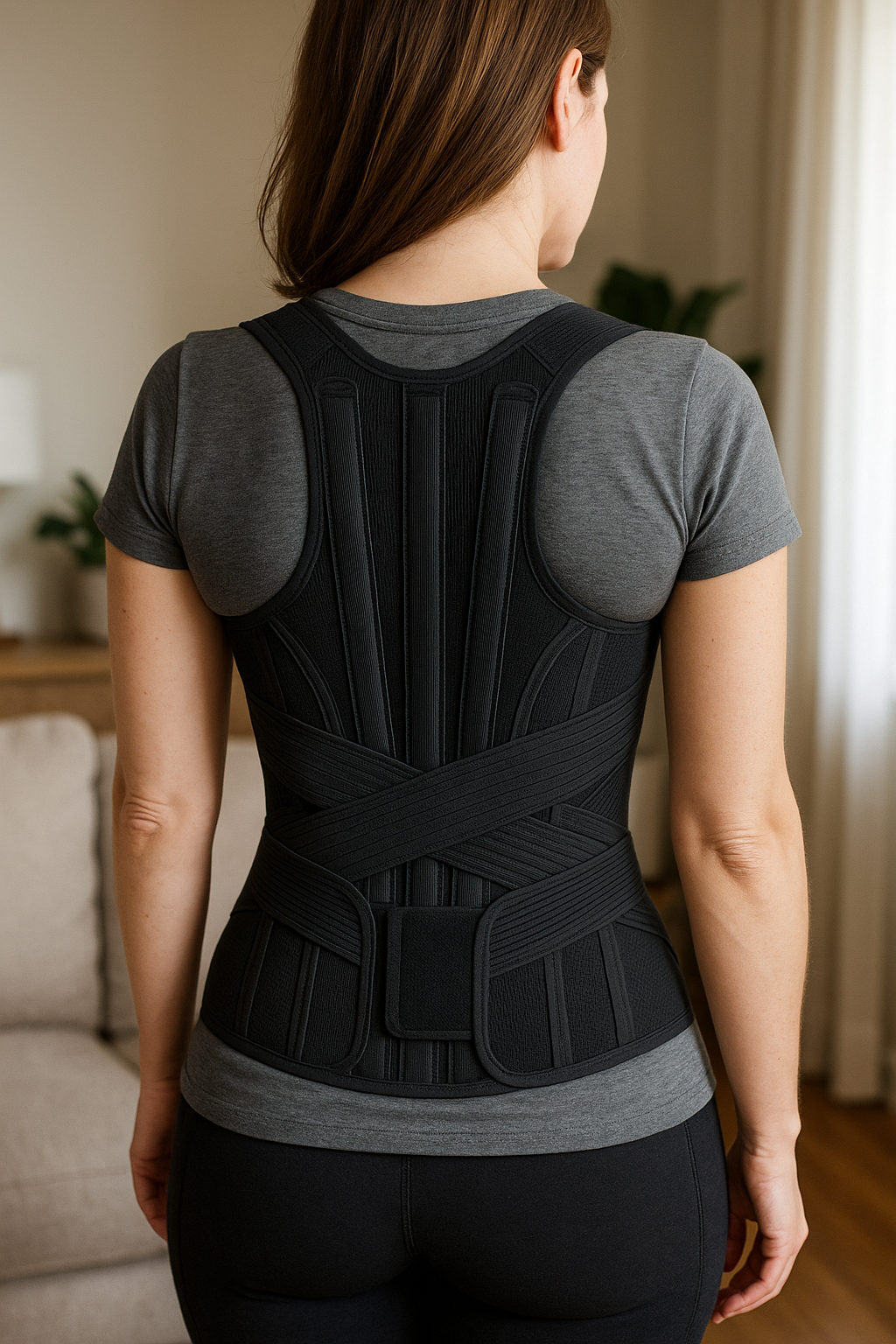
Ergonomic aids can help by improving posture, supporting joints, and reducing strain during everyday movement and training. For some people, the first step is not a new workout plan, but making daily positions and movements less uncomfortable, for example:
- Back or posture support to reduce strain during walking, light strength work, or daily activities.
- Supports for knees, ankles, or wrists if joint discomfort is a barrier to starting.
- Compression and stabilising products that can increase the feeling of security during movement.
Anodyne’s ergonomic aids are designed to support the body in motion and reduce pain-related obstacles. The aim is not to “push through” discomfort, but to make activity feel safer and more manageable so you can keep showing up.

Men's Posture Shirt™ - Black
Promotes better posture and can reduce pain/tension with patented NeuroBand™ tech.

Lumbar support belt
Provides strong, adjustable lower back support and helps relieve pain and tension.
How to start and keep going
When depression is present, the best plan is usually the one you can repeat. A sustainable routine often starts smaller than you think, and builds gradually.
- Choose something you can tolerate today. A 10-minute walk, gentle cycling, or a short home routine is enough to begin.
- Make it specific. Instead of “I will exercise more”, try “I will walk for 10 minutes after lunch on Monday, Wednesday, and Friday”.
- Lower the threshold. Lay out clothes the night before, keep equipment visible, or plan a route that feels easy and familiar.
- Plan for bad days. Create a “minimum version” of your routine (for example, 5 minutes of movement) so the habit does not disappear when energy drops.
- Track completion, not performance. Consistency matters more than intensity, especially early on.
If pain, instability, or fear of aggravating symptoms is holding you back, consider addressing comfort first. The right support can make the difference between stopping after a few attempts and building a routine that lasts.
Exercise as part of a broader treatment plan
Exercise can be a powerful ally, but it is usually most effective when integrated into a broader approach. For mild to moderate depression, physical activity may be comparable to traditional treatments for many people, but it is not a universal stand-alone solution. If symptoms are severe, persistent, or significantly affect daily functioning, professional treatment is essential.
Consider speaking with a GP or mental health professional if you are unsure where to start, if you are already in treatment and want to add exercise safely, or if you have physical conditions that require adjustments. If you experience thoughts of self-harm or feel unsafe, seek urgent help immediately through local emergency services or a crisis line.
Frequently Asked Questions
Can exercise replace medication for depression?
Exercise can reduce depressive symptoms and may be highly effective for mild to moderate depression, but it is usually best used as part of a broader treatment plan. For moderate to severe depression, medication and/or psychotherapy may be necessary, and changes to treatment should be made with a healthcare professional.
What type of exercise is best for depression?
Both aerobic exercise (such as walking, cycling, or swimming) and resistance training (such as strength exercises) can help. Mixed programmes that combine both may offer slight advantages. The most effective option is typically the one you can do consistently and safely.
How much exercise is needed to see benefits?
Many people benefit from 2–4 sessions per week. Evidence-based programmes often include a total of around 13–36 sessions, and general health guidance commonly recommends about 150 minutes of moderate activity per week. If that feels too high at first, shorter sessions can still be meaningful and can be increased gradually.
Are there any risks associated with exercising for depression?
Exercise is generally safe and has few side effects. The most common risks are minor muscle or joint injuries, especially if you increase intensity too quickly. Start at a comfortable level, build gradually, and choose activities that fit your current fitness and physical condition.
How can ergonomic aids help in maintaining an exercise routine?
Ergonomic aids can reduce pain, improve posture, and provide stability, which can make movement feel more comfortable and less intimidating. By lowering physical barriers such as back strain or joint discomfort, support products can help you stay consistent with exercise, which is key when using exercise and depression strategies together.
Kilder
- Cochrane. (2023). "Exercise to treat depression yields similar results to therapy and antidepressants."
- Fysio.dk. (2024). "Depression kan behandles med intensiv træning."
- Black Dog Institute. (2022). "Exercise and Depression."
- Sportshøjskolen. (2023). "Mental sundhed og fysisk aktivitet."
- Mayo Clinic. (2023). "Depression and exercise: Can it help?"
- Sundhedsstyrelsen. (2021). "Ny rapport undersøger hvordan fysisk aktivitet kan mindske symptomer hos patienter med depression."
- NHS. (2023). "Exercise for depression."
- Ugeskriftet. (2023). "Fysisk træning og depression."
- HSE. (2023). "Physical activity and mental health."
- Folketinget. (2023). "Svar på spørgsmål om fysisk aktivitet og depression."
- YouTube. (2023). "Exercise and depression: A practical guide."
- Idan. (2023). "Fysisk inaktivitet og mental sundhed."
- PMC. (2023). "The impact of physical activity on depression."
- SDU. (2021). "Fysisk aktivitet og psykiske lidelser."
- Flow Neuroscience. (2023). "Exercise and Depression: What the Science Says."