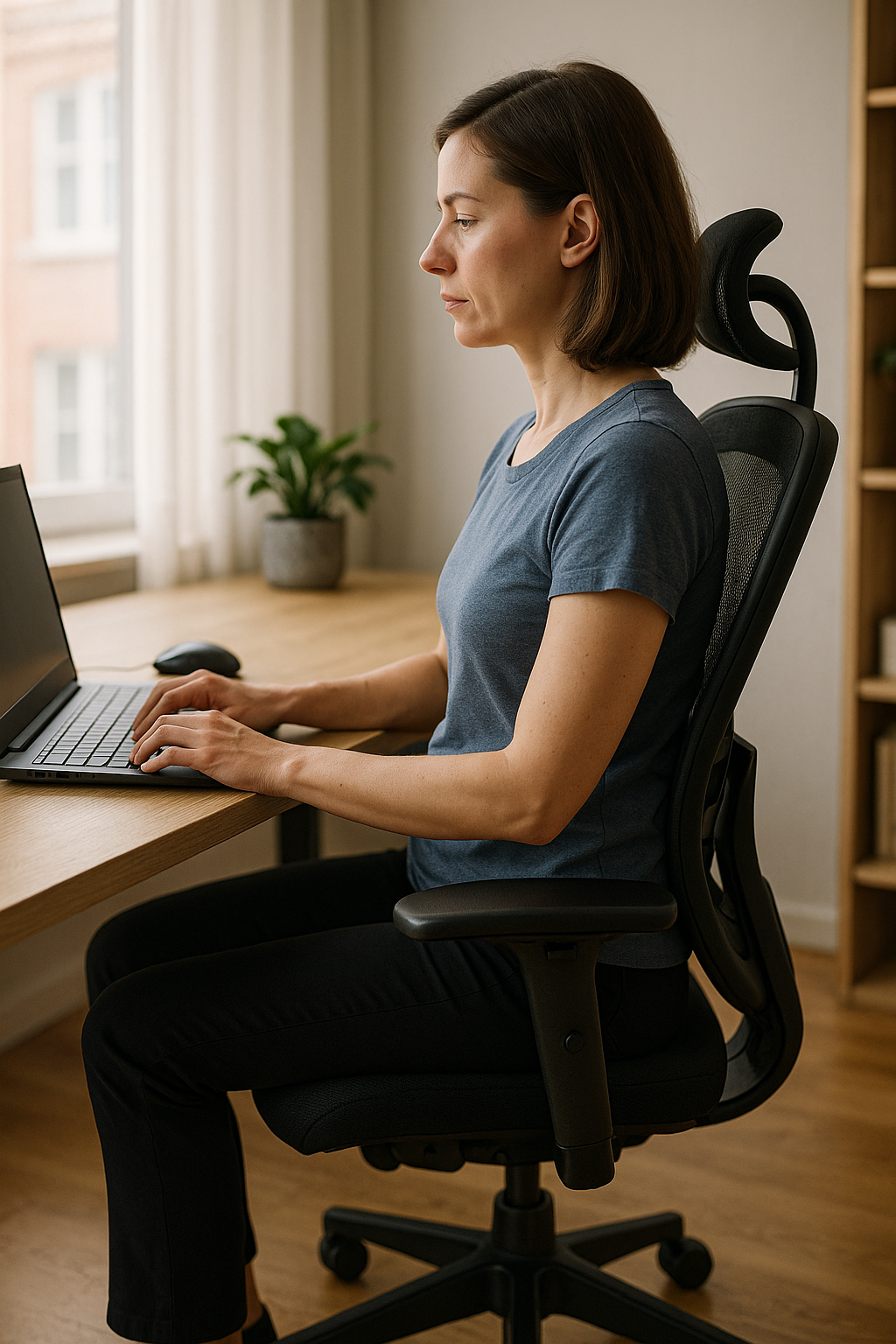
Better posture is often treated like a finishing touch: shoulders back, chin up, look confident. But posture isn’t a pose you “do” for a photo—it’s the way your body organises itself all day, whether you’re at a desk, on the sofa, driving, or looking down at your phone. And that everyday alignment matters for far more than appearance.
When your head drifts forward, your shoulders round, or your lower back collapses, your muscles have to work overtime to hold you up. Over time, that can translate into tension in the neck and shoulders, stiffness through the mid-back, and an achy lower back that seems to appear out of nowhere. Better posture can reduce unnecessary strain by helping your joints and muscles share the load more evenly—especially during long periods of sitting or standing.
There’s also a useful reality check: posture is dynamic. No single “perfect” position is meant to be held for hours. What tends to help most is a combination of reasonable alignment and regular movement—small adjustments, frequent breaks, and enough strength and mobility to return to a comfortable, supported position.
Why better posture matters beyond looks
Posture influences how you breathe, how you distribute pressure through your spine, and how efficiently you move. When you’re stacked in a more neutral position—head over shoulders, shoulders over hips—many people notice they feel less compressed and more “open” through the chest. That can make everyday tasks feel easier, from walking to carrying groceries to simply getting through a workday without feeling drained.
Better posture can also affect how you show up mentally. Standing taller often changes how you feel in your body: more grounded, more capable, and yes, more confident. It’s not magic—it’s feedback. When your body feels supported, it’s easier to focus on what you’re doing instead of constantly shifting, fidgeting, or bracing against discomfort.
A practical goal: less strain, more energy
The aim isn’t rigid “military” posture. It’s finding a sustainable setup—at your desk, in your daily routines, and during rest—that reduces overload in common problem areas like the neck, shoulders, and lower back. In the next section, we’ll break down what posture actually is, why movement matters as much as alignment, and the most effective ways to start improving it without overthinking every minute.
Understanding posture: alignment, support and movement
Posture is the way your body holds itself in different positions—standing, sitting, walking and lying down. It’s built from three main pieces: how your joints are stacked (alignment), how your muscles share the workload (support), and how often you change position (movement). When those pieces work together, your spine’s natural curves can do their job: the neck and lower back curve slightly inward, while the mid-back curves slightly outward. These curves aren’t flaws to “straighten”; they’re part of how the spine absorbs load.
It also helps to think of posture as a moving target. A position that feels great for five minutes can become uncomfortable after fifty. That’s why better posture isn’t about locking yourself into a perfect shape—it’s about returning to a more supported position often, and giving your body regular chances to reset.
Quick self-check: what does neutral feel like?
A simple way to find a more neutral setup is to scan from top to bottom:
- Head: imagine it floating up, with your chin gently tucked (not forced down). If your head is drifting forward, your neck muscles tend to overwork.
- Shoulders: let them drop away from your ears, then lightly draw them back so the chest isn’t collapsed. Avoid squeezing hard—think “wide collarbones.”
- Ribs and pelvis: aim for a stacked feeling rather than flared ribs or an exaggerated arch. Many people do best when they feel their lower ribs soften down and their pelvis sits level.
- Feet: distribute weight across the whole foot when standing, rather than hanging on one hip or leaning into the heels.
If this feels tiring, that’s useful information: it often means certain muscles need more endurance, or your environment is nudging you into a slouch.
Exercises and stretches for better posture
The most effective posture work usually combines mobility (so you can get into a good position) and strength (so you can stay there comfortably). Try these options 3–5 times per week, choosing a few that feel relevant to your body and routine.
- Plank (core endurance): forearms on the floor, elbows under shoulders, legs long. Keep a straight line from head to heels and breathe steadily. Start with 15–30 seconds and build gradually.
- Glute bridge (hip support for the lower back): lie on your back with knees bent and feet flat. Lift hips until your body forms a line from shoulders to knees, pause briefly, then lower. Aim for 8–12 controlled reps.
- Wall angels (upper back and shoulder control): stand with your back against a wall, ribs relaxed. Slide arms up and down like making a snow angel, keeping shoulders down. Move slowly and stay within a comfortable range.
- Shoulder rolls (reset tension): roll shoulders up, back and down for 5–10 reps, then reverse. This is a quick “desk-friendly” reset when you notice creeping tension.
- Chest opener (counteracts rounding): clasp hands behind your back or hold a towel, gently lift the hands and open the chest while keeping the neck long. Hold 20–30 seconds.
- Yoga-inspired options: poses like cobra, sphinx, child’s pose and cat-cow can improve awareness of spinal position and help you move between flexion and extension without stiffness.
Consistency matters more than intensity. If you feel pinching, numbness, or sharp pain, stop and adjust—posture training should feel supportive, not aggressive.
Ergonomic adjustments that make good posture easier
Your body tends to match your environment. If your screen is too low, your head will follow. If your chair doesn’t support you, your muscles will compensate. A few small changes can make better posture feel almost automatic.
- Desk setup: sit back in your chair so your lower back is supported. Keep feet flat on the floor (or on a footrest), with knees roughly level with hips. Place your screen so the top is around eye level, and keep keyboard and mouse close so your elbows can stay near your sides.
- Smartphone and laptop use: bring the screen up toward eye level when possible, and take frequent micro-breaks. Even small reductions in head-forward time can reduce neck and shoulder strain.
- Driving: sit close enough that you’re not reaching for the wheel. Adjust the seat so your back is supported and your shoulders can stay relaxed.
- Sleep positions: many people do well on their side with a pillow between the knees, or on their back with a pillow under the knees. Stomach sleeping often pushes the neck into rotation for long periods, which can irritate sensitive areas.
Long-term pain prevention: what posture can and can’t do
Poor posture is commonly linked with discomfort in the neck, shoulders and lower back because certain tissues end up doing more work than they were designed for. Over time, that can contribute to persistent tightness, reduced mobility, and a cycle where you move less because you feel stiff, then feel stiffer because you move less.
At the same time, it’s worth being realistic: pain is rarely caused by one single factor. Stress, sleep, workload, previous injuries, and overall strength all play a role. The goal with better posture is not perfection—it’s reducing unnecessary strain, improving how you distribute load, and building the strength and habits that help you feel more comfortable day to day.
Next, we’ll look at how to turn posture awareness into a simple daily routine, what tools can help, and when it makes sense to get professional guidance.

Men's Posture Shirt™ - Black
Patented shirt that activates your muscles and helps relieve pain and improve posture daily.

Women's Posture Shirt™ - Black
Patented Posture Shirt™ to support muscles, reduce pain, and increase postural awareness.
Make better posture a daily habit
Better posture becomes much easier to maintain when you stop relying on willpower and start building simple cues into your day. Think of posture as something you “check in on” rather than something you “hold.” A useful approach is to link posture resets to routines you already do: when you open your laptop, when you refill your water bottle, after a meeting, or every time you stand up.
During each check-in, aim for a quick, low-effort reset: let your shoulders drop, lengthen the back of your neck, and feel your ribs and pelvis stack comfortably. Then add movement. Even 20–30 seconds of standing, walking, or gentle shoulder rolls can reduce the stiffness that makes slouching feel inevitable.
If you work at a desk, consider a simple rhythm: change position regularly, alternate between sitting and standing if possible, and take short movement breaks throughout the day. The goal is not constant correction—it’s reducing long, uninterrupted time in one posture.
Use technology to support better posture (without obsessing)
Apps and wearable reminders can be helpful if they encourage movement rather than “perfect posture.” A timer that prompts you to stand, stretch, or look away from the screen can reduce the slow drift into a head-forward position. If you try reminders, keep them realistic: prompts every 30–60 minutes are often easier to stick with than frequent alerts that interrupt focus.
It also helps to use your devices in a way that supports alignment. Raise screens closer to eye level when you can, bring work closer to you instead of leaning forward, and use headphones for long calls so you’re not cradling a phone between shoulder and ear. Small changes like these reduce the need for your neck and upper back to “hold you up” all day.
Ergonomic aids that can make posture easier
Ergonomic aids are not a replacement for strength, mobility, and movement—but they can reduce strain and make better posture feel more natural, especially during long periods of sitting or standing. The most useful tools are the ones that support your body’s neutral alignment without forcing you into a rigid position.
- Lumbar supports: helpful if your chair doesn’t support the natural curve of your lower back. The aim is gentle support, not an exaggerated arch.
- Footrests: useful when your feet don’t rest flat on the floor. Stable foot contact can reduce tension in the hips and lower back.
- External keyboard and mouse: often a major upgrade for laptop users because it allows the screen to be higher while keeping elbows close to the body.
- Posture garments or braces: can provide light feedback and cue you to return to a more upright position. They tend to work best as short-term training support rather than something to rely on all day.
If an aid causes discomfort, numbness, or makes you feel restricted, it’s a sign to reassess the fit, the setup, or whether the tool is appropriate for your needs.
When to seek professional guidance
Posture changes can be very effective for reducing everyday tension, but persistent or worsening symptoms deserve a closer look. Consider speaking with a physiotherapist or qualified clinician if you notice:
- Pain that persists despite regular movement breaks and basic ergonomic adjustments
- Numbness, tingling, or weakness in the arm or hand
- Headaches that seem linked to neck and shoulder tension
- Sharp or radiating pain rather than general stiffness
- Major posture changes that appeared quickly or after an injury
A professional can help identify the main drivers—strength deficits, mobility restrictions, workload, stress, or workstation factors—and create a plan that fits your body and daily demands. That personalised approach is often what turns “knowing what to do” into lasting progress.
Frequently Asked Questions
Is it too late to improve my posture?
No. Better posture is typically built through gradual changes: improving strength and endurance in key muscles, restoring mobility where you feel stiff, and adjusting daily habits that keep pulling you into the same positions. Progress may be slower if you’ve had the same patterns for years, but meaningful improvement is still realistic at any age.
Can poor posture really cause pain?
It can contribute. When posture repeatedly places extra load on certain tissues—often the neck, shoulders, and lower back—muscles may stay tense and joints may feel irritated. However, pain is rarely caused by posture alone. Sleep, stress, previous injuries, overall activity levels, and workload also influence symptoms. Better posture is best viewed as one practical tool for reducing unnecessary strain.
Do I need special equipment to improve my posture?
No. Many people improve posture with movement breaks, targeted exercises, and a few ergonomic adjustments. That said, ergonomic aids like lumbar supports, footrests, and posture garments can be useful when they reduce strain or provide gentle feedback—especially if your environment makes good alignment difficult.
How often should I check my posture?
Frequent, brief check-ins work better than long periods of holding a “perfect” position. A practical target is to scan your posture whenever you change tasks and to take a short movement break every 30–60 minutes during prolonged sitting or standing.
Källor
- Healthline. (n.d.). "Posture Benefits."
- Anytime Fitness. (n.d.). "10 Exercises for Better Posture from a Physical Therapist."
- Rush University Medical Center. (n.d.). "The Power of Good Posture."
- Healthline. (n.d.). "Posture Exercises."
- University of St. Augustine for Health Sciences. (n.d.). "How to Improve Posture."
- Primal Physical Therapy. (n.d.). "Best Physical Therapy Posture Exercises."
- MedlinePlus. (n.d.). "Guide to Good Posture."
- Cleveland Clinic. (n.d.). "Posture Exercises."
- Brown Health. (n.d.). "Posture and How It Affects Your Health."
- Blue Rock Medical. (n.d.). "The Remarkable Benefits of Improved Posture."
- Harvard Health Publishing. (n.d.). "Why Good Posture Matters."
- UCSB Student Health. (n.d.). "Posture."