It often starts innocently: a busy week, a tight deadline, a difficult conversation you can’t quite let go of. You finally get into bed, but your mind keeps running and your body feels oddly “on.” That’s the sleep and stress cycle in action—stress makes it harder to fall asleep and stay asleep, and then poor sleep makes everyday challenges feel bigger the next day.
This loop is far from rare. Many adults sleep less than they need, and the gap adds up over time. The American Psychological Association describes sleep as a necessary function that allows the brain to recharge and the body to rest. Yet adults average around 6.7 hours per night, even though the recommended range is typically 7–9 hours. When sleep gets squeezed, it’s not just energy that suffers—memory, mood, judgment, and resilience can take a hit, too.
Stress is one of the most common reasons sleep quality drops. In survey data highlighted by the APA, 42% rate their sleep quality as fair or poor, and 43% say stress has caused them to lie awake at night in the past month. On a broader level, global survey findings also point to stress and anxiety as the leading barrier to good sleep—ahead of work, screens, and household responsibilities. In other words, this isn’t only a personal struggle; it’s part of a wider sleep crisis affecting daily wellbeing and performance.
Why sleep and stress so often reinforce each other
Stress doesn’t only live in your thoughts—it shows up in your physiology. When you’re under pressure, your system is more alert, and that can clash with what sleep requires: a gradual downshift. At the same time, a short or fragmented night can make you more reactive the next day, lowering your tolerance for normal demands and making stress feel more intense.
There’s also a body piece many people overlook. Stress commonly travels with muscle tension—tight shoulders, a clenched jaw, a stiff lower back, shallow breathing. If your body stays braced into the evening, comfort becomes harder to find, and small discomforts can turn into repeated awakenings. That’s why improving sleep often isn’t just about “switching off” mentally, but also about helping the body feel safe, supported, and able to let go.
A more practical way to think about better nights
In the next sections, we’ll break down what’s happening beneath the surface—how stress disrupts sleep, why some people are more sensitive than others, and what you can do to interrupt the pattern with realistic, body-based strategies.
The science behind sleep and stress
Stress and sleep are tightly linked, and the relationship runs in both directions. When stress rises, sleep quality tends to fall—people often take longer to fall asleep, wake more during the night, and spend less time in truly restorative sleep. Data-driven sleep analyses have repeatedly shown the same pattern: higher self-reported stress is associated with shorter sleep duration, lower sleep efficiency, and poorer overall sleep scores. In everyday terms, the more “wired” you feel, the harder it is for your system to settle into a stable night.
Over time, this can become more than an annoying phase. Chronic stress paired with ongoing poor sleep is associated with broader health risks, including cardiovascular strain and mental health challenges. That doesn’t mean a rough week automatically leads to long-term problems—but it does explain why the sleep-stress cycle can feel so stubborn. When your body doesn’t get consistent recovery at night, it becomes harder to regulate stress the next day, and the loop continues.
How stress disrupts sleep: mind and body mechanisms
Stress affects sleep through overlapping psychological and biological pathways. Psychologically, one of the biggest culprits is rumination—repetitive, sticky thinking that keeps the brain engaged when you want it to power down. Instead of drifting into sleep, your mind replays conversations, predicts worst-case scenarios, or runs through tomorrow’s to-do list. Social anxiety can add another layer: concern about how you were perceived, what you should have said, or what might happen next time. These patterns don’t just feel unpleasant; they actively maintain arousal and make it harder to transition into sleep.
Biologically, stress shifts the body toward alertness. Your nervous system is designed to keep you safe, so when it detects pressure—whether it’s a real threat or a modern “mental” one—it can increase vigilance. That can show up as a faster heart rate, shallow breathing, and muscle tension. Even if you’re exhausted, your body may behave as if it needs to stay on watch. This is one reason stress-related sleep problems often include both difficulty falling asleep and difficulty staying asleep.
There’s also an important individual-differences factor: sleep reactivity. Some people are simply more sensitive to stress-related sleep disruption. With high sleep reactivity, even relatively small stressors can trigger a noticeable change in sleep onset, awakenings, or early-morning waking. Understanding this can be relieving: if you feel like your sleep “breaks” easily under pressure, it may not be a lack of willpower—it may be a higher vulnerability that calls for more deliberate wind-down routines and stronger boundaries around recovery.
Why this is a global and workplace issue, not just a personal one
Stress is consistently reported as the top barrier to good sleep in large global surveys, ranking above work itself, screen use before bed, household responsibilities, and sleep disorders. That matters because it reframes the problem: many people aren’t failing at sleep hygiene—they’re trying to sleep in a world that keeps their nervous system activated.
Workplace stress plays a major role in this. High workload, constant availability, and blurred boundaries can keep the brain in “problem-solving mode” late into the evening. Add screens—emails, news, social media—and you get a double hit: mental stimulation plus light exposure that can delay the body’s natural wind-down. Household responsibilities can further compress the time available to decompress, especially for people who move from work stress straight into caregiving or chores.
Performance and health consequences you can feel quickly
Even a few nights of inadequate sleep can affect how you function. Cognitively, you may notice slower thinking, reduced focus, more mistakes, and lower frustration tolerance. Physically, recovery can suffer—training feels harder, motivation drops, and the body may feel heavier or more sore. Poor sleep is also linked with a higher risk of depression and anxiety, which can intensify the mental side of stress and make bedtime feel even more loaded.
One reason sleep is so important for stress recovery is that it supports emotional regulation. REM sleep, in particular, is closely tied to how the brain processes emotional experiences and adapts to stress. When stress shortens or fragments sleep, you may get less consistent access to the deeper recovery your brain relies on to “reset” emotional reactivity. The next day, challenges can feel sharper, and the threshold for stress can drop.
The overlooked link: stress, muscle tension, and night-time comfort
Stress doesn’t only keep the mind active—it often keeps the body braced. Tight shoulders, a stiff neck, jaw clenching, and a guarded lower back can make it harder to find a comfortable position and stay there. Discomfort can lead to micro-awakenings, more tossing and turning, and a lighter overall sleep. This is where an ergonomic perspective becomes especially relevant: if your day is spent in postures that load the neck, back, and hips, stress-related tension can become physical friction at night.

Men's Posture Shirt™ - Black
Improves posture, relieves pain and tension. Patented NeuroBand™ and strong effect for daily life.

Women's Posture Shirt™ - Black
Supports and relieves your back with patented technology for better posture and less pain.
In the next part, we’ll move from understanding to action: how to break the cycle with practical strategies that calm the nervous system, reduce physical tension, and make sleep feel easier to access—even during stressful periods.
Breaking the sleep and stress cycle with practical strategies
When sleep and stress feed each other, the goal is not perfection—it is creating enough “downshift” signals for your nervous system to move from alertness to rest. Start by choosing one or two changes you can repeat nightly. Consistency matters because it teaches your body what to expect.
Use a short wind-down sequence. A simple routine can reduce rumination by giving your attention a clear track to follow. Try 5 minutes of slow breathing (longer exhales than inhales), followed by a brief body scan from jaw to shoulders to hips. If thoughts keep looping, write down the top three worries and one next step for each. This does not solve everything, but it reduces the mental load you carry into bed.
Protect your sleep window. A consistent wake-up time is often more effective than forcing an early bedtime. If you cannot fall asleep after about 20–30 minutes, get up and do something calm in dim light until you feel sleepy again. This helps prevent the bed from becoming a place where you rehearse stress.
Reduce screen friction. Screens can keep the brain in “input mode” and push bedtime later than intended. If you use your phone in the evening, set a clear cutoff (for example, 30–60 minutes before bed) and replace it with a low-effort activity: stretching, a warm shower, or quiet reading.
Ergonomics: how your body can make sleep and stress worse or better
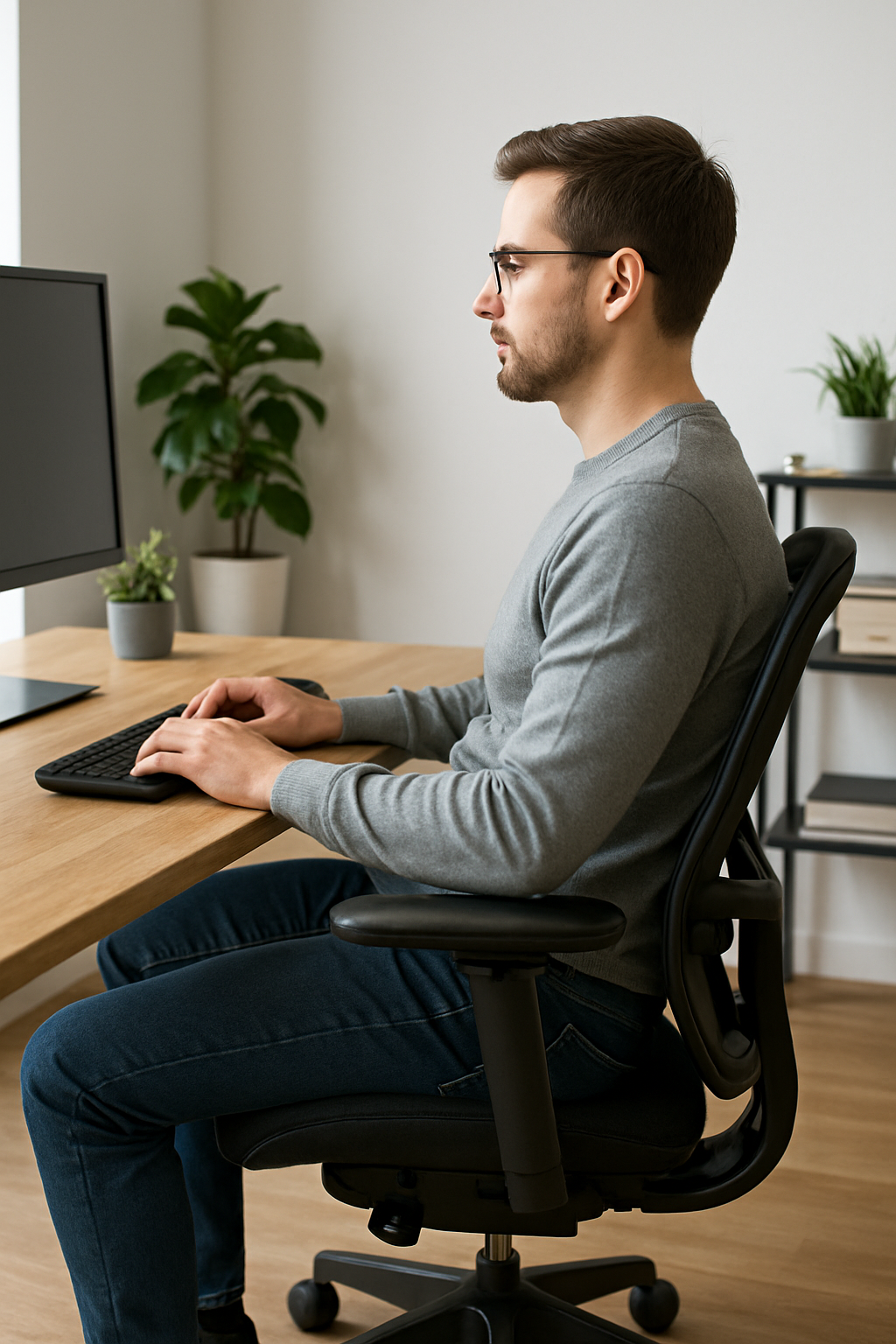
Stress often shows up physically as bracing: elevated shoulders, a clenched jaw, shallow breathing, and a stiff lower back. If your day includes long hours at a desk, driving, or repetitive tasks, your body may arrive at bedtime already loaded with tension. That discomfort can lead to more position changes, lighter sleep, and more awakenings—making the sleep and stress loop harder to break.
Start earlier than bedtime. Evening comfort is often determined by daytime posture. A few practical adjustments can reduce end-of-day strain:
- Workstation setup: Keep the screen at eye level, shoulders relaxed, and feet supported. If you constantly lean forward, your neck and upper back may stay “on” long after work ends.
- Micro-breaks: Every 45–60 minutes, stand up, roll the shoulders, and take a few slow breaths. This is not about fitness—it is about releasing the posture your body has been holding.
- Supportive sleep environment: Choose bedding that keeps the spine in a neutral position and reduces pressure points. If you wake with neck or lower-back discomfort, it is often a sign that support or alignment is off.
Consider ergonomic aids for tension reduction. Posture-supporting garments or targeted supports can help reduce muscular overwork by encouraging better alignment and distributing load more evenly. The aim is not to “force” posture, but to reduce the physical effort your body uses to hold itself upright all day—so it has less tension to unwind at night.
Self-assessment: track patterns and find your biggest levers
If your sleep changes from week to week, a short log can reveal what is actually driving it. Use a downloadable 7-day sleep and stress log to track:
- Bedtime and wake time
- Time to fall asleep and number of awakenings
- Stress level (0–10) in the evening
- Screen use in the last hour
- Body tension hotspots (jaw, shoulders, chest, lower back, hips)
After a week, look for simple correlations: do high-stress days match more awakenings? Do tight shoulders match longer time to fall asleep? This turns “I sleep badly sometimes” into actionable insight.
Body-based checklist for the last 10 minutes before bed:
- Unclench the jaw; let the tongue rest
- Drop the shoulders away from the ears
- Exhale slowly for 6–8 seconds, repeat 5–10 times
- Gentle neck and chest opening stretch (no pain, no forcing)
- Adjust pillow/support so the neck feels neutral, not tilted
Frequently Asked Questions
How does stress specifically affect sleep quality?
Stress increases physiological arousal, including higher cortisol and a more alert nervous system. This can make it harder to fall asleep, increase night-time awakenings, and reduce overall sleep efficiency—so you spend less time in restorative sleep.
What are some signs that stress is impacting my sleep?
Common signs include difficulty falling asleep, frequent awakenings, early-morning waking, restless sleep, and feeling unrefreshed even after enough hours in bed. You may also notice more muscle tension at night, such as tight shoulders or jaw clenching.
Can improving my posture really help with sleep?
Yes. Better posture and ergonomics can reduce muscle tension and discomfort that otherwise lead to tossing, turning, and micro-awakenings. When the body feels supported and less braced, it is easier to settle into sleep.
What are some quick fixes for stress-induced sleeplessness?
Try slow breathing with longer exhales, progressive muscle relaxation, and a short “brain dump” where you write down worries and next steps. If you cannot fall asleep after 20–30 minutes, get up briefly and do something calm in dim light until sleepiness returns.
Are there long-term solutions for managing stress and sleep?
Long-term improvements usually come from combining consistent sleep timing, regular physical activity, stress-management skills (such as mindfulness), and reducing daily sources of physical tension through better ergonomics. If sleep problems persist for weeks or significantly affect daily functioning, consider speaking with a qualified healthcare professional.
Källor
- Baylor College of Medicine. (n.d.). "How Stress Can Affect Your Sleep."
- Cedars-Sinai. (n.d.). "Sleep and Stress."
- Cadence. (n.d.). "The Effects of Stress and Sleep on Health & Performance."
- Frontiers in Psychology. (2026). "Sleep Apps Help Some Users, But They Stress Out People With Insomnia."
- Banner Health. (n.d.). "How Sleep Can Affect Stress."
- DiVA Portal. (n.d.). "Fulltext PDF."
- Stanford Medicine. (2025). "Sleep and Mental Health Connection: What Science Says."
- PubMed Central. (n.d.). "Article PMC11532129."
- American Psychological Association. (2013). "Stress in America: Sleep."
- Wikipedia. (n.d.). "Psychological Stress and Sleep."
- Harvard Medical School. (n.d.). "Sleep and Health Education Program."
- International Journal of Novel Research and Development. (n.d.). "IJNRD2407234."
- The National Sleep Foundation. (n.d.). "The Stress-Sleep Connection."
- ScienceOpen. (n.d.). "Document File."
- PubMed Central. (n.d.). "Article PMC7045300."