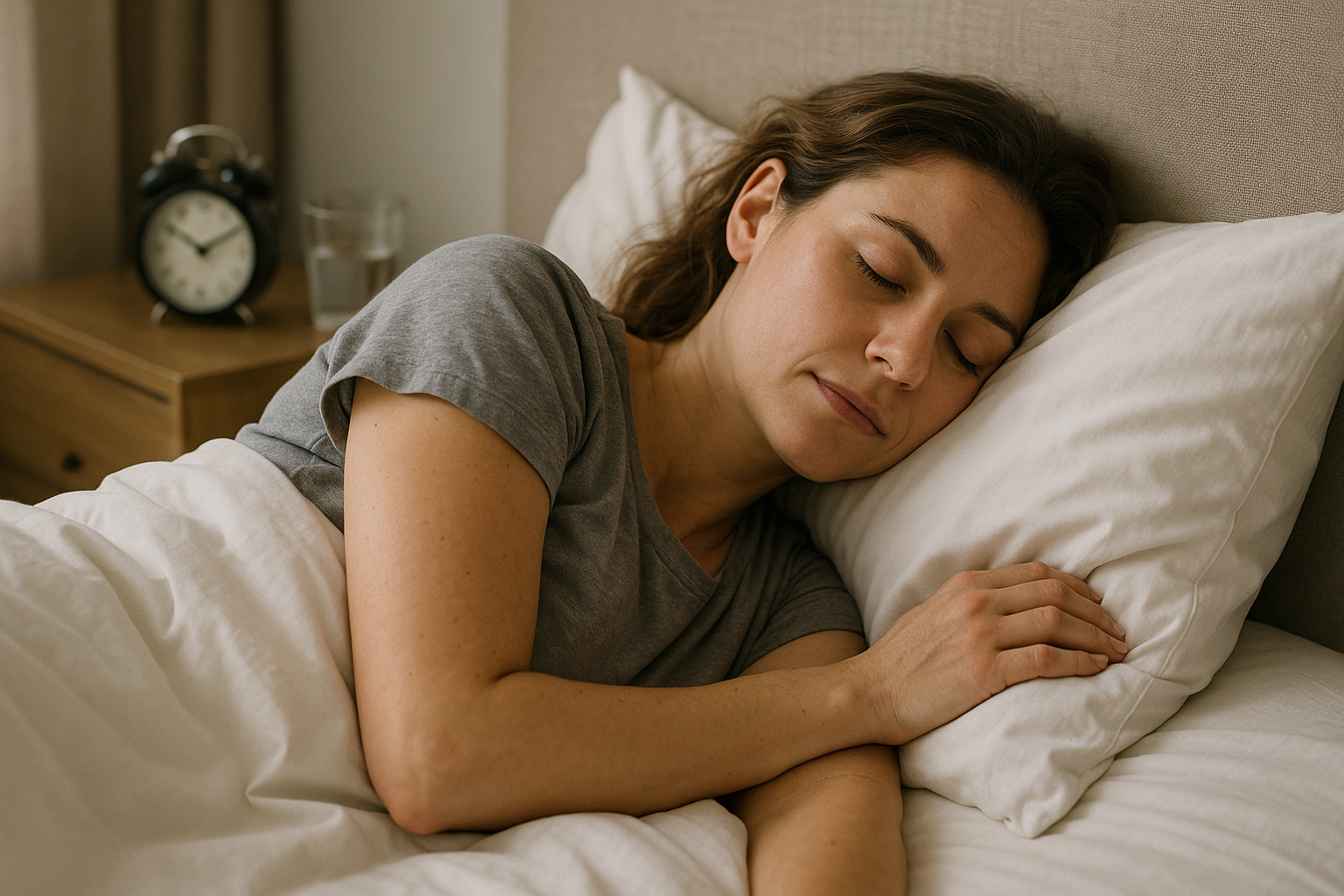
Most of us know the feeling: you technically slept “enough,” yet you wake up heavy-headed, stiff, and already behind. That gap between time in bed and how you function the next day is exactly where optimal sleep lives. It’s not a luxury or a wellness trend; it’s the foundation for clearer thinking, steadier mood, better training results, and a body that actually feels recovered when you get up.
Optimal sleep is best understood as the combination of duration (how long you sleep), quality (how well you sleep), and personal needs (what your body uniquely requires). That’s why the most common questions are also the most practical: How many hours are optimal? What does optimal sleep look like in real life? And what can you do tonight to move closer to it?
What optimal sleep really means
For most adults, optimal sleep usually lands within the well-known range of 7–9 hours per night. But “optimal” is not a fixed number you must hit perfectly. It’s the point where you wake up feeling refreshed, stay alert through the day without relying on constant caffeine, and recover well from both mental and physical stress. Some people feel best closer to seven hours, others need more—especially after periods of short nights, high workload, or intense training.
Quality matters just as much as hours. If you spend eight hours in bed but toss, turn, and wake repeatedly, your sleep can look fine on the clock and still be poor in practice. This is also why sleep tracking has become popular: wearables often highlight patterns like frequent awakenings, low sleep efficiency, or too little deep sleep. The numbers can be helpful, but the goal is simple: sleep that feels restorative.
Why optimal sleep affects your whole body
Sleep is when your brain consolidates memory and learning, your nervous system downshifts, and your muscles and connective tissue get time to repair. When sleep is consistently too short or fragmented, many people notice it first as irritability, cravings, reduced focus, and slower recovery. Over time, poor sleep is also linked with higher risk factors for metabolic issues such as obesity and type 2 diabetes.
There’s also a more everyday barrier that often gets overlooked: comfort and body alignment. If pain, tension, or an unsupported sleep position keeps pulling you into lighter sleep, you may wake up tired even with “enough” hours. In the next section, we’ll break down what to look for in sleep duration and quality—and how to start optimizing both.
Understanding optimal sleep: how many hours do you really need?
If you’ve ever wondered why one person thrives on seven hours while another feels foggy without eight, the answer is that optimal sleep has both a recommended range and a personal sweet spot. For most adults, research-based guidance consistently points to 7–9 hours per night, with many people functioning best around 7.5–8.5 hours. That range isn’t a rule to follow perfectly every night, but it is a reliable starting point if you’re trying to improve energy, mood, and recovery.
There’s also evidence that the “best” number can shift depending on what outcome you care about. One large study focusing on metabolic health found a sweet spot around 7 hours and 18 minutes in relation to insulin resistance. The key takeaway isn’t that you must hit a precise minute count—it’s that both too little and too much sleep can be associated with poorer health markers, and that consistency tends to matter more than occasional weekend catch-up.
Sleep quality metrics that define optimal sleep
Duration is only half the story. Optimal sleep also depends on how efficiently you move through the night. This is where sleep trackers can be useful: not because their numbers are perfect, but because they introduce practical metrics you can act on. The most helpful ones are:
- Sleep latency: how long it takes you to fall asleep. Many adults do best when this is roughly 10–30 minutes.
- Sleep efficiency: the percentage of time in bed that you’re actually asleep. A realistic target for adults is 80% or higher.
- Awakenings and wake after sleep onset (WASO): how often and how long you’re awake during the night. Brief awakenings are normal; frequent or long ones often explain why you feel unrefreshed.
- Sleep stages: the balance of light sleep, deep sleep, and REM sleep across the night.
Sleep stages vary from person to person and from night to night, but adult sleep often falls within the ranges below. If your tracker shows values outside these ranges occasionally, that can be completely normal. Patterns over weeks are what matter.
| Sleep stage | Typical adult range | Why it matters |
|---|---|---|
| Light sleep (N1–N2) | About 50–60% | Supports overall recovery and transitions between stages |
| Deep sleep (N3) | About 16–20% | Physical restoration, immune support, feeling refreshed |
| REM sleep | About 21–30% | Memory processing, emotional regulation, learning |
Your personal optimal sleep duration (and why sleep debt changes everything)
Even within the 7–9 hour guideline, your personal optimal sleep duration can differ due to genetics, age, training load, stress, and accumulated sleep debt. Sleep debt is what builds when you repeatedly sleep less than your body needs. It’s also why a single “good” night doesn’t always fix fatigue: your system may still be catching up.
A practical way to estimate your own optimal sleep is to track two things for 10–14 days: how long you sleep and how you function the next day. Note your energy dips, cravings, focus, mood, and whether you need extra caffeine. If you can, include a few days where you wake naturally without an alarm. Over time, you’ll see a pattern: a range where you feel most stable and alert. That’s your target.
Practical tips to achieve optimal sleep consistently
Once you know what you’re aiming for, the next step is making it repeatable. The most effective sleep optimization strategies are often the least complicated, because they support your circadian rhythm and reduce the factors that fragment sleep.
Build a routine your body can predict
- Keep a consistent wake time (even on weekends when possible). This anchors your sleep-wake rhythm.
- Create a 10–20 minute wind-down routine: dim lights, stretch gently, read, or take a warm shower.
- If your mind races, do a quick brain dump on paper: worries, to-dos, and tomorrow’s first step.
Optimize your sleep environment
- Temperature: many people sleep best around 18°C. A slightly cooler room often improves sleep continuity.
- Darkness and quiet: blackout curtains and consistent background sound can reduce micro-awakenings.
- Comfort and support: if you wake stiff or keep changing position, consider whether your pillow height and mattress support keep your spine neutral. Poor alignment can quietly increase awakenings and reduce deep sleep.
Adjust habits that disrupt sleep quality
- Light exposure: get outdoor light in the morning, and reduce bright screens in the last hour before bed.
- Caffeine: if you struggle to fall asleep or stay asleep, limit caffeine after early afternoon.
- Evening timing: heavy meals, alcohol, and intense exercise too close to bedtime can fragment sleep and reduce restorative stages.
In the next section, we’ll connect these sleep principles to something many people underestimate: how pain, posture, and everyday ergonomics can make it harder to reach optimal sleep—even when your routine looks “right” on paper.
Ergonomics: The missing piece in optimal sleep
If your routine is solid and your bedroom is dark and cool, but you still wake up unrefreshed, ergonomics may be the factor holding your optimal sleep back. Discomfort does not always wake you fully. Often, it shows up as micro-awakenings, frequent position changes, or lighter sleep that reduces the restorative value of the night. Over time, this can affect both how you feel in the morning and how much sleep you think you “need” to function.
Many people notice the pattern as stiffness in the neck, shoulders, lower back, or hips. The body responds by searching for a less painful position, which can fragment sleep and reduce time spent in deeper stages. If a sleep tracker shows frequent awakenings or low sleep efficiency, it can be worth evaluating whether support and alignment are contributing.

Women's Posture Shirt™ - Black
Improves posture and postural awareness, can relieve tension and pain in daily life.
How posture and pain can disrupt sleep quality
Optimal sleep depends on your ability to stay comfortably still for long enough to cycle through deep and REM sleep. When joints or muscles are irritated, the nervous system stays more alert, making it easier to wake up from normal sleep transitions. Even if you do not remember waking, the result can be the same: reduced deep sleep, lower sleep efficiency, and a morning that starts with fatigue instead of recovery.
A practical way to think about sleep posture is “neutral alignment.” Your spine should be supported so it is not forced into twisting, excessive arching, or side-bending for hours. Common issues include a pillow that is too high (neck flexion), too low (neck side-bending), or a mattress that allows the hips to sink unevenly (lumbar rotation and tension).
Simple ergonomic adjustments to support optimal sleep
- Side sleepers: Aim for a pillow height that keeps the neck in line with the rest of the spine. Placing a pillow between the knees can reduce hip and lower-back strain by keeping the pelvis more level.
- Back sleepers: Choose a pillow that supports the natural curve of the neck without pushing the head forward. A small pillow under the knees can reduce tension in the lower back for some people.
- Stomach sleeping: This position often increases neck rotation and lower-back extension. If you cannot avoid it, consider a very low pillow (or none) and a thin pillow under the pelvis to reduce strain.
The goal is not a “perfect” position, but fewer pain-driven adjustments during the night. If you wake up in a different position than you fell asleep in, that is normal. What matters is whether discomfort is repeatedly pulling you toward lighter sleep.

Lumbar support belt
Provides stabilisation and relief for lower back pain and can be adjusted for personalized support.
Daytime ergonomics that improve nighttime recovery
Optimal sleep does not start at bedtime. If your body spends the day in sustained, unsupported positions, it is more likely to carry tension into the evening. A common example is desk work with forward head posture and rounded shoulders, which can contribute to neck and upper-back discomfort that becomes more noticeable when you lie down.
Small improvements during the day can reduce the “background load” your body brings into the night:
- Workstation setup: Keep the screen at eye level, shoulders relaxed, and elbows supported so you are not holding tension for hours.
- Movement breaks: Short breaks every 30–60 minutes can reduce stiffness that otherwise shows up as nighttime discomfort.
- Evening downshift: Gentle mobility work, light stretching, or a short walk can help transition the body out of a high-tension state before bed.
If you track sleep, consider pairing your data with a simple comfort log for 1–2 weeks: note where you feel stiffness in the morning, how often you wake, and whether you changed pillow or sleep position. This makes it easier to connect sleep metrics to real-world causes and move closer to optimal sleep in a way that is measurable and personal.
Frequently Asked Questions
Is 6 hours of sleep enough?
For most adults, 6 hours is below the range typically associated with optimal sleep. Some people may function on 6 hours in the short term, but many will see reduced alertness, poorer mood stability, and slower recovery over time. If you consistently sleep 6 hours and feel unrefreshed, it is a strong signal to aim closer to at least 7 hours.
Can you sleep too much?
Yes. While occasional long nights can help after short sleep, consistently sleeping far beyond your personal need can be associated with poorer health markers in some studies. If you regularly sleep long hours but still feel tired, the issue may be fragmented sleep, low sleep efficiency, or an underlying factor that reduces sleep quality.
What percentage of deep sleep is optimal?
For adults, deep sleep is often around 16–20% of total sleep. Deep sleep supports physical restoration and is strongly linked to feeling refreshed. Night-to-night variation is normal, so focus on trends over weeks rather than a single number.
What is a good sleep efficiency?
Sleep efficiency is the percentage of time in bed that you are actually asleep. A practical target for adults is 80% or higher. If your efficiency is consistently low, it often reflects frequent awakenings, long time to fall asleep, or spending too much time in bed awake.
What is the best temperature for optimal sleep?
Many people sleep best in a cool room, often around 18°C. If you wake up hot, sweat at night, or feel restless, lowering the temperature slightly and improving ventilation can support more continuous, restorative sleep.
Källor
- Nutri-Plus. (n.d.). "Optimal Sleep Duration: How Much Sleep Per Day Is Healthy."
- Mitocare. (n.d.). "Better Sleep Tips."
- Hirshkowitz, M., et al. (2015). "National Sleep Foundation's sleep time duration recommendations: methodology and results summary." Sleep Health.
- Neurology Solutions. (n.d.). "Sleep Hygiene and Best Practices."
- Healthline. (n.d.). "How Much Deep Sleep Do You Need?"
- Kripke, D. F., et al. (2002). "Mortality associated with sleep duration and insomnia." Archives of General Psychiatry.
- Mayo Clinic. (n.d.). "Sleep tips: 7 steps to better sleep."
- SmartSleep. (n.d.). "The Perfect Sleep Hygiene."
- Harvard Health. (2023). "How Much Sleep Do You Actually Need?"
- Dovepress. (n.d.). "Current insights into optimal lighting for promoting sleep and circadian health."
- MedlinePlus. (n.d.). "Healthy Sleep."
- MD Anderson Cancer Center. (n.d.). "Healthy Sleep Habits."
- Cleveland Clinic. (n.d.). "Sleep Basics."
- Caddick, Z. A., et al. (2018). "Review of the Environmental Parameters Necessary for an Optimal Sleep Environment."
- CDC. (n.d.). "About Sleep."