Hard training is only half the equation. The other half is what happens in the hours and days after you finish: muscle recovery. In simple terms, recovery is the process where your body repairs exercise-related micro-damage, restores energy stores, and recalibrates your nervous and immune systems so you can perform again—often at a higher level. Get it right, and you can train more consistently, feel better between sessions, and reduce the risk of small issues turning into time-off injuries.
Most people notice recovery first through delayed onset muscle soreness (DOMS): that familiar stiffness and tenderness that usually shows up after a delay, then peaks roughly one to three days after a new or intense workout. DOMS isn’t automatically a sign of a “good” session, and it isn’t something you have to simply endure. When soreness lingers, it can change how you move, reduce force output, and make it harder to hit quality reps—especially if you’re stacking sessions close together.
Because recovery is often discussed in vague terms (“listen to your body”), it helps to anchor the conversation in evidence-based methods. Research comparing common recovery strategies repeatedly shows that some approaches meaningfully reduce soreness and fatigue, while others are more about comfort or flexibility than true DOMS relief. The goal isn’t to chase every trend—it’s to choose tools that match your training load, schedule, and tolerance, and to apply them at the right time.
The science behind muscle recovery
Under the hood, recovery is reflected in measurable physiological signals. After demanding exercise—especially heavy eccentric work—your body may show higher levels of markers linked to muscle damage and inflammation. One commonly tracked marker is creatine kinase (CK), an enzyme that tends to rise when muscle cell membranes are stressed. Inflammatory signalling can be captured through markers such as interleukin-6 (IL-6), which often increases after intense work, and C-reactive protein (CRP), which is associated with broader systemic inflammation.
These markers don’t tell the whole story on their own, but they help researchers compare recovery techniques more objectively than “how sore did you feel?” When a method reduces DOMS while also improving trends in CK, IL-6, or CRP, it suggests an effect beyond placebo or short-term comfort. In the next section, we’ll break down which recovery strategies consistently perform best in studies—and how to think about using them without compromising your training adaptations.
Evidence-based techniques that speed up muscle recovery
If you want a recovery plan that actually holds up in research, it helps to prioritise methods that consistently reduce DOMS and improve objective markers such as CK and IL-6. Studies comparing multiple interventions show that not all “recovery” is equal: some strategies meaningfully reduce soreness and fatigue, while others mainly improve comfort or mobility without changing DOMS much.
Massage: the strongest overall option for DOMS and inflammation markers
Across large comparisons of post-exercise interventions, massage repeatedly ranks as the most effective single technique for reducing DOMS. In pooled analyses, massage shows a very large effect on soreness reduction (standardised mean difference around -2.26), and it also performs best for lowering CK and IL-6 compared with other common methods. In practical terms, that combination matters: you’re not only feeling better, you’re also seeing changes in markers linked to muscle damage and inflammatory signalling.
Beyond soreness, massage can reduce perceived muscle stiffness and fatigue, which is especially useful when you need to train again within 24–72 hours. The timing can be flexible, but many athletes benefit most when massage is used in the first day or two after a hard session—when soreness and movement restriction tend to build. Keep it targeted and purposeful: focus on the muscle groups that took the greatest eccentric load (for example, quads after downhill running, hamstrings after sprint work) rather than treating it like a full-body relaxation session.
Active recovery: better than doing nothing, when the intensity is right
Active recovery is low-to-moderate intensity movement performed after training or on the following day—think easy cycling, light jogging, rowing, or brisk incline walking. Compared with passive recovery (complete rest), active recovery tends to restore homeostasis faster by maintaining blood flow, supporting metabolite clearance, and keeping tissues moving without adding meaningful extra damage.
Intensity is the key variable. Research-informed recommendations often place effective active recovery around 60–100% of lactate threshold. That sounds technical, but the feel is simple: you should be working, but comfortably—able to speak in full sentences, with no burning legs and no sense that you’re “training hard.” Too easy may not do much; too hard can become another stressor that delays muscle recovery.
For many people, 10–30 minutes is enough to get the benefits without turning recovery into another workout. Active recovery is also a good option when soreness is mild but you feel “flat” or heavy, because it can improve readiness without relying on intense interventions.

Women's Posture Shirt™ - Black
Improves your posture with Neuroband™ tech, relieves pain & boosts postural awareness.

Men's Posture Shirt™ - Black
Posture shirt with NeuroBand™ technology to support posture and relieve neck/back/shoulder pain.
Cryotherapy and cold water immersion: useful for early soreness and inflammation control
Cold-based strategies—most commonly cold water immersion (CWI) and whole-body cryotherapy—are frequently used when the goal is to blunt early soreness and manage the initial inflammatory response after demanding training. In comparative research, cold exposure shows small-to-large reductions in DOMS, with effect sizes reported across a wide range (roughly -0.40 up to -2.26 depending on protocol, timing, and the outcome measured).
Practically, cold tends to be most appealing when you have a tight competition schedule, multiple sessions in a short window, or a high soreness cost (for example, when DOMS would noticeably change your mechanics). The trade-off is that aggressively reducing inflammation immediately after training may not always align with long-term adaptation goals for every athlete. If your priority is performance tomorrow, cold can help; if your priority is maximising training adaptations over months, consider reserving the coldest, most frequent protocols for your highest-load weeks or multi-event periods.
Additional recovery methods: what they’re best for
Compression garments: moderate support for soreness
Compression garments show moderate benefits for DOMS in research comparisons. They’re not typically the top performer, but they can be a low-effort add-on—especially during travel, long workdays after training, or when you want a passive method that doesn’t require extra time.
Vibration therapy: readiness and responsiveness
Vibration-based approaches stand out less for soreness reduction and more for neuromuscular outcomes. Studies comparing interventions note improvements in reaction time and muscle responsiveness, which can be useful before skill-based sessions or when you want to feel “switched on” without adding fatigue.
Functional electrical stimulation (FES): targeted strength and function support
FES (also called electromyostimulation in some contexts) uses electrical impulses to create muscle contractions. Research comparing recovery tools suggests it can support strength-related outcomes and improve measures tied to muscle function. It’s most relevant when you want a targeted, local stimulus—particularly for muscles that are hard to load lightly without aggravating soreness.
Stretching: better for range of motion than for DOMS
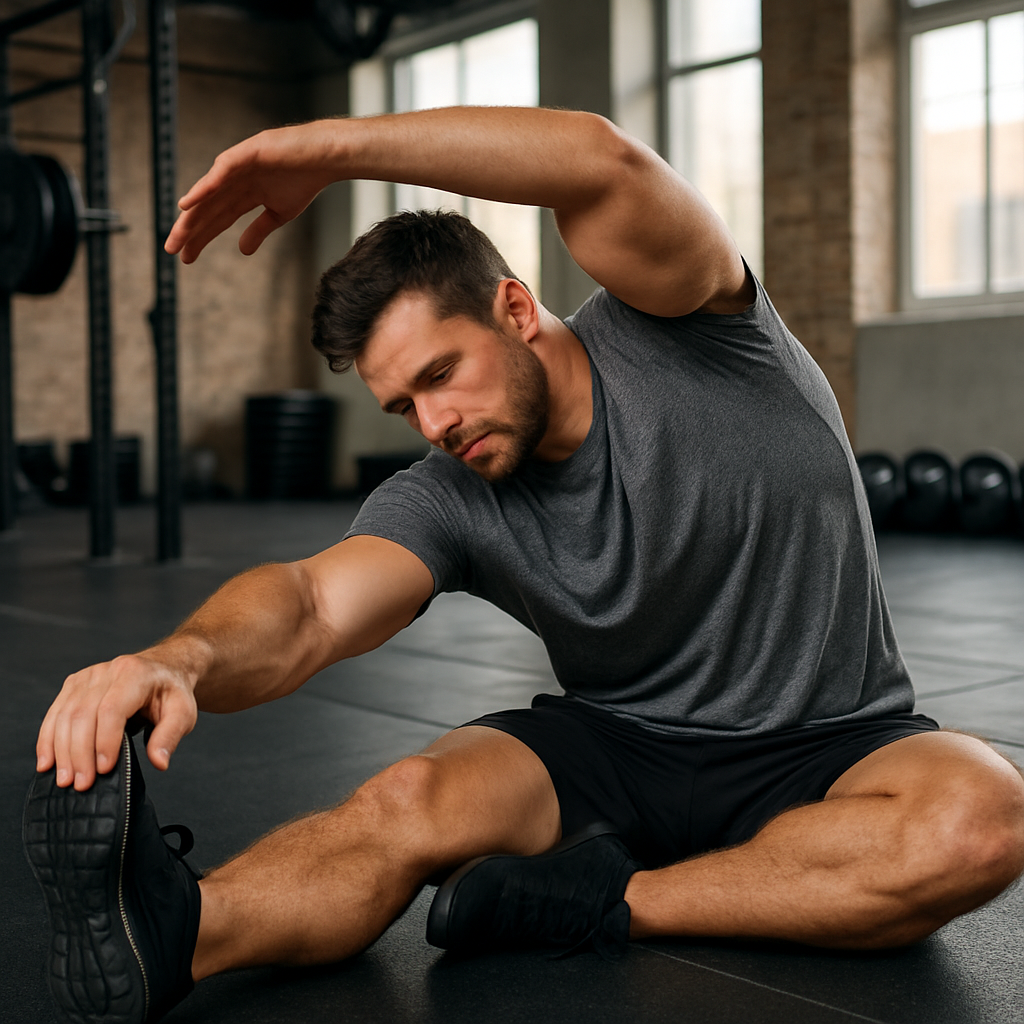
Stretching is valuable for maintaining or restoring range of motion, but it has limited impact on DOMS reduction in head-to-head comparisons. Use it when stiffness is restricting movement quality, but don’t expect stretching alone to meaningfully change soreness or muscle damage markers.
Emerging trends in muscle recovery
As the research base on muscle recovery grows, a clear trend is the move from general, feel-good recovery routines toward targeted interventions that match a specific outcome. Instead of asking, “What helps me recover?” athletes and coaches increasingly ask, “What helps soreness, what helps performance readiness, and what changes objective markers like CK and IL-6?” This shift matters because DOMS and fatigue do not always track perfectly with performance, and subjective soreness can be influenced by sleep, stress, and expectations.
Technology-driven methods such as functional electrical stimulation (FES) and vibration therapy are gaining attention because they can be applied locally and consistently. Rather than trying to “recover the whole body” at once, these approaches aim to improve a specific bottleneck: restoring muscle function, improving neuromuscular responsiveness, or supporting strength-related outputs when traditional training would add too much load. At the same time, newer studies increasingly include biomarkers and time-course measurements (for example, 24, 48, and 72 hours post-exercise) to capture when an intervention is most useful, not just whether it works at all.
How to apply muscle recovery methods in real life
The best recovery plan is the one you can execute consistently while still training hard. A practical approach is to choose one primary method and one “support” method based on your schedule, soreness cost, and the time until your next key session.
- If you need to perform again within 24–72 hours: prioritise massage when possible, and consider cold water immersion or other cold-based strategies when soreness would clearly reduce movement quality. Pair with light active recovery to maintain circulation without adding fatigue.
- If you are building long-term adaptations: keep recovery effective but not excessive. Use massage and active recovery as staples, and reserve aggressive cold exposure for periods with dense training or competition where next-day output matters most.
- If you feel stiff but not deeply sore: use stretching to restore range of motion and improve movement quality, but treat it as a mobility tool rather than a DOMS solution.
- If you want readiness without extra training stress: consider short bouts of vibration therapy or targeted FES for muscles that feel inhibited, especially before technical or speed-focused sessions.
Finally, remember that recovery is not a single action—it is a balance. If you constantly feel the need for high-intensity recovery interventions, it may be a sign that training load, sleep, or overall stress is outpacing your capacity. Use recovery tools to support your plan, not to compensate for a plan that is unsustainable.
Frequently Asked Questions
What is the most effective technique for muscle recovery?
Across comparative research, massage is the most consistently effective single technique for reducing delayed onset muscle soreness (DOMS). It also performs strongly for improving markers linked to muscle damage and inflammation, including CK and IL-6. If you want one method with the best overall evidence, massage is the most reliable starting point.
How often should I engage in recovery activities?
Frequency should match training load and how quickly you need to be ready again. For most people, light active recovery can be used after hard sessions and on easier days because it is low risk when intensity stays comfortable. Massage is often most useful during higher-load weeks or when soreness affects movement quality, commonly within the first 24–72 hours after demanding training. Cold-based methods are best used strategically when you have multiple sessions close together or competition demands, rather than automatically after every workout.
Can nutrition and hydration impact muscle recovery?
Yes. Muscle recovery depends on having enough energy and building blocks to repair tissue and restore glycogen. Adequate protein intake supports muscle protein remodelling, and sufficient carbohydrate intake helps replenish glycogen after hard sessions. Hydration also matters because dehydration can worsen perceived fatigue and reduce training quality, making recovery feel slower even when soreness is unchanged.
Are there any risks associated with cryotherapy or other recovery methods?
Cold water immersion and cryotherapy can be uncomfortable and may not be appropriate for everyone, particularly people with certain cardiovascular conditions or cold sensitivity. Use conservative exposure times and avoid extreme protocols if you are new to cold. With compression garments, ensure the fit is not overly restrictive. For FES, follow device guidance carefully and avoid use over irritated skin or in situations where electrical stimulation is contraindicated.
How does muscle recovery enhance athletic performance?
Effective muscle recovery helps you maintain training quality and consistency. By reducing DOMS, stiffness, and fatigue, you are more likely to hit target intensities, preserve technique, and avoid compensations that can increase injury risk. Over time, better recovery supports better training density, which is a key driver of performance improvements.
Källor
- Pliability. (n.d.). ”Muscle Recovery Time by Age.”
- Danske Fysioterapeuter. (2018). ”Abstractbog 2018.”
- Holmes Place. (n.d.). ”Regeneration for Optimal Training Results.”
- FW Physiology. (n.d.). ”The Science of Muscle Recovery: How to Optimise Repair and Performance.”
- National Center for Biotechnology Information. (2022). ”The Science of Muscle Repair.”
- True Protein. (n.d.). ”The Science of Muscle Repair: What Actually Happens After Your Workout.”
- Lifespan Fitness. (n.d.). ”How Long Does Muscle Recovery Actually Take?”
- Marc Pro. (n.d.). ”Soreness and Recovery: Separating Fact from Fiction.”
- MegaPump. (n.d.). ”What is Muscle Recovery and Why it Matters.”
- AsVIVA. (n.d.). ”Recovery Workouts: Was ist das?”