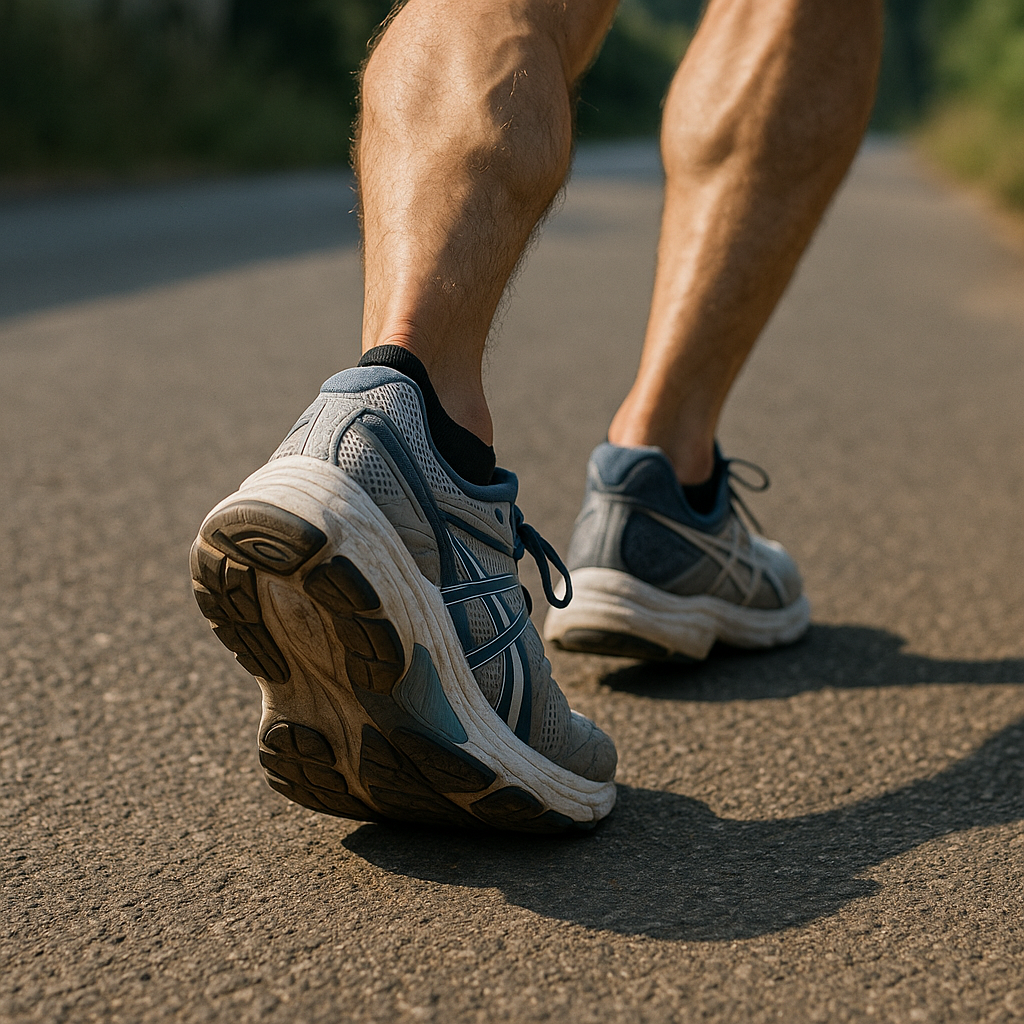
You set off at a pace that feels fine, your legs are warming up, and then it happens: your breathing turns loud and frantic. Suddenly it feels like the real workout isn’t your run at all—it’s trying to get enough air. If you’ve ever finished an easy kilometre wondering why your lungs gave up before your legs did, you’re not alone.
Breathing while running is one of those skills most of us assume should be automatic. But the way you breathe can be the difference between a steady, comfortable rhythm and that familiar spiral of gasping, tight shoulders, and a stitch in your side. The good news is that breathing is trainable. With a few simple adjustments, you can make each breath more effective—without overthinking every step.
Most breathing problems on a run come down to two patterns: shallow “chest breathing” that never fully fills the lungs, and breathing that has no rhythm, so it constantly feels out of control. That’s why many runners benefit from two practical tools: diaphragmatic (belly) breathing, which helps you draw air deeper and more efficiently, and stride-based breathing patterns, which create a repeatable cadence that matches your pace.
Why your breathing can feel harder than the run
When you run, your muscles demand more oxygen and your body needs to clear more carbon dioxide. If your breaths stay high in the chest, you may take quick, small inhales that don’t move much air—so you work harder for the same result. Add stress or a fast start, and it’s easy to feel “out of breath” early, even if your fitness is improving.
There’s also a less obvious factor: posture. Hours of desk time can leave you with a slightly collapsed rib cage, rounded shoulders, and a forward head position. That alignment can limit how freely your ribs expand, making deep breathing feel restricted before you even pick up speed.

Men's Posture Shirt™ - Black
Supports posture, relieves neck/shoulder/back pain, and activates core muscles during activity or rest.
What you’ll learn in this guide
In the rest of this post, you’ll learn how to build better breathing while running step by step: how to practise belly breathing off the track, how to use simple rhythmic patterns that match your stride, and how to choose nose or mouth breathing based on intensity. We’ll also connect the dots between breathing and running posture, so you can feel smoother, calmer, and more in control—whether you’re jogging easy or pushing the pace.
Why breathing while running can feel so difficult
Even at an easy pace, running changes your chemistry fast. Working muscles pull more oxygen from the blood, and your body produces more carbon dioxide (CO2) as a by-product of effort. Your breathing rate rises to bring in oxygen and, just as importantly, to clear CO2. When that clearance lags behind, you can feel “air hungry” even if you’re technically getting enough oxygen.
How you breathe matters here. Shallow chest breathing tends to be quick and narrow: the shoulders lift, the upper ribs flare, and the inhale can feel like it stops early. That limits how much air you exchange per breath, so you compensate by breathing faster. The result is often more tension, more noise, and less control. Diaphragmatic breathing helps because it encourages a fuller inhale and a steadier exhale, improving ventilation efficiency and reducing the urge to panic-breathe when the effort rises.
Step 1: practise diaphragmatic breathing at rest
Before you try to “fix” your breathing on a run, teach your body what a deep breath feels like when nothing else is demanding attention. Diaphragmatic breathing (often called belly breathing) is simple: on the inhale, the belly gently rises as the diaphragm moves down; on the exhale, the belly falls as air leaves the lungs.
Try this drill for 2–3 minutes once or twice a day:
- Lie on your back with knees bent, or sit tall with feet flat on the floor.
- Place one hand on your chest and one hand on your belly.
- Inhale slowly and aim to move the belly-hand more than the chest-hand.
- Exhale fully and let the ribs soften down rather than lifting the shoulders.
Once that feels natural, repeat the same drill while standing. The goal isn’t to force the belly out; it’s to reduce upper-chest dominance and make deep breathing feel normal again.
Step 2: add rhythm with stride-based breathing patterns
Rhythmic breathing gives your lungs a “metronome.” You match inhales and exhales to steps, which can make breathing while running feel calmer and more predictable. Use these patterns as starting points, not rules. If you can keep a steady rhythm and stay relaxed through the shoulders and jaw, you’re doing it right.
- 3:3 (inhale for 3 steps, exhale for 3 steps): best for warm-ups and easy runs where you can speak in short sentences.
- 2:2: a common “all-purpose” pattern for steady running and moderate efforts.
- 3:2 (often called a 5-step pattern): useful when you want a slightly longer inhale but a more active exhale; many runners like it for comfortable aerobic running.
- 2:1: typically reserved for harder efforts like hills or intervals when you need faster turnover of air.
If you notice you always exhale on the same foot strike, occasionally switch patterns (for example from 3:2 to 2:2 for a minute) so you don’t repeatedly load one side of the torso in the same way.
Step 3: nose vs mouth breathing (and when to use each)
Nasal breathing can be helpful at low intensity because it naturally slows the breath and can encourage a calmer, more controlled rhythm. Many runners find “nose in, mouth out” a good bridge: the inhale stays quiet and measured, while the exhale can be longer and more complete.
As intensity increases, mouth breathing often becomes necessary. It reduces airflow resistance and allows you to move more air quickly, which helps clear CO2 when the pace rises. A practical rule: if you can maintain nasal breathing without strain, you’re likely in an easy zone; if nasal breathing makes you feel restricted, switch to mouth breathing and focus on keeping the exhale smooth rather than choppy.
Posture and ergonomics: create space for your lungs
Your lungs can only expand as much as your rib cage allows. If your head drifts forward, shoulders round, or your upper back stays stiff (common after long desk days), your ribs don’t move as freely and diaphragmatic breathing becomes harder to access. On runs, use quick posture check-ins:
- Head: look ahead, chin gently tucked (avoid jutting forward).
- Ribs: think “stack ribs over pelvis” rather than flaring the chest up.
- Shoulders: let them drop away from the ears; keep hands soft.

Women's Posture Shirt™ - White
Activates your muscles, relieves pain/tension, and supports better posture for daily life or activity.
Mobility and activation drills to make breathing easier
Do these 3–4 times per week, especially if you sit a lot:
- Thoracic extension over a foam roller: place the roller across your upper back, support your head, and gently extend over the roller for 6–8 slow breaths, moving the roller slightly up or down as needed.
- Wall angels: stand with back against a wall, ribs down, and slide arms up and down slowly for 8–10 reps to reduce shoulder tension and open the chest.
- Scapular retractions: seated or standing tall, squeeze shoulder blades gently back and down for 2 seconds, then release; repeat 10–12 times, keeping the neck relaxed.
Combine these with your diaphragmatic breathing practice, and you’ll often notice that breathing while running feels less “tight” and more automatic—especially in the first 10 minutes when many runners struggle most.
Tools for hard efforts and recovery when breathing while running
Even with solid technique, harder sessions can make breathing while running feel chaotic. The goal during hills, intervals, or the final kilometres of a race is not to “stay calm” at all costs—it is to stay effective. Two simple tools can help you regain control without breaking stride.
1) The forceful exhale reset: When you feel your breathing getting stuck high in the chest, take one deliberate deeper inhale (through nose or mouth—choose what feels possible), then do a firm, fast exhale through the mouth as if you are fogging a mirror or blowing out a candle. Return immediately to your normal rhythm. Use this occasionally, not on every breath. Many runners find it helps clear built-up CO2 and reduces the urge to panic-breathe.
2) Longer exhales to manage intensity: If you are breathing fast, try making the exhale slightly longer than the inhale for 30–60 seconds. You can also use pursed-lip breathing (exhale through lightly pursed lips) to slow the breath and create a steadier outflow of air. This is especially useful when you crest a hill and want to settle back into a sustainable pace.
After the run, shift from performance to recovery. A simple option is box breathing: inhale for 4 seconds, hold for 4, exhale for 4, hold for 4, repeated for 2–4 minutes. Keep it gentle—this is about downshifting your nervous system, not testing breath-hold tolerance.
Troubleshooting: common breathing problems on a run
Breathing issues often show up in predictable patterns. Use these quick fixes as “in-run adjustments,” then practise the underlying skills (diaphragmatic breathing, rhythm, and posture) on easier days.
Side stitches: A stitch often appears when breathing is shallow, the pace is a touch too high, or posture collapses and compresses the torso. First, slow down slightly and lengthen your exhale for several breaths. Next, switch your breathing pattern for a minute (for example, move from 2:2 to 3:3 or 3:2) to change the timing of impact and breathing. Finally, do a quick posture reset: tall spine, ribs stacked over pelvis, shoulders relaxed. Many stitches fade when you create space for the diaphragm to move.
Out of breath early: If the first 5–10 minutes always feel rough, it is often a pacing and warm-up issue rather than a “bad lungs” issue. Start slower than you think you need to, and aim for a controlled pattern such as 3:3. If nasal breathing is comfortable, use it briefly at the start to prevent sprinting out of the gate. As you warm up, transition naturally to mouth breathing if needed, keeping the exhale smooth.
Tight upper body: Neck and shoulder tension can make breathing while running feel restricted. Check your hands (soft, not clenched), let the shoulders drop, and keep your gaze forward rather than down at your feet. If this is a recurring issue, revisit the mobility drills from earlier—especially thoracic extension and scapular control—because a stiff upper back often forces the chest and neck to do work the rib cage should be sharing.
When to be extra careful
If you have asthma, exercise-induced bronchoconstriction, or another lung or heart condition, breathing strategies can still be useful—but they should not replace medical guidance. If you experience wheezing, chest pain, faintness, or symptoms that worsen despite slowing down, stop and seek advice from a qualified healthcare provider. The safest approach is to build intensity gradually and use breathing techniques as supportive tools alongside your care plan.
Frequently Asked Questions
How can I prevent side stitches while running?
Start at a manageable pace, keep your posture tall (ribs stacked over pelvis), and avoid shallow chest breathing. If a stitch appears, slow down slightly, lengthen your exhale for several breaths, and switch breathing patterns for a minute (for example from 2:2 to 3:3 or 3:2) to change the timing of impact and breathing.
Is it better to breathe through my nose or mouth while running?
For easy runs, nasal breathing (or nose in, mouth out) can help keep the breath controlled and steady. As intensity increases, mouth breathing often becomes necessary because it allows you to move more air and clear CO2 faster. Use nasal breathing as a tool for easy intensity, not a rule you must follow at all paces.
What should I do if I feel out of breath at the start of my run?
Slow your start and treat the first 5–10 minutes as a warm-up. Use a simple rhythm like 3:3 and focus on a smooth, complete exhale. If nasal breathing feels comfortable early on, use it to prevent starting too fast, then switch to mouth breathing as your pace and ventilation needs increase.
How can I improve my running posture to aid breathing?
Look ahead with a gentle chin tuck, keep ribs stacked over the pelvis (avoid flaring the chest), and relax the shoulders away from the ears. Keep your hands soft and your jaw unclenched. If desk posture is a factor, add upper-back mobility and scapular control drills several times per week to create more room for rib cage expansion.
Are there breathing exercises I can do to improve my running performance?
Yes. Practise diaphragmatic breathing at rest to reduce chest-dominant breathing, then add stride-based patterns (such as 3:3, 2:2, or 3:2) on easy runs. For harder efforts, use occasional forceful exhale resets and slightly longer exhales to regain control. After running, box breathing can help you shift into recovery.
Källor
- Adidas. (n.d.). "How to Breathe While Running." Adidas Blog.
- Runner's World. (n.d.). "Breathing Techniques for Runners." Runner's World.
- Brooks Running. (n.d.). "How to Breathe While Running." Brooks Running Blog.
- American Lung Association. (n.d.). "Breathing Basics for Runners." American Lung Association Blog.
- German Sport University Cologne. (n.d.). "The Influence of Breathing Techniques on Physical Sport Performance." DSHS Publications.
- Red Bull. (n.d.). "Breathing Exercises for Runners." Red Bull.
- On. (n.d.). "3 Breathing Techniques to Improve Performance." On Stories.
- Run Ottawa. (n.d.). "Breathing on the Run." Run Ottawa.
- National Center for Biotechnology Information. (n.d.). "Article on Breathing and Running." NCBI.