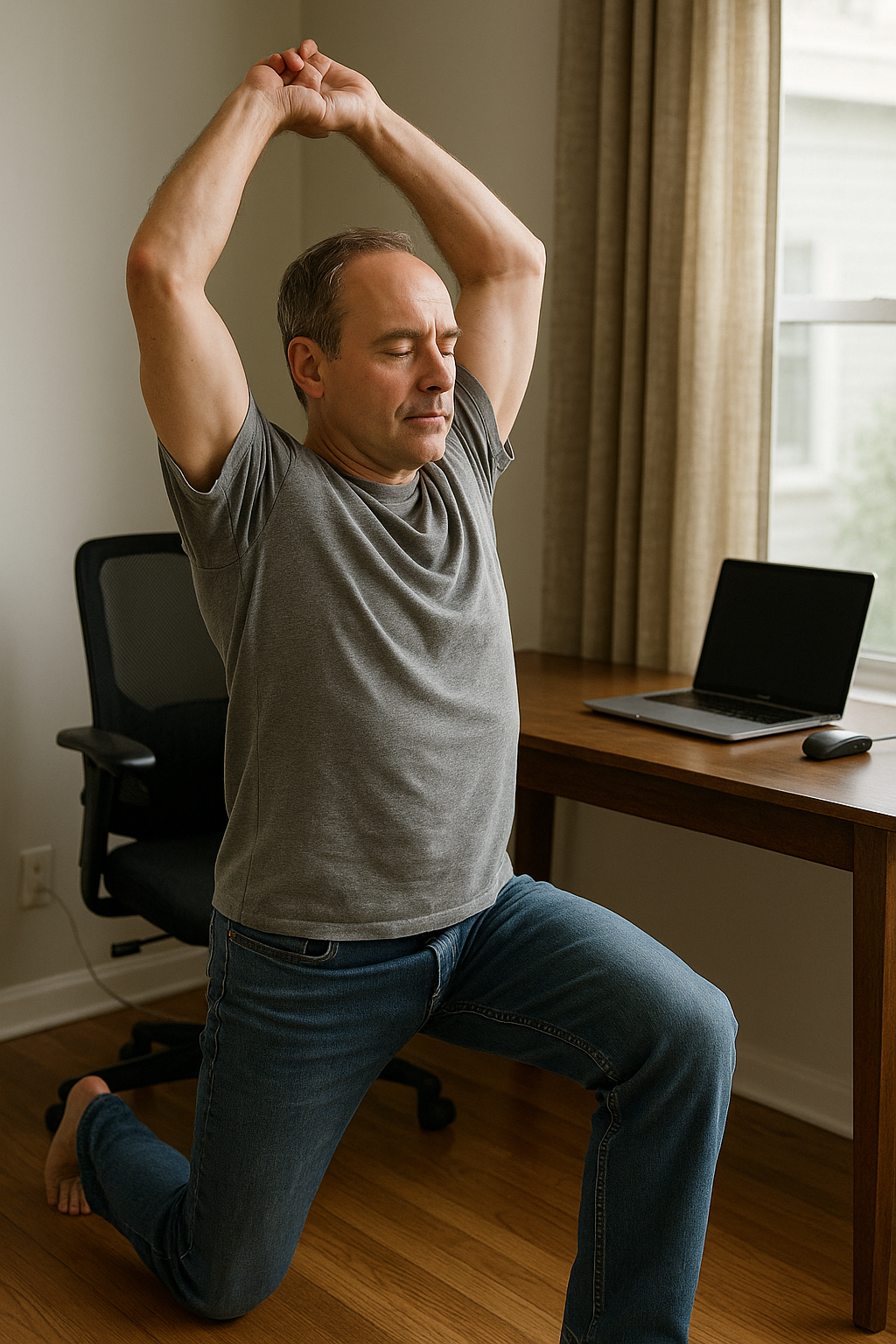
Balance training is often treated like something you only need if you play sports or are recovering from an injury. In reality, it is one of the most practical skills you can build for everyday life. Balance is your ability to control your body’s position, stay steady when you move, and recover when something throws you off, like a slippery floor, an uneven curb, or a quick turn while carrying groceries.
When your balance is working well, movement feels smoother and more automatic. You stand up with less effort, walk with more control, and feel more confident shifting your weight from one foot to the other. When it is not, the body often compensates with stiffness, smaller steps, and a “careful” way of moving that can affect posture and make daily activities feel more tiring than they should.
What balance training actually improves
Good balance is not just about standing on one leg. It is a mix of strength, coordination, joint control, and body awareness (often called proprioception). Balance training challenges these systems so you can stay stable in different situations: standing still, moving forward, changing direction, or reacting quickly if you stumble.
That is why balance training is commonly linked to fall prevention, but the benefits go beyond that. Many people notice better posture, improved stability through the ankles, knees, and hips, and a stronger sense of control in everyday movement. Over time, this can translate into more comfortable walking, safer stair use, and less hesitation when reaching, bending, or stepping over obstacles.
Why balance matters in everyday life (and more as you age)
Most daily tasks are small balance tests: standing at the kitchen counter, stepping into the shower, turning to look behind you, or walking while holding a bag in one hand. These moments require your body to constantly adjust, even if you do not consciously notice it.
As we get older, balance can decline due to changes in muscle strength, reaction time, and sensory input from the feet and inner ear. The good news is that balance is trainable at any age. A consistent approach can help maintain independence and confidence in movement, especially when combined with simple strength work and safe progressions.
Balance training for modern, sedentary routines
Balance is also relevant if you spend many hours sitting. Long periods of inactivity can reduce ankle mobility, hip stability, and the body’s ability to “wake up” quickly when you stand and move. Adding a few minutes of balance-focused practice can be a smart complement to ergonomic recovery habits, helping you feel steadier and more capable throughout the day.

Women's Posture Shirt™ - White
Patented shirt that activates muscles, improves posture and relieves discomfort during daily activities.
Types of balance training exercises
The most effective balance training programs use a mix of exercises that challenge you in different ways: standing still, moving through space, shifting weight, and reacting to changes. The goal is not to “master” one drill, but to gradually build steadiness across the situations you meet in real life.
Beginner balance exercises (start here)
Single-leg stand
Stand tall with feet hip-width apart. Shift your weight to one leg and lift the other foot slightly off the floor. Keep your hips level and your gaze steady. Start with 10–20 seconds per side and build up. If needed, lightly touch a wall or chair for support.
Heel-to-toe walk
Walk in a straight line placing the heel of your front foot directly in front of the toes of your back foot. Take 8–12 slow steps, turn around, and repeat. This drill trains control in a narrow base of support, similar to walking on uneven ground or in tight spaces.
Marching drill
March in place with controlled, slow lifts of the knees. Aim for quiet feet and an upright torso. Try 30–60 seconds. This is a simple way to train single-leg stability without holding a long static position.
Progressive and advanced balance exercises
Unstable-surface drills
Once the basics feel steady, add a slightly unstable surface (for example, a folded towel or a balance pad). Repeat your single-leg stand or marching drill. The small wobbles force the ankles, knees, and hips to coordinate faster, which is a key part of real-world stability.
Eyes-closed challenges
Closing your eyes removes visual input and increases reliance on proprioception and inner-ear signals. Start safely: stand with feet together near a wall, close your eyes for 5–10 seconds, and reopen. Progress to a staggered stance, then eventually a single-leg hold only if you can do so safely.
Dual-task training
In daily life, you rarely focus only on balance. Try counting backwards, turning your head left and right, or carrying a light object while doing heel-to-toe walking. This trains stability under distraction, which can be especially useful for fall prevention.
Tai Chi, yoga, and strength training
Slow, controlled movement practices like Tai Chi and yoga build body awareness, weight shifting, and joint control. Pairing balance drills with lower-body strength work (such as sit-to-stands, step-ups, and calf raises) often improves results because stronger legs and hips make it easier to “catch” yourself when your center of mass shifts.
Safety tips that make balance training work
Start with support. A wall, countertop, or sturdy chair can help you train consistently without fear of falling. Keep the area clear of rugs or clutter, wear stable shoes (or go barefoot if safe), and stop if you feel dizzy or experience sharp pain. Progress by changing only one variable at a time: less hand support, narrower stance, longer holds, slower movement, or a slightly more challenging surface.
Scientific backing and effective training regimens
Balance training is not just a “nice extra,” it is a trainable skill with measurable outcomes. A large systematic review and meta-analysis found that structured balance training improves multiple dimensions of balance in healthy older adults, including static balance (staying steady), dynamic balance (staying stable while moving), proactive balance (controlling planned shifts like stepping over an obstacle), and reactive balance (recovering after a slip or trip).
In that analysis, effective programs commonly followed a clear dosage pattern: about 11–12 weeks, around 3 sessions per week, and approximately 31–45 minutes per session (roughly 91–120 minutes per week). This matters because many people do balance drills “here and there,” but consistent practice over a few months is where the biggest changes tend to show up.
A practical takeaway is to treat balance like strength: schedule it. A well-rounded session can include a short warm-up, 2–3 static drills (like single-leg stands), 2–3 dynamic drills (like heel-to-toe walking and step patterns), and one reactive-style challenge (like controlled direction changes or quick but safe stepping responses).
Balance training for specific populations
Older adults and fall prevention
For older adults, the priority is safe, repeatable practice that improves confidence. Start with supported exercises and emphasize controlled weight shifts, heel-to-toe walking, and sit-to-stands. Short, frequent sessions can be more sustainable than occasional long workouts.
Mobility limitations or neurological conditions
If you have reduced sensation, significant weakness, or a neurological diagnosis, balance work should be scaled down and made more stable. Seated weight shifts, supported standing, slow ankle mobility drills, and very controlled marching can still build coordination. In these cases, a clinician-guided plan may be the safest route.
Office workers and sedentary lifestyles
If you sit for long periods, balance training can act like a “reset” for the lower body. A few minutes of marching, heel-to-toe walking along a hallway, or a supported single-leg stand during breaks can help re-engage the feet, ankles, and hips, making everyday standing and walking feel steadier.

Men's Posture Shirt™ - Black
Patented shirt activates muscles and improves posture—supports you at home, work, or during activity.
Progression and safety in balance training
Balance training works best when it is progressive, but progression should be deliberate rather than rushed. A simple rule is to change only one variable at a time. If you make the stance narrower, keep the duration the same. If you increase the duration, keep the surface stable. This approach helps you build real control instead of “surviving” the exercise with tension or compensations.
A practical progression ladder looks like this:
- More stable to less stable: feet hip-width apart → feet together → staggered stance → single-leg stance.
- More support to less support: two hands on support → one hand → fingertips → no hands (while staying near support).
- Eyes open to eyes closed: start with short intervals (5–10 seconds) and only progress if you can stay steady without holding your breath.
- Simple to complex: static holds → slow stepping patterns → direction changes → dual-task drills (turning the head, carrying a light object, counting).
To keep balance training safe, set up your environment first. Train near a wall or sturdy countertop, clear the floor of loose rugs and clutter, and avoid unstable chairs that can slide. Stop if you feel dizzy, if you notice new numbness, or if you get sharp pain. Mild muscle fatigue in the feet, calves, or hips is normal; joint pain is not.
Common mistakes that slow progress
Many people do balance drills often but improve slowly because the quality is off. These are the most common issues to watch for:
- Gripping with the toes: clawing the floor can create tension and reduce ankle control. Aim for a “tripod foot” (heel, base of big toe, base of little toe) with relaxed toes.
- Leaning into the support: a light touch is useful, but hanging on removes the challenge. Use support as a safety net, not a crutch.
- Holding the breath: bracing can make you feel stable but limits natural reactions. Breathe normally and keep the shoulders relaxed.
- Rushing the reps: fast movements can turn into momentum. Slow, controlled steps build the joint control you need for everyday stability.
- Skipping strength basics: balance training improves coordination, but it is easier when the legs are strong. Simple additions like calf raises, sit-to-stands, and step-ups support better results.
If you are unsure whether you are progressing appropriately, a good sign is this: the exercise should feel challenging but repeatable. You should be able to maintain a tall posture and recover small wobbles without panicking or needing to grab support.
How to fit balance training into your weekly routine
Consistency matters more than intensity. If your schedule is busy, treat balance training like brushing your teeth: small doses, done often, add up. You can integrate it into daily life without needing a full workout slot.
Easy daily “anchors”:
- Do a supported single-leg stand while waiting for the kettle to boil (10–20 seconds per side).
- Walk heel-to-toe down a hallway once or twice per day (8–12 steps).
- Do a controlled marching drill during a work break (30–60 seconds).
Suggested weekly schedule (evidence-based structure):
Aim for 3 sessions per week of 31–45 minutes for about 11–12 weeks. Each session can include a warm-up, 2–3 static drills, 2–3 dynamic drills, and one reactive or dual-task element. On non-training days, add 3–5 minutes of light balance practice to keep the skill “online.”
Balance aids and products:
A wall, countertop, or sturdy chair is often enough to start safely. As you progress, a folded towel or balance pad can add challenge with small, controlled instability. Supportive footwear or insoles may also help some people feel more stable during standing and walking by improving comfort and foot contact, especially if foot fatigue limits how long you can practice.
Frequently Asked Questions
What is balance training, and why is it important?
Balance training is practice that improves your ability to control your body position, stay steady during movement, and recover when you are pushed off balance. It is important because balance affects everyday tasks like walking, turning, reaching, and using stairs, and it supports confidence and safer movement as you age.
How often should I practice balance exercises?
A practical target is 3 sessions per week, with shorter practice on the other days if possible. Many effective programs follow a consistent routine for about 11–12 weeks, with sessions around 31–45 minutes. If that feels like too much, start with 5–10 minutes most days and build up.
What are some simple exercises to start with?
Good beginner options include a supported single-leg stand, heel-to-toe walking, and a controlled marching drill. Start near a wall or sturdy chair, keep the movements slow, and focus on posture and steady breathing.
Can balance training help prevent falls?
Yes. Balance training can improve different types of balance, including static balance (staying steady), dynamic balance (staying stable while moving), proactive balance (controlling planned shifts), and reactive balance (recovering after a slip or trip). These improvements are directly relevant to fall prevention, especially for older adults.
Is balance training suitable for all ages and fitness levels?
In most cases, yes. Balance training can be scaled from very supported, low-impact drills to more advanced progressions. The key is choosing exercises that match your current ability and progressing gradually, especially if you have been sedentary or are returning after an injury.
When should I consult a professional for balance issues?
Seek professional guidance if you have frequent unexplained falls, sudden dizziness, new weakness or numbness, significant pain, or if balance problems are getting worse. It is also a good idea to consult a physiotherapist if you have a neurological condition, recent surgery, or if you are unsure how to progress safely with balance training.
Kilder
- British Heart Foundation. "Balance Exercises." Heart Matters Magazine.
- Michigan Ear Institute. "Balance Training Exercises."
- Mayo Clinic Staff. "Balance Exercises: How to Add Stability Training to Your Workout."
- Hinge Health. "Balance Training."
- Four Oaks Physical Therapy. "The Importance of Balance Training for Fall Prevention."
- Wexner Medical Center. "Training Your Balance."
- Sherrington, C., et al. "Exercise to Prevent Falls in Older Adults: An Updated Meta-Analysis and Best Practice Recommendations." British Journal of Sports Medicine.
- Coastline Orthopaedic Associates. "Finding Your Balance: The Importance of Balance Training in Physical Therapy."
- HUR. "Let's Talk About Balance."
- Physio-pedia. "Balance Training."