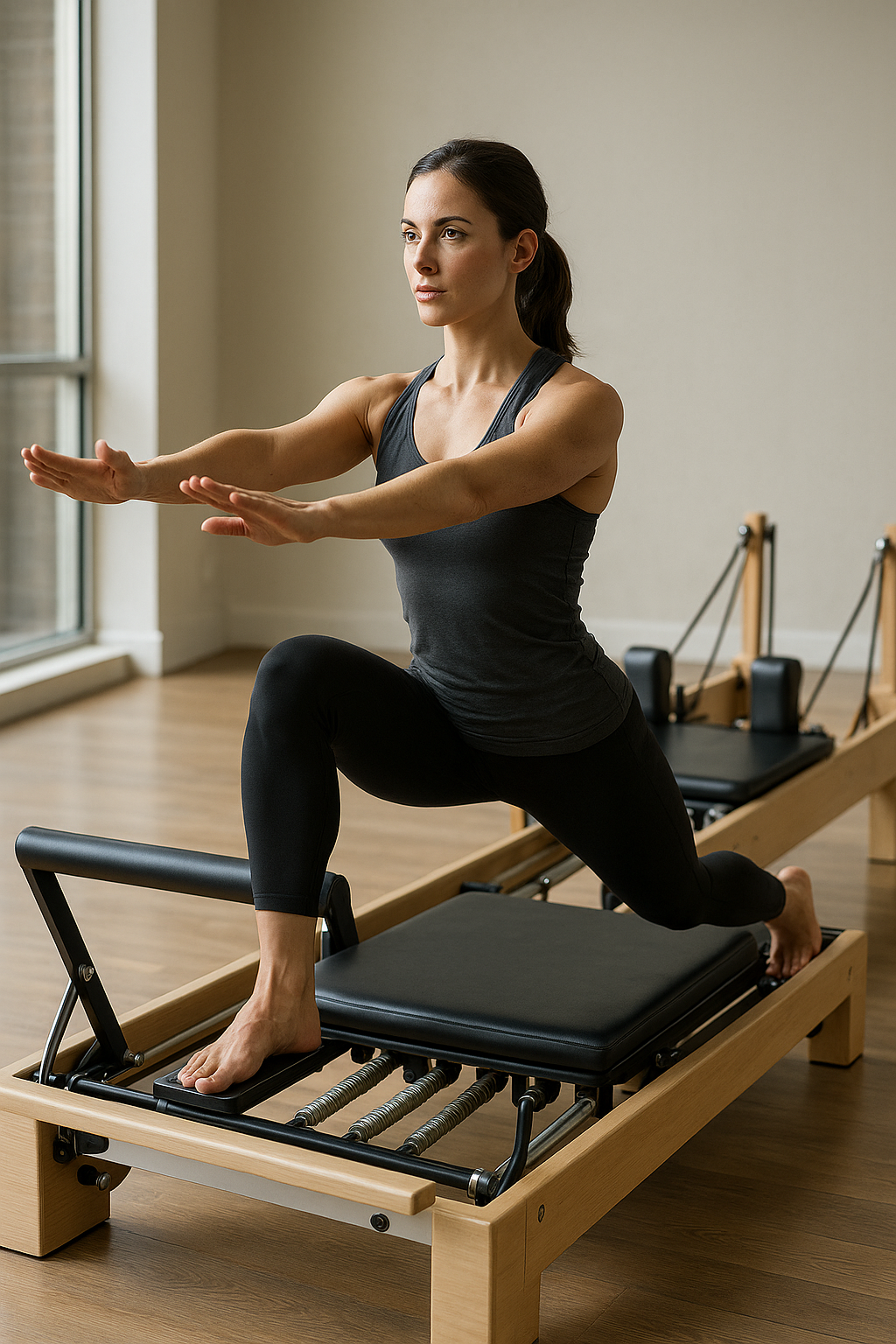
Pilates has quietly become one of the most practical upgrades you can make to a modern fitness routine. It’s a low-impact training method built around controlled strength, mobility, and precise alignment, often with an emphasis on the core, hips, and upper back. Instead of chasing exhaustion, pilates rewards consistency: you move with intention, learn how your body compensates, and build strength that carries over to everyday life—standing taller at your desk, walking with better mechanics, and feeling more stable when you lift, run, or play sport.

Women's Posture Shirt™ - Black
Stimulates muscles and improves posture; perfect for work, training, and relief from tension.
That shift matters because fitness culture is changing. More people are prioritising workouts they can repeat week after week without feeling broken down. Gen Z, in particular, is gravitating toward formats that feel both athletic and sustainable, while longevity-focused consumers are looking for training that supports healthy ageing rather than short-term intensity. Pilates fits that moment: it’s challenging without being punishing, and it’s designed to improve how you move, not just how much you can do.
Why pilates works for strength without the wear and tear
At its best, pilates is strength training with a posture-first mindset. The movements are typically joint-friendly, but they’re not “easy”—they’re specific. You’ll train deep stabilisers that often get skipped in high-intensity workouts, including the muscles that support the spine, pelvis, and shoulder blades. Over time, that can translate into better balance, cleaner technique in other training, and fewer nagging aches that come from poor mechanics or overuse.
It’s also a method that encourages body awareness. You’re repeatedly asked to notice rib position, pelvic tilt, breath, and alignment—small details that can make a big difference if you sit a lot, feel tight through the hips, or struggle with rounded shoulders. For many people, that mind-body element is the missing link between “working out” and actually moving better.
Pilates as a consistency-first fitness habit
If you’ve ever bounced between intense programmes and long breaks, pilates offers a different path: steady progress through repeatable sessions. That’s why it’s increasingly positioned as a cornerstone workout—something you can pair with walking, strength training, or sport to keep your body resilient. Whether you start on a mat or eventually explore reformer-based classes, the goal is the same: build low-impact strength, improve mobility, and make good movement feel automatic.
Pilates industry growth and what it signals for everyday exercisers
Pilates isn’t only trending on social media—it’s expanding as a category in a way that’s hard to ignore. Across the US fitness market, studios offering pilates have grown from 17% in 2021 to 45% in 2025. That kind of jump typically happens when a workout style moves from “niche” to “default option,” and it helps explain why reformer classes are now common in cities that previously had limited boutique fitness choices.
For consumers, this growth matters because it increases access and variety. More studios usually means more class times, more instructor styles, and more specialised offerings (beginner-friendly, athletic, prenatal, post-rehab, and strength-forward). It also means the quality bar is rising: studios compete on coaching, programming, and the overall experience, which can be a win for anyone who wants a consistent routine that feels guided and progressive rather than random.
Trends reshaping pilates: reformer demand, privates, and strength-forward programming
One of the biggest shifts is how strongly the market is leaning into reformer-based training. Reformer sessions allow for scalable resistance and precise assistance, which is why they work for both beginners and advanced clients. They also make it easier to train “strength without impact” in a way that feels measurable: springs can be adjusted, ranges of motion can be refined, and progress can be built session to session.
At the same time, demand for private pilates sessions is surging. Large fitness operators have reported significant increases in private sessions during 2025 and are planning to expand pilates into 12–14 new locations, alongside athletic reformer formats designed to feel more performance-driven. The takeaway is that pilates is increasingly positioned like a skill-based strength discipline: people aren’t only attending classes to sweat, they’re investing in coaching to improve technique, address imbalances, and build a body that moves better.
From a practical standpoint, this trend also reflects what many people want from fitness right now: structure, feedback, and a clear path. Privates and small-group reformer classes give you more cues on alignment, rib position, pelvis control, and shoulder mechanics—details that can be hard to learn in crowded, high-speed workouts.
Innovations like hot pilates and hybrid formats
Another reason pilates is growing is that it’s evolving. Hot pilates (often done on a mat in a heated room) has become a popular bridge between low-impact strength and cardio-style intensity. The heat can increase perceived effort and create a sweat-heavy experience, while the movement patterns still emphasise control, stability, and joint-friendly loading. For people who miss the “workout high” of more intense training but don’t want the joint stress, hot formats can feel like a compromise that still supports consistency.
Hybrid programming is also on the rise. You’ll see pilates blended with strength training principles (slower tempos, heavier spring choices, more standing work, and athletic sequencing). Some gyms are also building reformer-based classes that mirror the structure of traditional strength sessions—warm-up, focused blocks, and progressive overload through resistance changes. The common theme is clear: pilates is being presented less as a gentle add-on and more as a legitimate strength method that can stand on its own.
What 2026 predictions mean for your pilates routine
Looking ahead, the strongest forecasts point to strength-forward, reformer-led classes continuing to dominate. As more mainstream fitness chains add reformer rooms and expand pilates schedules, access will improve—but so will competition for quality instruction. That makes it worth being selective: a great class should feel organised, cue-driven, and progressive, not rushed or overly complicated.
Another 2026 theme is pilates becoming a global wellness staple rather than a trend cycle. In practice, that means more people will use it as a “base layer” for longevity: a repeatable method that supports posture, mobility, and resilient strength while pairing well with walking, sport, and occasional higher-intensity training.
Finally, expect more emphasis on education and technique-focused sessions. As studios look for sustainable revenue streams, equipment privates and form clinics are likely to expand. For you, that can be a positive shift: learning the fundamentals—breath mechanics, pelvic control, scapular stability, and spinal alignment—often unlocks faster progress and fewer setbacks, especially if you sit for long hours or train hard in other modalities.
Pilates for longevity: building a routine you can keep
One of the clearest reasons pilates continues to gain traction is that it supports the kind of training people actually stick with. Longevity-focused fitness is less about “max effort” and more about maintaining strength, mobility, and coordination over decades. Pilates fits that goal because it trains the body to control movement under manageable load, which can help you stay active without constantly needing time off to recover from joint irritation or flare-ups.
In practical terms, pilates reinforces the fundamentals that tend to slip when life gets busy: breathing mechanics, pelvic control, spinal alignment, and shoulder stability. Those skills matter for healthy ageing because they influence how you walk, lift, reach overhead, and tolerate long periods of sitting. When those patterns are solid, other training often feels better too—strength work becomes cleaner, running feels more efficient, and everyday aches are less likely to become “normal.”

Men's Posture Shirt™ - Black
Activates muscles, improves posture, and relieves tension for everyday, work, and training use.
Consistency beats intensity when the goal is sustainable strength
Pilates is often described as low-impact, but the real advantage is repeatability. A method you can do two or three times a week for months will usually outperform a programme you can only tolerate for short bursts. That’s why many people use pilates as a base layer alongside walking, strength training, or sport: it keeps the body organised and resilient while still allowing you to push intensity elsewhere when you want to.
If you are trying to make pilates a long-term habit, progression matters. Look for classes that revisit key patterns (spinal articulation, hip stability, anti-rotation, scapular control) rather than constantly chasing novelty. In reformer settings, “harder” should not mean faster; it should mean better control, smarter spring choices, and more precise ranges of motion. In mat classes, progression often comes from leverage changes, longer time under tension, and improved alignment rather than adding impact.
Why pilates is shaping modern fitness culture
Pilates is now the most-booked workout globally for the third consecutive year, and bookings have risen 66% since 2024. That cultural momentum is not just hype—it reflects a broader shift in what people value. Many consumers are moving away from workouts that leave them drained or sore for days and toward training that improves how they feel and function. Pilates meets that demand by offering a clear blend of strength, mobility, and skill-building.
It also matches how people want to engage with fitness today: flexible schedules, measurable progress, and options that scale. Reformer classes make resistance feel trackable, private sessions offer coaching and technique refinement, and newer formats (including heated mat classes and strength-forward sequencing) give people different “entry points” without abandoning the low-impact foundation. For Gen Z and for anyone prioritising healthy ageing, pilates is increasingly positioned as a smart default—something that supports performance now and protects capacity later.
For everyday exercisers, the takeaway is simple: you do not need to treat pilates as a side quest. It can be a primary strength method, a complement to lifting, or the training anchor that keeps your body moving well through changing seasons of life.
Frequently Asked Questions
What is the main focus of pilates?
Pilates primarily focuses on controlled strength, with an emphasis on core stability, posture, and efficient movement. Sessions typically train the muscles that support the spine, pelvis, and shoulder girdle while improving flexibility and body awareness.
How does pilates differ from other forms of exercise?
Unlike high-impact workouts that rely on jumping, heavy external loading, or fast repetitions, pilates emphasises low-impact, precise movements. The goal is to build strength and mobility while minimising unnecessary joint stress, using alignment, breath, and control to improve movement quality.
Can beginners start with pilates?
Yes. Pilates is suitable for all fitness levels because exercises can be modified and progressed gradually. Beginners often start with foundational mat work or beginner reformer classes to learn core engagement, breathing, and basic alignment before moving into more complex sequences.
What equipment is needed for pilates?
Mat pilates requires minimal equipment: a mat and enough space to move comfortably. Reformer pilates uses a reformer machine with springs for adjustable resistance. Some classes also incorporate small props such as resistance bands, rings, light weights, or stability balls to add variety and challenge.
How often should one practice pilates for optimal results?
Practising pilates 2–3 times per week is a common recommendation for noticeable improvements in strength, flexibility, and posture. Consistency is key, and many people see the best long-term results when pilates is paired with regular walking and occasional strength or cardio sessions based on personal goals.
Kilder
- Matas. (n.d.). ”Pilates Program.” Matas Stories.
- SATS. (n.d.). ”Pilates Guide.” SATS Magazine.
- Vores Puls. (n.d.). ”Pilates for Begyndere på 30 Minutter.” Vores Puls.
- Wikipedia. (n.d.). ”Pilates.” Wikipedia.
- Politiken. (n.d.). ”100 år med pilates: Moderne træningsform er ældgammel.” Politiken.
- YogaVivo. (n.d.). ”Introduktion til Pilatesmetoden.” YogaVivo.
- Wikipedia. (n.d.). ”Pilates.” Wikipedia.
- Pilates CPH. (n.d.). ”Pilates Metoder.” Pilates CPH.
- Den Intelligente Krop. (n.d.). ”Historien om Pilates.” Den Intelligente Krop.
- ALT. (n.d.). ”8 Pilates øvelser der på 15 minutter styrker dig fysisk og mentalt.” ALT.
- Pilates Central. (n.d.). ”History & Origins of Pilates.” Pilates Central.
- ReeForm. (n.d.). ”Historien om Joseph Pilates.” ReeForm.
- Den Intelligente Krop. (n.d.). ”Artikler og Øvelser om Pilates Træning.” Den Intelligente Krop.