If mat Pilates is the quiet classic, reformer pilates is the upgraded studio experience: still controlled and precise, but with a level of feedback and challenge that can change how your whole body moves. It’s a low-impact workout that looks deceptively smooth—until you feel your deep core switch on, your hips start to align, and muscles you didn’t know you had begin to work together. For many people, that “aha” moment is exactly why reformer pilates has become a go-to for building strength, flexibility, and better posture without pounding joints.
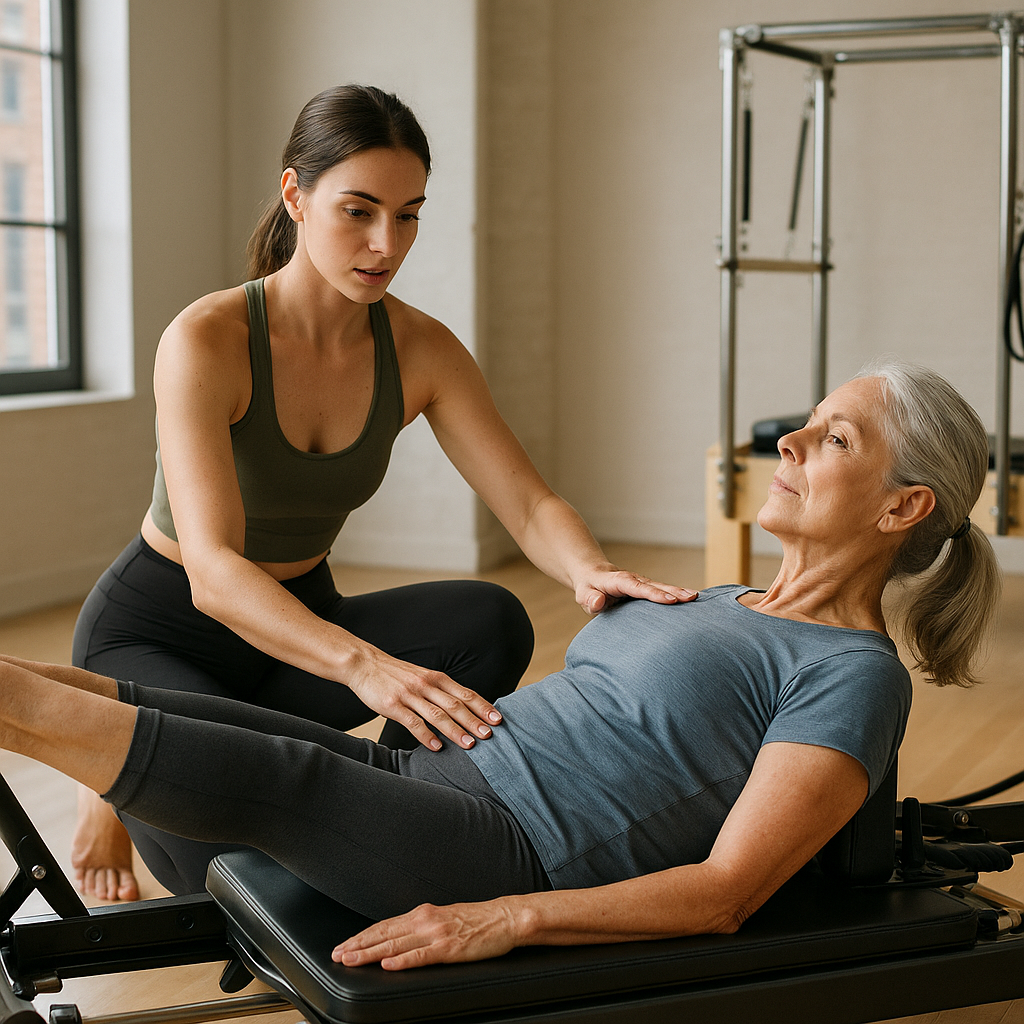
What makes it different is the machine itself. The Reformer is built around a sliding carriage that moves along rails, paired with adjustable springs that create resistance (or assistance, depending on the setup). Add straps, a footbar, and pulleys, and you get a system that supports your body while also asking it to stabilise—constantly. Instead of relying only on gravity like you do on a mat, reformer pilates lets you fine-tune the load, the range of motion, and the level of control required in each exercise.
What is reformer pilates, really?
At its core, reformer pilates is full-body training with a strong emphasis on the muscles that hold you together: the deep abdominals, pelvic floor, glutes, and the stabilisers around the spine and shoulders. The moving carriage creates an “unstable stable” surface—stable enough to feel safe, but dynamic enough to demand coordination. That combination is why sessions often feel both strengthening and surprisingly restorative.
You’ll typically work in multiple positions—lying down, kneeling, sitting, and sometimes standing—so the workout doesn’t just isolate muscles; it teaches them to cooperate. The result is a style of training that can feel athletic, therapeutic, or both, depending on how it’s programmed.
Why so many people are switching to the Reformer
Reformer pilates has grown fast because it meets people where they are. Beginners appreciate the guided movement and adjustable resistance. People returning from injury often like the supported positions and controlled tempo. Athletes use it to build core stability, mobility, and body awareness that carries over to sport. And for desk-bound bodies, it can be a practical way to counter stiff hips, rounded shoulders, and a “switched-off” core—without needing high-impact workouts to feel progress.
In the next section, we’ll break down the Reformer’s key parts and how they work together, plus the most talked-about benefits—from posture and flexibility to balance and the mind-body connection.
How the Reformer works: equipment basics
The Reformer looks simple at first glance, but each part is designed to create a very specific training effect: controlled movement under adjustable load. The main platform is the sliding carriage, which moves back and forth along rails. Because it’s moving, your body has to stabilise continuously—especially through the deep abdominals, glutes, and the muscles around the spine and shoulder blades.
Resistance comes from a set of springs attached to the carriage. Changing spring tension can make an exercise heavier (more resistance) or, in some cases, more supported (more assistance). That’s one reason reformer pilates works for such a wide range of people: the same movement pattern can be scaled without changing the quality of the exercise.
You’ll also see straps and handles connected to pulleys. These allow upper-body pulling and pushing patterns, rotational work, and core control challenges that are difficult to replicate on a mat. A footbar provides a stable contact point for leg work and full-body integration, while the headrest and shoulder blocks help keep you aligned and secure as the carriage moves. Put together, these elements let you train lying down, kneeling, sitting, and standing—often within the same session.
Why reformer pilates feels different from mat work
Mat Pilates relies largely on bodyweight and gravity. The Reformer adds two game-changers: variable resistance and guided movement. Springs can challenge you through a longer range of motion, and the carriage gives immediate feedback—if you rush, grip, or lose alignment, you’ll feel it. That feedback is what makes the workout both more demanding and more precise: you’re not just “doing reps,” you’re practising control.
Another difference is that the Reformer can help you find better mechanics. For example, the carriage can support your spine in supine work while you build hip strength, or it can reduce load on joints while you learn to stabilise your pelvis and ribcage. Over time, that tends to translate into cleaner movement patterns outside the studio, too.
Key benefits of reformer pilates
Core strength and stability
Reformer pilates is famous for core work, but it’s not only about visible abs. Many exercises target the deep stabilisers—including the transverse abdominis, pelvic floor, multifidus, and the muscles that position the ribs and pelvis. Because the carriage moves, your core has to anticipate motion and control it, which supports better alignment and can be protective for the lower back in day-to-day life.
Flexibility and range of motion
The Reformer encourages flexibility in a practical way: you’re lengthening while under control, often with spring resistance guiding you through the movement. Research on Pilates-style training has shown improvements in flexibility, including measurable gains in hamstring flexibility after consistent practice over several weeks. Shoulder range of motion can also improve when sessions include controlled pulling, reaching, and thoracic mobility work.
Posture and alignment
If you spend hours sitting, posture tends to drift: rounded shoulders, a stiff upper back, and hips that don’t extend well. Reformer pilates addresses this by training scapular stability (shoulder blade control), spinal articulation, and balanced strength between the front and back of the body. Instead of “forcing” posture, the goal is to build the support system that makes upright alignment feel natural.

Women's Posture Shirt™ - Black
Improves posture & relieves tension; activates muscles for daily support.
Balance and coordination
Because the carriage is moving, even straightforward exercises challenge your balance and proprioception (your sense of where your body is in space). That’s valuable for athletes who want better control and efficiency, but it’s also a major reason the method is often used with older adults and in rehabilitation settings. Many programs progress from stable, supported positions to more upright work as coordination improves.
Mind-body connection and stress relief
Reformer pilates is structured around breath, focus, and smooth tempo. That combination can shift your nervous system out of “rush mode” and into a more regulated state. Many people notice they leave class feeling both energised and calmer—partly because the workout demands attention, and partly because controlled breathing and rhythmic movement can reduce stress and improve mood over time.
How reformer pilates supports rehabilitation and joint health
One reason reformer pilates is widely used in rehabilitation settings is that it allows you to train strength, mobility, and control with a level of precision that is hard to achieve with free weights or bodyweight alone. The springs can reduce load on sensitive joints while still giving you enough resistance to rebuild capacity. That makes it useful when returning from common issues such as low back discomfort, hip or knee irritation, or shoulder instability—especially when the goal is to restore movement quality, not just “get stronger.”
Reformer pilates also makes it easier to progress gradually. Many programs begin with supported, lying-down exercises that emphasise pelvic and ribcage alignment, controlled breathing, and gentle range of motion. As tolerance improves, sessions can move toward kneeling and standing work that challenges balance and coordination. This step-by-step structure is helpful because it trains stability first, then adds complexity—often the safer order when rebuilding after injury.
Because the carriage moves, you also get immediate feedback: if you lose control, the machine “tells” you through wobble, noise, or uneven movement. With a qualified instructor, that feedback can be used to refine technique, reduce compensations, and build confidence in patterns like squatting, hinging, pushing, pulling, and rotating.

Men's Posture Shirt™ - Black
Activates and stimulates muscles for better posture; can relieve pain and tension.
Reformer pilates for athletic performance
Athletes often use reformer pilates as a complement to sport-specific training because it targets the qualities that support efficient power: trunk stability, hip mobility, shoulder control, and coordination under changing demands. Springs challenge muscular endurance without the impact of repeated jumping or heavy landings, which can be valuable during high-volume training phases or when managing overall fatigue.
Another advantage is how reformer pilates links the upper and lower body through the core. Many exercises require you to stabilise the pelvis while the legs move, or to control the ribcage while the arms pull through straps. That integration can carry over to running mechanics, change of direction, overhead work, and rotational sports where force transfer matters as much as raw strength.
For people who already lift weights or play sport several times per week, reformer pilates can also act as “movement maintenance”: improving range of motion, reinforcing alignment, and keeping stabilisers active so that bigger training sessions feel smoother and more controlled.
Science-backed insights and potential whole-body benefits
Reformer pilates is often described as a posture and core workout, but research on Pilates-style training suggests broader effects when practice is consistent. Studies have reported improvements in flexibility and range of motion after structured programs, which aligns with what many people notice in daily life: easier hip extension, less stiffness through the spine, and more comfortable overhead reach.
There are also findings pointing to mental and stress-related benefits. Focused breathing, controlled tempo, and the attention required to coordinate movement can support nervous system regulation. In practical terms, many people experience a calmer “after effect” from sessions, along with improved body awareness that can reduce tension habits like bracing the shoulders or gripping through the hips.
Emerging evidence also suggests potential metabolic benefits from regular Pilates-based exercise, including changes in markers such as lipid profiles and oxidative stress in certain populations. While reformer pilates is not a replacement for medical care or a single solution for metabolic health, it can be a sustainable form of low-impact training that supports overall activity levels—especially for people who struggle with high-impact workouts.
If your goal is measurable progress, consistency matters more than intensity spikes. Two to three sessions per week is a realistic target for building strength, improving flexibility, and seeing posture changes over time. Even one weekly session can be valuable when paired with daily movement habits such as walking, mobility work, or brief core activation.
Frequently Asked Questions
What is the difference between reformer pilates and mat Pilates?
Reformer pilates uses a machine with a sliding carriage and adjustable springs to provide resistance and support. Mat Pilates relies mostly on bodyweight and gravity. The Reformer typically offers more exercise variety, easier scaling (lighter or heavier), and more feedback on control and alignment.
Is reformer pilates suitable for beginners?
Yes. Reformer pilates is low-impact and highly adjustable, which makes it accessible for beginners. A beginner-friendly class or a few private sessions can help you learn setup, breathing, and technique so you build strength safely and efficiently.
Can reformer pilates help with back pain?
It can help many people by improving deep core strength, pelvic control, and posture habits that influence spinal loading. However, back pain has multiple causes, so it is best to work with a qualified instructor and seek clinical guidance if pain is persistent, severe, or worsening.
How often should I practice reformer pilates to see results?
Most people notice changes with consistent practice 2–3 times per week, such as better core control, improved flexibility, and easier upright posture. Results depend on your starting point, session quality, and what you do outside class (sleep, daily movement, and overall training load).
Are there any risks associated with reformer pilates?
Reformer pilates is generally safe, but risks can increase with poor setup, excessive resistance, or rushing through movements. Working with a qualified instructor is important, especially if you are pregnant, recovering from injury, or managing conditions affecting the spine, hips, shoulders, or balance.
Källor
- Pilates Anytime. (n.d.). "Reformer Pilates: The Secret to Faster Results."
- RTR Pilates. (n.d.). "The Top Reformer Pilates Tricks and Techniques to Elevate Your Practice."
- YouTube. (n.d.). "Reformer Pilates Workout for Beginners."
- YouTube. (n.d.). "Advanced Reformer Pilates Exercises."
- YouTube. (n.d.). "Pilates Reformer Full Body Workout."
- YouTube. (n.d.). "Reformer Pilates for Flexibility and Strength."