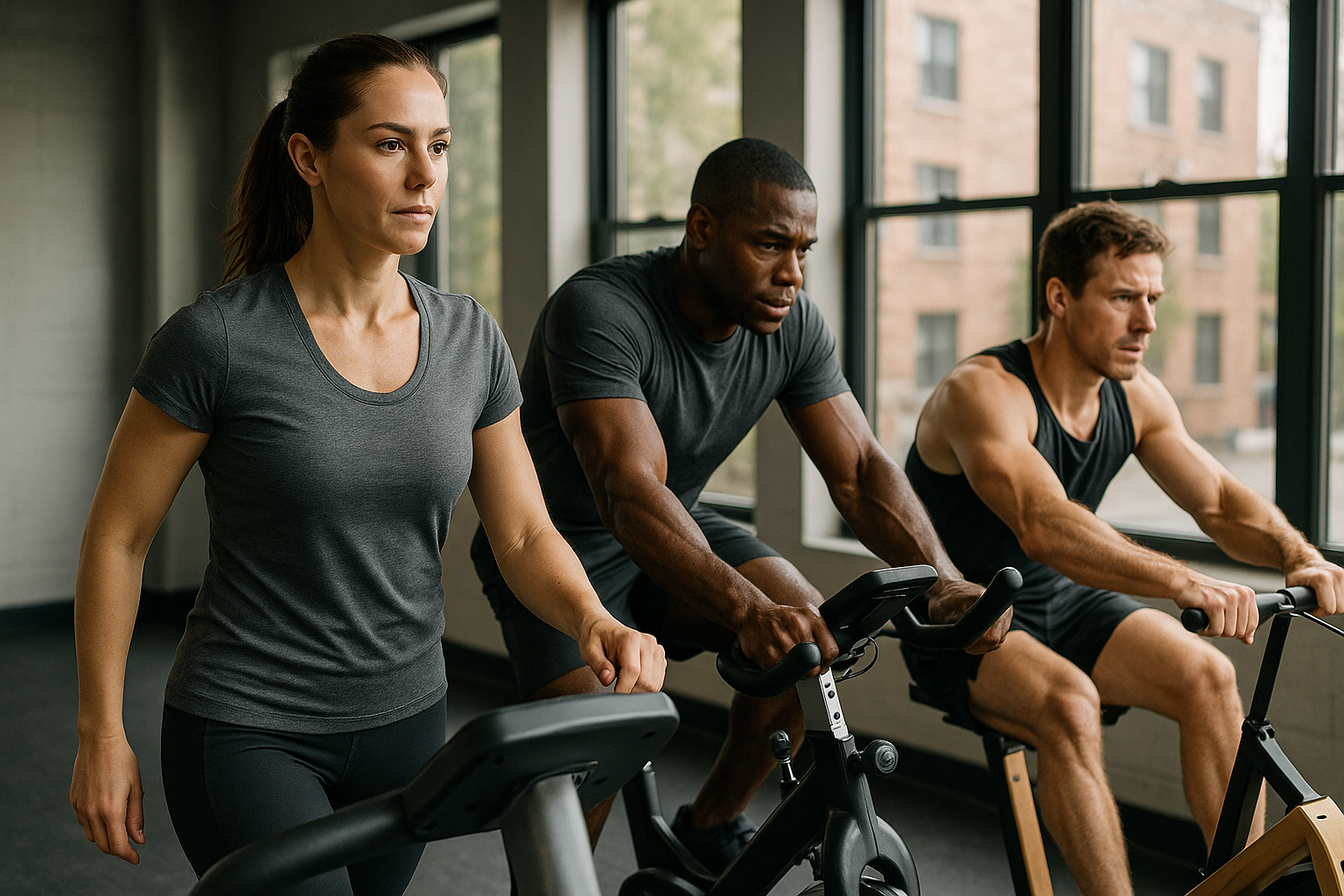
Starting a new workout routine can feel like a choice between “too hard” and “not worth the time.” That’s exactly why hiit for beginners has become such a popular entry point. HIIT stands for high-intensity interval training, which simply means you alternate short bursts of effort with planned recovery. Instead of exercising at the same pace for a long time, you work a little harder for a moment, then ease off, and repeat.
The big draw is efficiency. A well-structured HIIT session can be done in around 15–20 minutes, making it easier to fit into everyday life. It’s also flexible: HIIT can be built around walking, cycling, bodyweight moves, or low-impact variations that keep things kinder to joints. In other words, HIIT doesn’t have to mean burpees, sprinting, or pushing to your absolute limit on day one.
What makes HIIT beginner-friendly
Beginners often worry that HIIT is only for people who are already fit. In reality, the “interval” part is what makes it adaptable. You can adjust the intensity, the length of each work period, and how much rest you take. A common beginner setup is shorter work intervals with longer recovery, so you can focus on steady breathing and good form rather than trying to go all-out.
Another reason hiit for beginners works well is that it gives you clear structure. You know when to push and when to recover, which can feel more manageable than guessing how hard you should go during a longer workout. Over time, those repeated bursts can help build cardiovascular fitness and endurance, while also increasing overall calorie burn compared with some steady-state sessions of the same length.
Why HIIT can be a smart place to start
If your goal is to feel fitter, have more energy, or get back into exercise after a break, HIIT can offer a motivating sense of progress. Because sessions are short, it’s easier to stay consistent, and consistency is what drives results. The key is to start at an appropriate level: you should feel challenged during the work intervals, but still in control.
If jumping or fast direction changes don’t feel right for your body, low-impact HIIT is a great option. You can keep one foot on the floor, choose joint-friendly movements, and still get the interval effect. In the next section, we’ll break down a simple first HIIT structure, how to warm up and cool down, and which variables to adjust so your training feels sustainable from the start.

Men's Posture Shirt™ - Black
Supports posture and can help with pain during activity or at rest.

Women's Posture Shirt™ - Black
Improves posture with patented Neuroband™ tech; for exercise or daily support.
How to structure your first HIIT workout
A beginner HIIT session works best when it’s simple, repeatable, and easy to scale. A classic starting structure is 20 seconds of work followed by 40 seconds of rest. That 1:2 work-to-rest ratio gives you enough recovery to keep your form solid and your breathing under control, while still creating the interval effect that makes HIIT so effective.
Here’s a straightforward template you can use for hiit for beginners:
- Warm-up: 5 minutes
- Main set: 6–10 rounds of 20 seconds work + 40 seconds rest (6–10 minutes total)
- Cooldown: 3–5 minutes
That means your full workout can still fit into a 15–20 minute window, but it won’t feel like a “test” you have to survive. The goal is to finish thinking, “I could do that again,” not “I never want to do that again.”
Warm-up and cooldown basics
Warm-ups and cooldowns aren’t optional extras in HIIT. A warm-up gradually raises your heart rate, increases blood flow to working muscles, and helps your joints move more comfortably before intensity goes up. Keep it easy and rhythmic: brisk walking, light cycling, marching in place, or step-ups on a stable surface all work well.
For the cooldown, bring your breathing down slowly with gentle movement (like easy walking), then add a few light stretches for the muscles you used most. This is also a good moment to check in with how your body feels, especially if you’re new to intervals.
Beginner-friendly exercise ideas
You don’t need complicated moves to get a great session. Pick one or two exercises you can do with control. Good options include:
- Brisk incline walking (outdoors or treadmill)
- Stationary cycling with a slightly higher resistance during work intervals
- Low-impact jumping jacks (step one foot out at a time instead of jumping)
- Bodyweight sit-to-stands from a chair (great for building leg strength)
- Marching high knees (fast march rather than a run)
If you’re unsure what to choose, start with walking or cycling. They’re easy to scale, joint-friendly for many people, and make it simpler to control intensity.
The key variables to adjust as a beginner
HIIT is flexible because you can change a few “dials” to match your current fitness level. For beginners, the most important variables are intensity, interval length, rest time, and total rounds.
- Intensity: Aim for challenging effort, not maximum. During work intervals, you should be breathing harder but still able to speak a short phrase.
- Work duration: Keep it short at first (10–20 seconds). Longer intervals can come later.
- Recovery: Use longer rests early on (40–60 seconds) so you can repeat each interval with good form.
- Rounds: Start with fewer rounds and add one round at a time as you adapt.
A simple weekly schedule to start with
Most beginners do best with two HIIT sessions per week at first, leaving room for recovery and lower-intensity movement. A practical schedule looks like this:
- Monday: 15-minute HIIT session
- Wednesday: Active recovery (easy walking, mobility work, or yoga)
- Friday: 15-minute HIIT session
After 2–3 weeks of consistency, you can progress in small steps. For example, keep the same exercises but reduce rest from 40 seconds to 30 seconds, or add 1–2 rounds while keeping the same rest. Change only one variable at a time so your body can adapt without feeling overwhelmed.
Safety tips and readiness guidance
Before starting hiit for beginners, do a quick readiness check. If you can comfortably walk for 20 minutes at an easy pace, you likely have a solid base to begin gentle intervals. If you have a medical condition, are returning after a long break, or experience chest pain, dizziness, or unusual shortness of breath with exercise, it’s wise to speak with a healthcare professional before increasing intensity.
During workouts, use these safety principles:
- Prioritise form over speed. If your technique breaks down, lower the intensity or choose a simpler movement.
- Stop if pain appears. Muscle effort and heavy breathing are normal; sharp or escalating joint pain is not.
- Recover on purpose. Rest days are part of the plan, not a sign you’re doing it wrong.
Common beginner mistakes include skipping the warm-up, doing HIIT too many days in a row, and treating every interval like an all-out sprint. The fastest way to make HIIT sustainable is to keep it controlled, repeatable, and joint-friendly from the start.
Low-impact options for hiit for beginners
If traditional HIIT movements feel too bouncy or fast, low-impact intervals can give you the same training effect with less stress on your joints. The goal stays the same: short bursts of higher effort followed by planned recovery. What changes is the exercise selection and how you create intensity.
Low-impact hiit for beginners is especially useful if you have sensitive knees, hips, ankles, or lower back, or if you are returning to exercise after time off. You can still raise your heart rate by increasing pace, adding resistance, or using larger ranges of motion without jumping.
- Seated intervals: Seated marching, fast feet taps, or seated “punches” can elevate your heart rate while keeping impact minimal. Focus on tall posture and controlled breathing.
- Swimming or pool intervals: Water reduces joint load while providing resistance. Try short “faster” lengths or timed bursts with easy floating or gentle kicking as recovery.
- Resistance band intervals: Band rows, band squats to a chair, or band presses can be used in intervals to build strength and raise effort without high impact.
- Incline walking: Increasing incline (or walking uphill outdoors) is a joint-friendlier way to make a work interval feel challenging.
To keep it beginner-friendly, stick to the same interval structure you have already learned (for example, 20 seconds of work and 40 seconds of rest). Choose one movement you can do with solid form, then repeat it for several rounds rather than switching exercises constantly.
How to make intervals feel challenging without going all-out
A common misconception is that HIIT only “counts” if you push to your absolute limit. For hiit for beginners, the most sustainable approach is controlled intensity. You should feel like you are working hard during the work interval, but you should not feel out of control, dizzy, or unable to recover during rest.
Try these simple ways to scale effort up or down:
- Change speed: Move faster during the work interval and slow down during rest.
- Change range of motion: Make steps bigger, sit-to-stands deeper (within comfort), or arm swings stronger.
- Add light resistance: Use a band or slightly higher bike resistance, but keep form steady.
- Adjust rest: If you cannot repeat the next interval with good technique, add more rest rather than forcing intensity.
As a simple self-check, aim to finish the last round with the same quality as the first. That consistency is a strong sign you are training at the right level for progress.
Setting realistic expectations and tracking progress
Results from hiit for beginners are often felt before they are seen. Early changes tend to show up as better stamina, easier breathing, and improved confidence with the movements. If your main goal is fat loss, remember that training supports the process, but nutrition, sleep, and overall daily activity also play major roles.
Here is a realistic timeline many beginners can relate to:
- After 2 weeks: Work intervals feel less intimidating, recovery feels quicker, and you may notice better energy after workouts rather than feeling wiped out.
- After 4 weeks: You can often complete more rounds with steady form, or you can slightly reduce rest while staying in control. Everyday tasks (stairs, carrying groceries, brisk walking) may feel easier.
- After 8 weeks: Many people notice clear improvements in endurance and overall fitness. You may be ready to progress by adding one session per week, increasing work time slightly, or introducing a second exercise into the circuit.
Track progress with simple metrics that reflect real fitness improvements:
- Recovery: How quickly your breathing settles after an interval.
- Consistency: How many sessions you complete per week.
- Performance: Rounds completed with good form, or the ability to use slightly more resistance.
- Well-being: Sleep quality, mood, and how your body feels day to day.
Frequently Asked Questions
Is hiit for beginners suitable for everyone?
HIIT can be adapted for most fitness levels, but it is not one-size-fits-all. If you have a medical condition, are pregnant, are returning after a significant injury, or experience symptoms like chest pain, dizziness, or unusual shortness of breath, speak with a healthcare provider before starting or increasing intensity.
How often should I do hiit for beginners each week?
Two sessions per week is a strong starting point for many beginners, with at least one rest or low-intensity day between sessions. As your recovery improves, you can build to 2–3 sessions per week, but more is not always better if it reduces your ability to recover and stay consistent.
What if HIIT feels too intense?
Lower the intensity and keep the interval structure. Choose low-impact movements, shorten the work interval (for example, 10–15 seconds), and extend rest (for example, 45–60 seconds). The goal is repeatable effort with good form, not pushing to exhaustion.
Can I do hiit for beginners at home without equipment?
Yes. Bodyweight movements like sit-to-stands from a chair, step-back lunges (or split squats holding onto support), wall push-ups, marching high knees, and low-impact jumping jacks can all work well. Pick exercises you can control and that feel comfortable for your joints.
How do I know when to progress?
Progress when you can complete all rounds with steady technique and you recover well between intervals. Change only one variable at a time, such as adding one round, slightly reducing rest, or increasing resistance on a bike. If soreness or fatigue lingers for days, scale back and prioritise recovery.
Källor
- MudGear. (n.d.). "HIIT Workouts for Beginners: Let's Take It Step by Step."
- 8fit. (n.d.). "HIIT Workout für Anfänger."
- YouTube. (n.d.). "Beginner HIIT Workout."
- Bauerfeind. (n.d.). "HIIT Workout for Beginners."
- Aaptiv. (n.d.). "How to Tackle HIIT Workouts as a Beginner."
- Weight Watchers. (n.d.). "HIIT Workouts for Beginners."
- Brick Bodies. (n.d.). "Gym HIIT Workouts: Are They Safe?"
- PureGym. (n.d.). "HIIT Workouts for Beginners."
- Zumub. (n.d.). "The Truth About HIIT Training: Everything You Need to Know."
- AARP. (n.d.). "HIIT Workout for Beginners."
- Basic-Fit. (n.d.). "What is a HIIT Workout?"
- On. (n.d.). "Low Impact HIIT Workout."
- Wikipedia. (n.d.). "High-intensity Interval Training."
- Red Bull. (n.d.). "HIIT Training Einsteiger Tipps Guide."
- PureGym. (n.d.). "Benefits of HIIT Training and Workouts."