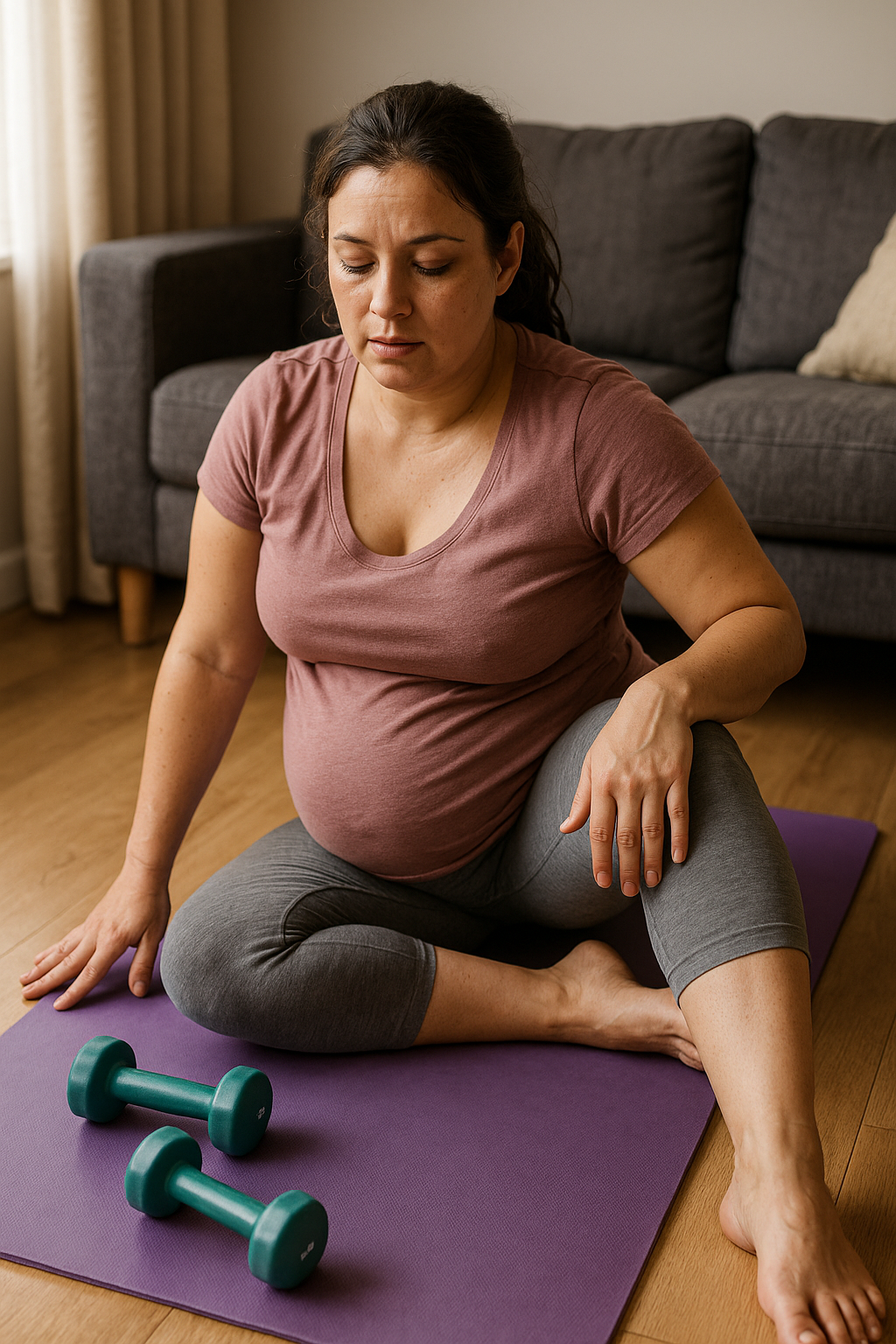
Core training is often marketed as the fast track to visible abs, but that’s a narrow view of what your midsection actually does for you. A strong core is the body’s built-in stabiliser: it helps you sit taller, move with more control, and transfer force efficiently whether you’re carrying groceries, reaching overhead, or getting up from a chair. For many people—especially those who spend hours at a desk—core strength is less about aesthetics and more about feeling steady, capable, and comfortable in everyday movement.
At its simplest, core training means practicing exercises that teach your trunk to resist unwanted motion while supporting the spine and pelvis. That includes bracing, breathing, and maintaining alignment under load. When the core does its job, the rest of the body often follows: shoulders can settle, hips can move more freely, and balance becomes easier because you’re not constantly “leaking” stability through the middle. This is also why core work is frequently recommended as part of routines aimed at reducing the risk of common overuse issues—particularly in the lower back—by improving how forces are distributed through the body.
What core training really includes
The core isn’t just the front of the stomach. It’s a coordinated system of muscles around the torso that work together to stabilise you in multiple directions. Effective core training builds strength and endurance for real-life tasks: holding posture, controlling rotation, and staying aligned as you move. Think of it as training your body to stay “stacked”—ribcage over pelvis—so your limbs can do their work without your spine compensating.
Why ergonomics matters for safer results
Here’s where many routines fall short: they focus on intensity before alignment. Ergonomic principles—neutral spine, joint-friendly angles, and appropriate support—help you get more out of each repetition with less strain. This is particularly relevant if you’re dealing with a sedentary lifestyle, stiffness from long sitting, or recurring tension in the back and hips. The goal isn’t to make exercises easier; it’s to make them cleaner and more targeted, so the right muscles are doing the work.
In the next sections, we’ll break down the key muscle groups involved, the most useful benefits, and how to combine classic exercises with ergonomic setup tips—so your core training supports both performance and posture, not just a short-term burn.
Core training fundamentals: the muscles that create stability
To get more out of core training, it helps to know what you’re actually trying to train. The core is best understood as a stabilising “cylinder” around the trunk that supports the spine and pelvis while your arms and legs move. Different muscles contribute in different ways, and the most effective routines include both endurance (holding alignment) and control (resisting rotation and extension).
Transverse abdominis sits deep and works like a natural weight belt. It helps create abdominal tension and supports spinal stability, especially when you brace before lifting, pushing, or pulling.
Rectus abdominis is the more superficial “six-pack” muscle. It helps control trunk flexion, but in practical training it’s often working isometrically to prevent excessive arching of the lower back.
Obliques (internal and external) help resist rotation and side-bending. They’re key for everyday movements like carrying a bag on one side, turning to reach, or stabilising during walking and running.
Erector spinae run along the spine and help maintain an upright posture. They work with the abdominal wall to keep the torso stacked and to control movement under load.
Benefits that go beyond a stronger midsection
When these muscle groups work together, core training becomes a foundation for how you sit, stand, and move. The most noticeable benefits are often subtle at first, but they add up quickly in daily life.
- Improved posture endurance: holding a neutral spine becomes easier, especially during long periods of sitting or standing.
- Reduced strain in the lower back: better trunk control can decrease the need for the lumbar spine to compensate during lifting and bending.
- Better balance and coordination: a stable trunk helps you control your centre of mass, which supports steadier movement.
- Enhanced performance: strength transfers more efficiently through the body when the torso is stable, benefiting everything from running to strength training.

Men's Posture Shirt™ - Black
Patented posture shirt that activates your muscles and can relieve back and shoulder pain.

Women's Posture Shirt™ - Black
Med dokumenteret effekt og Neuroband™ teknologi til forbedret kropsholdning og smertelindring.
Core exercises that deliver results (with form cues)
Popular core exercises work best when the goal is alignment first, intensity second. If you feel the lower back taking over, or you can’t breathe smoothly, it’s usually a sign to reduce the range of motion or choose a simpler variation.
Plank: Think “long line” from head to heels. Keep ribs gently down, pelvis neutral, and press the floor away. A quality plank is about steady breathing and minimal movement, not holding as long as possible with a sagging lower back.
Glute bridge: Lie on your back with knees bent and feet flat. Drive through the heels, squeeze the glutes, and lift until hips are level with the torso—without over-arching. This trains the posterior chain and helps take pressure off the lower back by improving hip control.
Russian twist (controlled rotation): Rotate from the ribcage while keeping the pelvis stable. Go slower than you think you need to; speed often turns this into a shoulder exercise. If your lower back rounds, elevate your feet on the floor, reduce the lean-back angle, or skip the weight.
Ergonomics in core training: alignment is your “equipment”
Ergonomic principles make core training safer and more effective because they keep joints in positions where the right muscles can do the work. Two simple priorities matter most: a neutral spine and a stacked ribcage-over-pelvis position.
Supportive mats reduce pressure on knees, elbows, and hips, which helps you maintain form longer. If discomfort forces you to shift or brace poorly, the core stops being the limiter and the joints become the problem.
Stability balls can be useful when they encourage controlled movement and better awareness of posture. For example, a ball-supported dead bug variation can help you learn to keep the ribs down while moving the legs. The key is choosing a size that lets your hips and knees sit near 90 degrees when seated, so you’re not forced into an exaggerated arch.
Breathing and bracing are also ergonomic tools. Aim for a quiet inhale through the nose into the lower ribs, then gently brace as if preparing for a cough—without holding your breath. This supports spinal stiffness while keeping the neck and shoulders relaxed.
Workplace-friendly core training for desk posture
If you sit for much of the day, you can reinforce core engagement without turning your office into a gym. At an ergonomic workstation, try short “micro-sets” that build awareness and endurance.
- Seated brace practice: sit tall with feet flat, exhale fully, then gently brace for 5–10 seconds while breathing normally. Repeat 3–5 times.
- Seated knee lift holds: maintain a tall posture, lift one knee a few centimetres, hold 5 seconds, switch sides. Keep the pelvis level.
- Standing anti-rotation press (band): if you have space, press a resistance band straight out from the chest and resist twisting. This targets obliques in a posture-relevant way.
What research and experts consistently emphasise
Across rehabilitation and performance settings, a consistent theme emerges: trunk endurance and control are closely tied to how well the spine tolerates daily loads. Studies in sports medicine and physiotherapy literature commonly associate improved core endurance with better movement mechanics and a lower likelihood of recurring lower back discomfort in many populations. Ergonomists and fitness professionals also tend to agree on a practical point: the best core training is the kind that reinforces neutral alignment and can be repeated consistently without flare-ups.
Advanced core training: progress without losing alignment
Once you can hold clean positions and breathe steadily through the basics, core training becomes less about adding random difficulty and more about applying smart progression. The goal is to challenge your trunk to maintain a neutral, stacked posture under gradually increasing demands—without letting the lower back arch, the ribs flare, or the shoulders tense up. When you progress with ergonomic precision, you build strength that carries over to sitting, lifting, and sport rather than just “feeling” a burn.
Progressive overload for core training (what to increase first)
Progressive overload means making an exercise slightly more challenging over time so your body continues adapting. For core training, the safest and most effective overload is usually not adding more spinal motion. Instead, increase the challenge while keeping the same high-quality alignment.
- Time under tension: add 5–10 seconds to a plank or side plank while keeping the same form and breathing rhythm.
- Leverage: move from a knee plank to a full plank, or from a short lever dead bug to a longer lever (arms and legs further from the body).
- Load: add light resistance (a band, a small weight, or a cable) to anti-rotation presses or carries while resisting twisting.
- Stability demand: use a stability ball or a balance pad only if it helps you maintain control—not if it turns the set into a fight for balance.
- Complexity: combine patterns, such as a bridge hold with a slow march, or a plank with controlled shoulder taps.
A simple rule: if your form changes, the exercise got harder than your current capacity. Scale back and build again.
Personalising core training for your body and your day
The most effective core training plan is the one that fits your needs and recovery. An office worker with stiffness from long sitting may benefit most from anti-extension and anti-rotation work (planks, dead bugs, Pallof presses) paired with hip mobility. Someone who lifts weights may focus on bracing and loaded carries to improve trunk stiffness under load. Older adults often do best with stability-focused exercises that improve balance and confidence, such as supported side planks, bird dogs, and controlled standing work.
Consider these personalisation factors:
- Age and training history: start with lower intensity and build consistency before adding complexity.
- Current symptoms: recurring lower back discomfort is a sign to prioritise control, breathing, and neutral spine positions over high-rep flexion or fast twisting.
- Work demands: if you sit for long periods, short, frequent sessions can be more useful than occasional long workouts.
- Equipment and environment: a supportive mat, a well-sized stability ball, and enough floor space to set up symmetrically can improve quality and adherence.
Safety and ergonomic tips that prevent common mistakes
Many core exercises fail not because they are “bad,” but because they are performed with compensations that shift the work into the lower back, hip flexors, or neck. Use these cues to keep your training joint-friendly and targeted:
- Keep ribs over pelvis: avoid flaring the ribs to “look” flatter in a plank. Think of gently knitting the front ribs down.
- Brace without breath-holding: exhale to set the position, then keep breathing quietly while maintaining tension.
- Stop chasing fatigue: end a set when alignment breaks. High-quality repetitions beat longer sets with compensation.
- Choose supportive surfaces: if elbows, knees, or hips hurt, use a thicker mat or padding so discomfort does not force poor posture.
- Progress rotation carefully: fast twisting with a rounded back can irritate the spine. Prioritise controlled anti-rotation first, then add slow rotation if tolerated.
If pain is sharp, radiating, or worsening, pause and seek assessment from a qualified healthcare professional. Core training should feel challenging, not threatening.
Frequently Asked Questions
What is the best core exercise for beginners?
Planks are often the best starting point because they train the entire trunk to resist unwanted movement. Begin with a short hold (10–20 seconds) and focus on a neutral spine, ribs gently down, and steady breathing.
Can core training help with lower back pain?
Yes. For many people, improving core endurance and control can reduce lower back strain by helping the trunk stabilise the spine during daily tasks. The key is choosing exercises that maintain neutral alignment and avoiding movements that provoke symptoms.
How often should I do core exercises?
Aim for 2–3 core training sessions per week, with rest days between for recovery. If you sit a lot, you can also add brief posture-focused “micro-sets” on non-training days to reinforce bracing and alignment.
Are there ergonomic products that can aid in core training?
Yes. Supportive mats reduce joint pressure and help you maintain form, stability balls can improve posture awareness when correctly sized, and an adjustable desk can support better positioning during workday core engagement drills.
Is core training suitable for older adults?
Absolutely. With appropriate modifications, core training can improve balance, posture endurance, and confidence in movement. Start with supported variations, prioritise control over intensity, and progress gradually based on comfort and stability.
Källor
- Mayo Clinic Staff. (n.d.). "Core exercises: Why you should strengthen your core muscles." Mayo Clinic.
- Gallo, L. (2020). "The 5 Best Core Exercises (and Ones to Avoid)." Healthline.
- Men's Health UK. (2020). "The Best Core Exercises for All Levels of Gym-Goer."
- Björn Borg. (n.d.). "Core Workout: Strengthen Your Core with These Exercises."
- Harvard Health Publishing. (n.d.). "Core exercise workout: 12 tips for exercising safely and effectively." Harvard Health.
- TrainingPeaks. (n.d.). "Core Strength for Athletes: A Workout to Improve Performance and Prevent Injury."
- Mayo Clinic Health System Staff. (n.d.). "15-Minute Workout: Core." Mayo Clinic Health System.