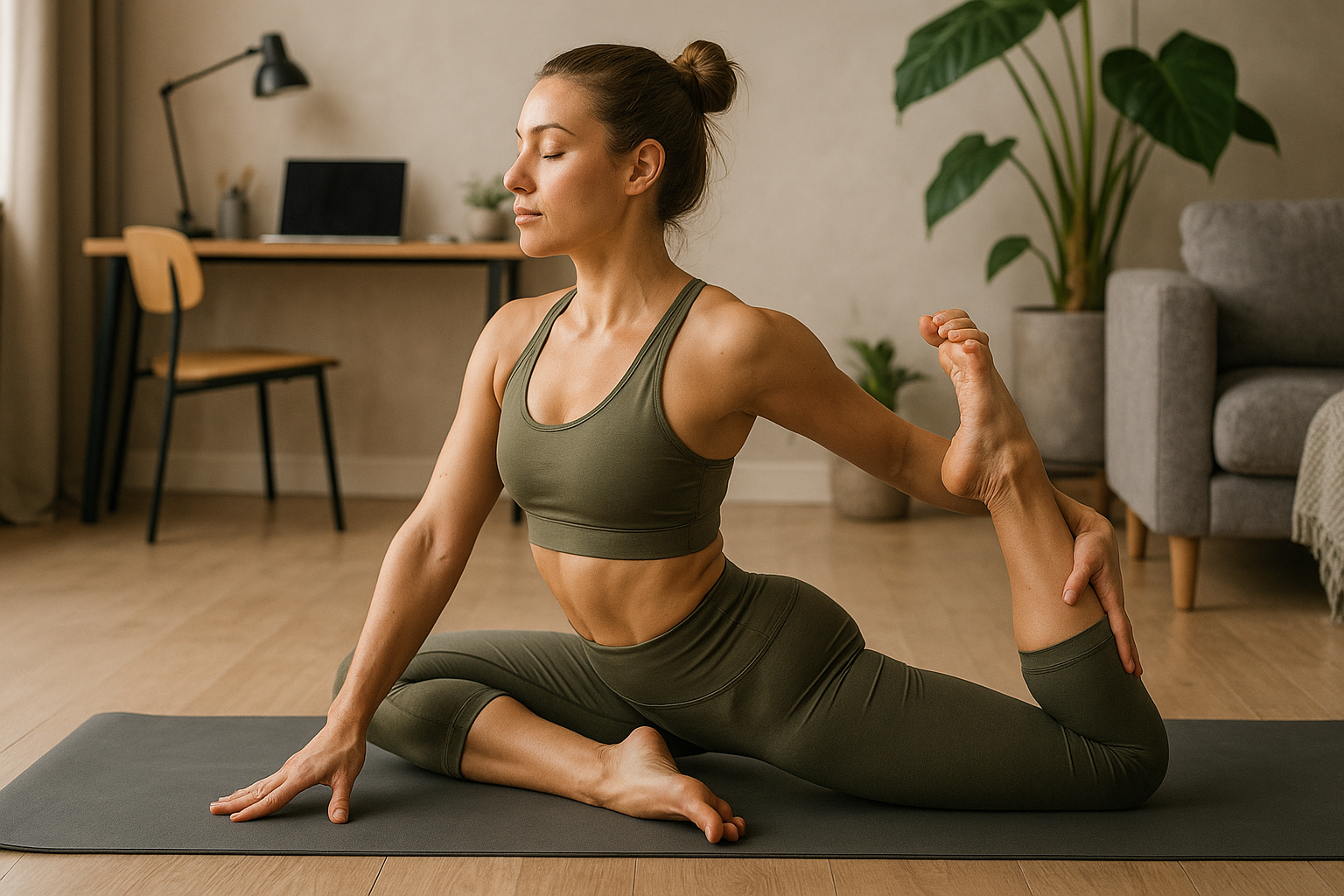
Most people don’t skip a warm-up on purpose. They just default to what they’ve always done: a quick toe-touch, a long hamstring hold, maybe a shoulder pull against a wall. It feels productive, it looks like stretching, and it’s been treated as the “right” way to get ready for exercise for decades. The problem is that your body doesn’t train in still frames. It trains in motion.
Dynamic stretching has become the go-to pre-workout approach in many sports and fitness communities because it matches what exercise actually demands: controlled movement, coordination, and muscles that can produce force through a full range of motion. Instead of holding a position and waiting for a sensation to fade, you move actively—gradually increasing reach, speed, and control. Done well, it’s one of the simplest ways to feel more switched on before a run, a lifting session, a team sport practice, or even a brisk walk after a long day at a desk.
That last point matters. Modern bodies often spend hours in one posture—hips flexed, upper back rounded, ankles stiff from limited movement. Then we expect performance on demand: sprint for the bus, jump into a workout, or hit a heavy first set in the gym. A smart warm-up bridges that gap. Dynamic stretching helps you transition from “seated and static” to “ready and responsive” by nudging joints and muscles through the ranges you’re about to use.

Men's Posture Shirt™ - Black
Stimulates your muscles to improve posture and relieve pain; ideal for both exercise and everyday use.

Women's Posture Shirt™ - Black
Activates muscles and supports posture; provides relief and awareness all day or during workouts.
Why this warm-up method is having a moment
There’s also a practical reason dynamic stretching is trending: it’s efficient. A few minutes of purposeful movement can raise your heart rate, increase blood flow, and rehearse key patterns like squatting, hinging, lunging, rotating, and reaching. It’s a warm-up that doesn’t just loosen you up—it prepares you to move better. And because the movements can be tailored, it works for beginners who need gentle mobility just as well as athletes chasing sharper speed and power.
What you’ll learn in this guide
In the rest of this post, you’ll get a clear, no-fluff understanding of what dynamic stretching is, how it differs from static stretching, and when to use it for the best effect. We’ll cover the most relevant benefits—mobility, performance, and injury risk reduction—then walk through practical examples you can plug into your routine whether you’re training for strength, running, or simply trying to feel less stiff after sitting all day.
What dynamic stretching is (and what it isn’t)
Dynamic stretching is a warm-up method built around active, controlled movements that take your joints through their usable range of motion. Instead of holding a position, you move in and out of it—think leg swings, arm circles, walking lunges, or bodyweight squats. The goal is to gradually increase reach, speed, and control while staying smooth and pain-free.
That “controlled” part matters. Dynamic stretching isn’t ballistic bouncing or forcing a joint past its limit. You should feel your muscles working and your body warming up, but you shouldn’t push into sharp discomfort. A helpful rule of thumb is that each rep should look nearly identical: steady tempo, stable posture, and no collapsing into end range.
Compared with static stretching (holding a stretch for an extended time), dynamic stretching keeps muscles engaged and the nervous system alert. Static holds can be useful in other contexts, but long holds right before explosive work may temporarily reduce force output for some people. Dynamic stretching, on the other hand, tends to support the “ready to move now” qualities you want before training.
When to use it in your warm-up
For most workouts, dynamic stretching works best after 5–10 minutes of light cardio that raises body temperature—easy cycling, brisk walking, rowing, or a gentle jog. Once you’re warm, you can use dynamic movements to prepare the specific joints and patterns you’re about to train.
Match the warm-up to the session:
- Running or field sports: prioritize ankles, hips, hamstrings, and coordination drills like high knees or skips.
- Strength training: use movement prep that mirrors your lifts—squat variations, hip hinges, lunges, and shoulder mobility before pressing.
- Jumping and sprinting: include progressive, springy movements (still controlled) that build toward faster contacts.
In practice, a focused sequence often lasts 5–10 minutes. More isn’t always better; the purpose is preparation, not fatigue.
Key benefits of dynamic stretching
Improved range of motion, flexibility, and mobility
Dynamic stretching can increase joint motion by raising muscle temperature, improving blood flow, and “greasing” the movement patterns you’re about to use. This is especially relevant if you spend much of the day sitting, where hips and ankles can feel stiff and the upper back can feel locked in place.
Sport-specific examples make this easy to apply. Runners often benefit from leg swings and high knees to open the hips and rehearse knee drive. Athletes in cutting and agility sports can use hip circles and lateral lunges to prepare for changes of direction. The common thread is simple: you’re practicing the ranges you’ll need, under control.
Better performance when it counts
A well-designed dynamic warm-up can improve qualities like sprint speed, jump height, power output, reaction time, and coordination. One reason is that it increases readiness in the nervous system and helps you produce force quickly through the ranges you’ll use in training.
Intensity matters here. Many athletes respond best when the warm-up gradually builds toward moderate effort—often around the point where you’re breathing a bit harder but can still talk in short sentences. That’s also why dynamic stretching pairs well with a short cardio ramp-up: you’re not just loosening tissues, you’re switching on the whole system.
Injury risk reduction through better preparation
No warm-up can “injury-proof” a body, but dynamic stretching can reduce avoidable risk by preparing muscles, tendons, and joints for load. By activating stabilizers and rehearsing coordination, you’re less likely to jump straight into high forces with cold, unprepared tissue.
This is particularly useful in high-impact or repetitive activities where small deficits add up—running, court sports, or heavy lifting. When hips, knees, and ankles are moving well and the trunk is engaged, you’re more likely to land, cut, and lift with better alignment and control.
Circulation and a true warm-up effect
Dynamic stretching doubles as a circulation boost: it raises heart rate, increases oxygen delivery, and elevates core temperature while mimicking sport movements. A simple example is the bodyweight squat. Done with control, it mobilizes ankles, knees, and hips while also waking up the glutes and trunk—exactly the kind of whole-body preparation many workouts need.
Limitations of dynamic stretching
Dynamic stretching is effective for most people, but it is not a one-size-fits-all solution. If you have a very limited range of motion, balance challenges, or pain with basic movement patterns, some drills may be too demanding or may encourage compensation (for example, arching the lower back to “get” more hip motion). In those cases, start with smaller, supported movements and prioritize control over range.
Another limitation is volume. A warm-up should prepare you, not tire you out. If dynamic stretching turns into a long conditioning session—too many reps, too much speed, or too little rest—it can reduce performance in the main workout. Keep most movements at a moderate tempo and stop sets before fatigue changes your form.
It is also worth being realistic about outcomes. Dynamic stretching can support readiness and may help reduce avoidable injury risk by improving preparation, but research is mixed on how much it reduces injuries on its own. Injury risk is influenced by many factors, including training load, recovery, sleep, and technique. Similarly, while dynamic warm-ups often improve short-term performance, strength gains over time still depend primarily on progressive training.
Dynamic stretching routines you can use
The best dynamic stretching routine is the one that matches your session and your current mobility. As a general guide, choose 5–8 movements, perform 6–10 controlled reps per side (or 20–30 seconds), and move from general to specific. If you sit a lot during the day, include hips, ankles, and upper back to counter “desk posture” before you load the body.
Leg-focused warm-up (running, field sports, lower-body lifting)
- High knees: 2 x 20–30 seconds, tall posture, quick but controlled steps.
- Butt kicks: 2 x 20–30 seconds, keep knees pointing down, avoid leaning back.
- Leg swings (front-to-back): 8–10 per side, hold a wall for balance, hips square.
- Walking lunges with reach: 6–8 per side, reach arms overhead to open hips and trunk.
- Bodyweight squats: 8–12 reps, pause briefly at the bottom if you can stay stable.
Full-body protocol (simple, repeatable, 6–10 minutes)
This option works well before general strength training or a mixed workout. Perform each movement for about 30 seconds and repeat the circuit up to three times, keeping the effort moderate.
- Hip circles: smooth circles each direction, ribs stacked over pelvis.
- World’s greatest stretch (dynamic version): step into a lunge, rotate toward the front leg, then switch sides.
- Thoracic rotations: rotate through the upper back without twisting the lower back.
- Ankle rocks: drive the knee forward over the toes while keeping the heel down.
- Arm circles or band pull-aparts: prep shoulders for pressing and pulling.
To finish, add 1–2 “ramp-up” sets that resemble your workout: a few light sets of your first lift, or short accelerations if you are running. This bridges the gap between mobility and performance.
What the research generally supports
Across many reviews and sport-focused studies, dynamic stretching tends to outperform long static holds for immediate improvements in range of motion and for short-term performance measures such as sprinting, jumping, and change of direction. Results vary because protocols vary: the exact movements, the total time, the intensity, and whether cardio is included all influence the outcome. The most consistent takeaway is practical: keep dynamic stretching specific, controlled, and brief, and use it to rehearse the patterns you will actually train.
Frequently Asked Questions
What is the difference between dynamic and static stretching?
Dynamic stretching uses active, controlled movement through a joint’s range of motion (for example, leg swings or walking lunges). Static stretching involves holding a position for a period of time (for example, a hamstring stretch held for 30–60 seconds). Dynamic stretching is typically used before training to increase readiness, while static stretching is often used after training or in separate mobility sessions.
Can dynamic stretching replace static stretching altogether?
Not entirely. Dynamic stretching is usually the better choice right before exercise, especially for running, jumping, and lifting. Static stretching can still be useful for improving flexibility over time, calming down after training, or targeting specific tight areas when performance is not the immediate goal.
Is dynamic stretching suitable for everyone?
Generally yes, but it should be scaled to the individual. If you have limited mobility, balance issues, or pain, choose supported versions (holding a wall or reducing range) and keep movements slow and controlled. If symptoms persist, consider guidance from a qualified health professional.
How long should a dynamic stretching session last?
For most workouts, 5–10 minutes is enough, usually after 5–10 minutes of light cardio. If you are preparing for high-intensity sprinting or heavy lifting, you may add a few short ramp-up sets, but the goal is readiness, not fatigue.
Are there any risks associated with dynamic stretching?
Risks are minimal when technique is controlled and pain-free. Problems typically come from moving too fast, forcing end ranges, or doing too much volume. Focus on smooth reps, stable posture, and a moderate pace that you can repeat consistently.
Källor
- Gymshark. (n.d.). "Dynamic Stretching." Gymshark Blog.
- Active Posture. (n.d.). "Discover the Practice: Reader's Guide to Popular Stretching Exercise Names." Active Posture Blog.
- Naked Nutrition. (n.d.). "Difference Between Dynamic & Static Stretching." Naked Nutrition Blog.
- Medical News Today. (n.d.). "Dynamic Stretching: Overview and Benefits." Medical News Today.
- Cleveland Clinic. (n.d.). "Dynamic Stretching vs. Static Stretching." Health Essentials.
- Sportamore. (n.d.). "Dynamic Training: Maximize Your Performance." Sportamore Inspiration.
- Gymshark. (n.d.). "Dynamic vs. Static Stretching." Gymshark Blog.
- Stretch Coach. (n.d.). "Dynamic Stretching: An Introduction." Stretch Coach.