Flexible hips and inner thighs don’t just look good in a warm-up—they help your body move better, feel better, and stay more resilient. When the groin area is tight, everyday actions like getting out of a car, climbing stairs, or changing direction during sport can feel restricted. That’s where a consistent groin stretch routine comes in: it’s one of the simplest ways to improve comfort and mobility while lowering the risk of those sudden “twinges” that can derail training or make sitting all day feel even worse.
Groin stretching isn’t only for athletes. Runners, footballers, and gym-goers often notice tightness after repetitive strides, squats, or lateral movements—but office workers can be just as affected. Hours of sitting can leave the hips flexed and the inner thighs underused, which may contribute to stiffness when you finally stand up and move. The good news is that a few targeted stretches can help restore range of motion and reduce that locked-up feeling over time.
What a groin stretch targets
The “groin” usually refers to the adductor muscle group on the inside of the thigh. These muscles help draw the leg toward the midline and stabilise the pelvis when you walk, run, or change direction. Because they work as both movers and stabilisers, they can become overworked (leading to soreness or strain) or under-stretched (leading to tightness and reduced mobility). A well-chosen groin stretch targets these adductors while also encouraging better hip mechanics—often a missing piece for people who feel stiff in deep squats or wide stances.
Why groin flexibility matters for comfort and injury prevention
Tight adductors can show up as limited hip opening, discomfort in wide-stance movements, or a feeling of pulling along the inner thigh. In more active settings, reduced flexibility may increase the likelihood of a groin strain—especially during quick direction changes, sudden accelerations, or slipping into an awkward split stance. Stretching won’t make you “injury-proof,” but it can be a practical part of a broader routine that includes warm-ups, strength work, and sensible progression.
In the next section, we’ll break down the most effective groin stretch options, including when to use dynamic versus static techniques, plus simple ways to make stretches more comfortable and controlled with ergonomic aids like resistance bands, foam rollers, and stability support.
Static vs. dynamic groin stretch: what’s the difference?
Not all stretching works the same way, and choosing the right style matters for comfort and results. A dynamic groin stretch uses controlled movement to take the hips and inner thighs through a gradually increasing range of motion. Think of it as “prepping” the tissues and nervous system for activity. Dynamic options are best before running, strength training, field sports, or any session with quick direction changes.
A static groin stretch is held in a steady position, usually for 30–60 seconds, to encourage relaxation and lengthening in the adductors and surrounding hip muscles. Static holds tend to fit best after training, after a walk, or as part of a mobility routine on rest days. If you’re feeling stiff from long hours of sitting, static stretching can also be a useful “reset,” as long as you stay gentle and avoid forcing range.
Three effective groin stretches to start using
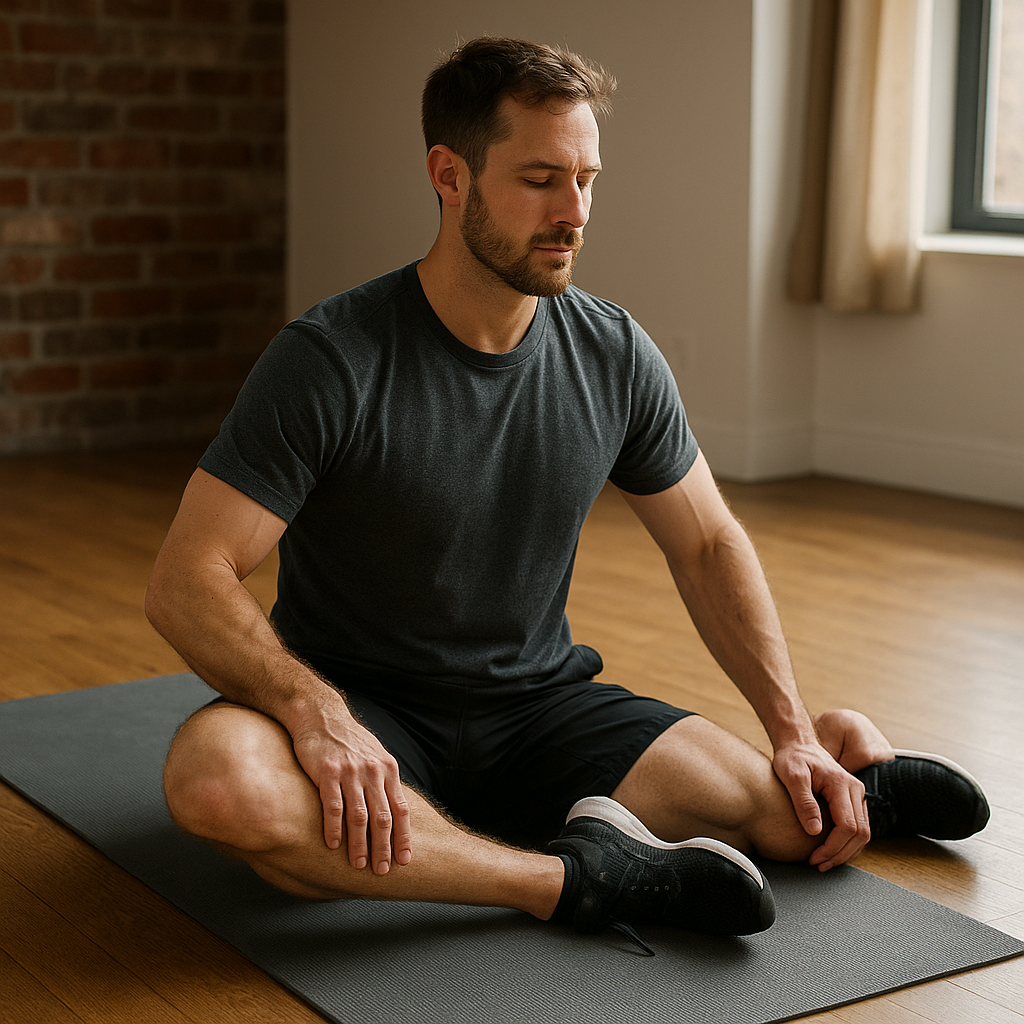
Butterfly stretch (static)
This classic groin stretch targets the inner thighs while encouraging hip external rotation. It’s beginner-friendly and easy to scale.
- How to do it: Sit tall on the floor. Bring the soles of your feet together and let your knees fall out to the sides. Hold your ankles or feet.
- Adjust your position: If your back rounds, sit on a folded towel or cushion to elevate your hips.
- Hold: Keep your chest lifted and gently hinge forward from the hips until you feel a mild stretch along the inner thighs. Hold 30–60 seconds, breathing slowly.
- Precaution: Avoid pressing your knees down with your hands. The stretch should feel controlled, not forced.
Frog pose (static, deeper adductor focus)
Frog pose is a stronger option that can be very effective for tight adductors, but it should be approached with patience. The goal is a gradual opening, not a sudden drop into the position.
- How to do it: Start on hands and knees. Slide your knees apart until you feel a moderate stretch. Keep your ankles in line with your knees, with feet turned out comfortably.
- Support your body: Lower onto your forearms if it feels stable. Keep your spine long and avoid collapsing into the lower back.
- Modify with ergonomic aids: Place a foam pad or folded towel under each knee for comfort. If you struggle to control the position, loop a resistance band around your thighs (just above the knees) to provide gentle support and feedback as you open.
- Hold: 20–45 seconds to start, building up as tolerated.
Standing groin stretch (dynamic or static)
This variation is practical for warm-ups and “movement snacks” during the workday because it doesn’t require getting on the floor.
- How to do it: Stand with feet wider than hip-width. Shift your weight to one side by bending that knee, keeping the other leg straight. You should feel the stretch on the straight leg’s inner thigh.
- Posture cues: Keep your chest up, hips back, and the bent knee tracking over the toes. Avoid letting the arch collapse.
- Dynamic option: Move side-to-side slowly for 6–10 reps each way before training.
- Static option: Hold the end position for 20–40 seconds each side after training.
How ergonomic aids can make stretching more effective
If your flexibility is limited, the right support can help you stay in good alignment and relax into the stretch rather than fighting for balance. A resistance band can provide light assistance and help you control range, especially in positions like frog pose or wide-stance holds. A foam roller can be used before stretching to reduce the “stiff” sensation in the inner thigh by gently rolling the adductors (stay light, avoid sharp pain, and don’t roll directly on the groin itself). A stability ball can also add support for certain hip-opening movements by giving you something to brace against, which often makes it easier to keep the spine neutral.

Lumbar support belt
Provides adjustable compression and relief for lower back pain and tension.
Key benefits of a consistent groin stretch routine
When done regularly, groin stretching can improve hip range of motion, making squats, lunges, and lateral movements feel smoother. For athletes, better adductor flexibility and control may support cleaner direction changes and reduce the likelihood of strains during high-speed or wide-stance actions. For people who sit a lot, opening the inner thighs and hips can ease that “tight and stuck” feeling and may contribute to better lower-body comfort during walking, stairs, and daily movement.
The most important factor is consistency: choose one dynamic option for warm-ups and one static option for cool-downs, then progress gradually as your body adapts.
Advanced groin stretch techniques for deeper mobility
Once the butterfly stretch, frog pose, and standing groin stretch feel controlled and comfortable, you can progress your groin stretch routine by increasing time under tension, improving positioning, and adding gentle movement. The goal is not to force a wider range of motion, but to build tolerance and control in the positions that challenge you.
A practical next step is a contract-relax approach (often used in mobility training). Move into a mild-to-moderate groin stretch, then gently contract the inner thighs as if you were trying to “drag” your knees inward without actually moving them. Hold that light contraction for 5–8 seconds, relax, and then ease slightly deeper for 10–20 seconds. Repeat 2–3 cycles. This can help you access more range without aggressive pushing.
You can also make frog pose more “active” by keeping your core engaged and lightly pressing your forearms into the floor to keep your spine long. If your hips feel unstable, a resistance band around the thighs can provide feedback and help you avoid collapsing into the end range.

37 exercises collected in the ultimate exercise book
Digital e-book with 37 targeted exercises for flexibility, mobility, and pain relief.
Sport-specific groin stretch options for runners and athletes
Different activities stress the adductors in different ways. Runners often benefit from groin stretching that respects the hip’s forward-driving pattern, while field and court athletes need more lateral control.
- For runners: Add a short dynamic groin stretch sequence before training. The standing side-to-side shift works well here because it warms the adductors while keeping the movement athletic and upright. Keep the reps smooth and stop short of any pinching in the hip.
- For football, tennis, and team sports: Include a lateral warm-up that gradually increases range. After the standing groin stretch, add a controlled lateral lunge pattern (small range at first), focusing on knee tracking and a stable foot. This helps prepare the adductors for cutting and change-of-direction demands.
- For strength training: If deep squats feel restricted, use a brief static hold after your session (for example, butterfly or a supported wide-stance hold) to encourage relaxation in the inner thighs.
If you feel sharp pain, catching, or a sudden “grab” in the inner thigh, treat that as a stop signal rather than something to stretch through.
How to fit a groin stretch into a busy day
Consistency matters more than intensity. If you struggle to find time, use short “movement snacks” that take 2–4 minutes and don’t require changing clothes.
- Morning (1–2 minutes): 6–10 slow side-to-side shifts in a standing groin stretch to reduce stiffness.
- Midday (2 minutes): Butterfly stretch on a mat or carpet, sitting on a cushion if your hips feel tight.
- Evening (2–4 minutes): Frog pose with knee padding, held gently for 20–45 seconds, repeated 2 times.
As a general guideline, aim for 3–5 days per week. If you are very tight from sitting or training volume, lighter daily sessions can work well as long as the intensity stays mild. A good groin stretch should feel like steady tension, not pain. Breathing slowly (long exhales) often helps the hips and inner thighs relax.
Frequently Asked Questions
How long should I hold a groin stretch?
For most static groin stretch positions, hold 30 seconds to 1 minute and repeat 2–3 times. If you are new to stretching or feel very tight, start with 20–30 seconds and build gradually.
Is it safe to perform groin stretches post-injury?
If you have had a recent groin strain or sharp inner-thigh pain, it is best to consult a healthcare professional before returning to stretching. In many cases, gentle, pain-free groin stretching can support recovery, but pushing into discomfort too early may aggravate the tissue.
Can groin stretches help with lower back pain?
They can. Tight hips and inner thighs may contribute to increased tension through the pelvis and altered movement mechanics. A consistent groin stretch routine may help reduce lower-body stiffness and, for some people, ease strain that is felt in the lower back. Persistent or worsening back pain should be assessed by a professional.
What are the signs of overstretching?
Common signs include sharp pain, lingering soreness that lasts more than a day or two, muscle spasms, or a feeling of instability in the hip. Stretching should feel controlled; if symptoms increase during or after a session, reduce intensity and range.
How can ergonomic aids enhance my stretching routine?
Ergonomic aids can make a groin stretch safer and more effective by improving alignment and comfort. Resistance bands can provide light support and help you control range. Foam pads or folded towels reduce pressure on the knees in frog pose. Foam rollers can be used gently on the inner thigh (not directly on the groin) before stretching to reduce the sensation of stiffness and help you move more smoothly.
Källor
- SERP Analyse: Din guide til bedre online synlighed. Kabinescooter.dk.
- Plutonic.dk. Understanding SERP.
- SEO Knowledge: SERP. Citona.dk.
- How to Rank on Google: SERP Strategies. ReportGarden.
- SERP Definition. Relevans.dk.
- YouTube Video on SERP Analysis.
- SERP Features: A Comprehensive Guide. SEOMonitor.
- What is a SERP? Wix SEO Learning Center.
- YouTube Video: Understanding SERP.
- SERP Definition. Lazzaweb.dk.