If your hips feel stiff when you stand up from your desk, struggle to sit comfortably in a deep squat, or notice your stride shortening on runs, you’re not alone. Tight hips are one of the most common “modern body” complaints—showing up in office workers who sit for hours and in runners who repeat the same hip motion day after day. The good news is that a well-chosen hip stretch routine can make everyday movement feel smoother, reduce that locked-up sensation at the front of the hips, and help you move with more control.
The hips sit at the centre of how you walk, climb stairs, lift, and rotate. When they don’t move well, other areas often compensate—typically the lower back, knees, or even the ankles. That’s why hip tightness can feel like more than just a local issue: it can affect posture, comfort during long periods of sitting, and how “free” your body feels during training.

Women's Posture Shirt™ - Black
Stimulates muscles and can relieve tension and pain; improves posture awareness for everyday life.
Why hips get tight in the first place
For many people, the biggest driver is prolonged sitting. When you sit, the hip flexors stay in a shortened position, and over time that can contribute to a persistent feeling of stiffness when you stand, walk, or try to extend the hip. Add in poor posture (like an exaggerated arch in the lower back) and the body may default to using the same muscles over and over, while others underperform.
On the other end of the spectrum, repetitive activity can do it too. Runners, cyclists, and gym-goers often load the hips heavily but not always through a full range of motion. That can leave you strong in certain positions, yet restricted in others—especially if recovery and mobility work are inconsistent.
What this guide will help you do
In the next sections, you’ll get a practical selection of hip stretch options—ranging from gentle openers to deeper mobility drills—so you can choose what fits your body and your day. We’ll cover popular favourites like the 90/90 position, figure-four variations, and the hip flexor lunge/couch stretch, plus inner-hip openers such as butterfly and frog. You’ll also learn simple cues that matter more than chasing an intense sensation, along with straightforward safety tips like breathing steadily, avoiding sharp pain, and using consistent holds (often around 30 seconds) to build lasting change.
Essential hip stretch moves for better mobility
Not all hip tightness comes from the same place. Some people feel it at the front of the hip (often the hip flexors), others on the outside (glutes and deep rotators), and many feel it along the inner thigh (adductors). The best results usually come from combining a few targeted positions rather than forcing one intense stretch. Use the options below to build a short routine that matches what feels restricted in your body.
90/90 stretch (internal and external rotation)
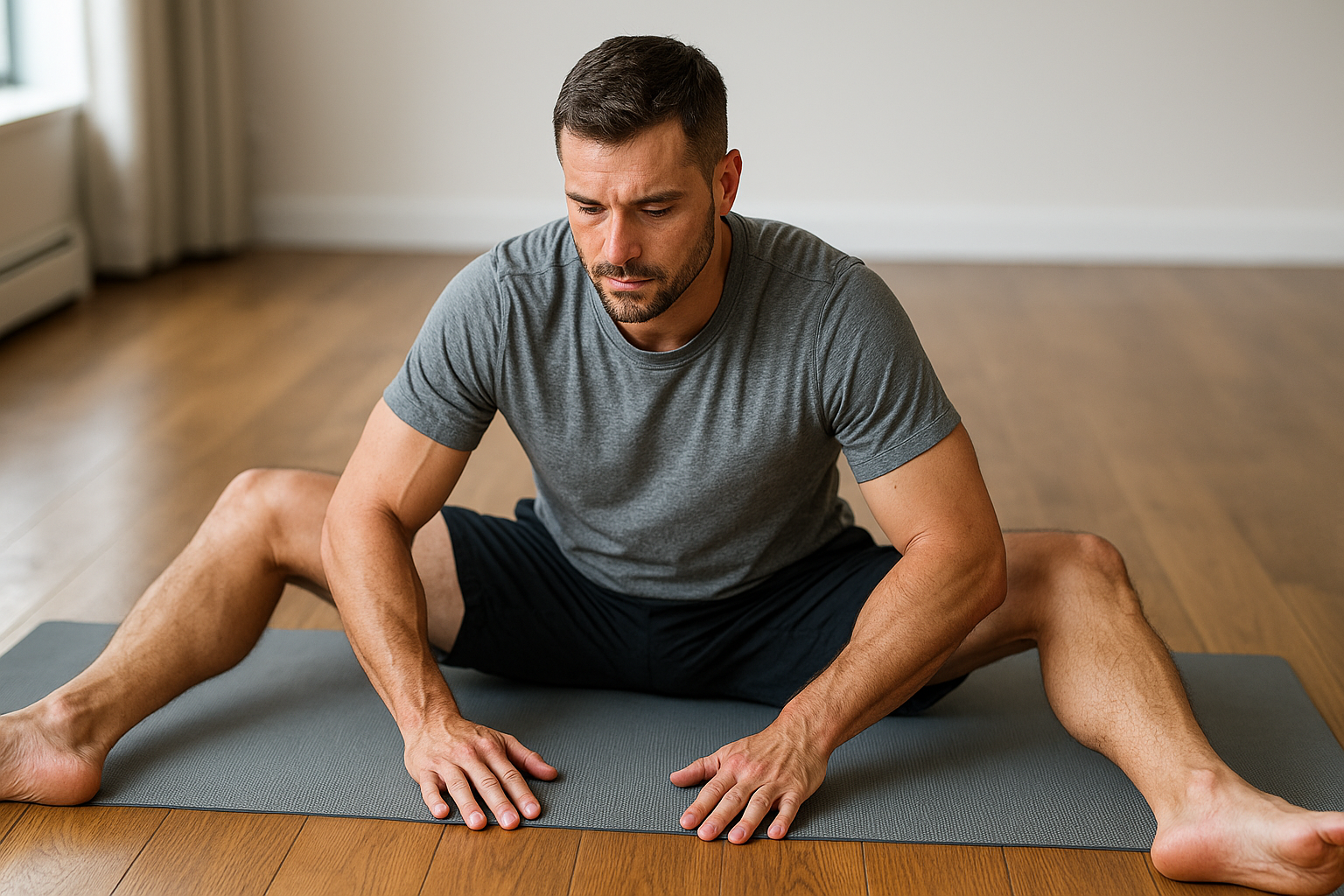
Sit on the floor with your front leg bent at about 90 degrees in front of you and your back leg bent at about 90 degrees to the side. Keep your chest tall and your hips heavy toward the floor. You should feel the front hip working into external rotation and the back hip into internal rotation.
How to do it: Place your hands behind you for support, then slowly lean your torso forward over the front shin while keeping your spine long. Hold for about 30 seconds, then switch sides.
Dynamic or static? Use it dynamically (gentle forward-and-back rocks) before training, and more statically after training or on rest days.
Figure-four stretch (outer hip and piriformis)
Lying version: Lie on your back, cross one ankle over the opposite knee, and pull the uncrossed leg toward your chest. Keep the tailbone heavy and avoid twisting your pelvis.
Seated version: Sit tall on a chair, cross ankle over knee, and hinge forward from the hips (not the lower back). This is a great option for desk workers who need a quick reset.
Hip flexor lunge and couch stretch (front of hip and thigh)
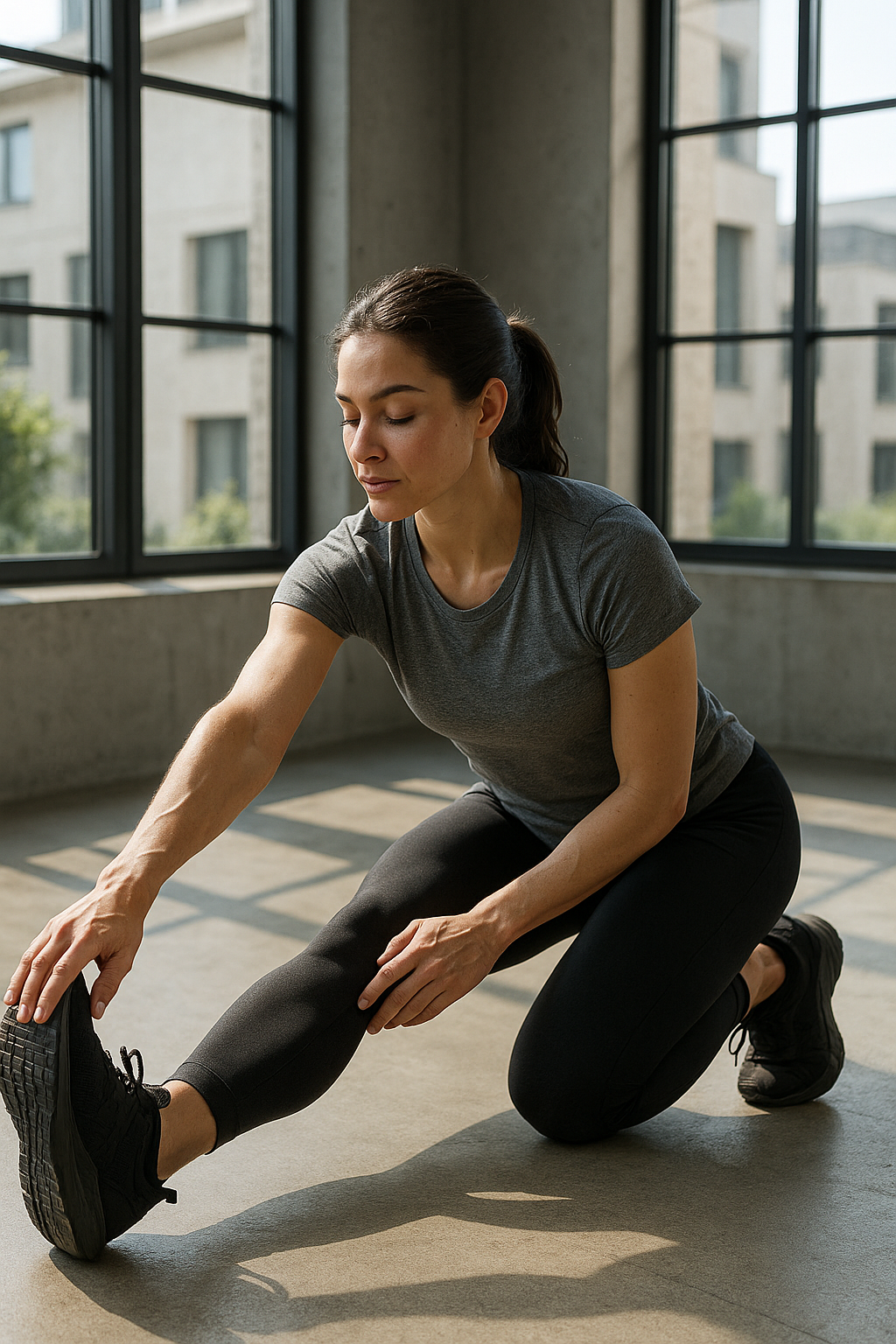
Start in a half-kneeling lunge with one knee down and the other foot in front. The key cue is a gentle forward hip drive while keeping your ribs stacked over your pelvis. If you simply arch your lower back, you’ll feel “a big stretch,” but it often comes from spinal extension rather than true hip extension.
To progress, move into a couch stretch: place your back shin up against a wall or sofa, with the knee close to the base. Squeeze the glute on the kneeling side and lightly tuck the pelvis (posterior pelvic tilt) to bias the hip flexors and reduce compensation.
Butterfly pose (adductors and groin)
Sit on the floor, bring the soles of your feet together, and let your knees fall out to the sides. Hold your ankles and sit tall. Instead of pushing the knees down, think about lengthening your spine and breathing into the inner thighs. If your back rounds, sit on a folded towel to elevate the hips.
Frog stretch (inner hip opener)
Come onto hands and knees, then slide your knees apart with your shins angled outward. Keep your hips in line with your knees and your spine neutral. Slowly shift your hips back until you feel a strong but manageable stretch through the inner thighs. This one is intense for many people, so start with short holds and controlled breathing.
World’s greatest stretch (dynamic full-body option)
Step into a long lunge with hands on the floor inside the front foot. Drop the back knee if needed. Rotate your torso toward the front leg and reach the same-side arm upward, then return and switch sides. Move slowly and treat it as a mobility drill: 3–5 controlled reps per side works well in warm-ups.
Child’s pose and low lunge (gentle openers)
Child’s pose helps relax the hips and lower back, especially if you widen the knees slightly. Low lunge (with the back knee down) is a beginner-friendly way to explore hip extension without the intensity of the couch stretch. Use these on recovery days or as a starting point if you’re new to stretching.
Pelvic tilt (small move, big payoff)
Pelvic tilts teach control of the pelvis, which often determines whether a hip stretch hits the right tissues. Lie on your back with knees bent. Exhale, gently flatten your lower back to the floor (posterior tilt), then return to neutral. Do 8–12 slow reps before hip flexor work to improve positioning.
What research suggests about hip flexor stretching
Stretching can improve passive hip extension—meaning how far the hip can be moved when you relax. In a home-based program lasting a few weeks, participants increased passive hip extension significantly, but this didn’t automatically translate to better active hip extension or changes in pelvic tilt during running. In practice, that means flexibility gains are real, but you may also need strength and control work to “use” the new range when you move.
Research also suggests that stretching with a posterior pelvic tilt can reduce reactive hip flexor force more effectively than simply pushing into hip extension. That supports the coaching cue above: ribs down, glute engaged, pelvis gently tucked.

Men's Posture Shirt™ - Black
Activates and stimulates muscles to relieve pain and tension, improving posture for work and daily life.
Quick self-tests and safety tips
If you’re unsure where you’re limited, try a simple couch stretch position and compare sides: does one hip feel dramatically tighter, or does your lower back want to arch immediately? Another option is the FABER position (ankle across opposite knee) to notice left-right differences in outer hip mobility.
For most people, holding a hip stretch for about 30 seconds per side is a solid starting point. Breathe slowly, avoid sharp pain or pinching at the front of the hip, and progress gradually by improving position first—depth comes later.
How to make hip stretch work in real life
The biggest difference between a routine that “works” and one that doesn’t is consistency and context. A hip stretch done once a week may feel good in the moment, but it rarely changes how you move day to day. Instead, treat hip mobility like brushing your teeth: small, regular inputs that keep stiffness from building up.
A practical approach is to match your stretches to the moment. Use dynamic mobility before training or long walks to prepare the hips to move, and use static holds after activity or in the evening to downshift tension. If you sit for long periods, short “movement snacks” (2–4 minutes) can be more realistic than a long session you never get to.
Dynamic hip stretch trends: mobility drills that carry over
One clear trend in mobility training is shifting from long passive holds to controlled, dynamic hip stretch drills—especially for people who want the flexibility to show up in sport and daily movement. Two popular options are the Cossack squat and the bear sit, both of which encourage the hips to explore range while you stay active and stable.
Cossack squat: Step wide, shift your weight to one side, and bend that knee while keeping the other leg straighter. Keep the heel down on the bent side if possible, and let the hips travel back as if sitting into the side. Move slowly for 4–6 reps per side. You’ll often feel the inner thigh of the straight leg and the hip of the bent leg working together.
Bear sit: Sit on the floor with knees bent, feet flat, and hands behind you. Drop both knees to one side, then sweep them through to the other side under control. This is less about forcing depth and more about smooth rotation without pinching at the front of the hip.
These drills fit well into warm-ups because they build control. They also pair nicely with the 90/90 stretch: do a few dynamic transitions first, then finish with a 30-second hold where you need it most.
Don’t chase the “big stretch” feeling
A common critique of popular hip stretch routines is that they reward intensity over precision. A strong sensation is not always a sign you are stretching the target tissue. For example, in hip flexor work, many people feel a huge pull simply because they are arching the lower back and tipping the pelvis forward.
Instead, prioritise joint positioning:
- Stack ribs over pelvis to reduce compensation from the lower back.
- Use a gentle posterior pelvic tilt (think “tuck”) when stretching the front of the hip.
- Keep the glute lightly engaged on the stretching side to guide true hip extension.
If you feel sharp pinching at the front of the hip, back off and adjust your position. Often, reducing depth and improving alignment makes the stretch more effective—and more comfortable.
Simple routines you can actually stick to
If you want a repeatable plan, use a mix of dynamic and static work and keep it short:
- Daily (5–8 minutes): pelvic tilts (8–12 reps), bear sit (6–10 slow sweeps), 90/90 stretch (30 seconds per side), figure-four stretch (30 seconds per side).
- Training days (3–5 minutes warm-up): world’s greatest stretch (3–5 reps per side), Cossack squat (4–6 reps per side), then one brief hip flexor lunge hold (15–20 seconds per side).
- Evening reset (4–6 minutes): butterfly pose (30–45 seconds), low lunge with posterior pelvic tilt (30 seconds per side), child’s pose (30–60 seconds).
If you learn best visually, follow a video guide or keep a printable checklist near your training area. The goal is not variety for its own sake—it’s repeating the same high-quality positions long enough for your body to adapt.
Frequently Asked Questions
What causes tight hips?
Tight hips are often caused by prolonged sitting, poor posture, and repetitive activities that limit hip movement. Over time, the body adapts to the positions you spend the most time in, which can make certain hip ranges feel stiff or restricted.
How often should I do hip stretches?
Ideally, incorporate hip stretches into your daily routine, focusing on both static and dynamic exercises. Even 5–10 minutes per day is enough to build consistency, especially if you sit a lot or train frequently.
Can these stretches help with back pain?
Yes, many hip stretches can alleviate back pain by improving hip flexibility and reducing strain on the lower back. When the hips move better, the lower back often has to compensate less during walking, lifting, and sitting.
Are these stretches suitable for beginners?
Absolutely, the stretches listed are beginner-friendly, with modifications available for different fitness levels. Start with gentle options like child’s pose, low lunge, and the seated figure-four, then progress gradually as control improves.
How long should I hold each stretch?
Aim to hold each stretch for about 30 seconds, ensuring you maintain proper form and avoid discomfort. If a position feels intense, reduce the depth and focus on slow breathing rather than forcing range.
Källor
- Healthline. ”Hip Exercises.”
- Hinge Health. ”Hip Flexor Exercises.”
- WebMD. ”Hip Flexor Stretches.”
- American Academy of Orthopaedic Surgeons. ”Rehabilitation: Hip.”
- Regionshospitalet Midt. ”Hofteøvelser ved irriteret slimsæk.”
- Fit & Well. ”Five Hip Stretches to Undo the Damage of Sitting.”
- Healthline. ”Hip Flexor Exercises.”
- Sundhed.dk. ”Overbelastning af hoftebøjer (iliopsoasmusklen).”
- Regionshospitalet Horsens. ”Udvendige hoftesmerter.”