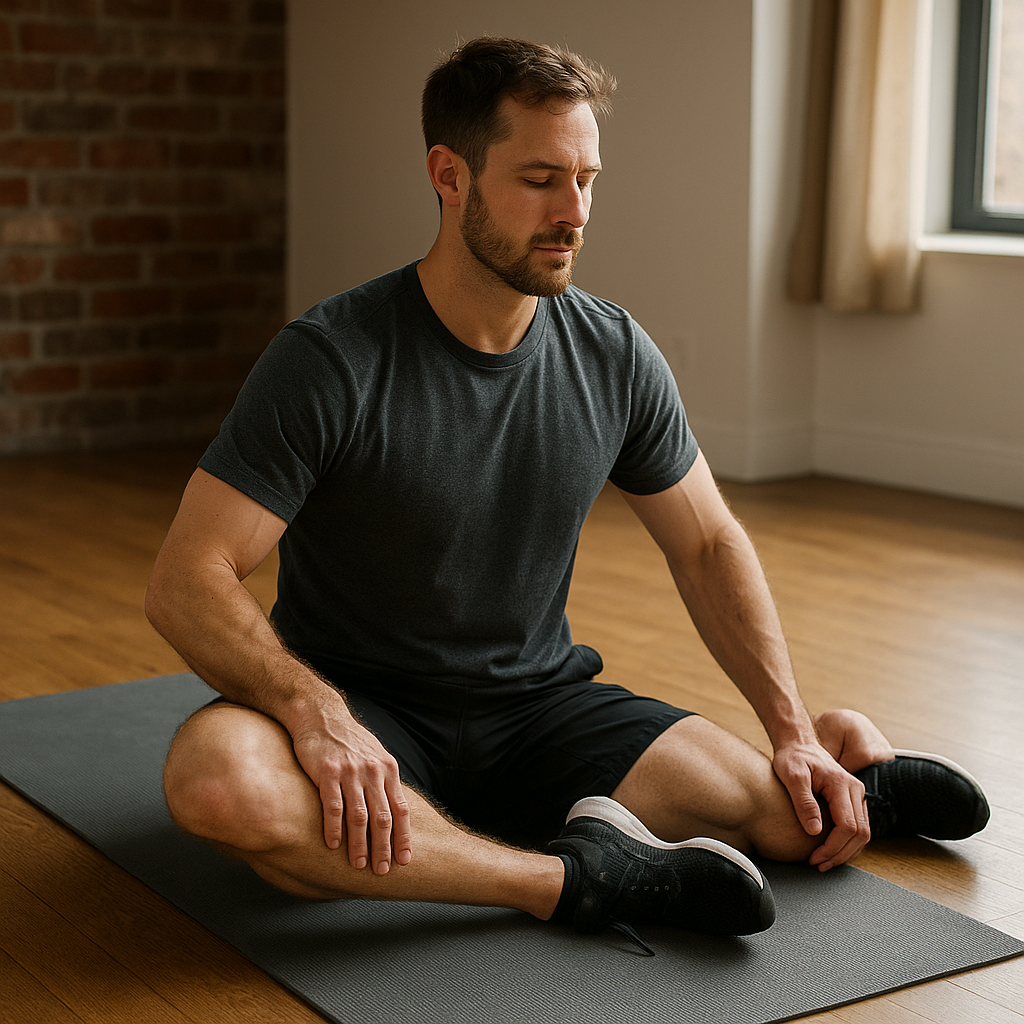


Strength training builds power. Cardio builds capacity. But flexibility training is what helps you access the strength you already have—through cleaner movement, better positions, and fewer “stuck” areas that quietly limit your workouts and your everyday life. If you’ve ever felt your squat cut short by tight hips, your overhead press compromised by stiff shoulders, or your run altered by cranky calves, you’ve seen how flexibility can be the hidden bottleneck.
Flexibility training simply means working to improve how far a joint and the surrounding tissues can move with control. And while many people still associate it with long, passive holds at the end of a workout, the fitness world has evolved. Today, flexibility is increasingly trained with a mix of approaches: short, consistent sessions; dynamic movements that prepare the body for sport; and integrated mobility work that pairs range of motion with stability and strength. The goal is practical flexibility—usable range you can actually own.
That shift matters because the benefits go well beyond “feeling loose.” Done well, flexibility training can help reduce the risk of common overuse issues by addressing restrictions that force your body to compensate elsewhere. It can also improve range of motion (ROM), which often translates to more efficient technique—whether you’re lifting, running, cycling, or just trying to move comfortably through a long workday.
Why flexibility training deserves a place in your week
When your joints can move through a healthy ROM, your body doesn’t have to cheat. That can mean less strain on tendons and smaller stabilising muscles, and a better chance of keeping training consistent over time. It can also mean better positions in strength work: deeper squats, smoother hip hinges, more comfortable overhead reaches, and cleaner rotation in sports that demand it.

Women's Posture Shirt™ - Black
Posture shirt with patented NeuroBand™ technology improves posture, relieves pain, and supports muscles in daily life and training.
Flexibility training is also relevant if you’re not chasing performance numbers. Daily tasks—getting up from the floor, carrying groceries, reaching into the back seat, sitting at a desk for hours—can all feel easier when your movement options aren’t restricted. Many people notice that when tight areas calm down, posture and balance feel more natural too.
What you’ll learn in this guide
In the next sections, we’ll break down what current evidence and modern coaching trends suggest about stretching and flexibility protocols, including how much is enough, when dynamic methods may be a better fit, and how flexibility changes with age. You’ll also get practical ways to integrate flexibility training into a real schedule—without turning it into a second full workout.
What the research says about stretching dosage
One of the biggest reasons flexibility training feels confusing is that many people assume “more is better.” Recent research suggests that isn’t always true. A large systematic review on static stretching dosage found that the biggest returns tend to come from surprisingly small amounts of total time. For immediate (acute) improvements in range of motion, the strongest effects were seen around 4 minutes of total stretching per session for a given muscle group. For longer-term (chronic) improvements, the review found that about 10 minutes per week per muscle group produced the greatest gains, with little added benefit beyond that point.
In practice, this means you don’t need marathon stretching sessions to make progress. If your goal is to gradually improve hamstring flexibility, for example, you might accumulate 10 minutes per week through short holds spread across multiple days. The same review also reported that people with poorer starting flexibility typically improve more, and that some areas (like the hamstrings) often respond more than others (like the spine). The takeaway: consistent, targeted work beats occasional long sessions.
Dynamic vs. static stretching: choosing the right tool
Static stretching (holding a position) still has a place, but it’s no longer the default “do this before everything” recommendation. A growing trend in coaching is to use dynamic stretching and movement-based mobility drills as the primary warm-up strategy, especially before strength training, running, or sport. Dynamic work raises tissue temperature, rehearses the patterns you’re about to use, and can improve movement quality without the sluggish feeling some people get from long static holds.
That doesn’t mean static stretching is harmful. When static holds are kept relatively short (for example, under about a minute per muscle), performance effects before training are generally trivial. The key is matching the method to the moment: dynamic stretching tends to fit best before activity, while static stretching often fits best after training or in separate sessions when you’re specifically trying to increase range of motion.
How flexibility training supports injury prevention
Flexibility training is often discussed as injury prevention, but the most useful way to think about it is this: it helps reduce the need for compensation. When a joint can’t access a normal range of motion, your body will often “borrow” movement from somewhere else. Over time, that can increase stress on tissues that weren’t meant to take the load—like the lower back picking up extra motion when hips are stiff, or the shoulders overworking when the upper back doesn’t move well.
Fitness authorities commonly frame flexibility work as a way to address muscle imbalances and restore more normal movement options. That matters because balanced mobility can make technique more repeatable under fatigue. It also pairs well with strength training: gaining range is helpful, but controlling that range is what keeps it usable when you sprint, lift, rotate, or change direction.
Performance benefits: more usable range, better output
Improved flexibility can translate to performance by making movement more efficient. When you can reach positions without fighting your own restrictions, you can often produce force in better alignment. In strength training, this may look like a deeper squat with a more stable torso, a cleaner hip hinge, or a more comfortable overhead position. In running and field sports, it can mean smoother stride mechanics and less “braking” caused by tight hips or ankles.
Importantly, flexibility training is not about becoming hypermobile. For most people, the goal is adequate range of motion for the demands of your sport and life, combined with the stability to use it. That’s why many coaches integrate flexibility work into full programs rather than treating it as a separate, optional add-on.
Flexibility and age: why consistency matters more over time
Flexibility tends to decline with age, and estimates often cited in health and performance education suggest an average drop of roughly 10% per decade from ages 20 to 49. This doesn’t mean you’re destined to get stiff—it means the baseline “maintenance dose” becomes more important. Regular flexibility training can help offset that decline by keeping tissues accustomed to moving through full ranges and by reinforcing movement quality.
If you’re busy, this is good news: you can get meaningful results from short sessions. A few minutes of targeted work most days is often more effective than a single long session once a week, especially if you sit for long periods or repeat the same training patterns.

Men's Posture Shirt™ - White
Patented NeuroBand™ posture shirt for men, supports better posture, muscle activity, and relieves pain for work, sports, or daily use.
How to integrate flexibility training into a real week
A practical approach is to place flexibility work where it supports what you already do:
- Before training: use dynamic stretches that match your workout (leg swings, walking lunges, thoracic rotations, ankle rocks).
- After training or on rest days: add short static stretching blocks to target your tightest areas, aiming to accumulate about 10 minutes per week per muscle group.
- For daily life: focus on the areas that affect comfort and posture most—hips, calves, chest, and upper back—especially if you sit often.
When flexibility training is treated as a small, repeatable habit rather than a separate workout, it becomes easier to stick with—and that consistency is what produces lasting change.
Alternative methods that still improve flexibility training
If traditional stretching feels tedious—or if you struggle to stay consistent—there are other ways to build flexibility that still support better range of motion (ROM). Two approaches that have gained attention are microstretching and resistance training through longer ranges. Both can be useful because they fit into real schedules and often feel more “active” than long static holds.
Microstretching uses low-intensity positions (often described as a mild stretch rather than a deep pull) held with calm breathing. The goal is to reduce protective tension and let the body gradually accept more range without fighting it. This can be especially helpful if you tend to tighten up when you stretch hard, or if you feel sore and “guarded” after intense training.
Resistance training can also function as flexibility training when you use controlled reps through the largest pain-free range you can manage. Examples include slow split squats to open the hip flexors, Romanian deadlifts to challenge hamstring length under load, or overhead pressing variations that progressively improve shoulder and upper-back positions. The advantage is that you are not only gaining ROM—you are also building strength and control in that ROM, which is what makes flexibility usable in sport and everyday movement. For a full range of options, see our product collection.
How to apply these methods in a busy week
The most reliable trend across modern protocols is that short, consistent sessions outperform occasional long sessions. Instead of waiting for a full “mobility day,” treat flexibility training like brushing your teeth: small doses, repeated often.
Here are practical ways to do that without adding a second workout:
- After training (3–6 minutes total): pick 1–2 tight areas and accumulate time with short holds. For example, two rounds of 30–45 seconds per side for hip flexors and calves.
- On non-training days (5–10 minutes): use microstretching for areas that feel chronically tight (hips, hamstrings, chest). Keep intensity low and focus on relaxed breathing.
- Inside strength sessions: choose exercises that naturally train end range. Examples: deep goblet squats with a pause, slow eccentrics in split squats, controlled hip hinges, and thoracic rotation drills between sets.
If you want a simple target, aim to accumulate roughly 10 minutes per week per muscle group for long-term improvements, spread across multiple days. This aligns well with the idea that flexibility training works best when it is frequent enough to remind the body that the new range is safe and repeatable.
A simple flexibility training mini-routine (10 minutes)
Use this as a standalone session or after a workout. Keep everything pain-free and controlled.
- 1–2 minutes: dynamic hip openers (leg swings or walking lunges)
- 2 minutes: microstretching hip flexor position (1 minute per side, low intensity)
- 2 minutes: calf stretch (1 minute per side)
- 2 minutes: hamstring stretch or hinge-to-wall drill (controlled)
- 2 minutes: chest/shoulder opener + thoracic rotations
Progress by adding days, not by forcing deeper positions. Over time, you should notice that the same movements feel smoother, not just “stretchier.” That is the real sign that flexibility training is transferring into better movement.
Frequently Asked Questions
What is the best time to do flexibility training?
The best time is when your muscles are warm. For many people, that means after a workout, after a short walk, or later in the day when the body feels less stiff. Dynamic flexibility training tends to fit best before training as part of a warm-up, while static stretching or microstretching often fits best after training or as a standalone session.
How often should I engage in flexibility training?
Consistency matters more than long sessions. A practical goal is at least 5 days per week, using short sessions. Many protocols also work well when you accumulate about 5 minutes per muscle group per week (and up to around 10 minutes per week for longer-term gains), spread across multiple days.
Can flexibility training help with back pain?
It can help in many cases by improving movement options and reducing the need to compensate through the lower back. When hips, upper back, or ankles are restricted, the lower back often takes on extra motion. Flexibility training that restores more normal ROM—paired with strength and control—may reduce tension and improve movement efficiency.
Is static stretching bad for performance?
Static stretching is not automatically bad, but timing and duration matter. When held for shorter periods (for example, under about 60 seconds per muscle group) before activity, performance effects are generally trivial. Many people still prefer dynamic stretching before training because it prepares the body for movement without feeling sluggish.
How does flexibility training prevent injuries?
Flexibility training supports injury prevention by improving ROM and reducing compensations. When a joint cannot access the range needed for a task, other areas often “borrow” motion and take on extra stress. By restoring more balanced movement options—and combining that with strength to control the new range—you reduce the risk of strains and overuse issues during training and daily activities.
Källor
- Jones, M. (2023). "Alternative Flexibility Training." International Journal of Sports Physical Therapy.
- Smith, L. (2023). "Flexibility and Mobility: A Comprehensive Review." Journal of Movement Science.
- Brown, T. (2022). "The Impact of Stretching on Athletic Performance." Sports Medicine Journal.
- American Heart Association. (n.d.). "Flexibility Exercise (Stretching)." Heart.org.
- Cochrane. (2023). "Flexibility Exercise Training for Adults with Fibromyalgia." Cochrane Library.
- NHS. (n.d.). "How to Improve Strength and Flexibility." NHS.uk.
- Williams, R. (2023). "Improving Flexibility is Surprisingly Easy, Study Says. Here's How." Science Alert.
- Mayo Clinic Staff. (n.d.). "Stretching: Focus on Flexibility." Mayo Clinic.
- Women's Health. (2023). "The Link Between Flexibility and Longevity." Women's Health.
- Adidas. (n.d.). "Increase Your Flexibility With These 7 Exercises." Adidas Blog.
- American Academy of Orthopaedic Surgeons. (n.d.). "Flexibility Exercises for Young Athletes." OrthoInfo.
- Cleveland Clinic. (n.d.). "How to Improve Flexibility and Its Benefits." Cleveland Clinic Health Essentials.