Pilates has a way of sneaking up on you. One minute it looks like slow, precise movement on a mat; the next, you realise your whole body is working—especially the muscles that keep you upright, steady, and pain-free in everyday life. That’s why Pilates has become a modern favourite: it blends strength and mobility with focus and breath, and it fits just as well into an athlete’s training plan as it does into a desk worker’s weekly reset.
If you’ve been wondering what is pilates, the simplest answer is this: it’s a mind-body exercise system built around controlled movement, core stability, alignment, and breath awareness. Instead of chasing heavy loads or high heart rates, Pilates trains how you move—teaching your body to generate strength with precision, improve posture, and create a smoother connection between your brain and your muscles.
What Pilates is and why it feels different
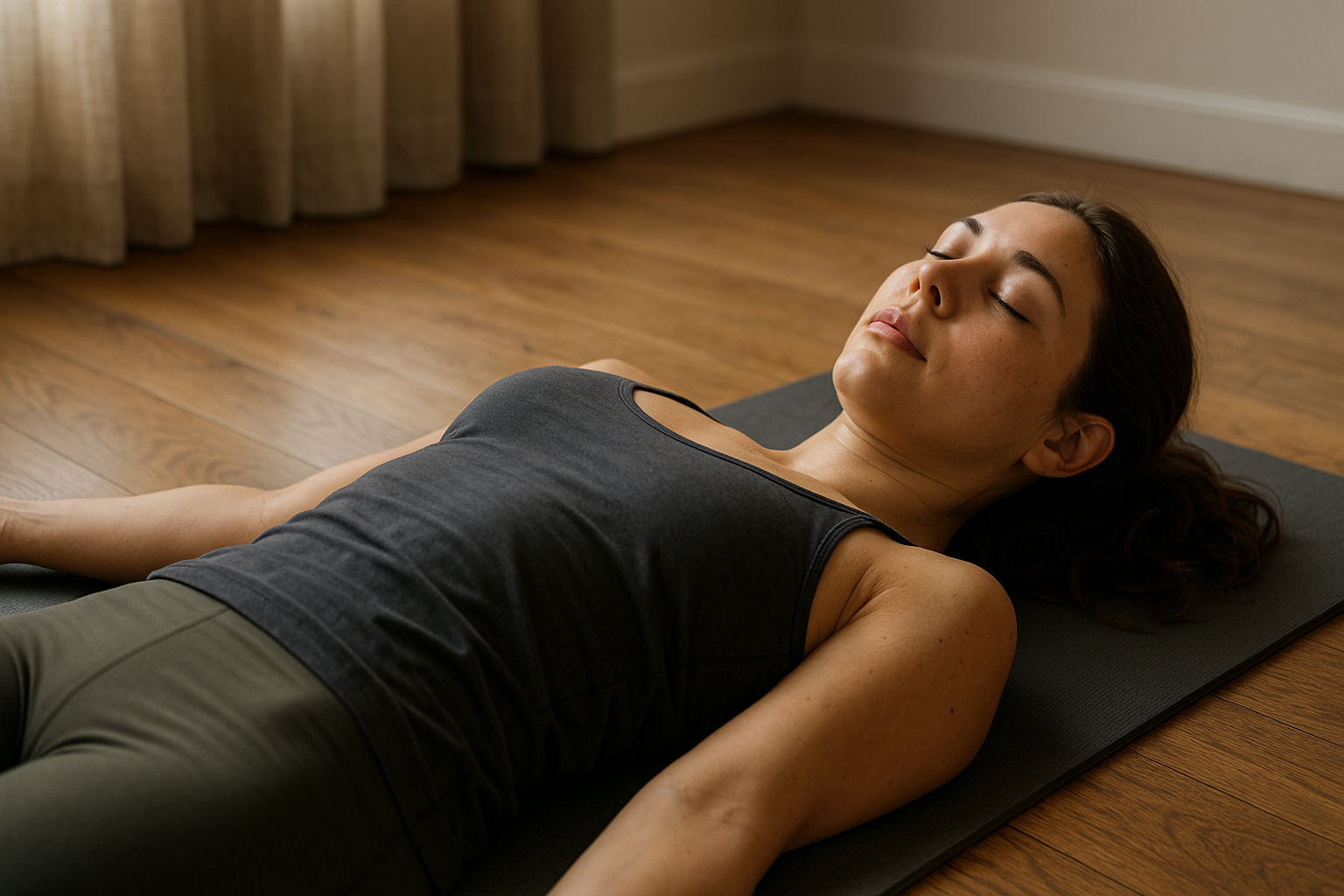
At the heart of Pilates is control. Movements are typically performed with intention and a steady tempo, with special attention to spinal alignment, pelvic position, and deep core engagement. You’ll often hear cues about “lengthening” through the crown of the head, keeping the ribs from flaring, or moving from your centre—because Pilates is designed to build stability first, then mobility and strength on top of it.
Breathing is part of the method, too. Pilates encourages coordinated breathing that supports trunk stability and helps you stay present in each repetition. The result is a workout that can feel both calming and surprisingly challenging—especially if you spend long hours sitting and your posture has started to do the heavy lifting for you.

Men's Posture Shirt™ - Black
Patented shirt supports muscles and may reduce neck, shoulder and back pain.
Mat work and the reformer: two ways to practice
Pilates can be done as mat-based training using your body weight, sometimes with small props like rings or balls. It can also be practiced on specialised apparatus—most famously the reformer, a spring-loaded sliding carriage that adds adjustable resistance and can assist with alignment. This equipment-based approach is one reason Pilates is widely used in both fitness and rehabilitation settings: it can be progressed, scaled back, and tailored with a high level of precision.
What you’ll get from this guide
In the rest of this post, we’ll explore where Pilates comes from, what makes it unique, and why it continues to evolve in modern training. You’ll also get a clearer picture of how Pilates may complement your current routine—whether your goal is better posture, a stronger core, fewer aches from daily life, or simply a smarter way to move.
Where Pilates comes from: the story behind the method
Pilates didn’t begin as a trendy studio class—it started as a practical solution to a real problem: how to build a stronger body when traditional training isn’t accessible. The method was developed in the early 20th century by Joseph Pilates, who was born in 1880 near Düsseldorf, Germany. As a child, he dealt with health challenges and became fascinated by how the body could be trained to become more resilient. Over time, he studied and experimented with a wide range of movement influences, including gymnastics, bodybuilding, martial arts, and exercises inspired by animal movement.
During World War I, Joseph Pilates was interned in a British camp on the Isle of Man. This period became a turning point for his ideas. He refined his system by focusing on controlled, repeatable movements that could restore strength and function—especially for people who were injured or unable to move freely. One of the most cited innovations from this time was his use of springs attached to hospital beds to help bedridden patients perform resistance-based movement. That spring-based concept later shaped the equipment now associated with Pilates, particularly the reformer.
In the 1920s, he moved to the United States and opened a studio in New York City with his wife, Clara. The method—originally called Contrology—attracted dancers who needed strength, mobility, and precision without the wear-and-tear of constant impact. Notably, it became popular in dance circles that included influential names like Martha Graham and George Balanchine, helping Pilates spread as both conditioning and rehabilitation.
Mat Pilates vs. apparatus Pilates: what’s the difference?
One reason Pilates works for so many bodies is that it comes in two main formats. Both share the same foundations—control, alignment, breath, and core stability—but they feel different in practice.
Mat Pilates
Mat sessions use body weight as resistance and are often built around classic Pilates patterns like spinal articulation, controlled leg work, and deep abdominal engagement. Props may be added to change the challenge or improve feedback, such as a Pilates ring, small ball, resistance band, or foam roller. Mat work is also where many people learn the “language” of Pilates: how to find neutral spine, stabilise the pelvis, and move the limbs without losing trunk control.
Apparatus Pilates
Apparatus sessions use specialised equipment designed to guide movement and add adjustable resistance. The reformer is the best-known: a sliding carriage with springs that can make an exercise harder (more resistance) or more supportive (assistance and control). Other common pieces include the chair, tower, and ladder barrel. Because the equipment provides feedback and support, apparatus Pilates is often used in rehabilitation settings and can be a smart option if you’re working around pain, recovering from injury, or aiming for highly precise technique.
| Mat Pilates | Apparatus Pilates |
|---|---|
| Uses body weight; may include small props | Uses equipment like the reformer, chair, tower, ladder barrel |
| Accessible and cost-effective; easy to do at home | Adjustable spring resistance for progression or support |
| Challenges stability because there’s less external assistance | Supports alignment and precision; often used for rehab |
| Great for learning fundamentals and building consistency | Great for targeted strengthening and controlled mobility work |
Benefits of Pilates for strength, posture, and stress
Pilates is often described as “core work,” but its benefits are broader than a stronger midsection. It trains the body as an integrated system, which is why many people notice changes not just in workouts, but in how they sit, stand, walk, and lift.
Core strength and spinal stability
Pilates builds strength in the muscles that support the spine and pelvis, including the deep abdominals, glutes, and muscles around the hips and back. This matters for posture and for everyday comfort—especially if you spend hours sitting, where the body can start to rely on passive structures instead of active support. Better trunk control can also reduce the likelihood of compensations that contribute to recurring back discomfort.

Women's Posture Shirt™ - White
Patented shirt for women supports posture & offers relief while sitting or active.
Flexibility, balance, and coordination
Because Pilates pairs strength with controlled range of motion, it can improve flexibility without sacrificing stability. Many exercises challenge balance and coordination as you move arms and legs while keeping the trunk steady. That combination is useful for injury prevention, athletic performance, and rehabilitation, where restoring control often matters as much as restoring strength.
Stress reduction through breath and focus
Pilates sessions are typically structured around deliberate breathing and concentration. That focus can shift your nervous system out of “rush mode” and into a calmer, more regulated state. The movements are not rushed, and the goal is quality over quantity—an approach that many people find grounding, especially when daily life feels physically and mentally cluttered.
How Pilates has evolved in modern training and rehabilitation
Although Pilates began as Contrology, it has continued to evolve as it moved from dance studios into mainstream fitness and clinical settings. Today, many physiotherapists and movement specialists use Pilates-based exercises to help people rebuild strength, improve movement quality, and return to activity after injury. The reason is simple: the method is built around controlled, repeatable patterns that can be scaled up or down without losing the focus on alignment and stability.
In rehabilitation contexts, Pilates is often used to restore coordination between the trunk, hips, and shoulders—areas that commonly compensate when someone has pain or reduced mobility. The apparatus can be especially useful here because spring resistance provides both challenge and support, allowing for precise loading without forcing the body into positions it cannot yet control. For desk workers, this same approach can translate into better posture endurance: instead of “holding yourself up” with tension, you learn to distribute effort through the core and glutes while keeping the spine long and organised.
What is pilates compared to yoga?
Pilates and yoga are often grouped together because both are low-impact and emphasise mindful movement, but they are not the same practice. Pilates is primarily a conditioning method: it trains strength, stability, and mobility through structured exercises and detailed technique. Yoga is broader in scope, commonly including philosophical and meditative elements alongside physical postures.
Breathing is a clear point of contrast. Pilates typically uses a form of three-dimensional breathing that encourages expansion through the ribcage while maintaining trunk control, which can support spinal stability during movement. In many yoga traditions, pranayama practices may be taught as a distinct focus, sometimes separate from the physical sequence. In practical terms, Pilates tends to cue breathing as a tool to stabilise and move with precision, while yoga often uses breath to support flow, relaxation, and meditative attention.
Pilates in the modern world: who it’s for and how to personalise it
Pilates has become a staple for athletes, performers, and public figures because it strengthens the body without relying on impact or heavy external load. It can improve control at end ranges, build joint stability, and reinforce efficient movement patterns—qualities that carry over into sports and strength training. At the same time, it remains highly accessible for beginners because every exercise can be modified.
The best way to make Pilates work for you is to match the style and setting to your goals:
- For posture and back comfort: prioritise fundamentals like pelvic control, ribcage positioning, and slow core work. Short, consistent sessions often beat occasional long workouts.
- For strength and performance: consider apparatus sessions where spring resistance can progressively challenge the legs, glutes, and upper body while keeping technique clean.
- For stress and recovery: choose classes that emphasise breath, control, and mobility rather than fast transitions.
Whatever your starting point, Pilates works best when you treat it as skill-building. The goal is not to “push through” repetitions, but to move with enough control that your body learns a better default—one that shows up when you sit at your desk, carry groceries, or train in the gym.
Frequently Asked Questions
What is the difference between Pilates and yoga?
Pilates is a mind-body exercise system focused on controlled movement, core stability, alignment, and strength through precise repetition. Yoga is a broader practice that often includes spiritual or meditative traditions alongside physical postures. Both use breath, but Pilates typically applies three-dimensional breathing to support trunk stability during movement, while yoga may use pranayama as a dedicated breathing practice and as support for relaxation and flow.
Can beginners start with Pilates?
Yes. Pilates is suitable for beginners because exercises can be modified for different mobility levels, strength levels, and injuries. A beginner-friendly class or a session with a qualified instructor can help you learn key foundations such as neutral spine, pelvic control, and breathing coordination.
What equipment do I need to start Pilates?
You can start with just a mat and enough space to move comfortably. Many people add small props over time—such as a resistance band, Pilates ring, or small ball—but they are optional. If you want more guidance, support, or adjustable resistance, apparatus sessions (especially reformer) are a common next step.
How often should I practice Pilates to see results?
A practical target is 2–3 sessions per week. With consistent practice, many people notice improved core control, posture awareness, and flexibility within a few weeks, with more visible strength and movement changes developing over time.
Is Pilates effective for weight loss?
Pilates can support weight loss indirectly by improving muscle tone, movement quality, and consistency with exercise. However, it typically burns fewer calories than high-intensity training. For weight loss goals, Pilates works well alongside activities that increase overall energy expenditure, plus a nutrition approach that fits your needs.
Källor
- Merriam-Webster. ”Pilates Definition”.
- Pilates Foundation. ”About Pilates”.
- Physio-Pedia. ”Pilates”.
- WebMD. ”What Is Pilates?”.
- The Pilates Initiative. ”The Pilates Method”.
- Cleveland Clinic. ”Everything You Want to Know About Pilates”.
- National Center for Biotechnology Information. ”Pilates for Rehabilitation”.
- YouTube. ”Pilates Introduction”.