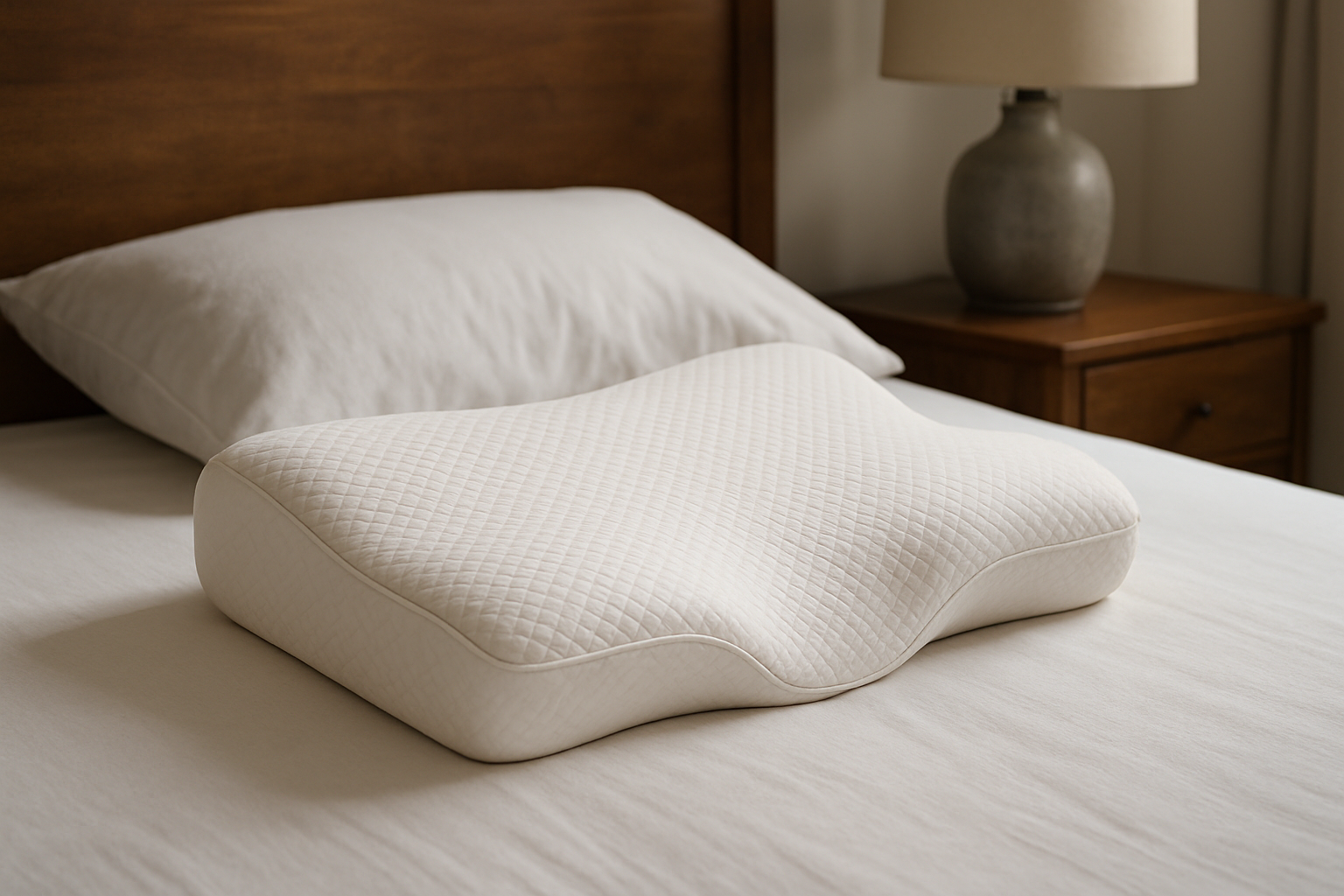
Waking up with a stiff neck can turn even a full night’s sleep into a groggy, painful morning. If you spend your day at a desk, look down at a phone more than you’d like, or simply notice that your shoulders and neck feel tense more often, your pillow may be part of the problem. An ergonomic neck pillow is designed to do what a standard pillow often can’t: keep your head and neck supported in a position that feels natural, stable, and easy to maintain through the night.
Sleep ergonomics has become a bigger part of the health conversation for a reason. We ask a lot of the neck: it balances the head, adapts to screens, driving, stress, and workouts, then we expect it to fully recover while we sleep. But if your pillow pushes your chin forward, lets your head drop to one side, or collapses after an hour, your neck muscles may keep “working” instead of resting. The result can be tension, frequent waking, or that familiar ache that shows up as soon as you sit up.
Why an ergonomic neck pillow can change your nights
The main goal is simple: better alignment. When your cervical spine (the neck portion of your spine) stays closer to neutral, many people experience less strain and a calmer, more supported feeling in the upper body. The right ergonomic neck pillow can also help reduce pressure points, make it easier to settle into a comfortable position, and improve overall sleep quality by minimizing the small adjustments that pull you out of deeper sleep.
That said, not all pillows are created equal. “Supportive” can mean anything from overly tall and rigid to soft and flat—neither of which helps if it leaves your neck angled up, down, or sideways. Fit matters: your sleep position, shoulder width, and how much you move at night all influence what feels good and what actually supports you.
Choosing the right pillow starts with one question
Before you look at materials, cooling features, or firmness, start with this: does your pillow help your head stay level and your neck feel long and relaxed? In the next sections, we’ll break down what research suggests matters most in pillow design, how shape and height affect cervical alignment, and how to choose an ergonomic neck pillow that matches the way you actually sleep.
What research suggests matters most
If you have ever tried switching from one “comfortable” pillow to another and still woke up with neck tension, you are not alone. Research comparing different pillow designs suggests that comfort is only part of the story. In a systematic review and meta-analysis that examined dozens of studies on pillow design and neck pain, the most consistent takeaway was that pillow shape and height influence cervical alignment more than the filling material alone. In other words, a pillow can be made from an excellent material, but if the loft is wrong for your body and sleep position, your neck may still spend the night in a strained angle.
The same review also found that certain pillow types, including rubber and spring designs, were associated with reduced neck pain, less waking pain, lower neck-related disability, and higher satisfaction in some groups. Interestingly, improvements in sleep quality were not always significantly different between pillow types in people with chronic neck pain, which reinforces an important point: the goal is not only “sleeping deeper,” but also waking up with a neck that feels calmer and more supported.
Neutral alignment: the non-negotiable goal
A helpful way to think about an ergonomic neck pillow is that it should “fill the gap” between your head, neck, and mattress without pushing you out of a natural posture. Neutral alignment generally means:
- Your nose points roughly toward the ceiling when you sleep on your back (not toward your feet).
- Your head stays level with your spine when you sleep on your side (not tilted down into the mattress or lifted up toward the ceiling).
- Your neck feels supported along its natural curve, rather than hanging in mid-air or being forced into a sharp bend.
When the pillow height is too high, the neck can flex forward, which may increase morning stiffness and upper back tension. When it is too low or collapses during the night, the neck may side-bend or extend, which can also irritate joints and muscles. The “right” feeling is often subtle: your jaw unclenches, your shoulders drop, and you do not feel the urge to keep repositioning your head.
How to choose an ergonomic neck pillow by sleep position
Because shape and height matter so much, start by matching the pillow to how you actually sleep most nights.
Side sleepers: prioritise loft and a stable edge
Side sleeping typically requires a higher loft to keep the neck level with the rest of the spine. If the pillow is too low, your head drops toward the mattress and the neck side-bends for hours. Look for designs that support the space between the ear and the outer shoulder, such as contour pillows or adjustable-loft options that let you add or remove fill. If you often wake with a sore ear, it can be a sign the pillow is too firm, does not contour well, or concentrates pressure in one spot.
Back sleepers: medium-low loft with gentle cervical support
Back sleeping usually works best with a medium-low loft and a slight contour that supports the neck without pushing the head forward. Thick, tall pillows can flex the neck and create a “chin-to-chest” posture that may contribute to morning tightness. A well-designed ergonomic neck pillow for back sleepers typically has a lower head cradle and a supportive neck roll, helping the cervical curve feel held rather than flattened.
Material considerations: comfort, temperature, and movement
Once shape and height are right, material becomes the next decision, mainly for comfort preferences and how the pillow behaves through the night.
- Memory foam: Often chosen for its contouring feel and pressure distribution. It can be helpful if you like a “hugging” sensation, but some people find it retains heat or feels slow to respond when changing positions.
- Latex: Typically more responsive and breathable than traditional memory foam, with a buoyant support that holds its shape well. It can be a strong option for hot sleepers or those who dislike the sinking feeling.
- Water-based options: These can be useful for people who change positions frequently because the support adapts as you move. The feel is different from foam, so it is worth considering if you struggle to stay comfortable in one position.
Whatever material you choose, pay attention to whether the pillow maintains its height overnight. A pillow that feels supportive at bedtime but flattens by 3 a.m. can undo the alignment you are trying to achieve.
A quick self-check before you commit
When you test an ergonomic neck pillow at home, give it a few nights, but also assess it with intention. Lie in your usual position and notice whether your neck feels long and supported, and whether your head stays level without effort. If you feel like you need to tuck your hand under your neck for “extra support,” the pillow may be too low or not contoured for you. If your chin feels pushed toward your chest, it is likely too high.
In the next part, we will look at how to integrate better pillow support with everyday ergonomics, simple neck-friendly habits, and practical ways to confirm you are sleeping in a neutral position.
Make an ergonomic neck pillow part of your daily neck routine
An ergonomic neck pillow can do a lot of the heavy lifting at night, but your neck health is shaped by what happens during the other 16 hours of the day. If your neck feels tight in the morning, it is often a combination of sleep posture and daytime habits such as prolonged sitting, screen use, and stress-related tension.
To get more out of your pillow, pair it with small, consistent changes:
- Move your neck gently every day: Slow rotations, side bends, and chin tucks can help restore comfortable range of motion. Keep movements pain-free and controlled.
- Set up your desk for neutral posture: Aim for a screen at eye level, elbows supported, and a chair height that lets your shoulders relax rather than lift.
- Reduce tech neck: Bring your phone closer to eye level and take short breaks from looking down. Even 30–60 seconds of posture reset a few times per day can reduce cumulative strain.
Think of the ergonomic neck pillow as your nightly “alignment anchor,” while these habits reduce the forces that pull your neck out of neutral during the day.

Men's Posture Shirt™ - Black
Promotes healthier posture and can relieve pain and tension in neck, shoulders, and back.

Women's Posture Shirt™ - Black
Improves posture, stimulates muscles, and can reduce pain and tension.
Practical alignment checks you can do at home
You do not need special equipment to evaluate whether your ergonomic neck pillow is helping. What you need is a simple way to confirm that your head is not being pushed into an awkward angle.
Quick mirror or photo test
If possible, ask someone to take a photo of you lying in your usual sleep position (side or back) on your pillow. Look for these cues:
- Side sleeping: Your nose should point straight out, not down into the mattress or up toward the ceiling. Your neck should look like a continuation of your spine, not bent sideways.
- Back sleeping: Your chin should not be forced toward your chest. Your face should look relaxed, with the neck supported rather than “floating.”
Pressure and effort check
After you settle in, notice what your body wants to do:
- If you feel the urge to tuck your hand under your neck, the pillow may be too low or lacking cervical contour.
- If you feel like your chin is being nudged forward, the pillow is likely too high for back sleeping.
- If you wake with a sore ear when side sleeping, the pillow may be too firm, not contouring well, or concentrating pressure in one spot.
Give a new pillow a short adjustment period, but do not ignore clear signs of poor fit. The right ergonomic neck pillow should make neutral alignment feel easy, not forced.
Simple visual guide: correct vs incorrect pillow height
Use the guide below as a quick reference. While every body is different, these patterns are common:
- Too high (often back sleepers): Head tilts forward, chin moves toward chest, upper back and neck may feel tight in the morning.
- Too low (often side sleepers): Head drops toward the mattress, neck side-bends, shoulder may feel compressed.
- Just right: Head stays level, neck feels supported along its natural curve, shoulders feel heavy and relaxed.
If you are between sizes or sleep positions, an adjustable design can help you fine-tune height so your pillow matches your body rather than forcing your body to adapt to the pillow.
When to replace your ergonomic neck pillow
Even a well-made ergonomic neck pillow will not support you forever. Over time, foam can soften, latex can lose some resilience, and any pillow can develop uneven areas that change your alignment.
As a general rule, consider replacement every 18–24 months for foam and every 2–3 years for latex, or sooner if the pillow no longer holds its shape, feels lumpy, or leaves you waking up with new or worsening stiffness. If you fold or bunch your pillow to “make it work,” that is often a sign it is no longer providing consistent support.
Frequently Asked Questions
What is an ergonomic neck pillow?
An ergonomic neck pillow is shaped to support the natural curve of the neck and keep the head aligned with the spine during sleep. The goal is to maintain a neutral position so the neck muscles can relax instead of bracing all night.
How do I choose the right ergonomic neck pillow for my sleep position?
Start with your most common sleep position. Side sleepers typically need more loft to fill the space between the ear and shoulder, while back sleepers usually do best with a medium-low loft and gentle cervical support that does not push the head forward. If you switch positions often, consider a design that adapts well or allows loft adjustment.
Will an ergonomic neck pillow feel too hard?
It should feel supportive, not rigid. Many ergonomic designs feel firmer than a very soft traditional pillow at first because they are built to hold shape and maintain alignment. If it feels like a brick, creates pressure points, or makes you tense your jaw or shoulders, the fit or firmness is likely wrong for you.
How long does it take to adjust to a new pillow?
Many people need about 3–7 nights to adjust to a new ergonomic neck pillow. If discomfort steadily improves, that can be normal adaptation. If pain increases or you consistently wake worse, reassess loft and shape.
When should I replace my pillow?
Replace foam pillows about every 18–24 months and latex pillows every 2–3 years, or sooner if the pillow loses height, becomes uneven, or no longer supports a neutral neck position.
Källor
- Glückstoff. (n.d.). "Cushion Orthopädie." Glückstoff Blog.
- Sports Medicine Weekly. (n.d.). "Tips for Choosing an Ergonomic Neck Pillow."
- Smith, J., & Doe, A. (2021). "Effects of Pillow Design on Sleep Quality and Neck Pain: A Review." Journal of Sleep Research.
- WebMD. (n.d.). "Neck Pillows: What You Need to Know."
- Johnson, L., & Lee, P. (2020). "Pillow Types and Their Impact on Cervical Alignment." Ergonomics International Journal.
- NoxNox. (n.d.). "Pillow for Neck Pain: What You Need to Know."
- Neck Solutions. (n.d.). "Neck Pillows for Pain Relief and Support."