A herniated disc has a way of shrinking your world. One day you’re lifting a bag, tying your shoes, or simply sitting at your desk—next, pain, stiffness, or tingling can make ordinary routines feel like obstacles. It’s no surprise that one question shows up early for almost everyone: herniated disc healing time—how long is this going to take?
The honest answer is that recovery is rarely a straight line. Symptoms often flare, settle, and flare again as the irritated area calms down and you gradually return to movement. Still, there is a reassuring pattern: most people see a clear improvement within 6–12 weeks with conservative care, and many sources estimate that roughly 60–90% feel significantly better in that window. For some, that’s the turning point where daily life starts to feel normal again. For others—especially if nerves have been irritated for a while—full symptom resolution can take several months, and in tougher cases up to a year.
It also helps to know what “healing” means here. A disc doesn’t always return to its original shape, but the body can reduce inflammation, the herniation can shrink over time, and the nervous system can become less reactive. In practice, that often translates into less pain, better mobility, and more confidence in everyday movements.
What to expect from a herniated disc recovery timeline
In the next sections, we’ll walk through the typical stages of recovery—from the acute phase (when symptoms are loud and protective strategies matter most) to the gradual rebuild (when strength, tolerance, and routine come back). You’ll also learn why two people with the same diagnosis can have very different timelines, based on factors like the location and size of the herniation, overall health, sleep, stress, and how demanding your workday is on your back.
Why a proactive approach can shorten the rough weeks
While you can’t force healing, you can create better conditions for it. Small daily choices—how you sit, how often you change position, how you pace activity, and how you set up your workspace—can reduce repeated irritation and help you progress more steadily. Think of it as giving your spine fewer reasons to flare, and more chances to settle.
If you’re looking for a clear plan, you’re in the right place: we’ll break down what tends to help at each stage, and what signals mean it’s time to get medical advice.
Herniated disc healing time: stages week by week
Most recovery timelines follow a predictable pattern: symptoms are strongest early on, then gradually ease as inflammation settles and the irritated nerve becomes less sensitive. The goal in each stage is not to “push through,” but to do the right amount of movement and support so you can keep progressing without repeated flare-ups.
Weeks 0–2: acute phase (calm the irritation)
In the first days and weeks, pain can feel sharp, intense, or unpredictable—especially with bending, coughing, or prolonged sitting. This is the phase where you focus on reducing irritation and finding positions that let symptoms settle.
- Keep moving gently: short, frequent walks and light movement often help more than extended bed rest. Aim for “often, not hard.”
- Avoid aggravating positions: many people flare with sustained flexion (slumped sitting, bending forward repeatedly) or twisting under load.
- Use supportive ergonomics: sit with hips slightly higher than knees if possible, keep feet grounded, and use lumbar support to maintain a neutral spine.
If sitting is a trigger, try alternating between sitting and standing every 20–30 minutes, even if it’s just a brief posture change. The key is reducing long, uninterrupted time in one position.

Lumbar support belt
Offers adjustable lower back support, ideal for herniated discs and sciatica relief.
Weeks 2–6: subacute phase (rebuild motion and control)
This is often where you notice the first meaningful shift in herniated disc healing time: pain becomes less constant, and you can do more before symptoms appear. It’s also the phase where a guided plan can make a big difference, because doing too little can leave you stiff and sensitive, while doing too much can restart the cycle.
- Introduce guided exercises: a clinician may add gentle mobility work, nerve glides (when appropriate), and early core and hip strengthening.
- Train posture and movement habits: practice hinging at the hips, keeping loads close to the body, and avoiding end-range bending early on.
- Upgrade your workstation: monitor at eye level, elbows supported, chair height that allows feet flat, and a backrest that supports the natural curve of your lower back.
Micro-breaks matter here. Even 60–90 seconds of standing, walking, or gentle extension can reduce the cumulative stress of desk work and help you tolerate longer days.
Weeks 6–12: stabilization phase (build resilience)
Many people experience significant improvement by this stage, which aligns with the common finding that a large majority feel much better within 6–12 weeks. You may still have “good days and bad days,” but flare-ups tend to be shorter and easier to settle.
- Return to normal activities with smart modifications: gradually increase lifting, chores, and exercise volume while keeping good form.
- Progress strengthening: focus on trunk endurance, glute strength, and controlled rotation (when tolerated) to build spinal capacity.
- Keep ergonomics consistent: the same habits that reduced irritation early on help prevent setbacks as you become more active.
A helpful rule is to increase one variable at a time (duration, intensity, or frequency). If you change everything at once, it’s harder to know what caused a flare.
Beyond 12 weeks: long-term management (reduce recurrence risk)
If symptoms linger beyond 12 weeks, it doesn’t automatically mean something is “wrong.” Full symptom resolution can take several months, and some tougher cases take up to a year. Long-term success usually comes from maintaining strength, staying active, and keeping your daily setup spine-friendly.
However, seek medical evaluation if you notice worsening pain that doesn’t respond to rest and activity changes, progressive weakness, increasing numbness, or changes in bladder or bowel control.
What affects herniated disc healing time?
Two people can have the same diagnosis and very different recovery speeds. The biggest influences tend to be:
- Severity and location: larger herniations or certain locations may irritate nerves more and take longer to settle.
- Overall health and age: general conditioning, smoking status, and metabolic health can influence tissue recovery and inflammation.
- Work demands: long sitting hours, heavy lifting, driving, or repetitive bending can prolong symptoms if not modified.
- Rehab consistency: steady, progressive exercise and good movement habits usually outperform “all-or-nothing” bursts of activity.
Practical ways to support faster progress
You can’t force healing, but you can reduce friction in the process. Prioritize sleep, manage stress (which can amplify pain sensitivity), and stay active within your comfort limits. Many people also benefit from ergonomic aids that make neutral posture easier to maintain during long workdays—especially when fatigue leads to slumping and repeated irritation.
Daily habits that can improve herniated disc healing time
Once the worst pain has settled, progress often depends less on one “perfect” exercise and more on what you do repeatedly throughout the day. Small choices—how you get out of bed, how you sit, how long you stay in one position—can either reduce irritation or keep re-triggering symptoms.
A useful goal is to keep your spine in a neutral, supported position as often as possible, especially during longer sitting or standing periods. Neutral does not mean rigid. It means avoiding end-range slumping, deep bending, or twisting under load—positions that can increase disc pressure and aggravate sensitive nerve tissue.
- Change position frequently: aim to shift posture or stand up briefly every 20–30 minutes. Even 60 seconds of walking can reduce stiffness and calm symptoms.
- Use a hip hinge for bending: when picking something up, send hips back and keep the object close to your body. Avoid repeated rounding through the lower back early in recovery.
- Respect symptom signals: mild discomfort that settles within a few hours is often acceptable; pain that escalates and lingers into the next day is usually a sign to scale back.
How to reduce disc pressure during sitting, standing, and sleep
Many people notice that sitting is the hardest part of the day. Prolonged, flexed sitting can increase pressure on the lower back and may aggravate leg symptoms. If you have a desk job, improving your setup can meaningfully influence herniated disc healing time by reducing repeated flare-ups.
- Sitting: sit back in the chair, keep feet flat, and use lumbar support to maintain the natural curve of the lower back. Keep hips slightly higher than knees if possible, and avoid perching on the edge of the seat.
- Standing: distribute weight evenly and avoid locking knees. If standing still increases symptoms, alternate one foot on a small step and switch sides every few minutes.
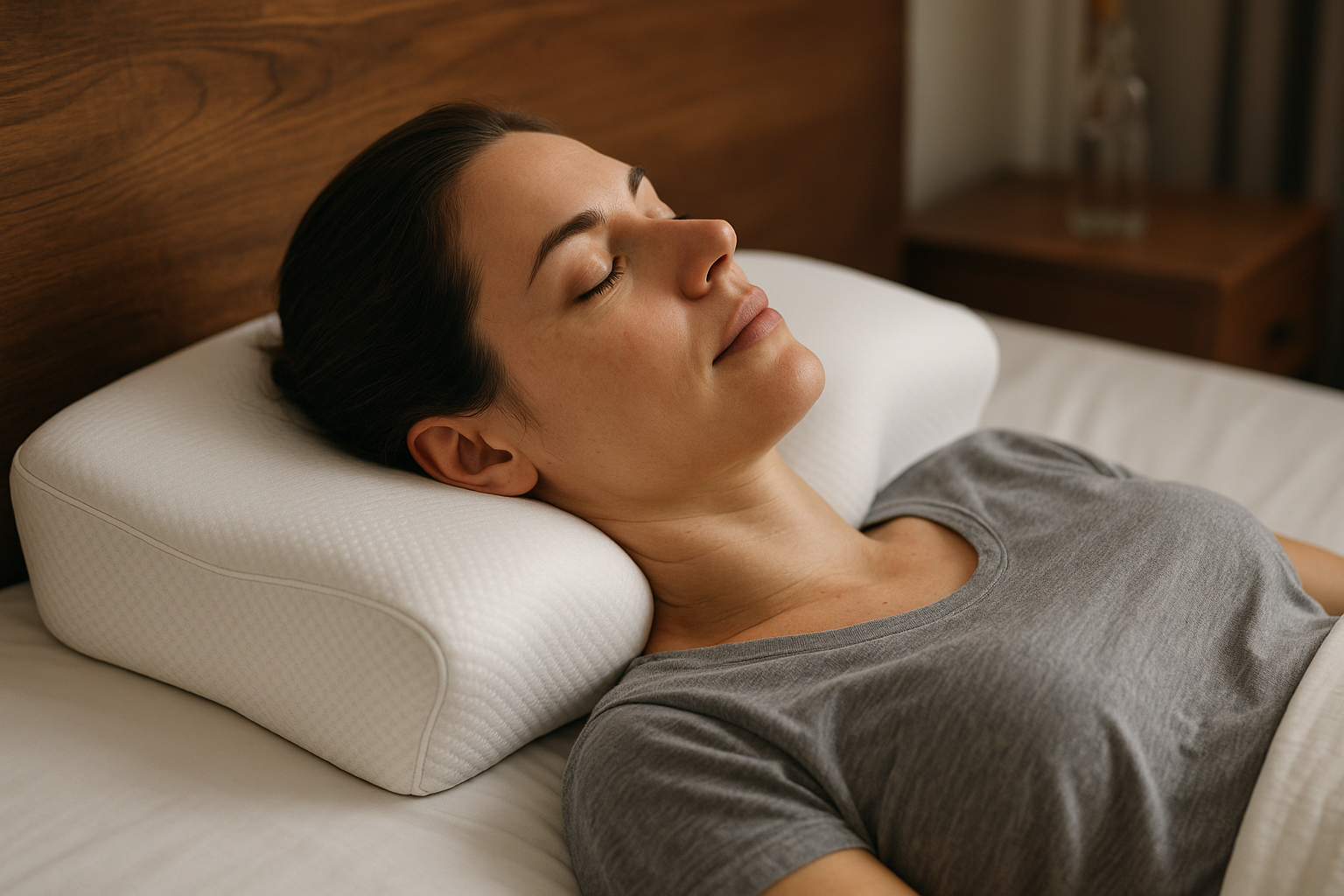
- Sleeping: choose a position that keeps the spine aligned. Many people feel best on their side with a pillow between the knees, or on their back with a pillow under the knees. The “best” position is the one that reduces symptoms and helps you sleep.
If you wake up stiff, start with a few minutes of gentle movement before bending forward for shoes or lifting items. Morning is often when discs are more sensitive, so easing into the day can prevent early flare-ups.
How ergonomic support can help during recovery
Ergonomic products are not a cure, but they can make good posture easier to maintain—especially when fatigue sets in and slumping becomes automatic. The most helpful supports are the ones that reduce strain without encouraging you to stay still for too long.
- Lumbar supports and seat cushions: can help maintain neutral alignment during desk work or driving, where prolonged sitting is hard to avoid.
- Sit-stand options: allow you to alternate positions and reduce the “one posture for hours” pattern that often aggravates symptoms.
- Posture garments: can provide gentle feedback and support to reduce rounded posture, particularly during computer work or light daily tasks. They work best when paired with regular movement breaks and progressive strengthening.
Think of support tools as a way to lower the daily “irritation load” so your rehab exercises and walking have a better chance to build capacity. Wearing a Posture Shirt™ can be especially helpful for those needing extra feedback to maintain good alignment throughout the day.

Men's Posture Shirt™ - Black
Activates muscles to improve posture; helpful for work, exercise, and pain relief.
When to seek medical or surgical evaluation
Most people improve significantly within 6–12 weeks with conservative care, and a large proportion—often estimated around 60–90%—feel much better in that window. However, it is important to get medical guidance if your recovery is not following a typical pattern.
Seek prompt medical assessment if you experience:
- New or worsening weakness in the leg or foot (for example, difficulty lifting the front of the foot or repeated tripping).
- Changes in bladder or bowel control, or numbness in the groin/saddle area.
- Severe, escalating pain that does not respond to rest, activity modification, or prescribed care.
Also consider booking a review if symptoms are not improving after 12 weeks, if pain is repeatedly flaring with normal daily activities, or if numbness and tingling are progressing rather than gradually easing. Some cases take several months—and occasionally up to a year—for full symptom resolution, but persistent or worsening symptoms deserve a tailored evaluation.
Frequently Asked Questions
Can a herniated disc heal on its own, and how long does that take?
Yes, many herniated discs improve with conservative care. In terms of herniated disc healing time, most people notice significant improvement within 6–12 weeks, and a large percentage feel substantially better in that period. Full symptom resolution can take several months, and in tougher cases it may take up to a year. “Healing” often means symptoms settle and function returns, even if the disc does not return perfectly to its original shape.
How long before I can exercise after a herniated disc?
Light activity is often encouraged early, as tolerated. Many people can begin gentle exercise such as walking and clinician-guided mobility work within the first few weeks, commonly around 2–4 weeks depending on symptoms. More demanding training and heavier lifting are typically reintroduced more gradually, often closer to 8–12 weeks, when pain is more stable and movement control has improved. A clinician can help you match exercise choices to your symptoms and stage of recovery.
When should I worry that my herniated disc isn’t healing?
Consider a medical review if symptoms persist without improvement beyond 12 weeks, if pain is worsening rather than stabilizing, or if you cannot progress activity despite consistent rehab and ergonomic changes. Seek urgent assessment if you develop new weakness, significant increasing numbness, or bladder or bowel changes. These signs require timely evaluation to rule out more serious nerve involvement.
Källor
- International Spine & Sports Institute. (n.d.). "Can a Herniated Disc Heal on Its Own? Myths vs Facts."
- HealthCentral. (n.d.). "Signs a Herniated Disc Is Healing."
- Chicago Neuro Pain. (n.d.). "How Long Does a Herniated Disc Take to Heal?"
- Advanced Spine Centers. (n.d.). "Signs a Herniated Disc Is Healing."
- ADR Spine. (n.d.). "How Long Does a Herniated Disc Take to Heal?"
- More Good Days. (n.d.). "Signs a Herniated Disc Is Healing."
- ASAP Pain Docs. (n.d.). "Do Bulging Discs Heal?"
- David Wiles, MD. (n.d.). "Will a Herniated Disc Heal on Its Own?"
- Spine MD. (n.d.). "Signs a Herniated Disc Is Healing."
- Total Ortho Sports Medicine. (n.d.). "How Long Does a Herniated Disc Take to Heal?"
- YouTube. (n.d.). "Herniated Disc Healing Time."
- Cleveland Clinic. (n.d.). "Herniated Disk."
- Strenge Spine. (n.d.). "Can a Herniated Disc Heal Itself?"
- Commons Clinic. (n.d.). "Identifying the Signs a Herniated Disc Is Healing: A Guide to Recovery."