Between school, homework, screens, and packed family schedules, it’s easy for movement to slide down the priority list. But the trend is hard to ignore: only about 1 in 4 U.S. children get the recommended amount of daily physical activity. That matters, because kids aren’t built to sit still for long stretches. They’re built to explore, climb, sprint, balance, and play—and those everyday bursts of motion are a big part of how strong, capable bodies (and confident minds) are formed.
Regular exercise for children supports far more than “fitness.” Physically, it helps build healthy bones and muscles, develops coordination, and supports heart health as kids grow. Mentally, movement can be a powerful mood booster and a practical way to build self-belief: learning a new skill—like skipping, throwing, or mastering a cartwheel—creates a sense of competence that often carries into school and social life. Socially, active play teaches teamwork, turn-taking, and resilience, whether it’s a backyard game of tag or a weekend bike ride with family.
Just as importantly, movement helps counterbalance modern sedentary habits. Many children spend hours each day seated—at desks, in cars, and on the couch. Over time, that can contribute to stiffness and discomfort, especially in the neck, shoulders, and back. The goal isn’t perfect posture or “training like an adult.” It’s giving growing bodies frequent chances to change position, use different muscles, and practice natural movement patterns.

Women's Posture Shirt™ - White
Supports your posture using patented NeuroBand™ technology; ideal for relief while sitting or being active.
What this guide will help you do
In the rest of this article, we’ll make exercise for children feel doable and fun—without turning your home into a gym. You’ll learn what the current activity recommendations look like, how to choose age-appropriate activities, and why a mix of energetic play, strength-building movement, and bone-loading activities matters. We’ll also share practical ideas you can use in real life: quick movement breaks during homework, playful indoor options for bad-weather days, and simple ways to build active routines that stick.
If you’ve ever wondered whether kids’ workout videos online are “enough,” or how to encourage a child who says they don’t like sports, you’re in the right place. The aim is progress, not pressure—and a healthier future built on movement kids actually enjoy.
How much exercise children need
Most health authorities align on a simple baseline: children and teens should get at least 60 minutes of moderate-to-vigorous physical activity each day. That doesn’t have to be a continuous hour or a formal “workout.” It can be split across the day—10 minutes before school, 20 minutes at recess, 15 minutes after school, and a short family walk after dinner.
Within that daily movement, it also helps to include two specific types of activity at least three days per week:
- Bone-strengthening activities (think jumping, hopping, running, skipping)
- Muscle-strengthening activities (climbing, crawling, bodyweight strength, light resistance)
This mix matters because kids’ bodies are still developing. They benefit from variety: short bursts of speed, changes of direction, balance challenges, and playful strength work that teaches control—not just endurance.
Age-appropriate exercise for children
Kids don’t need adult-style training plans. The best approach is to match movement to their stage of development, attention span, and interests—while keeping it safe and enjoyable.
Ages 3–5: play is the program
Preschoolers build coordination by exploring. Prioritise activities that look like play, not drills: running games, dancing, climbing at the playground, kicking a ball, riding a scooter, or simple “follow the leader” movement. The goal is frequent movement opportunities across the day, with lots of variety and minimal sitting.
Ages 6–12: skills, games, and variety
School-age kids can handle more structure, but they still thrive on games. This is a great time to develop fundamental skills—throwing, catching, jumping, landing, sprinting, and balancing—because competence tends to build confidence. Team sports can be wonderful, but they’re not required. Martial arts, swimming, dance, gymnastics, climbing, and cycling can be equally effective ways to stay active.
Teenagers: build habits and strength safely
Teens often benefit from a blend of enjoyable cardio (sports, running, dance, intervals on a bike) and safe strength training. Strength work doesn’t have to mean heavy weights; it can start with bodyweight exercises (squats to a chair, push-ups on a wall or bench, planks) and progress gradually with supervision and good technique. The aim is to build strong movement patterns, resilience, and a positive relationship with exercise—especially during years when school demands and screen time often increase.
Why movement matters: benefits beyond fitness
Regular physical activity supports children in ways that go far beyond “burning energy.”
- Physical health: Movement supports healthy weight, heart health, and metabolic health, and it helps develop coordination and motor skills. Bone-loading activities like jumping and running are especially valuable during growth years.
- Mental health and confidence: When kids learn skills and feel themselves improving, it can boost self-belief. Physical activity is also associated with improved mood and fewer depressive symptoms, which can make it easier for kids to engage socially and try new challenges.
- Social connection: Active play teaches cooperation, turn-taking, and resilience. Family activities—walks, bike rides, simple backyard games—also create shared routines that support long-term habits.
A helpful mindset shift is to focus on what a child’s body can do (jump farther, balance longer, climb higher, feel less tired) rather than how it looks. Body-positive language tends to keep motivation healthier and more sustainable.
Practical exercise ideas that kids actually do
If you’re looking for realistic options, start with activities that feel like play and naturally include different movement patterns (squat, crawl, reach, rotate, sprint, stop, balance).
- Classic games: tag, freeze dance, hopscotch, hide-and-seek, “red light/green light”
- Indoor obstacle course: pillows to step over, tape lines to balance on, a chair “tunnel” to crawl under (keep it safe and supervised)
- Treasure hunt walk: turn a walk into a mission (find something round, something red, three different leaves)
- Family movement circuit (10 minutes): 30 seconds each of marching, bear crawl, wall sit, jumping jacks, and “airplane balance,” repeated twice with breaks
How to fit exercise into busy days
The easiest way to make exercise for children consistent is to attach it to routines that already exist.
- Movement breaks during homework: every 20–30 minutes, do 1–2 minutes of movement (stairs, skipping, stretching, a quick dance). This helps kids reset attention and reduces stiffness from sitting.
- Active transportation: walk or bike to school when possible, or park a few blocks away and walk the rest.
- Screen-time “intermissions”: between episodes or gaming rounds, add a short challenge (10 squats, 20-second plank, or a lap around the house).
Consistency beats intensity. A child who moves a little every day—through play, sports, walking, and short strength challenges—is building a foundation for a healthier future that feels natural, not forced.
Overcoming barriers to exercise for children
Even when families understand the benefits, daily exercise for children can be hard to fit in. The most common barriers are time, motivation, weather, and limited access to safe spaces or organised activities. The good news is that kids don’t need perfect conditions or long workouts to build healthy habits—what they need is consistency, variety, and permission to move in small doses.
If time is the issue, aim for “movement snacks” that add up. Three 10–15 minute bursts across the day can be just as realistic as one longer session. Try a quick game before school, a short outdoor break after school, and a family walk after dinner. If motivation is the challenge, let kids choose from a short list of options (dance, scooter, obstacle course, ball games). Choice creates ownership, and ownership makes follow-through more likely.
For bad-weather days or small spaces, keep a simple indoor plan ready. A hallway can become a sprint lane, a living room can host a balance challenge, and a few pillows can turn into stepping stones. The goal is not to “train harder,” but to keep the daily rhythm of movement going.
Strength training myths: what parents should know
One of the most persistent misconceptions is that strength training is unsafe for kids. In reality, strength-focused movement can be a valuable part of exercise for children when it is age-appropriate and supervised. The priority is always technique, control, and gradual progression—not heavy loads or maximal lifts.
For younger kids, strength work often looks like play: climbing, crawling, hanging from monkey bars, carrying light objects, or doing animal walks. For older kids and teens, simple bodyweight exercises (squats to a chair, wall push-ups, step-ups, planks) and light resistance bands can build coordination and joint stability. A helpful rule: if form breaks down, the exercise is too hard right now. Reduce the range of motion, slow it down, or choose an easier variation.
Ergonomics and posture: supporting kids who sit a lot
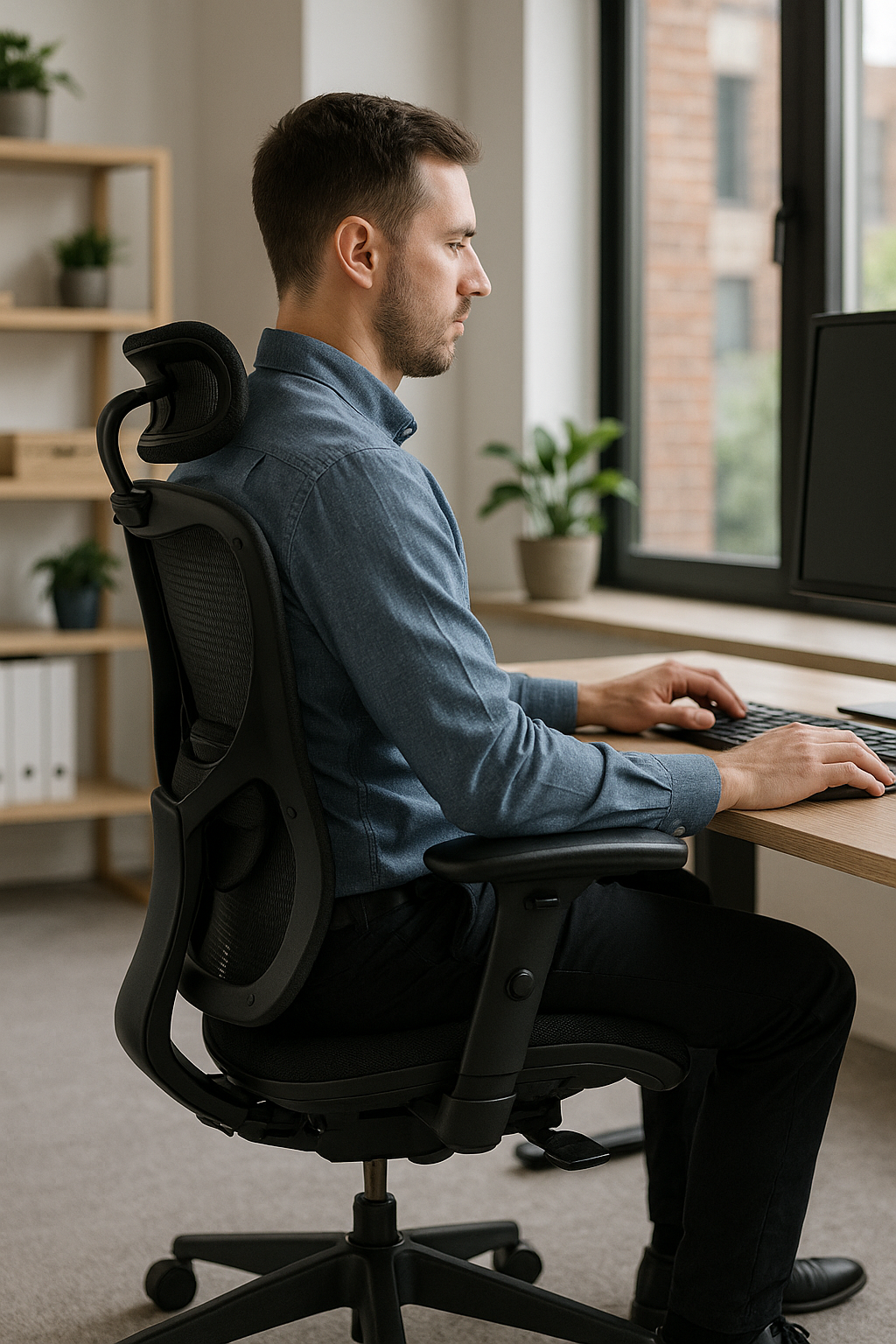
Movement matters even more because many children spend long stretches seated—studying, gaming, or scrolling. While “perfect posture” isn’t the goal, staying in one position for too long can contribute to stiffness and discomfort in the neck, shoulders, and back. Ergonomics helps by making sitting less stressful on a growing body and by encouraging regular position changes.
To set up a child-friendly study space, start with the basics:
- Feet supported: Feet should rest flat on the floor or on a stable footrest.
- Knees and hips comfortable: Aim for roughly right angles, without the child perching on the edge of the chair.
- Back supported: The chair should support the lower back; a small cushion can help if the chair is too deep.
- Screen at a sensible height: The top of the screen should be around eye level to reduce neck bending. For laptops, consider raising the screen and using an external keyboard if possible.
- Elbows close to the body: Forearms should rest comfortably on the desk to reduce shoulder tension.
Just as important as the setup is the habit: encourage a short movement break every 20–30 minutes. This supports focus and reduces the “locked-in” feeling that can make kids avoid activity later in the day.

Men's Posture Shirt™ - Black
Patented shirt that supports posture and can help relieve pain while sitting or being active.
Micro-exercises to reset posture and energy
These quick drills are simple, equipment-free, and easy to pair with homework breaks. Keep them light and comfortable—no forcing stretches or pushing into pain.
- Shoulder rolls (30 seconds): Roll shoulders up, back, and down slowly to release tension.
- Wall posture check (30–60 seconds): Stand with back near a wall, gently lengthen through the spine, and breathe calmly.
- Chair squats (8–12 reps): Stand up and sit down with control to wake up legs and hips.
- Desk push-ups (6–10 reps): Hands on the desk, body in a straight line, slow and steady.
- Balance challenge (30 seconds per side): Stand on one foot; make it harder by turning the head slowly or reaching arms like an airplane.
These “mini sessions” can also be a confidence builder. When kids feel capable in their bodies—stronger, steadier, less stiff—they’re often more willing to try new games, sports, or activities.
Frequently Asked Questions
How much exercise should a child get per day?
Most children and teens should get at least 60 minutes of moderate-to-vigorous physical activity each day. It can be split into shorter chunks throughout the day, which is often easier for busy families.
What are good exercises for children at home?
Great home options include dance breaks, indoor obstacle courses, balloon volleyball, skipping, bodyweight circuits (chair squats, desk push-ups, planks), and simple games like hide-and-seek or tag in a safe space. The best choice is the one your child will actually do consistently.
Is strength training safe for children?
Yes—when it focuses on proper form, control, and age-appropriate exercises. Bodyweight movements, climbing, and light resistance are generally a good starting point. Supervision and gradual progression matter more than the amount of weight.
How can I get my child to exercise more?
Make it social and fun, offer choices, and attach movement to existing routines (before school, after homework, after dinner). Focus on what their body can do—getting stronger, faster, or more coordinated—rather than appearance or weight.
Are YouTube kids’ workout videos effective?
Some can be helpful for inspiration, but many videos are not structured like a complete exercise program. Look for clear guidance on intensity and modifications, a warm-up and cool-down, and age-appropriate instruction. When in doubt, treat videos as a supplement to active play and real-world movement, not the only plan.
Källor
- Children's Health of Orange County. "Kids and Exercise: What Parents Should Know."
- Bupl. "Bevægelse: Stor Forskel i Små Børns Fysiske."
- KidsHealth. "Exercise (for Parents)."
- Sundhedsstyrelsen. "Anbefalinger om Fysisk Aktivitet og Stillesiddende Tid for Børn 0-4 År."
- Great Ormond Street Hospital. "Exercise for Children and Young People."
- Børns Vilkår. "Børns Udvikling."
- Centers for Disease Control and Prevention. "Physical Activity Basics: Guidelines for Children."
- Sundhedsstyrelsen. "Fysisk Aktivitet 0-4 År."
- Rush University Medical Center. "Exercise for Kids of Every Age."
- Syddansk Universitet. "Motorik, Fysisk Aktivitet og Stillesiddende Tid hos Børn."
- NHS. "Physical Activity Guidelines for Children and Young People."
- VIA University College. "Børns Fysiske Aktivitet i Børnehaver."
- Seattle Children's Hospital. "Exercise."
- Sundhed.dk. "Døvhed og Nedsat Hørelse hos Børn."
- National Center for Biotechnology Information. "Physical Activity and Health in Children."