Some nights you do everything “right”: you go to bed early, you get your eight hours, and you still wake up feeling foggy, stiff, or strangely unrested. That’s often a sign that the issue isn’t only how long you sleep, but how well your body follows a stable sleep rhythm.
Sleep rhythm is the way your body synchronises two systems: your internal clock (circadian rhythm) and the repeating sleep cycles you move through at night. When those systems are aligned, sleep tends to feel deeper and more restorative. When they’re out of sync, you may fall asleep at the “wrong” time for your biology, wake more easily, or spend less time in the stages that help you recover.
What sleep rhythm really means
Think of sleep rhythm as the pattern that keeps your nights predictable. Your circadian rhythm helps set the timing: when you naturally feel alert, when you start to feel sleepy, and when your body is primed for recovery. Your sleep cycles handle the structure: the stages of sleep your brain and body rotate through repeatedly from bedtime to morning.
This matters because restorative sleep is not a single state. It’s a sequence. A steady sleep rhythm supports physical recovery, clearer thinking, and a more stable mood, partly because it helps you spend enough time in the right stages at the right moments.
The science behind your body clock and sleep cycles
Your circadian rhythm runs on a near 24-hour loop and responds strongly to light and darkness. Morning light signals “wake,” while dim evenings help your body transition toward sleep. This is one reason irregular bedtimes, late-night screens, or frequent schedule changes can make sleep feel lighter or more fragmented.
Once you fall asleep, your body moves through cycles that include non-REM and REM sleep. Non-REM includes deeper phases linked to physical restoration, while REM is associated with mental processing and emotional regulation. Over a typical night, you repeat these cycles multiple times. If your sleep is interrupted, those cycles can be cut short, which can leave you feeling like you never truly recharged.
Improve your sleep, improve your life
If you’ve ever wondered why you can be “in bed” for hours yet still feel tired, mastering sleep rhythm is a practical place to start. In the next sections, we’ll break down what influences your rhythm day to day and how to optimise it with realistic habits, a better sleep environment, and smart ways to learn from your own patterns.
Circadian rhythm: your body’s internal clock
Your circadian rhythm is a biological timing system that runs on a near 24-hour cycle. It helps coordinate when you feel alert, when you get hungry, when your body temperature rises and falls, and when sleepiness naturally increases. While it’s generated internally, it relies heavily on external cues to stay accurate—especially light exposure, but also daily patterns like meal timing, movement, and social routines.
One of the most important players in this timing system is melatonin, a hormone released by the pineal gland. Melatonin doesn’t “knock you out” on its own; instead, it signals that it’s time for the body to shift into night mode. In practical terms, bright light in the evening (including indoor lighting and screens) can delay that signal, while dimmer light helps it rise at the right time.
When your circadian rhythm is out of sync with your schedule, sleep can become lighter and less predictable. This is why shift work, frequent late nights, or crossing time zones often leads to a familiar pattern: you’re tired at inconvenient times, wide awake when you want to sleep, and more likely to wake during the night. Over time, circadian misalignment can also affect performance, mood, and recovery because the body’s “night-time repair window” is no longer reliably timed.
Sleep cycles and stages: the architecture of sleep
Once you fall asleep, your brain and body move through a repeating pattern of sleep stages. These stages are usually grouped into non-REM sleep (N1, N2, and N3) and REM sleep. Together, they form a sleep cycle that averages around 90 minutes, and most people move through several cycles per night. The exact timing varies by person and by night, but the overall structure is consistent: sleep is meant to be rhythmic, not random.
N1 is the light transition phase where you drift off and can be easily awakened. N2 is still relatively light, but it’s more stable and makes up a large portion of total sleep. N3 is deep sleep, often considered the most physically restorative stage. This is when the body focuses heavily on recovery processes, and it’s also the stage you typically don’t want to wake up from—being pulled out of deep sleep can leave you groggy and disoriented.
REM sleep is best known for vivid dreaming, but its role goes beyond that. REM is closely tied to cognitive processing, learning, and emotional regulation. Across the night, deep sleep tends to be more prominent earlier, while REM periods often become longer toward morning. That’s one reason a disrupted second half of the night can affect mental sharpness even if you technically slept “enough” hours.
What matters for sleep rhythm is not chasing a perfect number of hours in each stage, but protecting continuity. Frequent awakenings—whether you remember them or not—can interrupt cycles and reduce the amount of deep sleep and REM you accumulate across the night.
What disrupts sleep rhythm day to day
Sleep rhythm is sensitive to small daily choices. The good news is that many of the most common disruptors are also the easiest to adjust once you know what to look for.
Environmental factors
Light is the strongest cue for circadian timing. Bright mornings help anchor wakefulness, while darker evenings support melatonin release. Your bedroom environment also matters: a dark, quiet, cool space tends to reduce awakenings and make it easier to move smoothly through sleep cycles. Even minor disturbances—streetlight through curtains, a warm room, intermittent noise—can fragment sleep enough to change how rested you feel.
Lifestyle factors
Consistency is a powerful stabiliser. Irregular bedtimes and wake times can shift your internal clock and make sleepiness arrive too early or too late. Caffeine timing can also interfere with sleep pressure (your built-up need for sleep), especially when consumed later in the day. Late, heavy meals and alcohol may make you feel sleepy initially, but they often lead to lighter, more disrupted sleep later in the night.
Exercise generally supports sleep rhythm, but timing matters for some people. Intense late-evening workouts can raise body temperature and alertness, which may delay sleep onset. If you notice that pattern, moving vigorous training earlier and keeping evenings for lighter movement can help.
Technology and sleep tracking
Sleep tracking apps and wearables have made sleep rhythm more visible. Many tools display a hypnogram—a graph showing estimated time spent in light sleep, deep sleep, REM, and awakenings. This can be useful for spotting patterns, such as frequent wake-ups at similar times, shortened deep sleep, or a bedtime that drifts later through the week.
However, consumer trackers estimate sleep stages rather than measuring them directly, so it’s best to use them for trends instead of treating nightly results as a verdict. A practical approach is to track one change at a time—like adjusting bedtime consistency or evening light exposure—and observe whether your sleep becomes less fragmented over one to two weeks. In the next part of this guide, we’ll turn these insights into a clear plan for stabilising your sleep rhythm with realistic habits and a sleep setup that supports uninterrupted rest.
Practical ways to stabilise your sleep rhythm
Once you understand what drives sleep rhythm, the next step is turning that knowledge into repeatable habits. The goal is not perfection, but consistency: predictable cues that tell your brain and body when to be alert and when to shift into recovery mode.
Keep a steady wake-up time. If you change only one thing, start here. Waking up at the same time most days anchors your circadian rhythm and makes sleepiness arrive more reliably at night. If you need to adjust your schedule, shift your wake-up time in small steps (for example 15–30 minutes every few days) rather than making a sudden change.
Build a short wind-down routine. A routine helps your body associate certain actions with sleep. Keep it simple and repeatable: dim lights, put your phone away, take a warm shower, read a few pages, or do a brief breathing exercise. The key is doing roughly the same sequence at roughly the same time, so your brain learns the pattern.
Use light strategically. Bright light in the morning supports alertness and helps “set” your internal clock. In the evening, lower light levels can help your body transition into night mode. If screens are part of your evening, reduce brightness and avoid stimulating content close to bedtime.
Protect your sleep environment. A cool, dark, quiet room supports fewer awakenings and smoother sleep cycles. If noise is unpredictable, consider a fan or other steady background sound. If light leaks in, blackout curtains or a sleep mask can help reduce disruption.
Ergonomics: the overlooked piece of sleep rhythm
Many people focus on timing, light, and routines, but overlook a basic requirement for stable sleep rhythm: staying comfortable enough to remain asleep. Even brief awakenings can fragment sleep cycles, reducing the continuity of deep sleep and REM sleep. You may still spend eight hours in bed, but the structure of your night becomes choppy.
Ergonomics matters because your body needs support that maintains a neutral, relaxed position for hours at a time. If your pillow is too high or too low, or your mattress does not support your natural curves, your muscles may stay slightly “on,” creating tension in the neck, shoulders, or lower back. That discomfort can trigger micro-awakenings, more tossing and turning, and a lighter overall sleep experience.

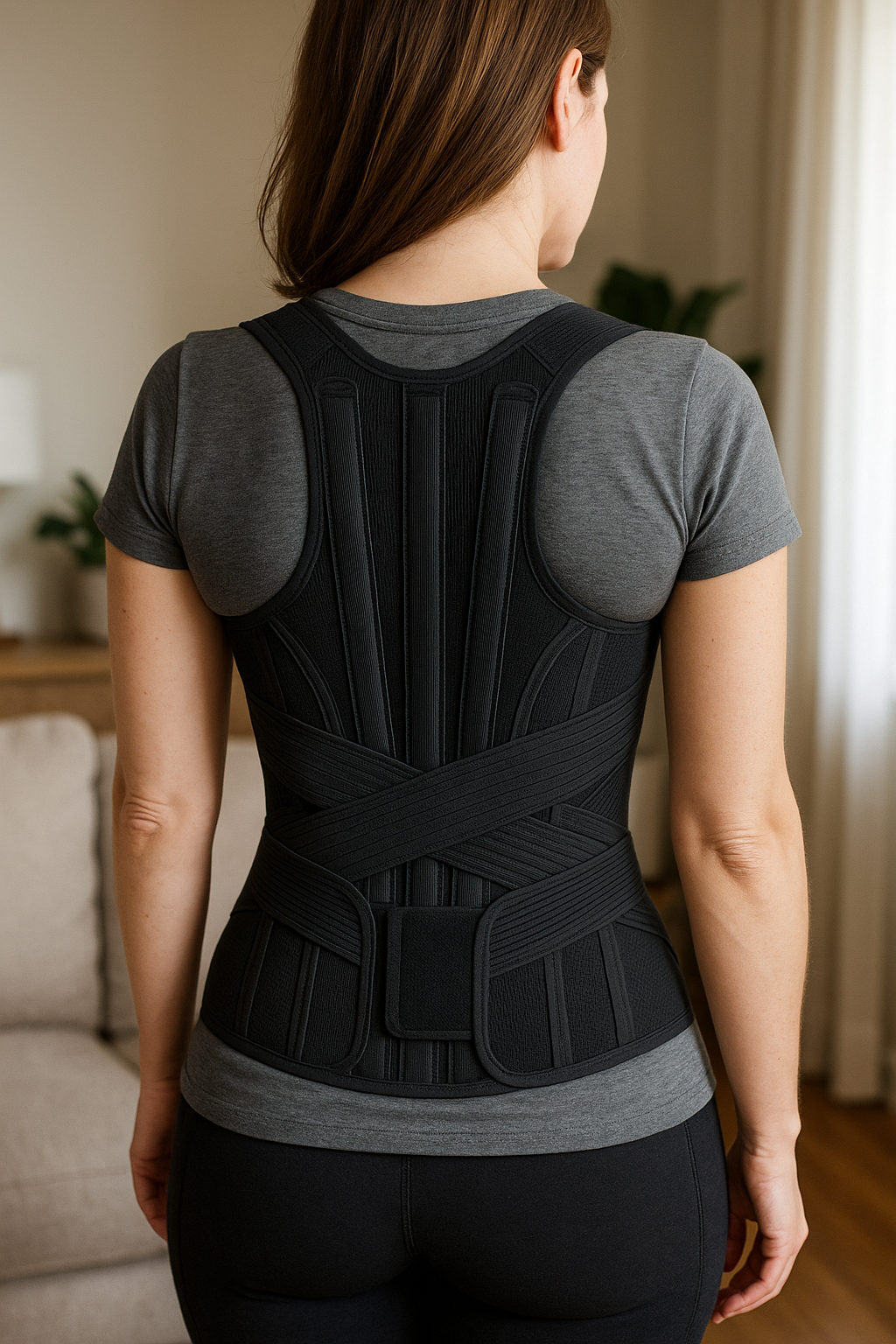
Women's Posture Shirt™ - Black
Improves posture and helps relieve tension; medical-grade support for work, exercise, and daily life.

Men's Posture Shirt™ - Black
Designed to stimulate muscles and relieve pain; ensures antimicrobial, everyday support for improved posture.
Start with spinal alignment. A supportive setup helps keep your head, neck, and spine in a straighter line. Side sleepers often benefit from a pillow that fills the space between the shoulder and the head, while back sleepers typically need support that keeps the neck neutral rather than pushed forward.
Match support to your sleep posture. Your preferred position influences where pressure builds. If you wake with shoulder or hip soreness, pressure relief may be a priority. If you wake with stiffness in the lower back, you may need more consistent support through the midsection to reduce strain.
Reduce pain-driven awakenings. If you often wake up to change position, notice where discomfort starts. The aim is not to “force” one perfect posture, but to make your most natural posture comfortable enough that your sleep cycles can progress with fewer interruptions. Over time, that can help your sleep rhythm feel steadier because your nights become more continuous.
Frequently Asked Questions
What is the best way to reset my sleep rhythm?
Resetting sleep rhythm works best with gradual timing changes and consistent morning cues. Keep your wake-up time steady, shift bedtime earlier or later in small steps, and get bright light soon after waking. In the evening, dim lights and keep your wind-down routine consistent so your body learns a reliable “night signal.”
How do sleep tracking apps help improve sleep rhythm?
Sleep tracking apps and wearables can help you spot patterns, such as irregular bedtimes, frequent awakenings, or nights that feel worse after late caffeine or alcohol. The most useful approach is to look for trends over one to two weeks, then test one change at a time (for example a more consistent bedtime or a darker bedroom) to see whether your sleep becomes less fragmented.
Can poor posture affect my sleep rhythm?
Yes. Poor posture or inadequate support can create discomfort that leads to tossing, turning, and brief awakenings. Those interruptions can break up sleep cycles and reduce the continuity of deep sleep and REM sleep. Improving alignment with a suitable pillow and mattress, and choosing a comfortable sleep position, can reduce pain-driven disruptions and support a more stable sleep rhythm.
When should I seek professional help for sleep issues?
Consider professional support if sleep problems persist for several weeks despite consistent habits, or if you regularly struggle to fall asleep, stay asleep, or function during the day. It is also wise to seek evaluation if you suspect a circadian rhythm disorder (for example an extreme inability to sleep until very late, or waking extremely early), loud snoring with choking or gasping, or ongoing insomnia that affects health, mood, or safety.
Källor
- Wikipedia. "Sleep Cycle."
- National Sleep Foundation. "How Your Circadian Rhythm Helps You Sleep."
- KU Leuven. "Sleep Pattern."
- Ruf Betten. "Finding Your Own Sleep Rhythm."
- Cleveland Clinic. "Circadian Rhythm."
- National Center for Biotechnology Information. "Circadian Rhythms and Sleep."
- Johns Hopkins Medicine. "The Science of Sleep: Understanding What Happens When You Sleep."
- Cleveland Clinic. "Circadian Rhythm Disorders."
- Femira. "How Does Sleep Work."
- Bundesministerium für Gesundheit. "Gut Schlafen."
- YouTube. "The Importance of Sleep Rhythm."
- Brain Effect. "Der Richtige Schlafrhythmus."
- National Center for Biotechnology Information. "Sleep Rhythms and Their Impact."
- Sleep Foundation. "Circadian Rhythm."