Body posture is easy to overlook because it feels “normal” right up until it doesn’t. One day your neck feels tight after screen time, your shoulders creep upward during stressful weeks, or your lower back complains after a long commute. Often, these aren’t random aches—they’re signals that your body is working harder than it needs to just to hold you upright.
In simple terms, body posture is the way your body aligns and positions itself while you sit, stand, move, and rest. When that alignment is balanced, muscles and joints share the workload efficiently. When it’s off, certain areas end up compensating—creating extra strain that can build over time. The good news is that posture isn’t a fixed trait. It’s a set of habits shaped by daily life, and small adjustments can make a noticeable difference in comfort, movement, and resilience.
Why body posture matters more than you think
Good posture is not about looking rigid or “standing up straight” all day. It’s about giving your body a stable, neutral starting point so you can breathe well, move freely, and reduce unnecessary tension. Think of alignment like stacking: when the head, shoulders, hips, knees, and ankles are better lined up, the body can rely more on structure and less on constant muscular effort.
Over time, that efficiency can be the difference between feeling capable and feeling worn down. Better posture can also support everyday performance—whether that’s lifting groceries, walking without fatigue, or getting through a workday without needing to constantly shift position to find relief.
Common signs of poor posture
Most posture problems are subtle at first. They show up as patterns—especially during desk work and phone use—rather than a single dramatic “bad position.” Common examples include slouching through the upper back, a forward head position (chin drifting toward the screen), rounded shoulders, or uneven weight distribution when standing.
These patterns can contribute to recurring discomfort in the neck, shoulders, upper back, or lower back, and they may affect how smoothly you move during exercise and daily tasks. If you’ve ever felt stiff after sitting, noticed one shoulder sitting higher than the other, or felt like you can’t fully relax your neck, posture may be part of the picture.
Improving body posture doesn’t require perfection—it requires awareness and a plan. Next, we’ll look at what’s happening in the body when posture slips, and how practical, measurable strategies can help you build better alignment over time.

Men's Posture Shirt™ - Black
Patented shirt activates muscles for improved posture and reduced pain. For daily use.

Women's Posture Shirt™ - White
Shirt with patented tech for posture, relief and muscle support. Documented effect.
The science behind body posture
Posture is not just a “spine issue.” It’s a whole-body strategy your nervous system uses to keep you balanced, stable, and ready to move. When alignment is closer to neutral, joints tend to sit in positions where they can share load effectively, and muscles can work at more efficient lengths. When posture drifts—like a forward head position or a rounded upper back—some tissues end up doing extra work for long periods, which can contribute to fatigue and irritation.
One reason posture matters is that it influences how forces travel through the body. In standing, a helpful reference is a stacked line where the ears sit roughly over the shoulders, the ribs are not flared forward, and the pelvis is not tipped excessively. This doesn’t mean “perfectly straight.” It means the body is organised so you can breathe, shift, and walk without constantly bracing.
Body posture can also affect breathing mechanics. When the chest collapses and the upper back rounds, the ribcage may move less freely. Many people then compensate by breathing more into the upper chest and neck area, which can increase tension around the shoulders and throat. Improving alignment often makes it easier to take calmer, fuller breaths—especially during desk work and stress.
There’s also a psychological layer. Posture plays a role in nonverbal communication: how open or closed you appear, how engaged you look, and how you carry yourself in social settings. While confidence is not “fixed” by posture alone, many people notice that a more upright, relaxed stance can support a more alert mood and a greater sense of readiness.
Practical strategies to improve posture (without becoming rigid)
The goal is not to hold one “correct” position all day. The most sustainable approach is to build awareness, strengthen the muscles that support you, and create an environment that makes better posture easier.
1) Build posture awareness in daily life
Start with quick check-ins rather than constant self-correction. A useful cue is to scan three areas: head, ribs, and pelvis. Is your chin drifting forward? Are your ribs flaring up as if you’re arching? Are you sitting on your tailbone with the pelvis tucked under? A small reset—bringing the head back, softening the ribs, and finding a more balanced seat—often reduces strain fast.
Another simple strategy is to link posture to habits you already do: every time you unlock your phone, open your laptop, or make coffee, take five seconds to “stack and relax.”
2) Strengthen what holds you up
Posture is easier when your body has capacity. Focus on the core (including the deep abdominal muscles), the upper back, and the glutes. Effective options include slow, controlled strength work such as dead bugs, bird dogs, rows, and hip hinges. You don’t need heavy weights to start—consistency and good form matter more.
3) Restore mobility where you get stiff
Many posture patterns are a mix of weakness and stiffness. Desk work commonly tightens the chest and hip flexors while the upper back becomes less mobile. Gentle stretching for the chest, hip flexors, and calves, plus thoracic spine mobility (upper-back rotations and extensions), can make neutral alignment feel more natural.
Yoga and Pilates can be helpful because they combine strength, mobility, and body awareness. The best choice is the one you’ll do regularly.
4) Make your workstation posture-friendly
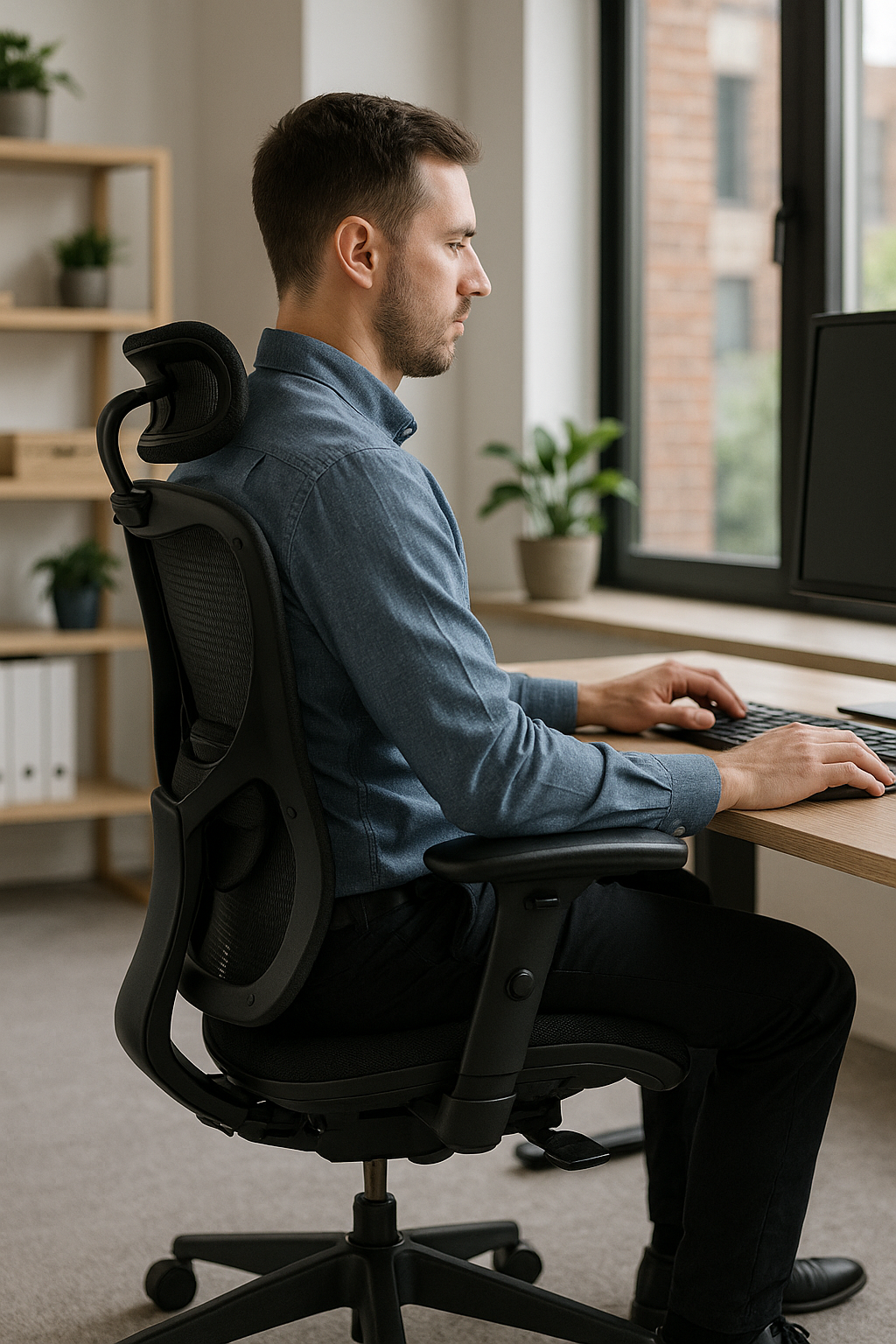
Ergonomics reduces the amount of “posture willpower” you need. Aim for a setup where your screen is near eye level, your elbows can rest close to your body, and your feet can stay supported. When sitting, think: back long (not rigid), shoulders relaxed, and feet flat on the floor or on a footrest. If you use a laptop, consider an external keyboard and raising the screen to reduce forward head posture.
Finally, take movement breaks. Even a well-set chair can’t compensate for hours of stillness. Short, frequent breaks—standing up, walking, or doing a few shoulder rolls—often help more than one long stretch session at the end of the day.
Advanced posture assessment tools: from guesswork to measurable data
Many people try to “fix posture” by looking in the mirror, but visual checks can miss subtle asymmetries. That’s where modern posture assessment tools can add value. Digital posture analysis uses images or video plus software to identify key landmarks and quantify angles, shifts, and left-to-right differences. Instead of relying only on what looks off, you can track what changes over time.
This objective approach is especially useful in sports and rehabilitation, where small alignment issues can influence movement efficiency and injury risk. It can also help everyday users stay motivated: when you can measure progress—like reduced forward head position or improved shoulder symmetry—it becomes easier to stick with the plan.
Whether you use a professional assessment or start with simple self-checks, the key is the same: treat posture as a trainable skill. With the right mix of awareness, strength, mobility, and ergonomic support, better body posture becomes less of a struggle and more of a new normal.
Make better body posture part of your day
Improving body posture is easiest when it becomes a background habit rather than a constant project. Instead of trying to “hold” a perfect position, aim to return to a better baseline more often throughout the day. Think of posture as a moving target: your body should be able to shift, reach, and relax without collapsing into the same strained pattern.
A practical approach is to use short posture resets. Every 30–60 minutes, take 10 seconds to check in: are your shoulders creeping up, is your chin drifting forward, and are you sitting or standing with most of your weight on one side? A small adjustment—bringing the head back over the ribs, letting the shoulders drop, and distributing weight evenly—can reduce tension without forcing stiffness.
Posture tips for work, home, and training
Daily environments strongly influence body posture. The goal is to set yourself up so good alignment is the “easy option,” even when you are tired or distracted.
At a desk: Keep the screen close to eye level to reduce forward head posture, and position the keyboard so elbows can stay near the body. Sit with feet flat on the floor (or supported by a footrest), and allow the spine to be long rather than rigid. If you notice you perch on the edge of the chair or tuck the pelvis under, scoot back and let the chair support you while keeping the chest relaxed.
On the sofa or in bed: Soft seating often encourages slouching and a rounded upper back. If you relax on a couch, use a cushion behind the mid-back or under the arm to reduce strain. When reading or scrolling, bring the screen up toward eye level rather than dropping the head down for long periods.
When standing and walking: A simple cue is “tall through the crown of the head, heavy through the feet.” Keep knees soft, ribs stacked over the pelvis, and weight spread across the whole foot rather than hanging on one hip. If you stand for long periods, change stance regularly or place one foot on a small step and switch sides to reduce lower-back fatigue.
During exercise: Strength and mobility work support posture best when form is controlled. Prioritise movements that build upper-back strength (rows, band pull-aparts), core control (dead bugs, carries), and hip strength (hinges, glute bridges). If you train hard but sit most of the day, include a few minutes of chest and hip-flexor mobility to help neutral alignment feel more natural. For additional support, consider knee support or elbow support if you experience joint discomfort during workouts.
Consistency beats intensity
Posture improvements typically come from small, repeatable actions. Two minutes of movement done several times a day often has more impact than one long session once a week. Consider setting a reminder for movement breaks, pairing posture resets with routine moments (calls, coffee, meetings), and tracking one or two simple goals, such as keeping the screen higher or taking three short walks per day.
If you use posture supports or ergonomic aids, treat them as tools that reduce strain while you build strength and awareness. The long-term aim is still a body that can hold good body posture comfortably without constant effort.
When professional help makes sense
Self-guided strategies work well for many people, but some situations benefit from a professional posture assessment. Consider seeking guidance if you have persistent or worsening pain, recurring headaches linked to neck tension, numbness or tingling, or symptoms that limit daily activity. It is also worth getting support if you have tried consistent changes for several weeks without improvement.
A qualified professional can identify whether a posture pattern is linked to mobility restrictions, strength imbalances, previous injury, or movement habits you may not notice. In some cases, objective tools such as digital posture analysis can help quantify alignment, highlight asymmetries, and track progress over time. This can make your plan more targeted and easier to follow, especially if you are returning to sport, managing recurring discomfort, or working toward specific performance goals.
Frequently Asked Questions
What is body posture?
Body posture refers to the alignment and positioning of the body during different activities and states of rest, including sitting, standing, walking, and lying down.
Why is posture important for health?
Good posture helps distribute load more efficiently across muscles and joints, which can reduce strain and support comfortable movement. Over time, this can help lower the risk of overuse irritation and make daily activities feel easier.
What are common signs of poor posture?
Common signs include slouching through the upper back, forward head posture, rounded shoulders, uneven shoulder height, and recurring discomfort in the neck, shoulders, upper back, or lower back—especially after sitting or screen use.
How can I improve my posture at work?
Set up an ergonomic workstation with the screen near eye level, keep elbows close to the body, and support your feet on the floor or a footrest. Use short movement breaks and quick posture resets rather than trying to hold one rigid position all day.
Are there tools available for posture analysis?
Yes. Digital posture analysis tools can use images or video with software to measure angles, shifts, and asymmetries. This provides objective data that can help guide improvements and track changes over time.
When should I consider professional posture assessment?
Consider professional assessment if you experience persistent pain, neurological symptoms such as tingling or numbness, or if consistent self-help strategies have not improved your body posture or comfort after several weeks.
Källor
- Lompoc Valley Medical Center. (2021). "Importance of Good Posture."
- YouTube. (n.d.). "Understanding Body Posture."
- National Osteoporosis Foundation. (n.d.). "Proper Body Alignment."
- Longdom Publishing. (n.d.). "Depth Analysis and Physiological Implications of Body Postures."
- Orthopedic Sports Medicine. (n.d.). "The Connection Between Your Posture & Physical Health."
- PubMed Central. (n.d.). "Posture and Its Impact on Health."
- PubMed Central. (n.d.). "Posture Correction Techniques."
- LearnOpenCV. (n.d.). "Building a Body Posture Analysis System Using MediaPipe."
- Charité - Universitätsmedizin Berlin. (n.d.). "Dynamics of Posture, Shape, and Motion."
- Royal Society Open Science. (n.d.). "Body Posture Aftereffects."
- Hermann Ortho. (n.d.). "Complex Body Posture Evaluation Programme."
- Wiley Online Library. (n.d.). "Psychological Implications of Body Posture."
- YouTube. (n.d.). "Posture and Ergonomics."
- Evolve NY. (n.d.). "What is the Ergonomically Optimum Body Posture."