Muscle recovery is the part of training most people rush through—then wonder why progress stalls. You can do everything “right” in the gym and still feel heavy, stiff, or unusually tired for days after. That’s not just bad luck; it’s your body signalling that the repair work hasn’t caught up with the stress you’ve put it under.
After a tough session, microscopic damage in muscle fibres is normal. The real issue is what happens next: delayed onset muscle soreness (DOMS), lingering fatigue, and low-grade inflammation can make your next workout feel harder than it should. In the short term, that can mean reduced power, poorer technique, and a higher risk of compensating with joints and tendons that weren’t meant to take the load. Over time, it can turn consistent training into a stop-start cycle.
Ever wondered why some athletes bounce back faster than others? It’s rarely because they “hurt less.” It’s because they treat recovery like a skill—using a few repeatable habits that help the body restore, rebuild, and be ready again.
Why muscle recovery matters for performance and injury prevention
Recovery is where adaptation happens. Training is the stimulus; recovery is the response. When you recover well, you’re more likely to return with better coordination, steadier energy, and muscles that can produce force efficiently. When you recover poorly, you may still show up—but performance tends to flatten, and small aches can become persistent problems.
Good muscle recovery also supports everyday function. If you sit a lot, carry kids, work on your feet, or deal with repetitive tasks, soreness and tightness don’t just affect workouts—they affect posture, sleep quality, and how you move through the day.

Men's Posture Shirt™ - Black
Improves posture, relieves tensions and supports muscles. Great for work, exercise & relaxation.
What this guide will help you do
In the rest of this post, we’ll break down practical, evidence-led recovery strategies you can actually use: hands-on methods like massage, low-intensity movement for active recovery, and temperature-based approaches such as cold and contrast therapies. We’ll also cover the fundamentals that quietly drive results—post-workout nutrition, hydration, and sleep—because even the best technique can’t outwork poor basics.
The goal isn’t to add complicated routines. It’s to help you choose the right tools at the right time, so muscle recovery becomes a consistent advantage rather than an afterthought.
Evidence-based muscle recovery techniques that work
Recovery advice is everywhere, but not all strategies deliver the same results. When researchers compare common post-exercise methods, a few stand out for consistently reducing soreness and helping you feel ready to train again. The best approach is rarely “one magic tool”; it’s choosing the right technique for your body, your training load, and your schedule.
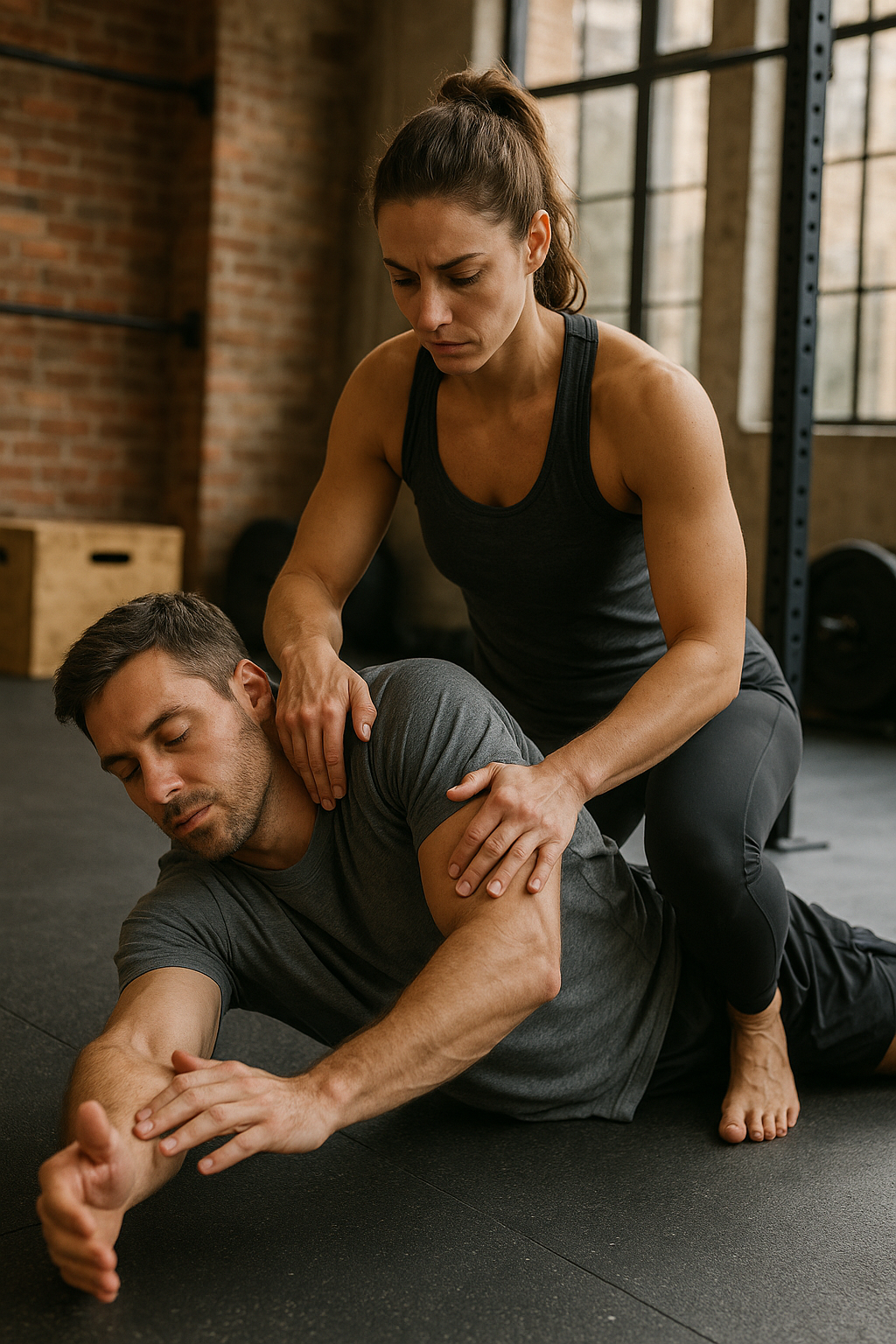
Massage therapy for soreness, fatigue and inflammation
Massage is one of the most reliable options for easing delayed onset muscle soreness. In large comparisons of recovery methods, massage shows a meaningful reduction in DOMS, with an effect size around SMD -0.78. It’s also associated with improvements in fatigue (reported in the same body of research as a larger overall effect across recovery interventions) and reductions in exercise-related biomarkers such as creatine kinase (CK) and inflammatory signalling like interleukin-6 (IL-6).
Practically, you don’t need an hour-long sports massage after every workout. A targeted 10–20 minutes focusing on the muscles that took the biggest hit (for example, quads after squats or calves after running) can be enough to reduce stiffness and restore comfortable range of motion. If professional massage isn’t realistic, self-massage with hands or a massage tool can still help by increasing local circulation and reducing the “tight, protective” feeling that often follows hard training.
Active recovery to keep blood moving without adding stress
Active recovery is low-intensity movement that supports circulation and tissue fluid exchange without creating more muscle damage. Think easy walking, light cycling, gentle swimming, or yoga that stays well below a challenging stretch. The goal is not to “burn off” soreness; it’s to keep your body moving so nutrients can reach recovering tissue and metabolic by-products can be cleared more efficiently.
This approach works well for both athletes and everyday exercisers because it’s simple and adaptable. A useful rule is that you should be able to breathe through your nose and hold a conversation. If your active recovery turns into another workout, it stops being recovery. For many people, 15–30 minutes the day after a hard session is enough to feel noticeably looser.
Cold therapies and contrast water: when to use them
Cold-based strategies are popular because they can quickly reduce the sensation of soreness and calm post-exercise discomfort. Options include cold water immersion, localized icing, and whole-body cryotherapy. Research comparing recovery methods shows cold and contrast approaches can range from small to large effects on soreness and related outcomes (with reported effects spanning roughly -2.26 to -0.40 depending on the protocol and measurement).
Cold therapy can be especially helpful when you need to feel functional soon after a demanding session, such as during tournaments, heavy training blocks, or physically demanding workdays. One caveat: if your primary goal is long-term muscle growth, frequent aggressive cold exposure immediately after strength training may not be ideal for everyone, because inflammation is part of the adaptation process. A balanced approach is to reserve cold for times when soreness is limiting movement quality, sleep, or your ability to train again soon.
Nutrition and hydration for faster muscle recovery
Hands-on techniques can help, but the “building materials” for repair come from what you eat and drink. After training, your body is trying to restore glycogen, repair muscle proteins, and normalize fluid balance. If you consistently miss those basics, recovery tools become band-aids.
Post-workout nutrition: protein and carbs in the right window
A practical target is 20–40 g of protein within about two hours after training, especially after strength work or high-intensity sessions. This supports muscle protein synthesis and provides amino acids needed for repair. Pairing protein with carbohydrates can further support recovery by replenishing glycogen, which matters for anyone training frequently or doing endurance-based work.
If you train hard multiple days per week, a generally higher carbohydrate and protein intake across the day tends to support better performance consistency than “saving” most of your nutrition for one meal. The best plan is the one you can repeat: a protein-rich meal, a carb source you digest well, and some colour from fruit or vegetables.
Hydration: don’t ignore electrolytes
Hydration affects blood volume, temperature regulation, and the delivery of nutrients to working tissues. Even mild dehydration can make workouts feel harder and can prolong the “flat” feeling afterward. Water is essential, but so are electrolytes, particularly sodium, when you sweat heavily. A simple check: if your urine is consistently very dark after training, or you regularly cramp, you may need more fluids and electrolytes around workouts.
Sleep: the recovery multiplier most people underuse
Sleep is where much of the repair work is coordinated. Most active adults do best with roughly 7–10 hours, depending on training load, stress, and individual needs. When sleep is short or fragmented, soreness often feels worse, motivation drops, and performance becomes harder to repeat. If you want one habit that improves nearly every other recovery strategy, it’s protecting sleep with a consistent bedtime, a darker room, and a wind-down routine that helps you actually switch off.
Additional muscle recovery strategies to add to your routine
If you already have the basics in place—smart training load, enough protein and fluids, and consistent sleep—small additions can make muscle recovery feel easier and more predictable. Two options that fit well into real life are compression and mobility work. They are not “magic fixes,” but they can reduce the heavy, stiff feeling that often lingers after hard sessions and help you maintain better movement quality between workouts.
Compression techniques: support circulation and reduce heaviness
Compression garments (such as sleeves, socks, or tights) apply gentle external pressure to the limbs. The practical goal is simple: support blood flow and fluid movement so the muscles feel less swollen and less “dead” the day after training. In research comparing recovery methods, compression tends to show small-to-moderate improvements in recovery-related outcomes and biomarkers, particularly when used consistently after demanding sessions.
Compression can be especially useful when you have to recover while staying active—during travel, long workdays on your feet, or multi-day training blocks. Many people find it most helpful in the hours after training and later in the day, rather than only during the workout itself.
To keep it practical, choose a level of compression that feels supportive but not restrictive. If you notice tingling, numbness, or skin discoloration, the garment is too tight. As with most muscle recovery tools, the best sign you’ve chosen well is that you move more comfortably and feel more ready to train again—not that you can tolerate the most intense version of the method.

Women's Posture Shirt™ - White
Stimulates muscles, improves postural awareness and supports rehabilitation at work or training.
Stretching and mobility: keep range of motion without overdoing it
Stretching is often discussed as a cure-all, but it works best when you use the right type at the right time. For muscle recovery, the goal is to restore comfortable range of motion and reduce protective stiffness, not to force flexibility when tissues are already irritated.
Before training, dynamic stretching and mobility drills can prepare joints and muscles for load. Think controlled leg swings, hip openers, arm circles, or light bodyweight movements that mirror what you are about to do. This approach increases temperature and coordination without creating the prolonged “relaxation” effect that some people feel after long static holds.
After training, gentle static stretching can help you downshift and regain a normal resting length in muscles that feel tight. Keep it mild: you should feel tension, not pain. A short routine (often 5–10 minutes) focusing on the muscles you trained hardest is usually enough. If you are very sore, mobility-based movement (slow squats to a comfortable depth, easy spinal rotations, light calf raises) may feel better than long, intense stretches.
Stretching is also a useful “movement audit.” If one side consistently feels tighter or you repeatedly lose range of motion in the same area, it may be a sign to adjust training volume, improve warm-up quality, or add recovery methods like massage or active recovery on the following day.
Frequently Asked Questions
What is the best way to reduce muscle soreness after exercise?
The most reliable approach is combining methods: massage to reduce soreness and stiffness, active recovery to increase circulation without adding stress, and cold or contrast therapies when soreness is limiting sleep, movement quality, or your ability to train again soon. The best choice depends on your training goal and how quickly you need to feel functional.
How much protein should I consume post-workout for optimal recovery?
A practical target is 20–40 g of protein within about two hours after exercise. This supports muscle repair by providing enough amino acids to stimulate muscle protein synthesis. Pairing protein with carbohydrates can further support recovery, especially if you train frequently or do endurance-based sessions.
Is sleep really that important for muscle recovery?
Yes. Sleep is a major driver of muscle recovery because it supports tissue repair, nervous system recovery, and overall readiness to train. Most active adults benefit from roughly 7–10 hours per night, with higher training loads often increasing sleep needs.
Can I use compression garments for muscle recovery?
Yes. Compression garments can support circulation and reduce the “heavy legs” feeling after hard sessions. Research generally shows small-to-moderate benefits, and they can be particularly helpful during long days of standing, travel, or multi-day training blocks.
How does hydration affect muscle recovery?
Hydration supports blood volume, temperature regulation, and the delivery of nutrients to recovering tissues. It also helps maintain fluid and electrolyte balance, which is especially important if you sweat heavily. If you regularly feel flat after training, cramp often, or notice consistently dark urine, improving fluids and electrolytes can meaningfully support muscle recovery.
Källor
- "The Science Behind Muscle Recovery." This is Fitness.
- "Den Ultimative Guide til Muskelrestitution." AMDIPT.
- "Importance of Muscle Recovery After Exercise." Lumen.
- "Restitution Efter Træning." Optima Sport.
- "The Science of Muscle Recovery: What Works and What Doesn't." Nutrova.
- "Kom i Gang Igen: Styrketræning Efter en Pause." Core Nutrition.
- "The Science Behind Muscle Recovery." CrossFit Newmarket Central.
- "Ømme Muskler Flere Dage Efter Træning." Fitness Free.
- "Muscle Recovery: Mechanisms and Interventions." PubMed Central.
- "Mekanismer for Udtrætning." Bodylab.
- "Understanding the Basics of Muscle Recovery." Optimum Nutrition.
- "30 Fokuspunkter for Restitution." Maxer.
- "Workout Recovery Guide." Polar.
- "Kan Man Træne Selvom Man Er Øm?" MyProtein.
- "Understanding the Basics of Muscle Recovery." Village Gym.